
Introduction
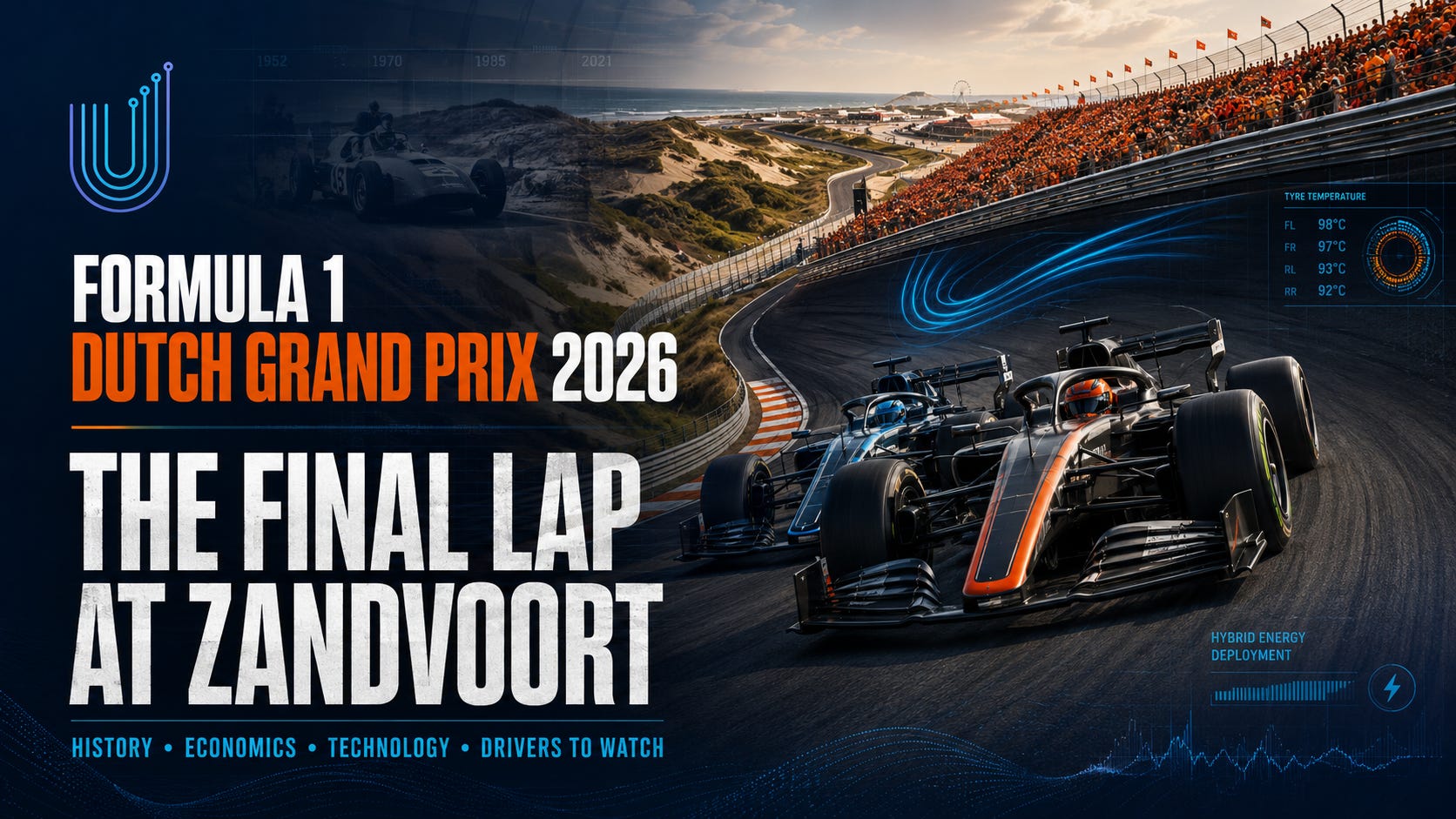
Formula 1 returns to Circuit Zandvoort this weekend for one of the most anticipated—and emotional—events of the 2026 season.
The Dutch Grand Prix has become known for its orange grandstands, beachside location and extraordinary support for Max Verstappen. However, the 2026 edition carries additional significance: it is currently scheduled to be the final Formula 1 race at Zandvoort following the championship’s return to the Netherlands in 2021.
It will also be Zandvoort’s first and only Sprint weekend. The Sprint and Grand Prix qualifying take place Saturday, followed by the 72-lap Grand Prix on Sunday at 9 a.m. Eastern.
The 4.259-kilometer circuit features narrow corners, rapid elevation changes and dramatic banking, making it one of the most technically demanding venues on the calendar.
The history of the Dutch Grand Prix
Circuit Zandvoort opened in 1948 as part of the postwar expansion of European motorsport. Its original configuration combined permanent racetrack sections with roads running through the coastal sand dunes west of Amsterdam.
The first Formula 1 Dutch Grand Prix took place in 1952, when Alberto Ascari led a Ferrari sweep of the first three positions. Zandvoort subsequently hosted Formula 1—with occasional interruptions—until 1985.
The circuit became known as a fast, unforgiving and highly technical test. Its flowing layout rewarded driver confidence, precision and rhythm, while its narrow dimensions left little room for mistakes.
Formula 1 did not return to Zandvoort until 2021, following a 36-year absence extended by the cancellation of the planned 2020 return during the COVID-19 pandemic. The revival coincided with Verstappen’s emergence as a Dutch sporting icon, creating enormous domestic demand for a Formula 1 race.
The renovated circuit preserved its old-school character while adding modern safety and infrastructure improvements. Its most distinctive feature is its banking: the Hugenholtz corner and final Arie Luyendijk corner allow drivers to carry substantial speed while placing unusual lateral and vertical forces on the cars and tires.
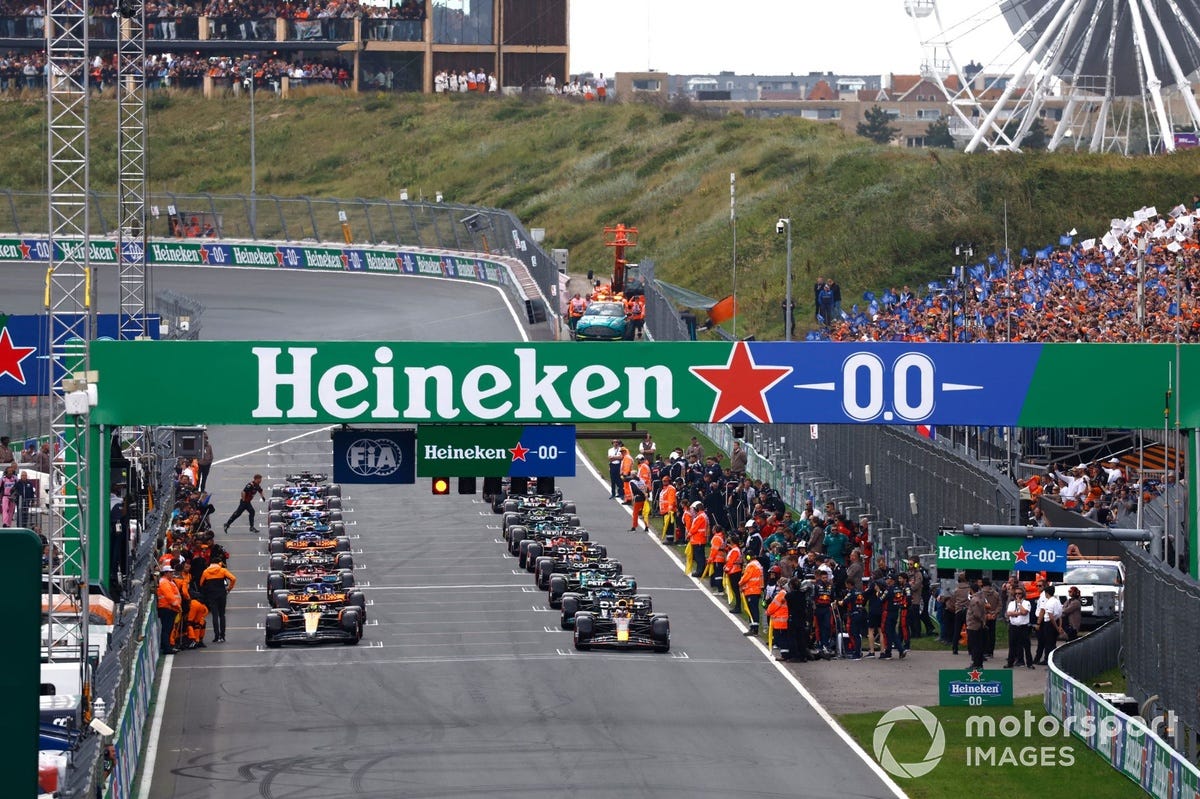
Since 2021, the race has become one of Formula 1’s most recognizable spectacles. Packed grandstands, orange celebrations, music and the proximity to Amsterdam helped transform it from a race into a national sporting festival.
That modern chapter reaches an important moment in 2026. The organizers have branded the event the “Final Lap,” with Saturday and Sunday completely sold out. Dutch Grand Prix organizers
Historic moments at the Dutch Grand Prix
Across its two Formula 1 eras, Zandvoort has produced several moments that remain part of the sport’s history.
James Hunt’s first Formula 1 victory—1975
James Hunt secured his maiden Formula 1 victory at Zandvoort in 1975 while driving for the small and unconventional Hesketh team.
Hunt made an early switch from wet tires to slicks as the circuit dried and then resisted sustained pressure from Ferrari’s Niki Lauda. After 75 laps, they were separated by approximately one second.
The victory demonstrated Hunt’s talent and gave Hesketh one of the most celebrated underdog wins in Formula 1 history.
Gilles Villeneuve’s three-wheel lap—1979
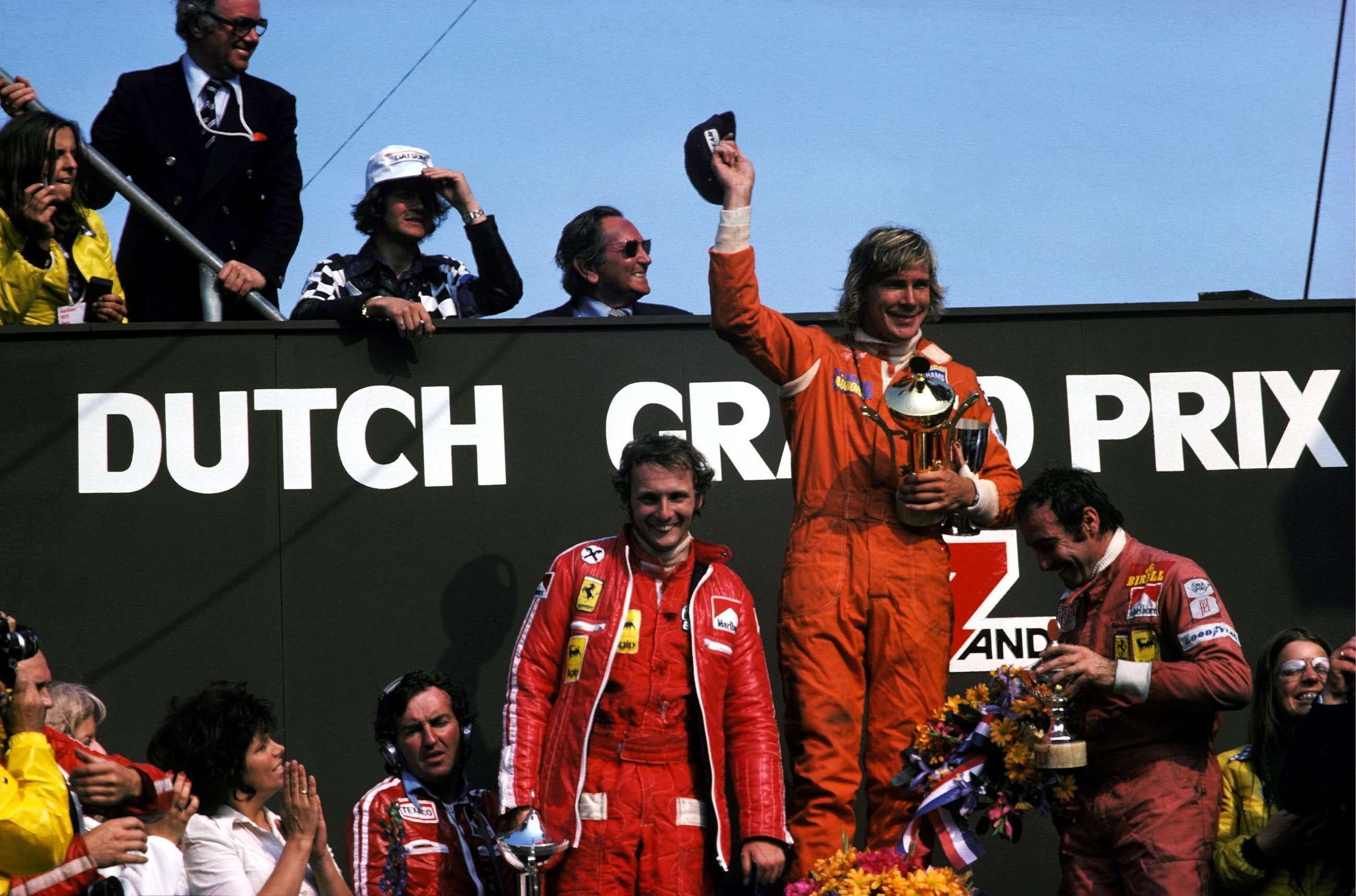
One of Zandvoort’s most unforgettable images came in 1979. After suffering a tire failure, Ferrari’s Gilles Villeneuve continued driving back toward the pits with only three functioning wheels.
The attempt did not save his race, but it became an enduring illustration of Villeneuve’s determination and fearless driving style.
A championship collision—1983
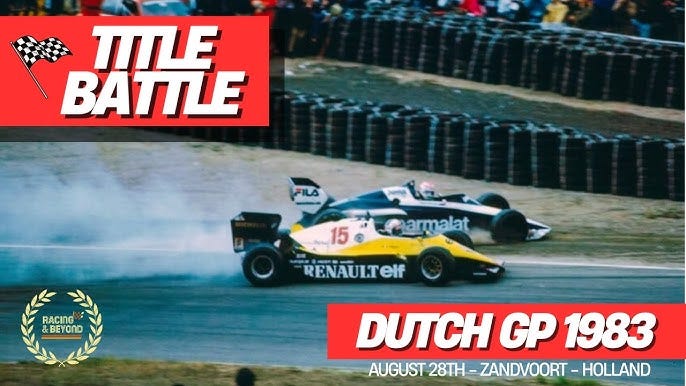
The 1983 Dutch Grand Prix delivered a decisive confrontation between championship rivals Alain Prost and Nelson Piquet.
While attempting to pass Piquet for the lead at Tarzan corner, Prost locked his brakes and collided with the Brabham. Both drivers eventually retired, allowing Ferrari’s René Arnoux to win.
Piquet ultimately recovered from the setback and secured his second World Championship later that season.
Niki Lauda’s final victory—1985
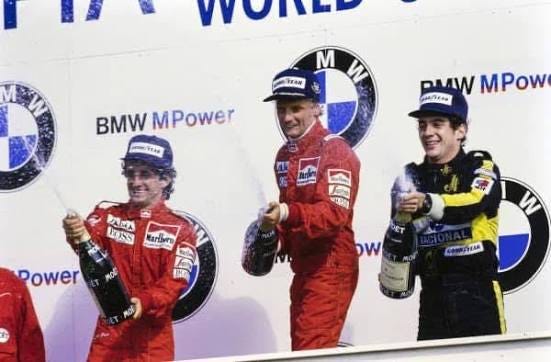
The final Dutch Grand Prix before Formula 1’s long absence produced another historic result.
Starting 10th, Lauda worked his way through the field and then defended against McLaren teammate Alain Prost during the closing stages. Lauda crossed the line only 0.232 seconds ahead, securing the 25th and final Formula 1 victory of his career.
Formula 1 would not race at Zandvoort again for 36 years.
Verstappen wins on the race’s return—2021
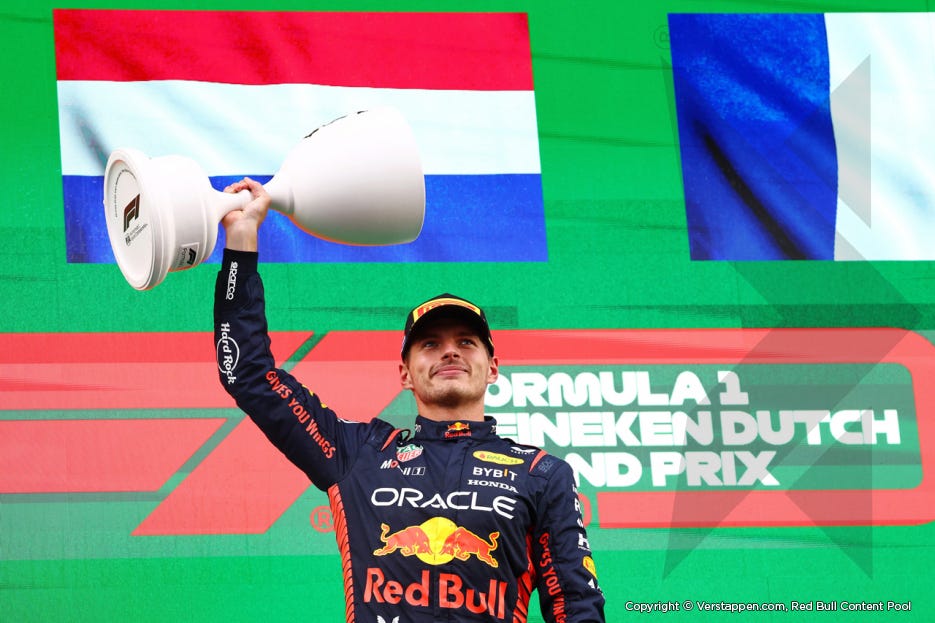
When Formula 1 returned in 2021, Max Verstappen delivered the result the home crowd wanted.
The Dutch driver converted pole position into victory as the circuit’s grandstands became a sea of orange. He repeated the achievement in 2022 and 2023, winning the first three Dutch Grands Prix following Zandvoort’s return.
His 2023 victory was especially significant because it equaled Sebastian Vettel’s record of nine consecutive Formula 1 wins. Verstappen broke that record at the following race in Italy.
Lawson’s unexpected debut—2023
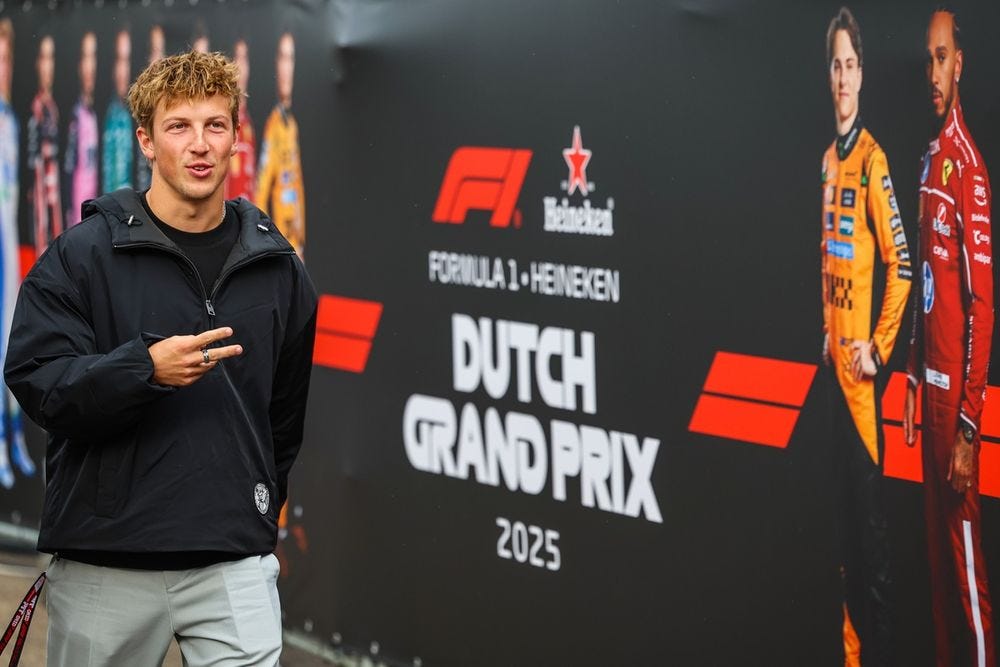
Zandvoort also provided Liam Lawson with an unexpected Formula 1 debut in 2023. Daniel Ricciardo broke a bone in his hand during Friday practice, forcing Lawson to step into the car with extremely limited preparation.
Despite difficult conditions and the circuit’s demanding layout, Lawson finished 13th. His performance helped demonstrate his readiness for a larger Formula 1 opportunity.
McLaren ends Verstappen’s winning run—2024 and 2025
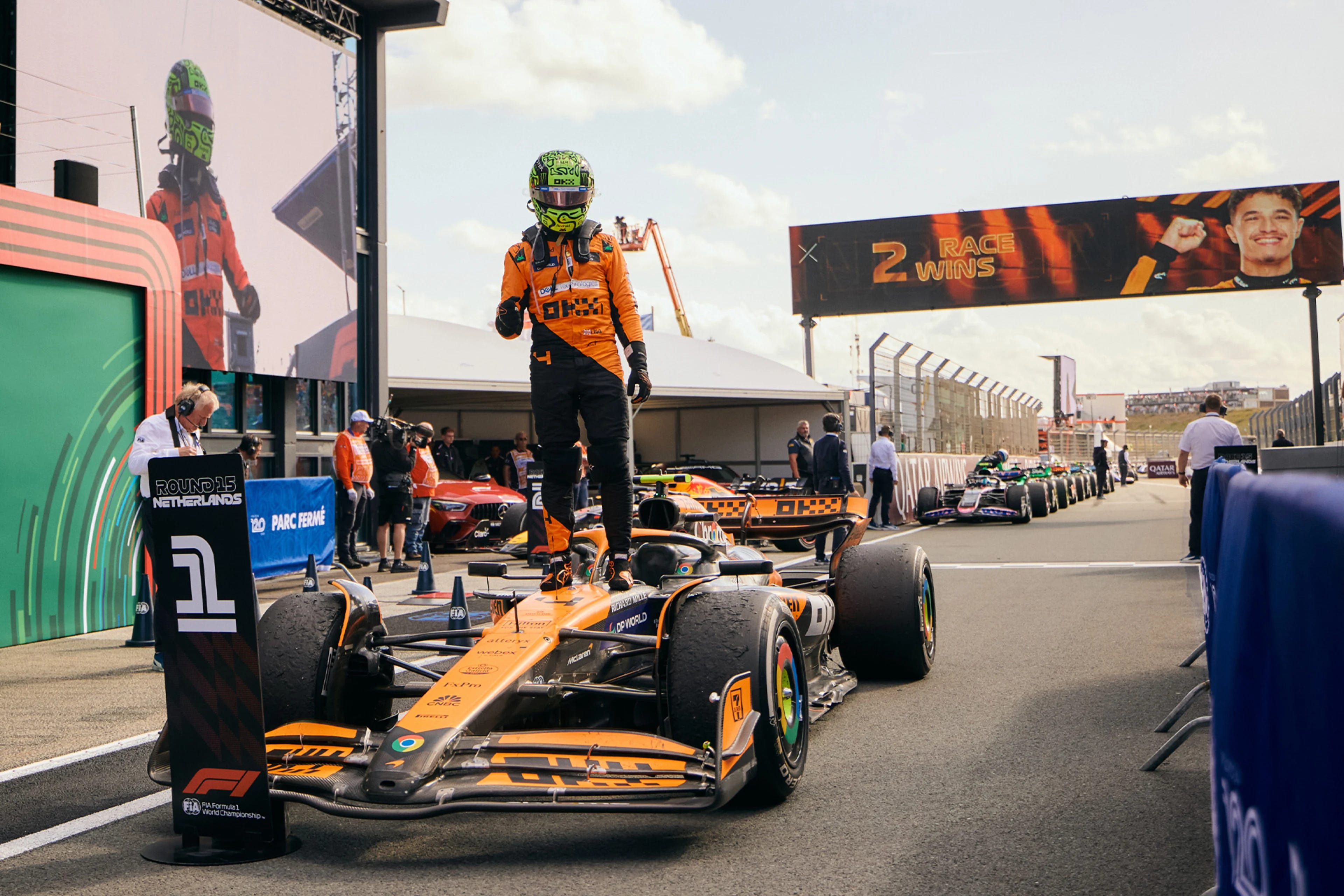
Lando Norris ended Verstappen’s run of home victories by winning the 2024 Dutch Grand Prix for McLaren.
Oscar Piastri followed with a commanding performance in 2025, taking pole, winning the race, leading every lap and recording the fastest lap. It was the first Grand Slam of his Formula 1 career and McLaren’s first since the 1998 Monaco Grand Prix.
Together, these moments demonstrate why Zandvoort occupies a special place in Formula 1 history. The circuit has hosted first victories, final victories, championship-defining collisions, unexpected debuts and defining performances from multiple generations of drivers.
The economics of the Dutch Grand Prix
Hosting a Formula 1 race creates several layers of economic value.
The promoter generates revenue through general-admission and grandstand tickets, premium hospitality, sponsorships, concessions, merchandise and entertainment. The surrounding economy benefits from hotels, restaurants, local transportation, retail activity and international tourism.
A Breda University of Applied Sciences impact study estimated that the 2023 Dutch Grand Prix attracted 157,000 unique paying spectators, who generated approximately 258,200 visits across the weekend. Friday attendance reached 97,700, while Saturday and Sunday each drew approximately 105,000 spectators.
The study estimated:
€25.8 million in additional spending within Zandvoort
€65.1 million across the wider Amsterdam metropolitan region
€30.4 million in regional added economic value
Employment activity equivalent to approximately 514 full-time jobs across the region
Around 20% of visitors stayed overnight in the metropolitan area, averaging 2.9 nights and spending approximately €104 per person per night.
These figures excluded several categories, including sponsor activations and spending from people who visited Zandvoort without attending the race. The complete commercial footprint may therefore have been larger. (Source: Breda University economic-impact study).
The event’s value also extends beyond direct spending. Global television coverage promotes Zandvoort and the Netherlands as tourism destinations. Sponsors use the weekend for client entertainment, product activation and international brand exposure. For Dutch companies, the Grand Prix has become an important business and networking platform.
The 2026 sellout demonstrates that consumer demand remains strong. Organizers have also reported considerable demand for hospitality packages and increasing interest from international visitors.
However, a sold-out race does not automatically guarantee long-term financial sustainability. Promoters must manage Formula 1 hosting fees, temporary grandstands, security, transportation, staffing, entertainment and circuit infrastructure.
Zandvoort’s limited physical footprint and coastal location can also make expansion and logistics more difficult.
This is an important distinction: an event can produce substantial benefits for its region while still operating within a challenging promoter-level financial model.
Viewership and Formula 1’s global growth
Publicly available figures do not provide a complete, verified global audience number specifically for the 2026 Dutch Grand Prix before the race takes place. However, the event is benefiting from Formula 1’s broader commercial momentum.
Formula 1 reported a global fanbase of approximately 827 million in 2025, representing 12% year-over-year growth. It also reported:
6.7 million spectators across the 2025 season
19 sold-out events out of 24
A 21% increase in average U.S. live race viewership
2.3 billion engagements across Formula 1’s social platforms
A fanbase in which 43% of fans are under 35
A fanbase that is now 42% female
These figures show why individual Grand Prix weekends have become valuable global media properties rather than simply motor races.
The Dutch Grand Prix has additional audience advantages. It combines Verstappen’s home-country appeal, a visually distinctive circuit, a festival atmosphere and convenient access from Amsterdam.
The final scheduled edition and introduction of the Sprint should create additional attention across television, streaming, social media and digital content.
Drivers to watch this weekend
George Russell
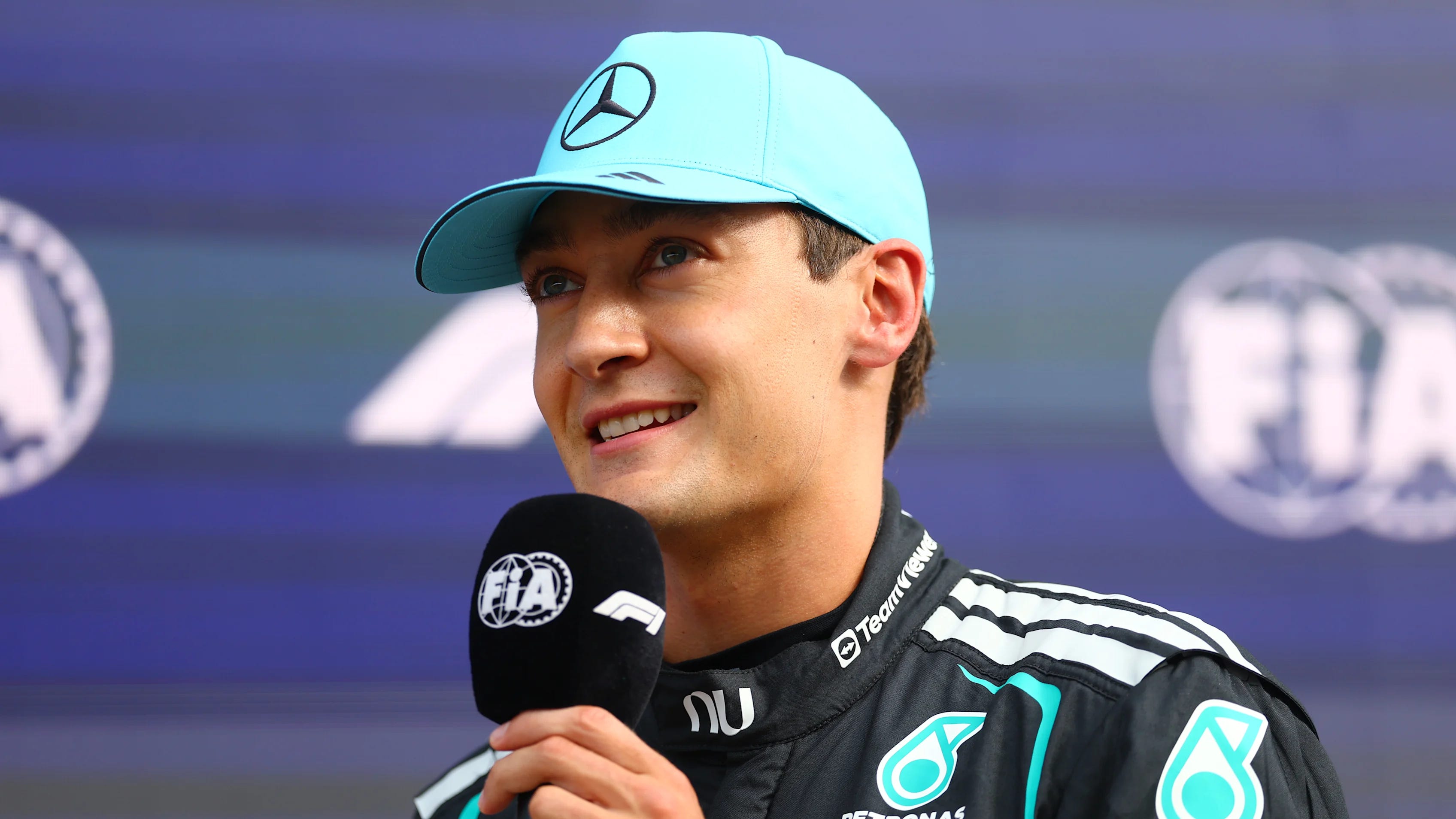
Russell produced the best performance in Friday’s Sprint Qualifying, taking pole with a lap of 1:11.567. With overtaking difficult at Zandvoort, starting position and execution will be critical.
Mercedes appears to have placed its car in a competitive operating window, although the team acknowledged that its long-run pace and performance through the faster corners still require attention.
Lando Norris
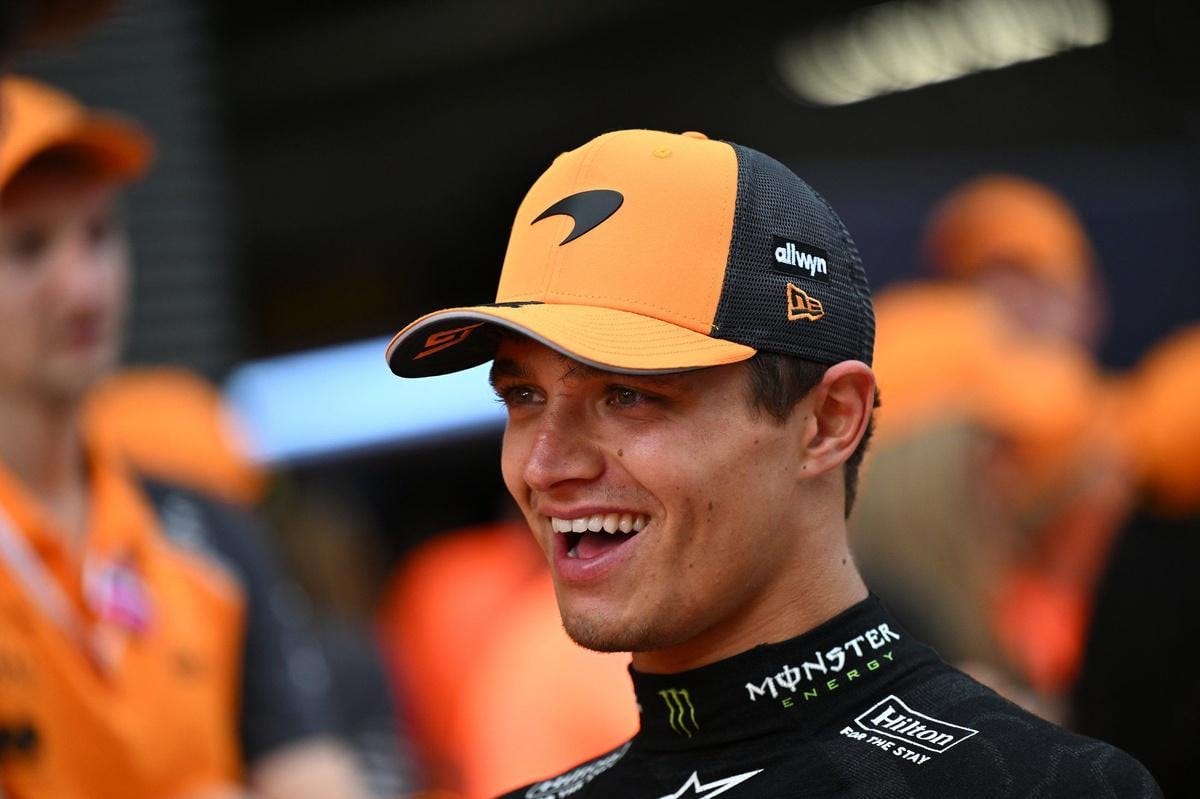
Norris qualified second for the Sprint, only 0.041 seconds behind Russell. McLaren was expected to perform well at Zandvoort, and both cars demonstrated strong underlying pace.
Norris will be a serious contender if McLaren can convert its speed into clean starts, effective tire management and a strong qualifying position for Sunday.
Charles Leclerc
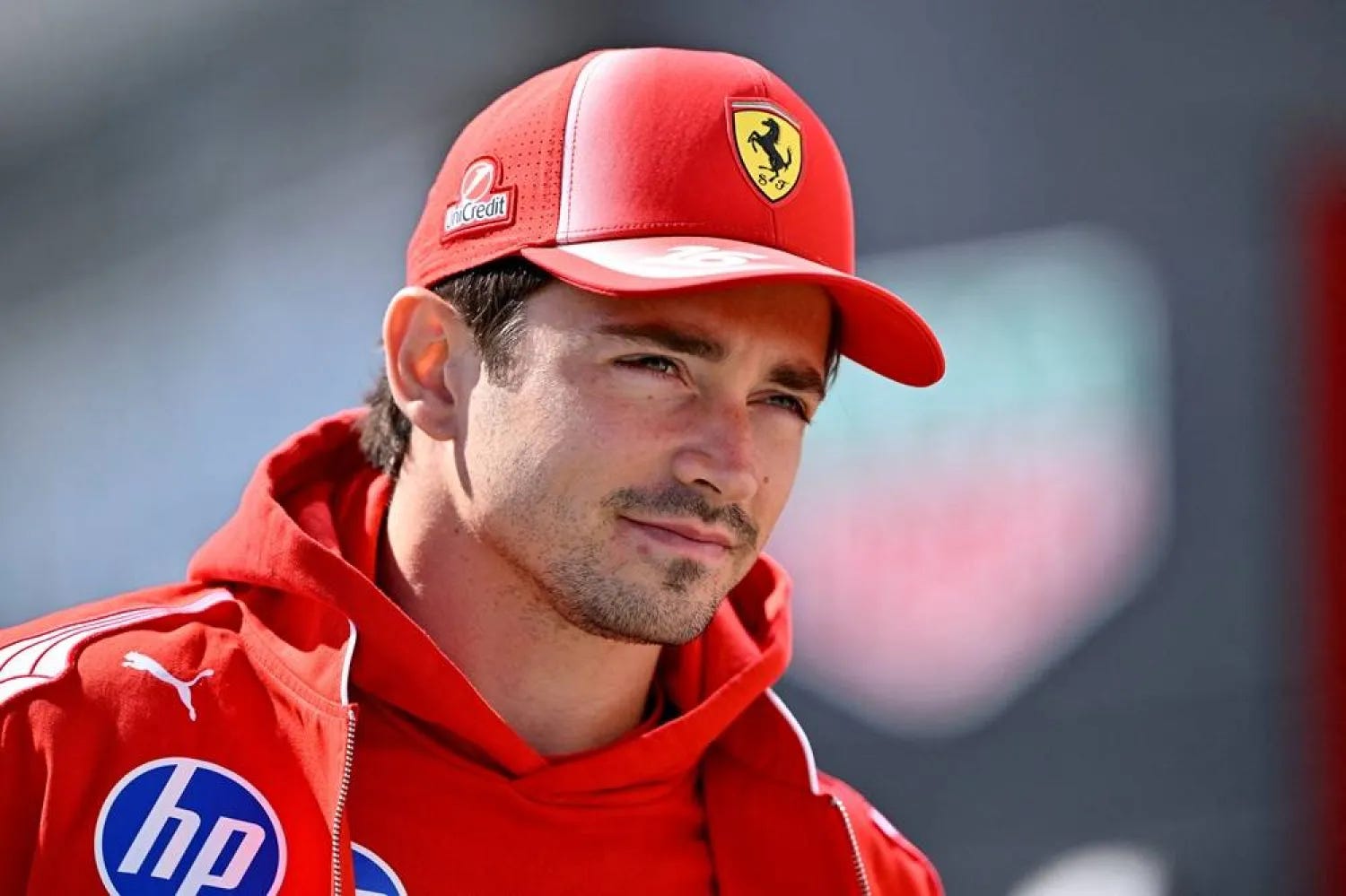
Leclerc finished Sprint Qualifying third, only 0.055 seconds away from pole. He described the lap as one of his strongest qualifying efforts of the season.
Ferrari also showed promising long-run speed during practice. If that performance carries into the race, Leclerc could challenge Mercedes and McLaren rather than simply compete for a podium.
Oscar Piastri
Piastri starts the Sprint fourth after leading the second segment of Sprint Qualifying. Although Norris ultimately finished ahead, Piastri’s pace indicates that both McLarens could contend throughout the weekend.
With four drivers separated by less than one tenth of a second at the front, small differences in setup, tire preparation and execution could decide the result.
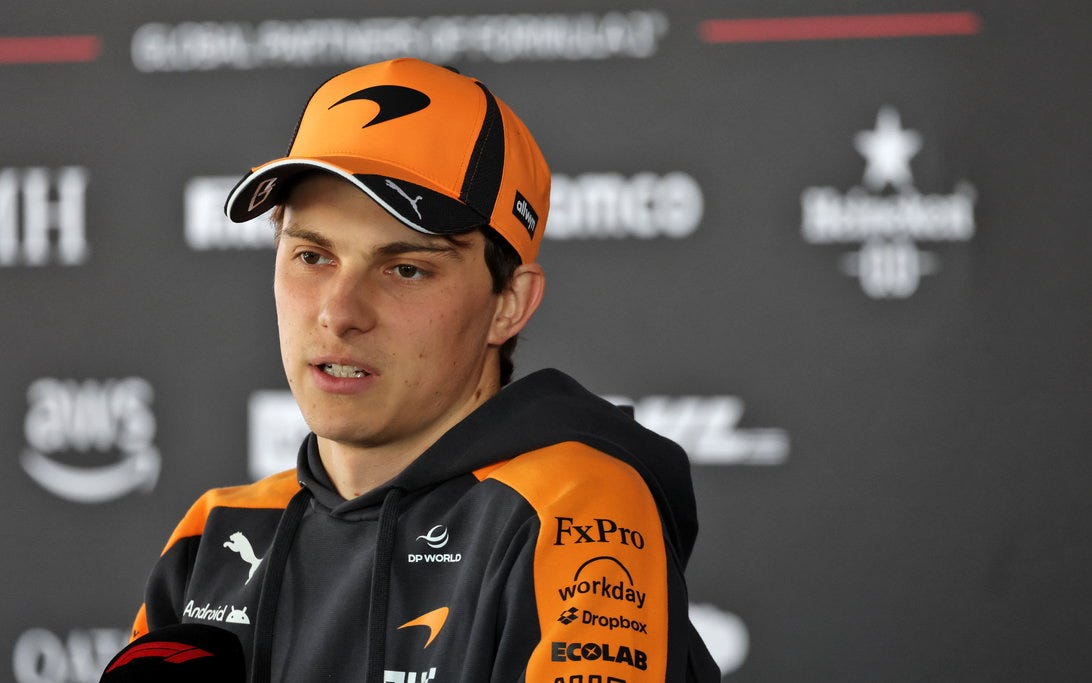
Kimi Antonelli
Antonelli remains one of the weekend’s most important drivers because he entered Zandvoort as the championship leader.
He topped the only practice session but damaged his floor during Sprint Qualifying and still recovered to fifth. His combination of speed and occasional errors makes him a major storyline.
The question is whether he can manage the championship pressure while extracting the performance available from the Mercedes.
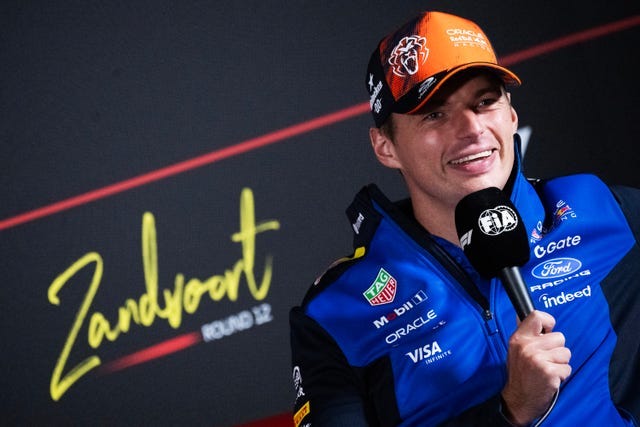
Max Verstappen
Regardless of his starting position or Friday performance, Verstappen remains the emotional center of the Dutch Grand Prix.
He qualified sixth for the Sprint after struggling with grip, traction and the car’s balance. Red Bull therefore has work to do before the Grand Prix. But Verstappen’s experience, home support and ability to capitalize on changing conditions mean he cannot be dismissed.
This final scheduled Zandvoort race also gives him an opportunity to deliver one more defining moment in front of his home crowd.
The impact of technology
Technology influences virtually every aspect of a modern Formula 1 weekend.
The new 2026 technical era
The Dutch Grand Prix takes place during the first season of Formula 1’s new technical regulations. These include redesigned hybrid power units and advanced sustainable fuels.
Teams are still learning how to optimize the relationship among electrical energy deployment, combustion performance, aerodynamics, tire behavior and race strategy.
Zandvoort provides a demanding test because energy efficiency must be balanced with the downforce and stability required through its banked and high-speed corners.
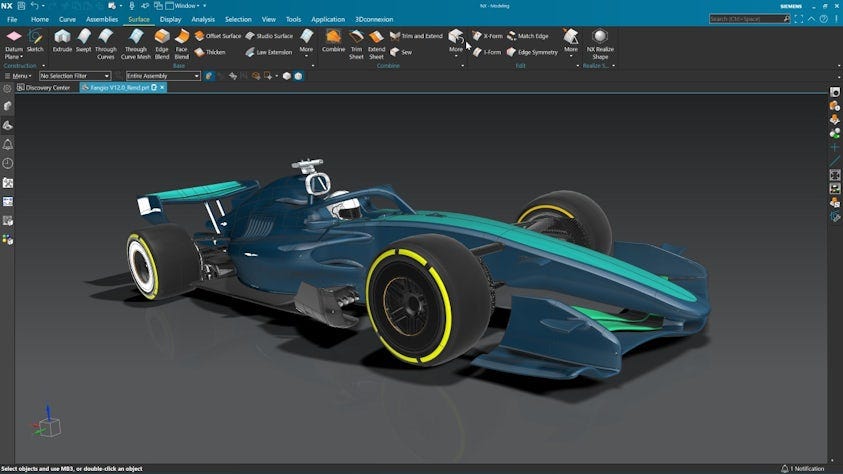
Simulation and digital twins
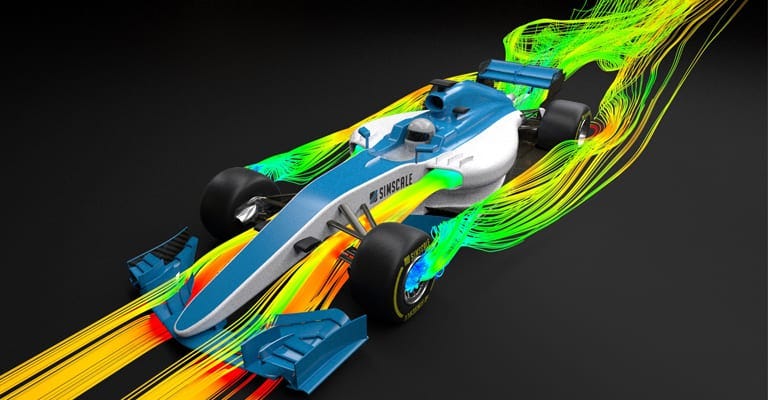
Before arriving at Zandvoort, teams run extensive simulations covering car setup, energy deployment, weather, tire degradation and potential race scenarios.
Driver-in-the-loop simulators allow drivers and engineers to test configurations without using limited track time. This is especially important during a Sprint weekend, when teams have only one practice session before competitive running begins.
The effectiveness of a team’s digital model can directly influence how quickly it identifies the correct setup.
Real-time data and decision-making
A Formula 1 car produces enormous volumes of telemetry. Engineers monitor tire temperatures, brake performance, aerodynamic balance, energy use, engine behavior and hundreds of other variables.
The objective is not simply to collect data. Teams must identify which signals matter and translate them into immediate decisions.
At Zandvoort, engineers will pay particular attention to:
Tire preparation and degradation
Floor damage from gravel excursions
Wind direction and sudden changes in balance
Energy deployment around the lap
Brake and power-unit temperatures
The probability and timing of safety-car periods
The opening sessions have already illustrated this challenge. Antonelli’s gravel excursion damaged the floor of his Mercedes and reduced downforce, while Verstappen reported both oversteer and understeer as Red Bull searched for a workable balance.
Aerodynamic development
Even during the season, teams continue introducing new wings, floors and smaller aerodynamic components.
McLaren brought a new rear wing and other updates to Zandvoort, while Alpine fitted an upgrade package to Pierre Gasly’s car that appeared to produce an immediate performance improvement.
These developments demonstrate how Formula 1 operates as a continuous engineering competition. A component worth only a few tenths of a second can move a driver several positions when the leading cars are separated by less than one tenth.
Tire technology and strategy
Pirelli reported that all three dry compounds could potentially be used during Sunday’s race. Surface abrasion, track temperature and the possibility of a safety car will influence whether teams select one-stop or multi-stop strategies.
Technology provides the forecast, but teams still need human judgment. A model cannot perfectly predict traffic, changing weather, accidents or how a particular driver will manage the tires under pressure.
Conclusion
The 2026 Dutch Grand Prix represents far more than another stop on the Formula 1 calendar.
It brings together the history of a circuit that first hosted Formula 1 in 1952, the commercial power of a globally expanding sport, the national enthusiasm surrounding Max Verstappen and a new generation of cars shaped by hybrid technology, sustainable fuels and advanced analytics.
Economically, the race has generated tens of millions of euros in regional spending while promoting Zandvoort and the Netherlands to an international audience. Commercially, its sellout crowds and hospitality demand show that the event remains highly attractive.
On the track, Russell, Norris, Leclerc, Piastri, Antonelli and Verstappen enter the weekend with different strengths and pressures. With the leading four separated by less than one tenth in Sprint Qualifying, technology and execution may matter as much as outright speed.
As Zandvoort prepares for its “Final Lap,” the weekend provides a fitting demonstration of what modern Formula 1 has become: a combination of history, elite human performance, engineering innovation, global entertainment and major economic impact.
What to Watch this weekend on TV?
Formula 1 Dutch Grand Prix: Sprint Saturday at 6 a.m., qualifying at 10 a.m., and the Grand Prix Sunday at 9 a.m. from Zandvoort. Official F1 schedule
Cincinnati Open tennis: ATP and WTA semifinals Saturday beginning at 11 a.m.; the men’s and women’s singles finals are Sunday beginning at 2 p.m.
BMW Championship: The top 50 players in the FedExCup Playoffs compete at Bellerive Country Club. Final-round coverage begins Sunday at noon on Golf Channel and 2 p.m. on CBS.
Premier League: Saturday’s main match is Tottenham at Brentford at 12:30 p.m. Sunday features Bournemouth at Manchester City at 9 a.m. and Liverpool at Newcastle at 11:30 a.m.
European soccer: Bayern Munich faces Borussia Dortmund in the German Super Cup Saturday at 2:30 p.m. Real Madrid plays Espanyol Saturday at 3:25 p.m., while Barcelona visits Elche Sunday at 3:25 p.m.
WNBA: Indiana plays New York Saturday at 7 p.m. The Fever then face Chicago Sunday at 7 p.m. Seattle visits Dallas Sunday at 4 p.m.
NFL preseason: Saturday includes Giants–Dolphins at 4 p.m., Eagles–Patriots at 7 p.m., Chiefs–Buccaneers at 7:30 p.m. and Cowboys–Cardinals at 10 p.m. Seattle plays Tennessee Sunday at 8 p.m.
Major League Baseball: Notable series include Blue Jays–Yankees, Giants–Red Sox, Cubs–Mariners and Pirates–Dodgers. Atlanta and Milwaukee play Sunday’s Little League Classic in Williamsport at 7 p.m.
Motorsports: Sunday also includes the inaugural IndyCar Grand Prix of Washington at 1 p.m. and NASCAR’s Cup Series race at New Hampshire at 3 p.m.
Little League World Series: Bracket games continue Saturday, with the U.S. and international championships taking place Sunday.
Badminton World Championships: Semifinals are Saturday and the championship matches are Sunday in New Delhi.
You may also like:
🏎️ The F1 tech market

Formula 1 (F1) is one of the most popular sports in the world, with 550M F1 fans tunning in every year to watch F1 races. It is also one of the most tech savvy sports on the planet.
🏎️ Upside F1 Guest Writer Series: Engineering a F1 driver, By Pieter Bulink, CEO, Maverick Training

This week, as part of our content series on F1, our guest writer is Pieter Bulsink, CEO of Maverick Training, a sports performance company focused on elite athletes in F1 and other sports. Pieter has been working with top athletes such as 4 times world champion in F1 Max Verstappen (Red Bull). Pieter has also worked with top women drivers such as Emely …
🔥Upside NFL/F1 Group Chat with Pieter Bulsink (Maverick Training/F1), Kim Brouzes (Kinmetrix), Ryan Juarez (Commanders/NFL) On Neck Training

This week we have the honor to interview a group of rehab and performance experts across the NFL and F1. We discussed neck training, their approach to neck training, the various modalities, best practices and trends that they are seeing in the market.