
INDUSTRY Q&A: OnTraq in elite sport: bringing lab-grade movement data to the training floor
An industry conversation with the team behind OnTraq by Qualisys
Movement analysis has lived in the lab for decades. The accuracy was there, but the setup time, the markers, and the specialist know-how kept it out of the daily routine of most performance teams. OnTraq, built on the biomechanics work of Qualisys, is one of the tools trying to close that gap. We asked the OnTraq team how research-grade data fits into a training week that has no spare hours.
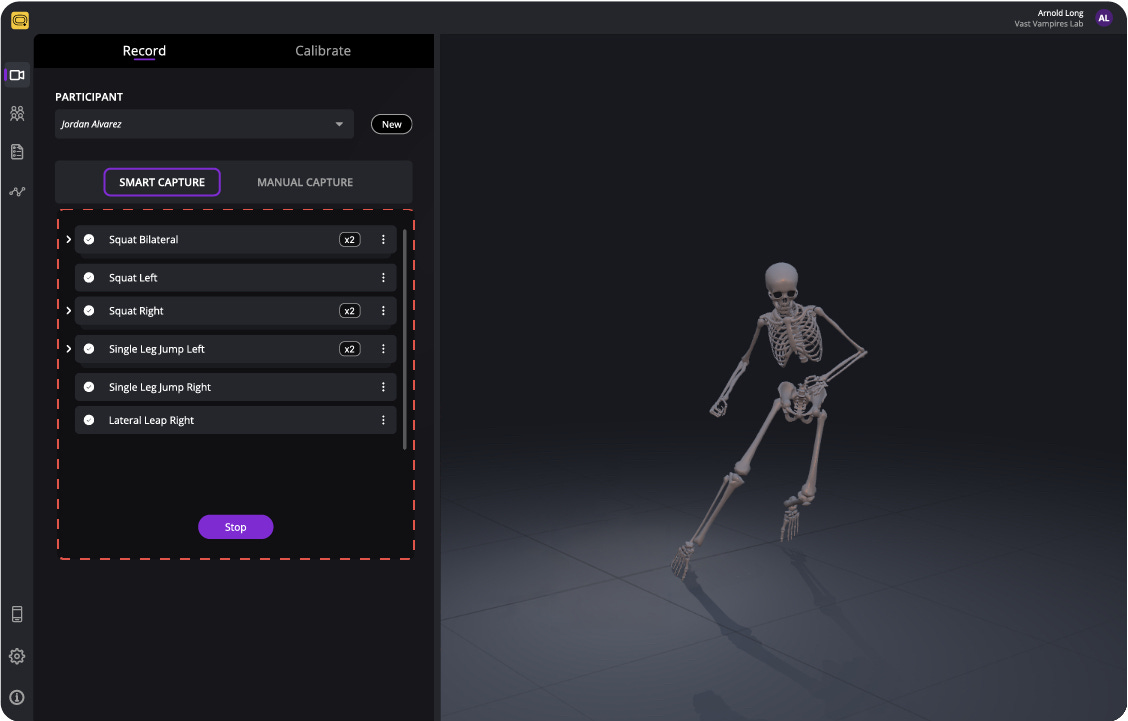
Picture: OnTraq software
Qualisys has a long history in motion capture. What changed when you moved toward the sports performance market?
Our starting point has always been high accuracy and high quality. That standard doesn’t change when the setting changes. What changes is the constraint. A sport team runs on a hectic schedule, so the priority became the time between an athlete stepping into the recording volume and staff getting usable data back. If that gap is long, the data never becomes part of the routine. Shortening it was the whole point.
Most teams already collect a lot of numbers. What’s different about the data you’re describing?
The number on its own is the least interesting part. What staff actually work with is the history: the pattern of how an athlete moves and performs over time. A single test tells you where someone is today. A run of consistent tests tells you which way they’re heading, and whether something has shifted since last month.
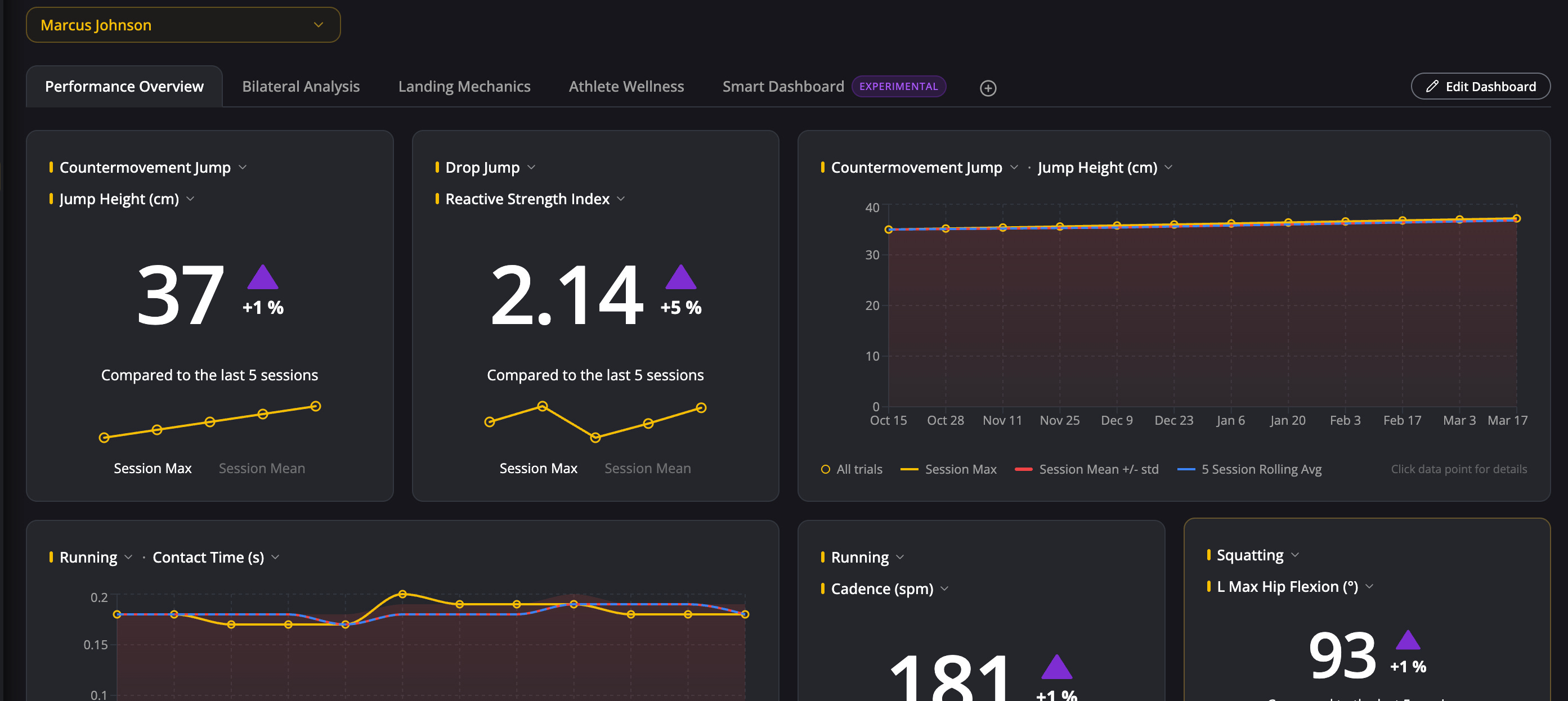
Picture: OnTraq dashboard
Consistency comes up a lot with practitioners. Why is it so hard to get?
Because most testing depends on who ran it and how. Marker placement, setup, operator judgment, all of it introduces small differences from session to session. When the method drifts, you can’t tell whether a change in the data is real or just noise from the process. Teams tell us their biggest frustration isn’t a lack of tools, it’s that their measurements aren’t repeatable enough to trust over a season.
How does OnTraq handle that?
We went with markerless, video-based motion capture because it’s the most practical way to collect 3D movement data on athletes, nothing to attach and no setup delays.
OnTraq comes from the biomechanical expertise Qualisys built over 35 years. We designed it to bridge science and practical application. The goal is a test that works the same way whether it’s the performance director or a junior staff member running it, with data that stays consistent across sessions.
Research-grade accuracy matters, but it’s not the only thing these teams need. What actually makes this work in a training week is speed and repeatability.
Where does this fit in a team’s schedule?
The realistic answer is warm-up, cool-down, or a testing block that doesn’t need its own afternoon. If a full-roster assessment takes half an hour instead of most of a day, staff can test more often, and more frequent data is what makes the tracking meaningful. Testing that disrupts practice gets skipped, and skipped testing tells you nothing.
You come from a research background. How technical does a team need to be to use this?
Not very, and that’s deliberate. The science sits underneath, but the person running the assessment shouldn’t need a biomechanics degree. We stay close to the teams we work with, learn how they already operate, and fit around that rather than asking them to rebuild their workflow. When a question comes up, they get a fast answer from people who know the system. That practitioner-first support matters as much as the software.
What keeps the team motivated on this?
A lot of us have watched strong athletes lose seasons to injuries and fight their way back over and over. Better movement data won’t remove that, but it can give staff earlier, clearer signals and a cleaner picture of where an athlete is in their recovery. If that helps even a few of them get back to full training sooner, that’s the work worth doing.
Last one. What would you say to a performance director who’s skeptical of another new system?
Fair skepticism. The honest pitch isn’t that OnTraq replaces anyone’s judgment. It’s that it gives your staff consistent, trustworthy movement data without costing you training time, built on a company that has spent decades getting the measurement right. Ask to see a full assessment run start to finish, then decide for yourself.
You may also like:
🎙️ Upside Video Chat with Luis Justiniano and Oskar Lindh at Qualisys, a leading provider of precision motion capture and 3D positioning tracking systems.

Today we have the honor of interviewing Luis Justiniano, a Sales Director - elite sports at Qualisys, a leading provider of precision motion capture and 3D positioning tracking systems. Luis is also joined by Oskar Lindh, Product manager at Qualisys.