
Introduction
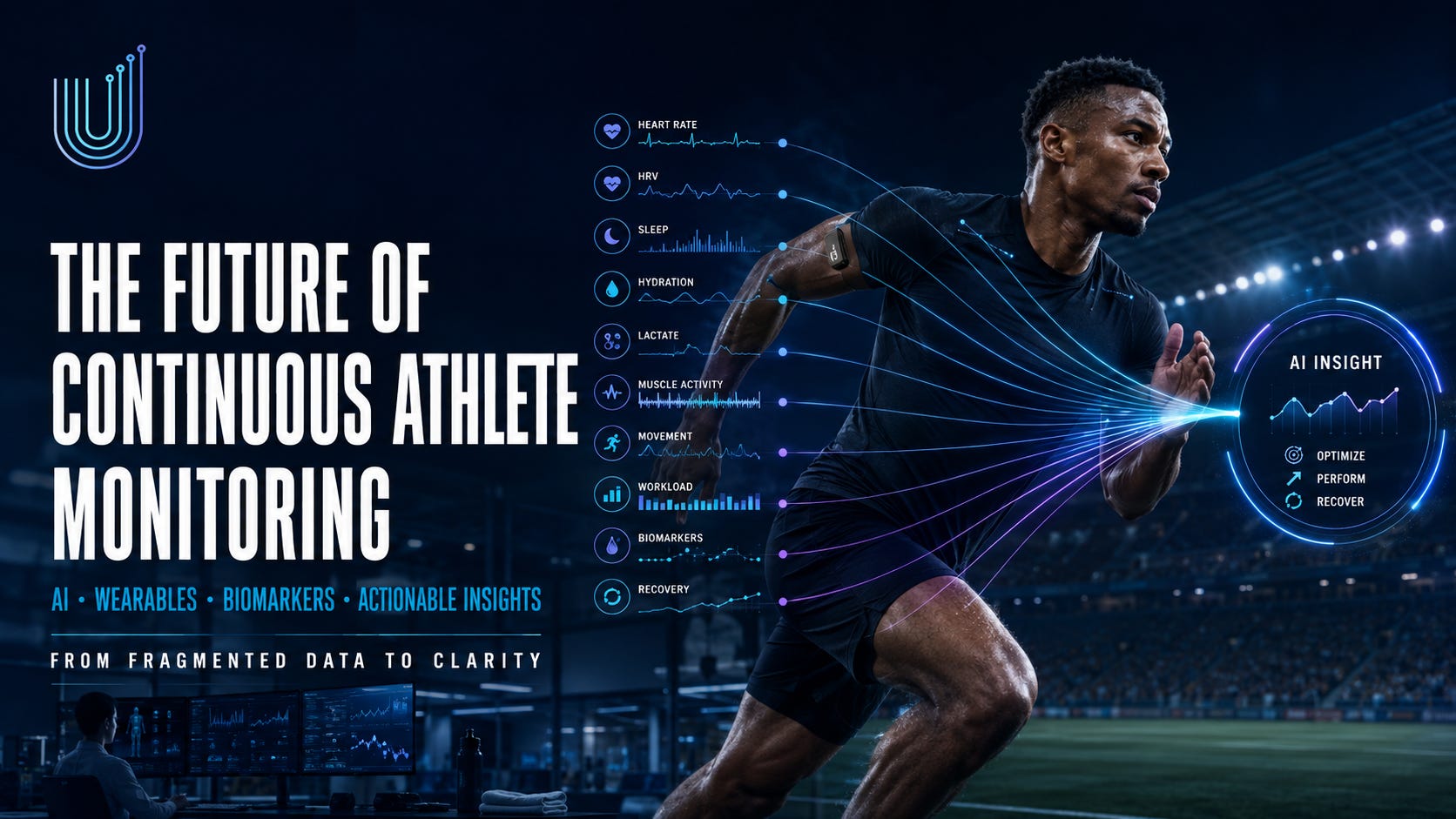
Elite sports organizations collect more athlete data than ever before. Wearables track heart rate, heart-rate variability, sleep, movement, training load, and recovery. Blood tests provide information about inflammation, nutrition, hormones, and other biomarkers, while continuous glucose monitors reveal how glucose changes throughout the day. Yet having more data does not automatically produce better decisions. The future of continuous monitoring will depend less on collecting another metric and more on connecting reliable information, interpreting it in context, and delivering timely insights that coaches, clinicians, and athletes can act upon.
The limitations of today’s monitoring systems
Wearable technology has improved significantly, but its measurements are not always accurate or consistent. Performance can vary by device, activity, placement, skin contact, movement, and environmental conditions. A device that performs well during sleep or steady-state exercise may become less reliable during high-intensity training or competition. For elite teams, even a small measurement error can affect how an athlete’s readiness or recovery is interpreted.
Traditional biomarker testing presents a different challenge. A blood, saliva, or urine test usually provides a snapshot of the athlete at a particular moment. It may offer valuable information, but it does not always reveal what happened between tests or show how the athlete responds dynamically to training, travel, sleep, nutrition, and competition.
Continuous glucose monitoring is an important exception because it tracks glucose throughout the day. However, glucose is only one component of athlete health and performance. It cannot independently explain hydration, muscle damage, neuromuscular fatigue, inflammation, psychological stress, or injury risk.
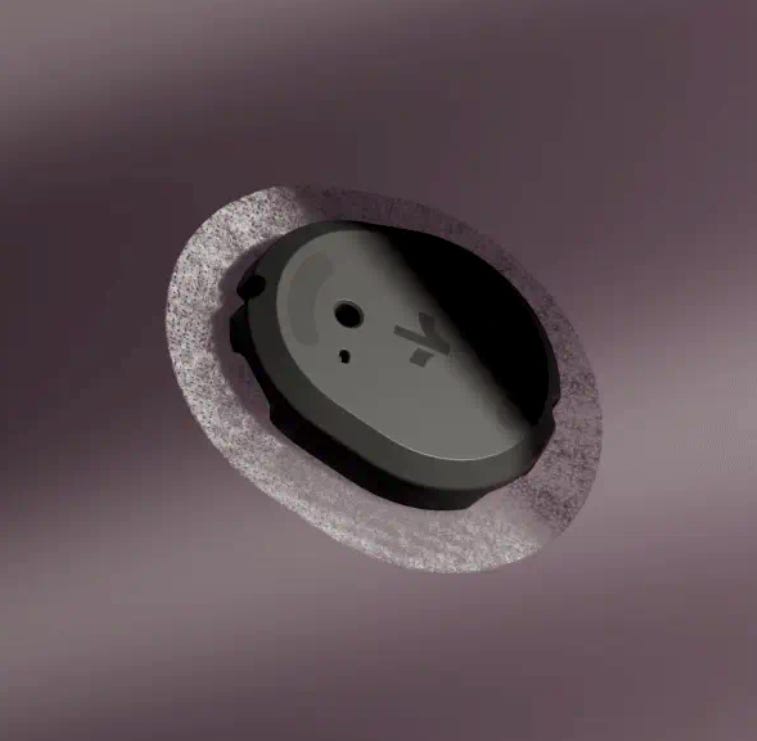
Picture: Nutrisence’s GCM patch.
The industry also has a data-integration problem. Wearables, laboratory tests, medical records, wellness questionnaires, video-analysis systems, and training-management platforms often operate in silos. Each may provide a piece of the athlete’s story, but coaches and practitioners are left to connect those pieces manually.
This creates a paradox: teams have more data but not necessarily more clarity.
Making sense of the data is the holy grail
The holy grail of continuous monitoring is not a single sensor that measures everything. It is a system capable of combining multiple imperfect signals and interpreting them within the athlete’s individual context.
A lower HRV measurement, for example, does not automatically mean an athlete should reduce training. It could reflect travel, poor sleep, illness, psychological stress, a demanding previous session, or normal variation. That signal becomes more meaningful when considered alongside resting heart rate, sleep, workload, hydration, symptoms, biomarkers, and the athlete’s personal baseline.
Future systems must therefore move beyond population averages and generic “readiness scores.” They will need to understand what is normal for each athlete, how that baseline changes during a season, and which combinations of signals have historically preceded fatigue, illness, injury, or strong performance.
Even then, the system should communicate probability rather than false certainty. Monitoring technology may identify elevated risk or an unusual pattern, but it should not pretend to predict an injury with absolute confidence.
Actionable health insights are the real objective
Athletes and coaches rarely need another dashboard filled with numbers. They need answers to practical questions:
Is the athlete responding normally to the current training load?
Is fatigue accumulating faster than expected?
Should today’s session be modified?
Does the athlete need more fluids, electrolytes, carbohydrates, or sleep?
Is a change meaningful, or is it simply measurement noise?
When should a practitioner investigate further?
Is the athlete ready to return to full training or competition?
The best monitoring systems will translate complex data into clear recommendations while showing the evidence and uncertainty behind them. They should also deliver the right information to the right person. A sports scientist may need detailed trends, while a coach may need a brief training recommendation and the athlete may need one or two simple actions.

Picture: Fitbit Air, capable of answering questions such as “Am I pushing too hard or ready to train? (Using the cardio load and daily readiness metrics).
Technology should support the multidisciplinary team—not replace its clinical expertise, coaching judgment, or knowledge of the athlete.
The next generation of sensors
The good news is that sensor technology is advancing beyond heart rate, HRV, movement, and sleep. Emerging systems are being developed to assess variables such as hydration, electrolytes, lactate, cortisol, muscle activity, tissue oxygenation, and fatigue.
Sweat-based biosensors are particularly promising because they may allow non-invasive, real-time monitoring during exercise. Researchers are developing platforms that measure lactate and electrolytes while accounting for factors such as sweat rate. However, calibration, motion artifacts, individual differences in sweat composition, and long-term sensor stability remain significant barriers to field deployment. Recent research has demonstrated progress in estimating lactate thresholds through multiparameter sweat sensing, while newer multimodal sensors illustrate the potential to monitor several biomarkers continuously.
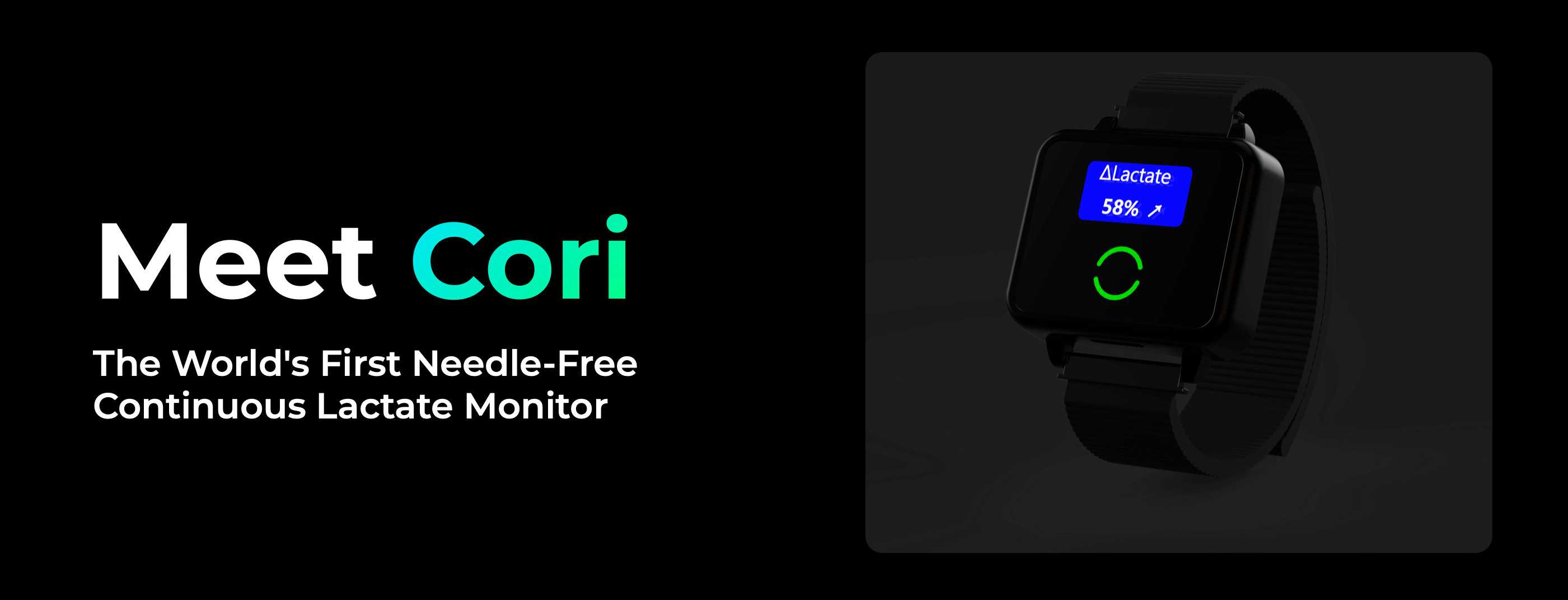
Picture: Cori, world’s first needle free continuous lactate monitor.
Electronic textiles and other unobtrusive sensors may also reduce one of the most persistent barriers to adoption: athlete compliance. The ideal technology will disappear into clothing, patches, equipment, or the training environment rather than asking athletes to manage multiple uncomfortable devices.
These advances will not eliminate the need for laboratory testing. Instead, continuous sensors could identify trends or anomalies, while validated clinical tests confirm what those patterns mean.
AI as the connective layer
Artificial intelligence may become the connective layer that brings these different information streams together. AI can process volumes of longitudinal data that would be difficult for a human team to review continuously. It can look for relationships among workload, sleep, travel, nutrition, biomarkers, movement, performance, and injury history.
As more high-quality data becomes available, AI systems may become better at:
Establishing individualized athlete baselines.
Detecting meaningful deviations from normal patterns.
Separating probable signal from measurement noise.
Identifying combinations of factors associated with poor recovery.
Forecasting how an athlete may respond to a planned workload.
Delivering role-specific recommendations to athletes, coaches, and clinicians.
Learning from the outcome of previous interventions.
However, more data alone will not guarantee better AI. Models need validated inputs, sufficient context, transparent reasoning, and ongoing human oversight. Teams must also address athlete consent, privacy, cybersecurity, data ownership, and the appropriate use of health information.
The questions practitioners will be able to ask
The next generation of monitoring platforms will allow practitioners to interact with athlete data using natural-language questions rather than manually reviewing multiple dashboards and reports. Instead of searching through separate systems, a coach, physician, physiotherapist, or sports scientist could ask:
How has this athlete responded to the past three weeks of training?
Which recovery markers have changed significantly from the athlete’s baseline?
Is the athlete adapting to the current workload or accumulating fatigue?
What factors are most likely contributing to today’s reduced readiness?
How are sleep, travel, nutrition, and training load interacting?
Are there early signs that warrant further clinical assessment?
How does the athlete’s movement today compare with their pre-injury baseline?
What happened the last time this combination of signals appeared?
Which recovery intervention has previously worked best for this athlete?
Should today’s training session proceed as planned, be modified, or be postponed?
What information is missing before the team makes a decision?
How confident is the system in its recommendation?
Future solutions could respond with concise, role-specific insights rather than a generic score. A strength and conditioning coach might receive a recommendation to reduce high-speed running volume, while a nutritionist might see evidence of inadequate fueling or hydration. A physiotherapist could be alerted to an unusual change in movement symmetry or muscle function, while the athlete might receive a simple recommendation related to sleep, nutrition, or recovery.
The most useful systems will also explain why an insight was generated. For example:
The athlete’s readiness is below their normal range. The primary contributing factors are two nights of reduced sleep, an elevated resting heart rate, declining movement efficiency, and a sharp increase in high-intensity workload. Consider modifying today’s session and reassessing symptoms.
This level of explanation is essential. Practitioners need to understand which signals influenced a recommendation, how reliable those signals are, and whether the system is identifying a meaningful trend or an isolated anomaly.
Future platforms may also provide scenario-based insights. A practitioner could ask what is likely to happen if the current workload continues, how an additional travel day may affect recovery, or which intervention has the greatest probability of improving readiness before competition. These outputs should support professional judgment, not make autonomous medical or return-to-play decisions.
Future trends in continuous athlete monitoring
Several developments are likely to shape the next phase of continuous monitoring in elite sports.
1. Multimodal monitoring
The market will move away from analyzing individual metrics in isolation. Future platforms will combine cardiovascular, biochemical, biomechanical, neuromuscular, behavioral, environmental, and subjective data to create a more complete picture of athlete health and performance.
2. Continuous biochemical sensing
Wearable sensors will increasingly attempt to monitor hydration, electrolytes, lactate, glucose, cortisol, and other biomarkers through sweat or other accessible biofluids. These technologies could help fill the gaps between traditional laboratory tests, although their accuracy and physiological interpretation must be validated under real-world sporting conditions.
3. Less invasive technology
Sensors will become smaller, more comfortable, and more integrated into patches, clothing, footwear, equipment, and training environments. The objective will be to collect useful information without disrupting athlete movement, routines, or concentration.
4. Individualized digital models
Future systems may create continuously updated digital profiles—or “digital twins”—of individual athletes. These models could estimate how a particular athlete is likely to respond to training, travel, competition, sleep disruption, environmental conditions, and recovery interventions.
5. Predictive and prescriptive analytics
Monitoring will progress from describing what has already happened to estimating what could happen next. Systems may identify an increased probability of poor recovery, illness, performance decline, or injury-related problems. They could then recommend potential actions, such as adjusting workload, increasing recovery time, changing fueling strategies, or conducting further assessment.
These recommendations will need to communicate uncertainty clearly. An elevated risk indicator should initiate a conversation or assessment—not be treated as a diagnosis.
6. AI-powered conversational interfaces
Practitioners will increasingly interact with data through conversational AI. Coaches may ask questions verbally and receive an immediate summary supported by charts, historical comparisons, and relevant evidence. This could make sophisticated analytics accessible to practitioners who are not data scientists.
7. Closed-loop monitoring
The most advanced systems will not stop after recommending an intervention. They will track what the team did, measure the athlete’s response, and learn whether that intervention was effective. Over time, this feedback loop could reveal which recovery and training strategies work best for each athlete.
8. Greater integration across the performance team
Medical, performance, nutrition, coaching, and psychological information will become more connected. Role-based access will remain important, but authorized practitioners should be able to work from a shared view of the athlete rather than relying on disconnected reports.
9. Monitoring beyond the training facility
Continuous monitoring will increasingly account for travel, sleep, menstrual-cycle factors, altitude, heat, air quality, time-zone changes, and daily behavior. This matters because athletes are influenced by what happens during the other 20-plus hours of the day—not only during training.
10. Stronger governance and athlete control
As monitoring becomes more continuous and personal, questions about consent, ownership, privacy, security, and appropriate use will become more important. Athletes will expect greater transparency about what is collected, who can access it, how long it is retained, and whether it can influence team selection, contracts, or employment decisions.
Ultimately, the future will move from passive data collection toward an intelligent feedback system: one that observes the athlete, recognizes meaningful changes, recommends an appropriate response, and learns from the outcome.
Looking beyond the AI hype
The rapid growth of generative AI has produced considerable excitement across sports technology. Many startups now describe their products as proprietary or unique AI platforms. In practice, however, some solutions are primarily interfaces—or “wrappers”—built around third-party foundation models and APIs.
An AI wrapper is not automatically a poor product. A well-designed interface can make existing AI models significantly more useful by connecting them to the right data, workflows, and users. The problem arises when a company presents access to a widely available model as a defensible technological breakthrough without demonstrating reliable sports-specific capabilities.
Elite sports organizations should therefore look beyond the AI label and ask more demanding questions:
Does the company own or have authorized access to relevant, high-quality sports data?
Is the system trained or configured for a specific sport and performance environment?
Can it integrate medical, physiological, biomechanical, training, and contextual information?
Have its outputs been independently validated with representative athlete populations?
Can the company explain how an insight or recommendation was generated?
Does the system report uncertainty, data-quality problems, and missing information?
Can it distinguish correlation from clinically or practically meaningful change?
Does it fit naturally into the workflows of coaches, clinicians, and performance staff?
How does it protect athlete privacy, confidential health data, and organizational knowledge?
What happens if the underlying third-party AI provider changes its model, pricing, or access terms?
The real competitive advantage will not come from placing a chatbot on top of a dashboard. It will come from combining reliable sensors, longitudinal athlete data, sport-specific expertise, validated models, secure infrastructure, and an understanding of how performance teams make decisions.
Future solutions must also demonstrate that they improve outcomes. A polished interface may produce impressive summaries, but teams should ask whether the product saves practitioners time, improves communication, changes a decision, detects a meaningful problem earlier, or helps an athlete recover and perform more effectively.
The most credible companies will be transparent about which components they have developed, which external models they use, and where human oversight remains necessary. In a market filled with ambitious claims, evidence, integration, and practical value will matter far more than branding a product as “AI-powered.”
The winners will turn complexity into clarity
The companies most likely to succeed will not necessarily be those that collect the most data or develop the largest number of features. The winners will be those that can seamlessly connect fragmented athlete information, determine what matters, and present it through an intuitive user experience.
Elite performance teams do not need another complicated dashboard. They need a system that brings together data from wearables, biomarkers, medical assessments, training loads, video, nutrition, sleep, travel, and athlete feedback without requiring practitioners to move between multiple platforms.
The user interface will be just as important as the underlying analytics. Different users need different levels of information:
Athletes need simple, personalized actions they can understand and follow.
Coaches need concise information that can guide training and competition decisions.
Clinicians need detailed trends, supporting evidence, and appropriate medical context.
Sports scientists need access to the underlying data, methodologies, and confidence levels.
Performance directors need a high-level view of athlete availability, organizational patterns, and emerging risks.
The best platforms will adapt the same information to each user rather than presenting everyone with an identical dashboard. They will make it easy to move from a simple recommendation to the evidence behind it, allowing practitioners to examine trends, data quality, contributing factors, and uncertainty when necessary.
Conversational interfaces may become an important part of this experience. Instead of searching through charts, a practitioner could ask, “Why is this athlete’s readiness lower today?” or “What has changed since last week?” The system could then provide a short answer, identify the contributing signals, visualize the relevant trends, and suggest appropriate next steps.
However, good user experience involves more than adding a chatbot. Future platforms must reduce cognitive load, prioritize urgent information, limit unnecessary alerts, and fit naturally into existing workflows. If practitioners are overwhelmed by notifications or cannot understand why an insight was generated, even the most sophisticated technology will go unused.
Ultimately, the most valuable platform will function as an intelligence layer across the athlete’s entire performance environment. It will transform disconnected measurements into a coherent story and convert that story into clear, timely, and trustworthy actions.
Whoever solves that challenge—and delivers it through the simplest, most intuitive, and most credible user experience—will be strongly positioned to lead the future of continuous athlete monitoring.
Conclusion
The future of continuous monitoring in elite sports will not be defined by the number of sensors an athlete wears. It will be defined by whether those sensors generate trustworthy information that improves decisions.
Progress in biochemical sensing, electronic textiles, computer vision, and AI could give performance teams a more continuous and complete understanding of the athlete. The greatest opportunity lies in connecting these technologies into an integrated system that learns the individual, recognizes meaningful changes, and delivers actionable insights at the right time.
The winners in this market will not simply collect the most data. They will be the organizations that can turn fragmented signals into clarity—helping athletes train more intelligently, recover more effectively, reduce avoidable risks, and remain healthy enough to perform consistently.
You may also like:
⌚️ 👟 The Sports Wearables Market: Where we are heading.

In the past few years, the world of sports has seen the emergence of a new wave of advanced wearables such as smart patches that can measure hydration or electrolyte, level, smartwatch that can measure blood pressure, or even contactless biosensors capable of measuring HR, blood pressure, sleep quality without any contact to the skin. As shown in the gr…
⌚ 🎽 ⚽ 🏀 Upside Analysis: Sports Leagues' regulation towards wearables

Since 2012, a growing number of sports leagues have started to allow pro teams to use wearable during live games or training in order to track players’ performance data. But not all the leagues are equal in this area. in this analysis we are going to provide an overview of current offline and online rules around the use of wearable data in pro sports.