

For decades, billionaires and successful entrepreneurs have invested in professional sports franchises as a way to diversify their portfolios, build prestigious assets and participate in the global sports economy.
Today, another trend is emerging: professional sports team owners are increasingly investing in sports technology startups.
From Mark Cuban and Ted Leonsis to Josh Harris, David Blitzer, Ryan Smith and Joe Tsai, a growing number of wealthy investors connected to professional sports are investing in companies developing technologies for athletes, teams, leagues and fans.
Their investments span several categories:
Athlete performance: GPS systems, biomarker analysis, biomechanics, strength training and injury-risk monitoring.
Sports analytics: AI, computer vision, scouting platforms and performance data.
Sports media: Automated highlights, streaming and content distribution.
Fan engagement: Digital experiences, gaming, fantasy sports and connected entertainment.
Health and fitness: Wearables, connected fitness equipment and digital coaching.
What makes this trend particularly interesting is that team owners can offer more than financial capital.
They often have direct relationships with coaches, performance directors, sports scientists, medical departments, league executives and other owners.
For sports-tech startups, those connections can potentially accelerate product development, facilitate pilot programs and open doors to new customers.
However, not all owner-backed investments are the same. Some owners invest personally, others through dedicated venture capital firms, while some participate through franchise ownership groups.
The central question is whether team owners are becoming a new class of strategic investors capable of accelerating innovation across professional sports.
The Billionaire Sports Team Owners Investing in Sports Technology
The following table highlights prominent investors, their sports ownership connections, estimated wealth and publicly reported sports-tech investment activity.
Net worth figures are approximate 2026 estimates, not audited personal financial statements. Portfolio investments may be held personally, through funds, or through ownership groups. Individual investment amounts are frequently undisclosed.
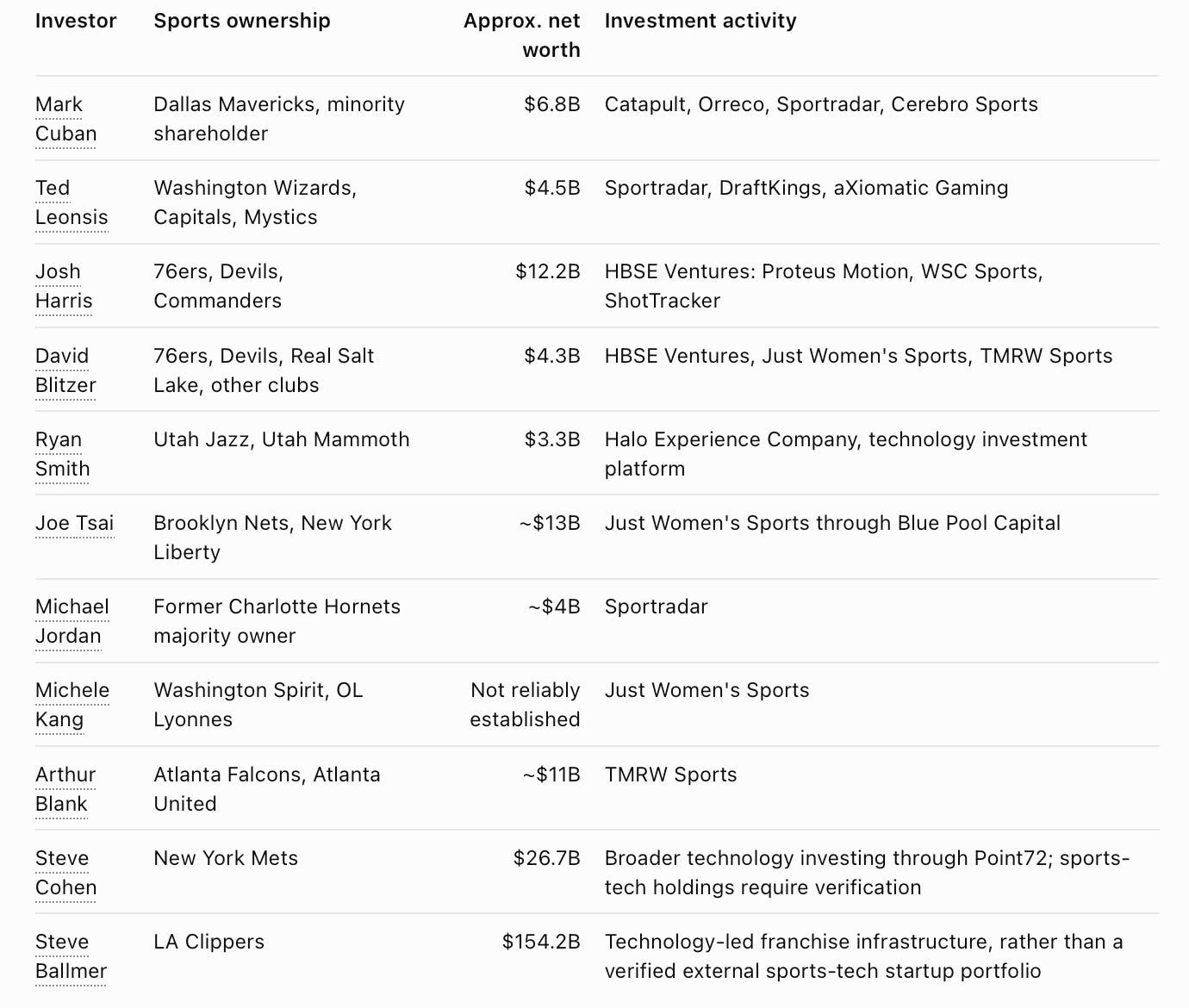
The investment portfolios below focus on the companies themselves, including their technologies and strategic relevance.
3. Which Sports-Tech Startups Have Team Owners Invested In?
Mark Cuban — Dallas Mavericks

Mark Cuban is one of the more recognizable technology entrepreneurs involved in professional sports.
Having made his fortune in technology, Cuban has invested in businesses spanning software, healthcare, consumer products and sports analytics.
His sports-tech investments are particularly interesting because several address the performance and data needs of professional teams.
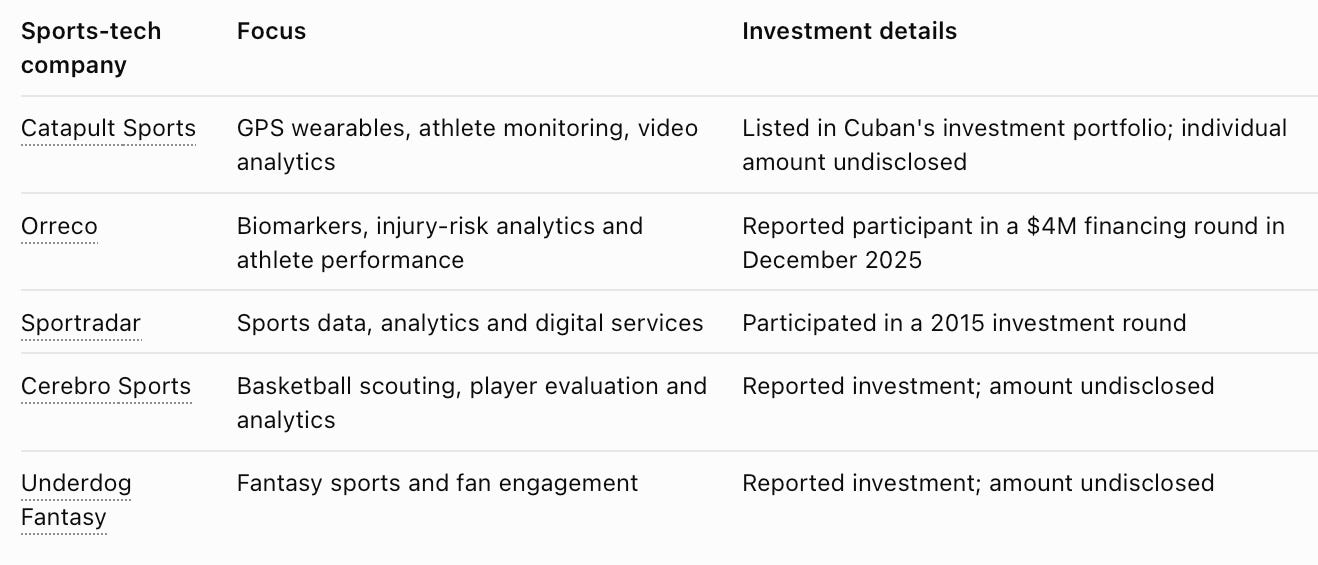
Upside Take: Cuban’s investments in Catapult, Orreco and Cerebro Sports are especially relevant to athlete performance and analytics.
They reflect interest in technologies that help sports organizations collect information, understand athlete performance and make better decisions.
Orreco, for example, combines biomarker analysis and performance data to support athlete monitoring. Catapult has expanded from GPS wearables into video, tactical analysis and strength training technology.
These investments illustrate how owners can participate in several complementary areas of the sports performance technology ecosystem.
Josh Harris and David Blitzer — Philadelphia 76ers, New Jersey Devils and Other Franchises

Harris and Blitzer are particularly interesting because their investment activity extends across multiple sports organizations and investment vehicles.
Their ownership group established HBSE Ventures to invest in emerging businesses, including sports technology.
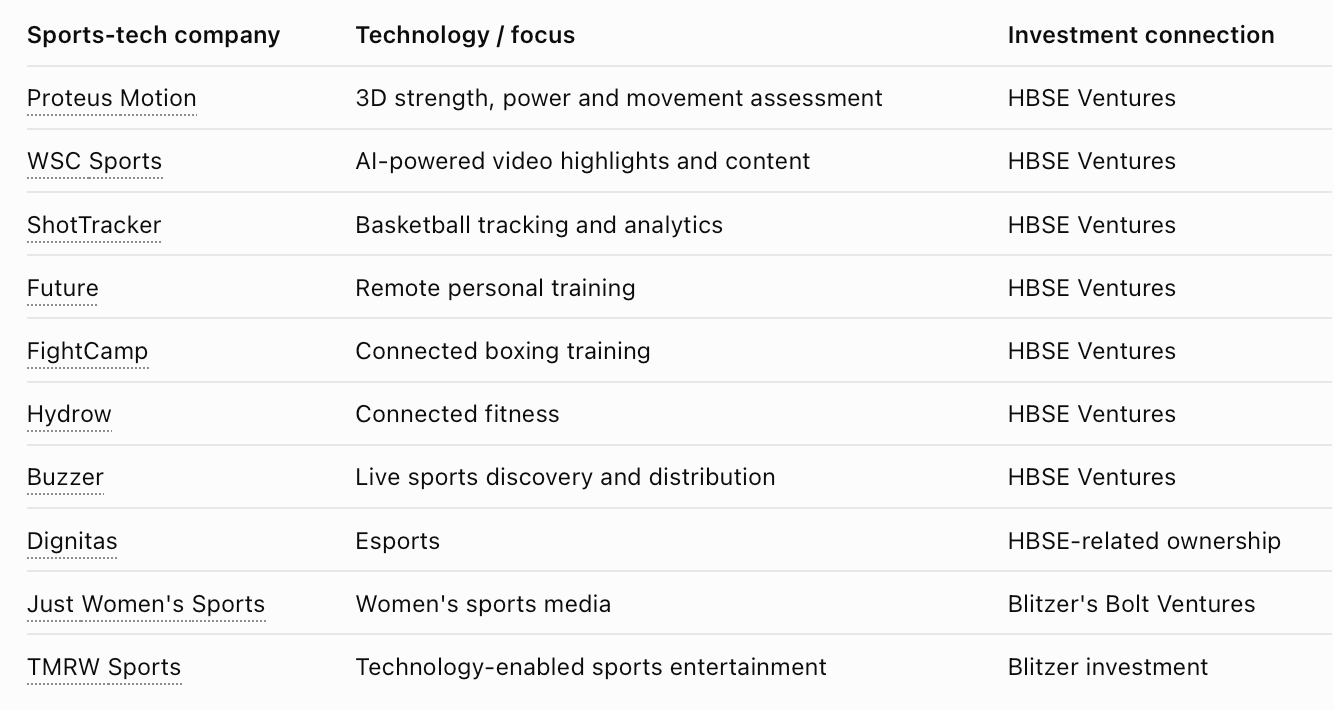
Upside Take: Harris and Blitzer’s investment activity is broader than traditional athlete monitoring.
Proteus Motion and ShotTracker address performance and analytics, while WSC Sports focuses on automated sports media. Hydrow, Future and FightCamp extend into consumer fitness.
This diversified approach offers exposure to technologies serving both professional sports organizations and the much larger consumer fitness market.
Ted Leonsis — Washington Wizards, Capitals and Mystics

Ted Leonsis has combined his background in technology and media with ownership of professional sports franchises.
Through investments and his involvement with Revolution Growth, he has participated in sports data, digital entertainment and gaming businesses.

Upside Take: Leonsis has demonstrated particular interest in the convergence of sports, data, digital media and entertainment.
His investment in Sportradar alongside Mark Cuban and Michael Jordan is a notable early example of professional sports owners recognizing the value of sports data infrastructure.
Joe Tsai and Clara Wu Tsai — Brooklyn Nets and New York Liberty

Through Blue Pool Capital, the Tsai family has backed Just Women’s Sports, a media platform focused on women’s sports.
Blue Pool Capital led the company’s reported $6 million funding round in 2022.
Upside Take: This investment reflects the increasing commercial opportunities surrounding women’s sports, including media, sponsorship and fan engagement.
Michele Kang — Washington Spirit and OL Lyonnes

Michele Kang has invested in Just Women’s Sports and has also made broader commitments to developing women’s professional sports.
Her involvement illustrates how ownership, media investment and the growth of women’s sports can reinforce one another.
Michael Jordan — Former Charlotte Hornets Owner

Michael Jordan participated in Sportradar’s 2015 investment round alongside Mark Cuban and Ted Leonsis.
The investment is significant because it brought together prominent sports owners and investors around the commercial potential of sports data and analytics.
Arthur Blank — Atlanta Falcons and Atlanta United
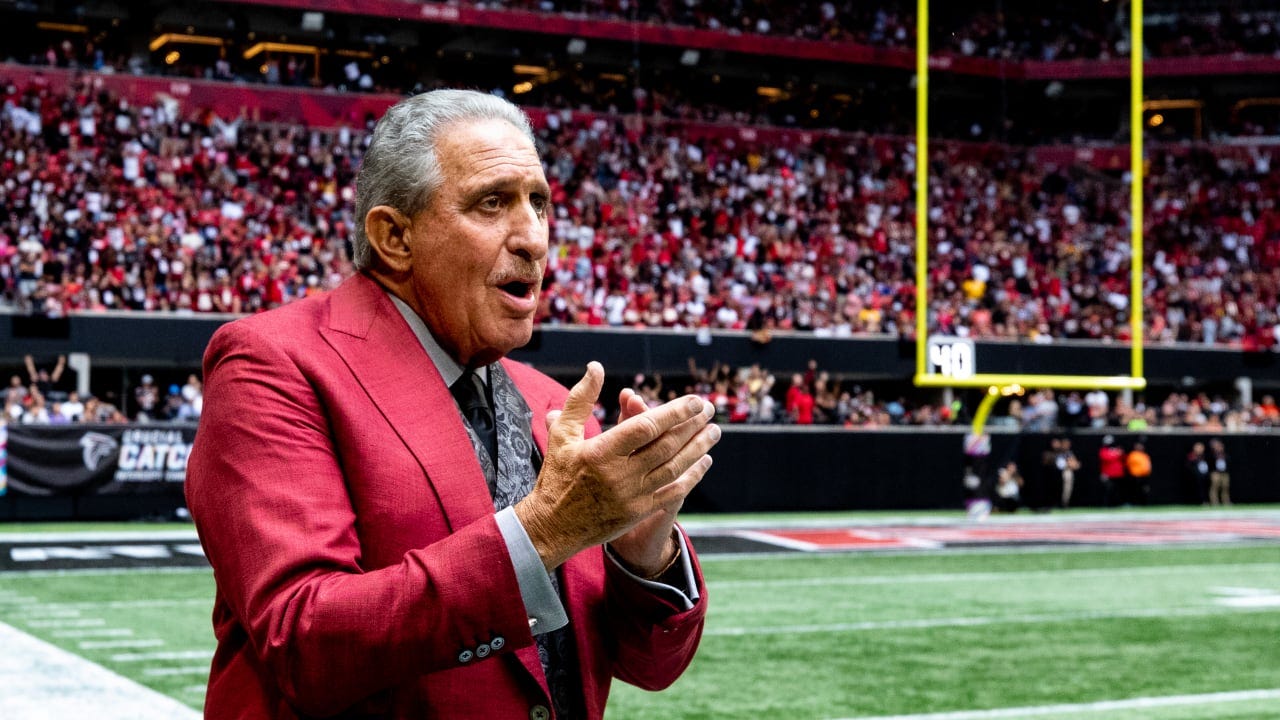
Arthur Blank has been identified as an investor in TMRW Sports, the technology-enabled sports entertainment company associated with Tiger Woods and Rory McIlroy.
TMRW Sports illustrates how technology can create new sports formats and commercial opportunities rather than simply improving existing teams’ operations.
Ryan Smith — Utah Jazz and Utah Mammoth

Ryan Smith’s approach is different from investing in individual sports-tech startups.
In 2025, Smith and Ryan Sweeney launched Halo Experience Company, targeting a $1 billion investment fund focused on technology and the experience economy.
By June 2025, the platform had reportedly raised approximately $875 million.
The investment thesis extends beyond sports-specific products to technologies that could be tested, distributed or commercialized through sports and entertainment ecosystems.
Upside Take: Smith’s approach could represent an evolution in owner-backed venture capital: from personal startup investments toward larger institutional investment platforms.
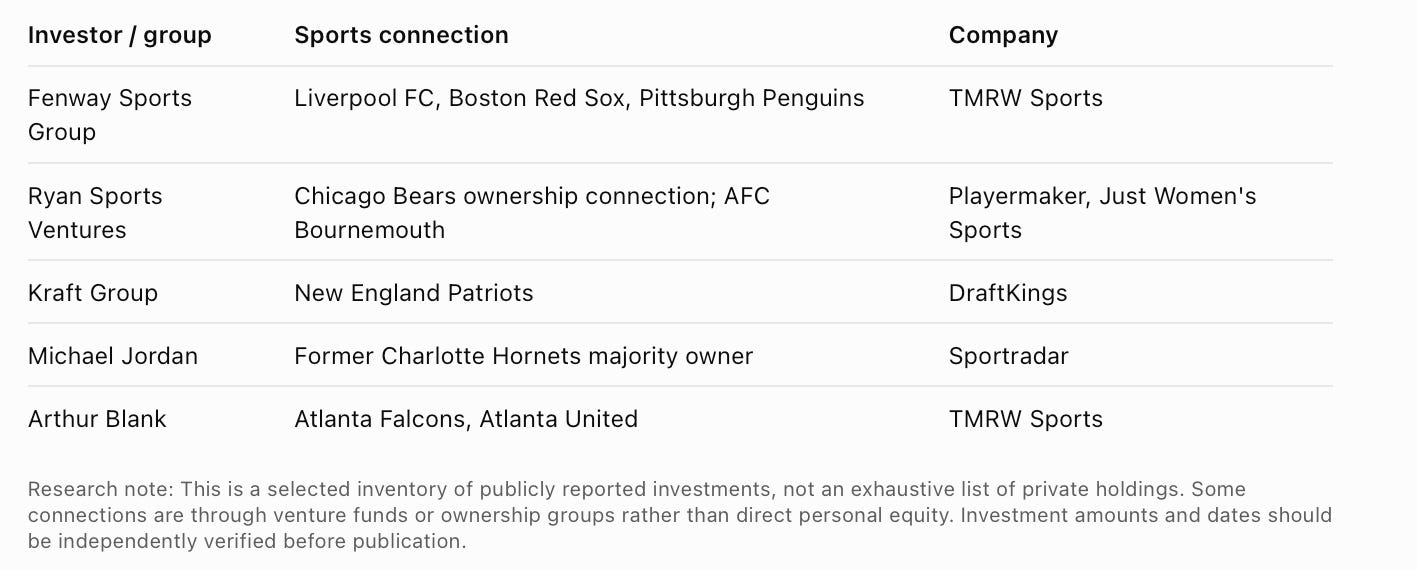
Other Notable Team-Owner Investment Connections
Why Are Sports Team Owners Investing in Sports-Tech Startups?
There are several reasons why wealthy sports owners are attracted to sports technology.
1. Financial returns and portfolio diversification
For many owners, sports technology is another investment category with the potential to generate meaningful returns.
Companies such as Catapult, Sportradar, Teamworks and Oura illustrate how technologies connected to sports, health or fitness can develop into significant businesses.
Sports technology is also becoming increasingly attractive to institutional investors.
In 2025, Teamworks announced a $235 million funding round, while Oura raised more than $900 million at a reported $11 billion valuation.
Although these investments were not necessarily made by the team owners profiled here, they demonstrate the potential scale of technology businesses operating in and around sports.
2. Gaining access to technologies that could improve team performance
Professional sports teams are constantly searching for competitive advantages.
For example, an owner investing in a startup developing AI-powered injury-risk analytics could gain insight into emerging capabilities that may eventually help a team improve its performance operations.
Potential benefits include:
Better understanding of athlete workloads and recovery.
Improved player evaluation and scouting.
More efficient analysis of training and competition data.
Earlier awareness of emerging performance technologies.
Opportunities for collaborative product development.
However, the scientific validity of these technologies must be assessed independently. Investing in a startup does not mean its product is proven effective.
3. Helping startups secure their first professional sports customers
One of the biggest challenges for sports-tech startups is getting access to professional sports organizations.
A team owner may be able to facilitate introductions to performance directors, sports scientists, medical staff and executives.
These relationships can help startups secure legitimate evaluations and pilot programs.
A successful pilot with a recognized sports franchise may then help a startup approach additional teams.
Nevertheless, an owner’s investment should not automatically determine a team’s purchasing decisions.
4. Leveraging relationships across multiple sports and leagues
Some investors own stakes in several teams across different leagues.
David Blitzer, for example, has ownership interests spanning basketball, hockey, soccer and other sports.
This network may provide portfolio companies with opportunities to connect with organizations in multiple markets.
A sports-tech startup that initially focuses on NBA teams might subsequently explore opportunities in the NHL, MLS or European soccer.
5. Investing in technologies with markets beyond professional sports
The professional sports market is relatively small compared with healthcare, fitness and consumer technology.
There are only a limited number of teams in the NBA, NFL, MLB, NHL and major soccer leagues.
Consequently, investors may prefer startups with the potential to expand beyond elite sports.
Examples include:
Wearables that can serve both athletes and consumers.
Biomechanics technologies that can expand into rehabilitation.
AI platforms that can serve sports teams and healthcare organizations.
Strength training technologies for professional teams and commercial gyms.
Video analytics platforms that can serve professional and amateur sports.
This scalability is an important consideration for venture investors.
Is This a Trend Likely to Continue?
Yes. I expect team-owner investment in sports technology to continue, although the types of investments will evolve.
Several factors support this outlook.
Growing investment activity
Sports Business Journal reported at least $2.37 billion across 51 sports-tech fundraising efforts in 2025.
While that does not represent investment exclusively from team owners, it demonstrates that sports technology has attracted meaningful capital.
The emergence of dedicated investment platforms
Rather than investing occasionally as individual angels, some owners are establishing dedicated venture investment organizations.
Examples include:
HBSE Ventures.
Bolt Ventures.
Halo Experience Company.
Revolution Growth, which has broader technology and media investments.
These platforms can provide more structured investment processes, professional due diligence and portfolio support.
The increasing importance of data and AI
Sports organizations are collecting increasing amounts of data through wearables, video, athlete management systems and other platforms.
The next challenge is transforming that information into useful insights.
This creates opportunities for companies developing AI-powered platforms, data integration tools and decision-support systems.
Growing interest in women’s sports
Women’s professional sports have attracted increasing investment, media coverage and commercial interest.
Investments in Just Women’s Sports demonstrate how some owners are participating in this growth.
I also expect opportunities in technologies specifically designed to address the performance and health needs of female athletes.
Potential challenges
Despite these opportunities, there are important risks:
Conflicts of interest between ownership investments and team procurement.
Overvalued startups with limited commercial traction.
Technologies lacking independent scientific validation.
Small addressable markets in elite professional sports.
Long sales cycles and complex procurement processes.
Startups becoming dependent on one investor’s network.
The long-term success of this investment trend will depend on whether portfolio companies can generate sustainable revenue and expand beyond individual team relationships.
Future Investment Trends
I expect six technology categories to attract particular attention from team owners and their investment vehicles.

1. AI and integrated sports performance platforms
Startups combining GPS, video, biomechanics, athlete management systems and physiological data into unified analytics platforms could become attractive investment targets.

2. Computer vision and biomechanics
Markerless motion capture, movement assessment and camera-based performance monitoring could reduce the need for specialized hardware while expanding access to sports analytics.

3. Biomarkers and next-generation wearables
Technologies measuring hydration, metabolic responses, physiological stress and other biomarkers could complement traditional GPS-based workload monitoring.

4. Women’s sports technology
Startups developing female-specific performance solutions, athlete health tools and commercial platforms may benefit from growing investment in women’s sports.

5. Smart stadiums and fan engagement
AI-powered fan experiences, personalized content, digital ticketing and sponsorship analytics offer opportunities to increase commercial revenue.

6. Youth sports and consumer technology
Coaching platforms, recruiting tools, affordable wearables and athlete development technologies could expand the market beyond professional sports organizations.
Another trend to watch: Sports-tech consolidation
Acquisitions could become an increasingly important part of the investment thesis.
Catapult has expanded beyond GPS through acquisitions such as XOS Digital, SBG Sports Software, Perch and IMPECT.
Other sports technology companies have pursued similar strategies to broaden their capabilities.
This creates potential exit opportunities for startups developing specialized technologies that could complement larger platforms.
For owner-backed investors, the prospect of acquisition by a larger sports-tech company may provide an additional reason to invest.
What Does This Mean for Sports-Tech Startups?
Having a billionaire team owner as an investor can offer significant advantages, but founders should carefully evaluate the strategic value of the relationship.
A startup should ask:
Can the investor introduce us to relevant practitioners and decision-makers?
Does the investor understand our technology and target customers?
Can the investor help us expand into multiple sports and leagues?
Will the investor support future funding rounds?
Can the investor help us build relationships with commercial partners?
Does the investor have experience scaling technology businesses?
Will the investor respect independent evaluations and procurement decisions?
The most valuable sports-tech investor is not necessarily the wealthiest. It is the investor who can combine capital with industry expertise, commercial relationships and long-term support.
For example, a smaller investment from an owner with meaningful relationships across several professional sports leagues could potentially be more valuable than a larger passive investment.
However, access to professional teams is not a substitute for product-market fit.
Ultimately, performance directors, sports scientists, coaches and medical professionals must believe that a technology delivers measurable value.
Conclusion
The growing involvement of billionaire sports team owners in sports technology represents an important development for the industry.
Mark Cuban’s investments in Catapult, Orreco, Sportradar and Cerebro Sports demonstrate interest in technologies that support performance analysis, athlete monitoring and data-driven decision-making.
Josh Harris and David Blitzer have pursued a broader strategy through HBSE Ventures and Bolt Ventures, investing across performance technology, connected fitness, sports media and digital entertainment.
Ted Leonsis has participated in the growth of sports data and gaming, while Ryan Smith’s Halo Experience Company illustrates the emergence of larger, professionally managed investment platforms connected to sports ownership.
These investors bring something that traditional venture capital firms may not always possess: direct relationships with professional sports organizations and an understanding of how the sports industry operates.
For startups, those relationships can potentially accelerate product development, facilitate evaluations and create commercial opportunities.
For team owners, investing in sports technology offers the possibility of financial returns while providing exposure to innovations that could transform the teams and leagues in which they participate.
Over the next five years, I expect increasing attention toward AI, computer vision, biomarker technologies, women’s sports, integrated performance platforms and digital fan engagement.
But there is an important distinction between investing in a promising technology and building a successful sports-tech business.
Startups will still need scientific credibility, strong products, sustainable revenues and the ability to scale beyond a handful of professional teams.
The next major opportunity for billionaire sports owners may not simply be acquiring another franchise. It may be investing in the technologies that professional teams, athletes and fans around the world will rely on for years to come.
You may also like:
💸 🏃Upside Analysis: Billionaire athletes club

Over the last decade, due to the emergence of bigger sponsorship deals, we have seen the emergence of a billionaire athletes club with pro athletes reaching the $1B mark in cumulative earnings. Those include Michael Schumacher ($1B), Jack Nicklaus ($1.15B), Arnold Palmer ($1.35B), Michael Jordan ($1.7B), Tiger Woods ($1.65B), Floyd Mayweather ($1B).
Upside Analysis: The Top 52 Sports Tech Investors (VCs, Family Offices)

In the past 10 years we have worked with some of the most prevalent sports tech investors (VCs, family offices, angel investors..) out there. We have essentially brought deal flow to those investors on a regular basis. Investors are always looking for sports tech startups to invest in. They are looking to invest in startups led by experienced founders, …