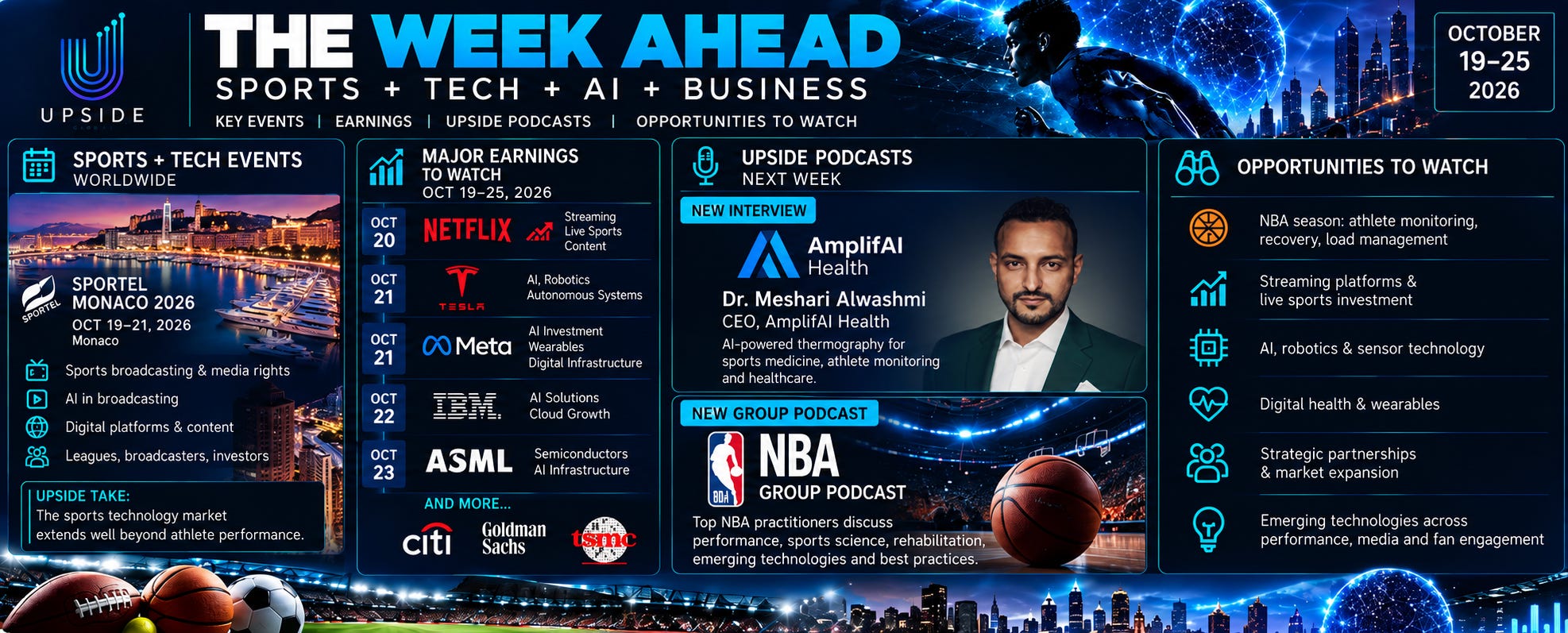
October 19–25, 2026
Another exciting week ahead at the intersection of sports, technology, AI, investment, and business!
This week, we’ll be following major developments across professional sports, artificial intelligence, healthcare technology, and the broader investment landscape.
From the start of the NBA regular season and major technology earnings to new opportunities in AI-powered athlete monitoring, there will be plenty to watch.
On the business side, companies including Netflix, Meta, Tesla, IBM, and major semiconductor manufacturers are scheduled to report earnings. Their results could provide valuable insights into AI investment, digital infrastructure, and the broader technology market.
And at Upside, we have two exciting podcasts coming up:
🎙️ An NBA Group Podcast bringing together leading NBA practitioners to discuss best practices, player performance, sports science, rehabilitation, and emerging technologies.
🎙️ An interview with Dr. Meshari Alwashmi, CEO of AmplifAI Health, to explore the company’s AI-powered thermography technology and its potential applications in sports medicine, athlete monitoring, and healthcare.
🏟️ Special Nashville Trip & ASPU Summit Recap: We’ll share key takeaways from our recent visits with Nashville SC (MLS), the Nashville Predators (NHL), and Vanderbilt University (NCAA), as well as insights from the ASPU Summit.
Our goal with this recap is not to disclose confidential information or reveal team-specific strategies, but rather to identify emerging industry trends, best practices, common challenges, and promising innovations across professional and collegiate sports.
By connecting with practitioners across different leagues and organizations, we aim to highlight valuable lessons and opportunities that can benefit the broader sports performance community.
🚀 Upside VIP Lunch in Atlanta: We’ll also announce additional sports-tech companies selected to present at our upcoming VIP Lunch with MLS and NWSL practitioners on December 18 at the U.S. Soccer Headquarters in Atlanta.
Here’s what we’ll be following next week.
🏟️ SPORTS + TECHNOLOGY CONFERENCES
📺 SPORTEL Monaco 2026 — Monaco | October 19–21

SPORTEL Monaco brings together leading organizations across sports broadcasting, media rights, technology, and digital content.
The event attracts sports leagues, broadcasters, technology companies, investors, and media organizations looking to explore the future of sports content and distribution.
Key themes include artificial intelligence in broadcasting, digital platforms, sports media rights, and emerging technologies.
Upside Take: The sports technology market extends well beyond athlete performance.
AI-powered video analysis, computer vision, automated content production, and real-time data processing are creating opportunities across both sports performance and sports media.
Interestingly, some of the same technologies used to analyze athletes’ movements can also be applied to broadcasting, officiating, and fan engagement.
What to watch: AI-powered broadcasting, computer vision, sports media investment, digital platforms, and emerging technology partnerships.
🏀 PROFESSIONAL SPORTS: NBA SEASON BEGINS
🏀 NBA Regular Season Opening Week | October 20–25
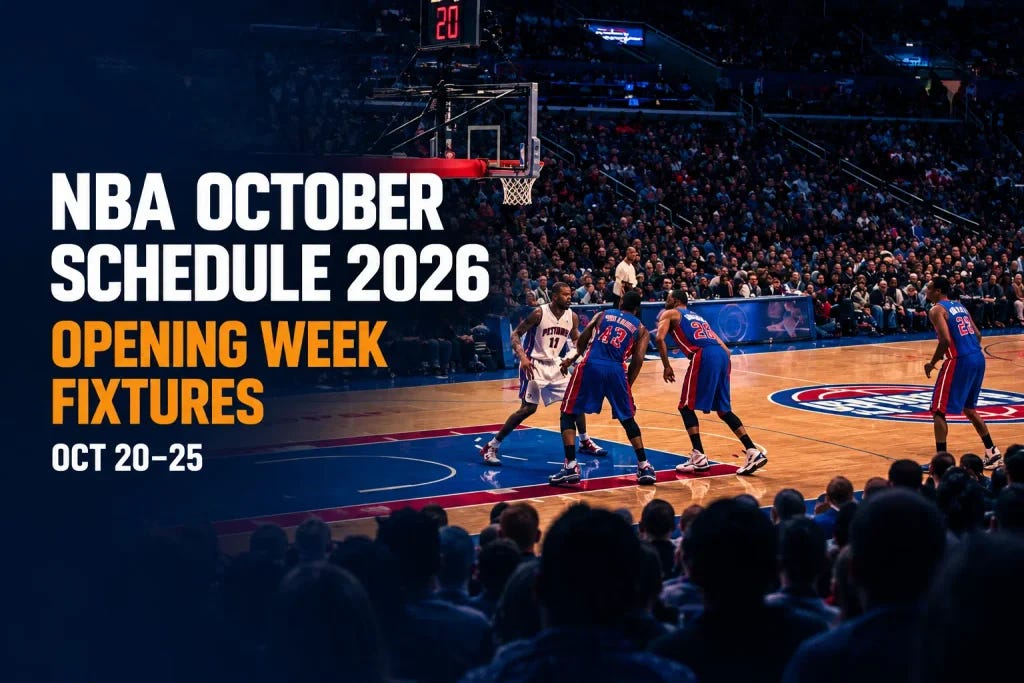
The start of the NBA regular season represents an important moment for teams, players, and performance departments.
After months of offseason training, rehabilitation, preseason preparation, and roster adjustments, teams transition into the demands of an 82-game regular season.
For performance practitioners, this means shifting priorities toward maintaining player health, managing training loads, optimizing recovery, and minimizing injury risk.
Some of the questions worth exploring include:
How are NBA teams individualizing recovery strategies?
Which technologies are being used to monitor fatigue and readiness?
How are strength and conditioning programs adapted during the regular season?
What role does AI play in athlete monitoring and performance analysis?
How do teams balance player development with the demands of competition?
Upside Take: The NBA continues to be one of the most interesting environments for sports technology innovation.
With demanding travel schedules, frequent games, and significant financial investments in players, even incremental improvements in athlete availability and performance can deliver substantial value.
What to watch: Athlete monitoring, player availability, workload management, recovery technologies, biomechanics, and AI-powered performance analytics.
📈 MAJOR EARNINGS TO WATCH
Next week is shaping up to be an important period for technology and financial markets, with several major companies scheduled to report quarterly results.
For sports-tech startups, these announcements are relevant because they provide signals about investment conditions, AI infrastructure, digital health, and the broader technology economy.
📺 Netflix — October 20

Netflix is scheduled to report quarterly earnings as the company continues expanding its entertainment, advertising, and live content businesses.
Its growing interest in live sports represents an important development for the sports media industry.
Upside Take: Streaming platforms are becoming increasingly important players in the sports ecosystem.
Their investment in live sports could create new opportunities for leagues, teams, content creators, and technology companies specializing in data analytics, broadcasting, and fan engagement.
What to watch: Live sports strategy, subscriber engagement, advertising revenue, streaming technology, and content investment.
🤖 Tesla — October 21

Tesla is scheduled to report quarterly earnings, with investors closely monitoring developments across autonomous driving, robotics, AI, and manufacturing.
Beyond electric vehicles, Tesla continues investing in technologies with potential applications across multiple industries.
Upside Take: Robotics, AI, and advanced sensors could eventually have important applications in sports performance and rehabilitation.
The development of more sophisticated robotics and computer vision technologies may open opportunities for automated movement analysis, physical assessment, and training systems.
What to watch: AI investment, robotics, autonomous systems, sensor technology, and product development.
🧠 Meta Platforms — October 21

Meta is expected to report earnings, with particular attention on its investments in artificial intelligence, computing infrastructure, and wearable technologies.
Meta’s broader strategy includes AI assistants, smart glasses, and immersive computing experiences.
Upside Take: Smart glasses and AI-powered wearables could become increasingly relevant to sports organizations.
Potential applications include hands-free data collection, athlete feedback, training assistance, and immersive learning experiences.
What to watch: AI infrastructure spending, smart glasses, wearable computing, AI assistants, and augmented reality.
💻 IBM — October 21
IBM is scheduled to report quarterly earnings, providing insight into enterprise AI adoption, software, and digital transformation.
Upside Take: One of the biggest opportunities for AI in professional sports is not necessarily building more sophisticated algorithms.
It is helping teams connect their existing data sources and make better decisions.
Enterprise AI solutions could support the integration of athlete management systems, medical records, training data, and performance analytics.
What to watch: Enterprise AI adoption, data integration, automation, and AI-powered decision support.
🔬 Lam Research & Texas Instruments — October 21

Both companies are scheduled to report earnings, offering insights into the semiconductor industry and demand for advanced computing technologies.
Lam Research provides equipment used in semiconductor manufacturing, while Texas Instruments develops analog and embedded processing technologies.
Upside Take: Many innovations in sports technology depend on advancements in semiconductor technology.
Smaller, more efficient processors and sensors enable the development of next-generation wearables, portable monitoring systems, and connected training devices.
What to watch: Semiconductor demand, AI infrastructure, sensor technology, embedded computing, and hardware innovation.
🏥 Abbott Laboratories & Thermo Fisher Scientific — October 21
These healthcare technology companies are also scheduled to report quarterly results.
Abbott operates across medical devices and diagnostics, while Thermo Fisher Scientific provides scientific instruments, laboratory technologies, and research solutions.
Upside Take: The convergence between healthcare and elite sports continues to create opportunities for innovation.
Technologies initially developed for medical applications are increasingly being explored for athlete monitoring, rehabilitation, physiological assessment, and recovery.
What to watch: Medical devices, diagnostics, biosensors, health monitoring, and healthcare innovation.
🚀 PRODUCT & TECHNOLOGY DEVELOPMENTS TO WATCH
⌚ Wearable Technology: The Next Generation of Athlete Monitoring
The wearable technology industry continues evolving beyond traditional metrics such as heart rate, steps, and sleep duration.
Companies are increasingly exploring technologies capable of measuring physiological responses, muscle function, metabolic activity, and recovery.
The next major opportunity may be integrating multiple physiological signals into more comprehensive athlete health and performance assessments.
Upside Take: The biggest challenge for wearable technology companies is demonstrating that their measurements are accurate, reliable, and actionable.
Sports organizations are becoming increasingly sophisticated in their technology evaluations.
For startups, scientific validation and evidence of practical value are essential.
What to watch: Sensor accuracy, continuous physiological monitoring, metabolic sensors, recovery metrics, and scientific validation.
🤖 AI in Sports Medicine & Athlete Health
Artificial intelligence is creating opportunities to improve how practitioners analyze data, identify trends, and support decisions.
Potential applications include injury risk assessment, rehabilitation monitoring, medical imaging, biomechanics, and physiological analysis.
However, AI solutions must demonstrate clinical and scientific validity before they can be relied upon in high-stakes environments.
Upside Take: The future of AI in sports medicine will depend on its ability to complement practitioner expertise rather than replace it.
The most valuable solutions will be those that integrate seamlessly into existing workflows and provide meaningful, interpretable insights.
What to watch: AI-powered diagnostics, medical imaging, thermography, injury monitoring, and clinical validation.
📊 The Convergence of Performance Technologies
The sports performance technology market is undergoing an important transformation.
Companies are increasingly looking to combine different capabilities, including wearable sensors, biomechanics, video analysis, strength training data, and athlete management systems.
This reflects a broader industry trend toward integrated technology ecosystems.
Upside Take: Teams increasingly want solutions that help them connect data across departments rather than operate multiple disconnected platforms.
For technology vendors, interoperability, data quality, and ease of integration could become important competitive advantages.
What to watch: Platform integration, acquisitions, AI-powered analytics, and connected performance ecosystems.
🚀 AT UPSIDE NEXT WEEK
🎙️ Upside NBA Group Podcast — Best Practices, Performance & Innovation Across the NBA
Next week, we’re excited to host a new Upside NBA Group Podcast, bringing together leading NBA practitioners to discuss the latest developments in sports science, strength and conditioning, athlete monitoring, rehabilitation, and performance technology.
With the NBA regular season beginning, this is an ideal opportunity to hear directly from practitioners working in one of the most demanding professional sports environments.
Our conversation will explore:
Player health and availability: How NBA teams manage the physical demands of an 82-game season.
Strength and conditioning: Best practices for maintaining strength, power, and physical readiness throughout the season.
Recovery and fatigue management: How teams approach recovery during congested schedules and frequent travel.
Technology and data: Which tools and performance metrics are proving most useful in daily practice.
The future of NBA performance: Emerging technologies, AI applications, and opportunities for innovation.
We look forward to discussing what is working, what challenges remain, and how NBA teams are adapting their approaches to athlete performance.
🎙️ Upside Podcast — Interview With Dr. Meshari Alwashmi, CEO of AmplifAI Health
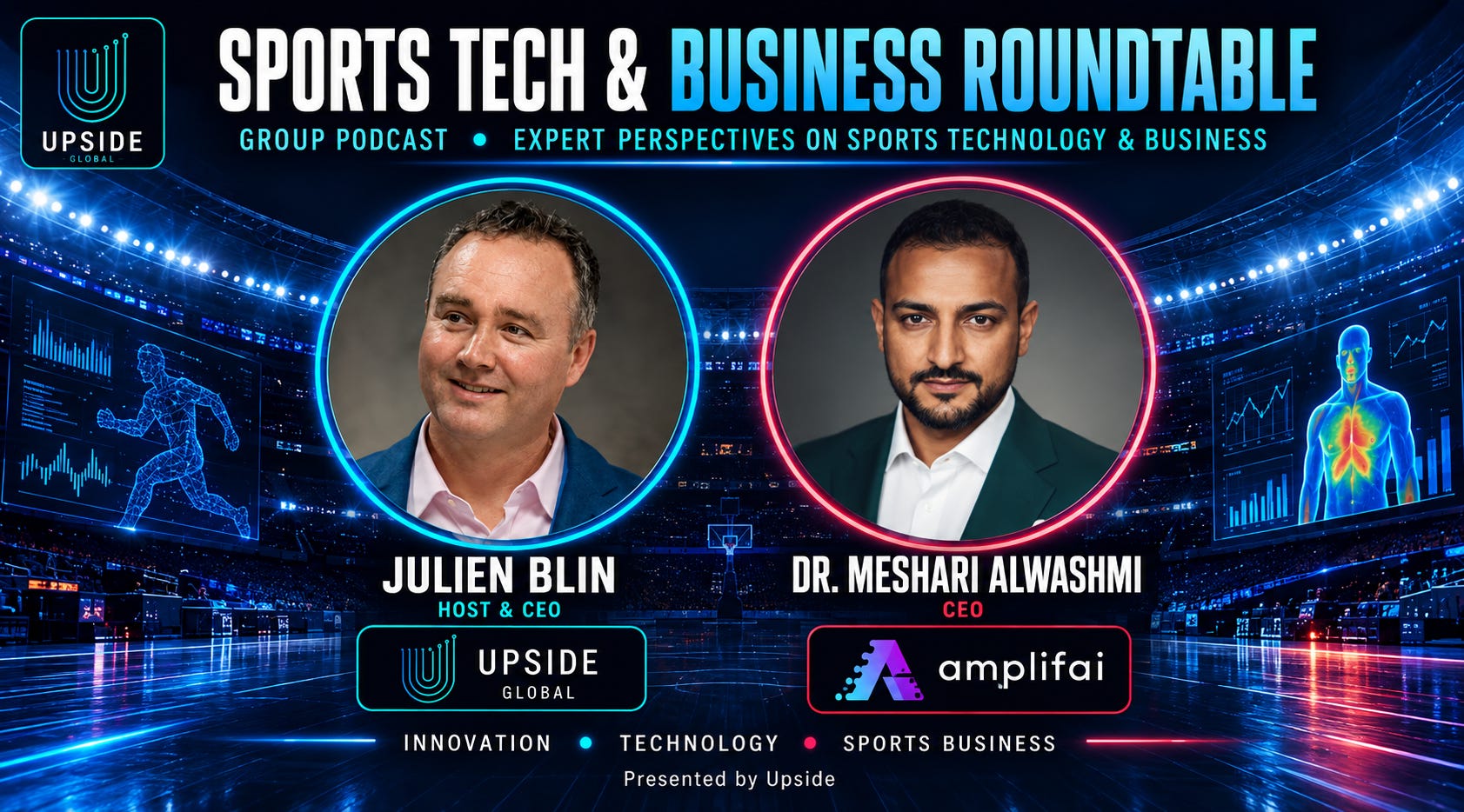
Next week, we will also interview Dr. Meshari Alwashmi, CEO of AmplifAI Health, to learn more about the company, its thermography technology, and its vision for the future of AI-powered health assessment.
AmplifAI Health is developing technology that combines artificial intelligence and thermographic imaging to analyze thermal patterns and support health-related assessments.
Thermography is particularly interesting because it offers a non-invasive way to visualize temperature patterns across the body.
For sports organizations, potential applications worth investigating include monitoring physiological responses, supporting rehabilitation assessments, and identifying changes that may warrant further evaluation.
During the interview, we’ll explore:
The company’s origins: Why Dr. Alwashmi founded AmplifAI Health and the problem the company is seeking to solve.
How the technology works: How AI and thermographic imaging are combined to analyze thermal data.
Applications in elite sports: Potential use cases in athlete monitoring, rehabilitation, and sports medicine.
Scientific validation: What evidence is needed to establish the accuracy, reliability, and practical usefulness of AI-powered thermography.
Commercialization and fundraising: The challenges of building, validating, and scaling a healthcare technology startup.
Future opportunities: How AI-powered imaging could evolve across healthcare, sports performance, and other industries.
Upside Take: AI-powered thermography is an interesting emerging area, but its potential value for professional sports will depend on robust scientific validation and clearly defined use cases.
We look forward to learning more about AmplifAI Health’s approach and discussing where the technology could deliver meaningful value for practitioners.
🏟️ New Startup Announcement — Upside VIP Lunch in Atlanta

Next week, we will announce two additional sports-tech companies selected to present at our upcoming Upside VIP Lunch.
📍 U.S. Soccer Headquarters — Atlanta, Georgia
📅 December 18, 2026
👥 Approximately 200 MLS/NWSL practitioners and decision-makers expected.
The selected company will have the opportunity to present its technology to performance directors, sports scientists, rehabilitation specialists and other professionals from elite soccer organizations.
Upside Take: One of the biggest challenges for sports-tech startups is getting access to the right decision-makers.
Our goal is to bring innovative companies and professional sports organizations together, facilitate meaningful conversations and accelerate technology adoption.
🔮 THE BIG PICTURE
Several important themes stand out heading into next week.
1. AI investment is entering a more demanding phase.
Investors increasingly want to understand how large investments in AI infrastructure translate into revenue, productivity, and profitability.
For sports-tech startups, demonstrating a clear return on investment will become increasingly important.
2. Athlete health remains a major innovation opportunity.
Technologies focused on monitoring fatigue, supporting rehabilitation, and improving athlete availability continue attracting interest.
However, accuracy, scientific evidence, and practical usefulness remain critical.
3. Wearables and healthcare technologies are converging.
The boundaries between consumer health, medical devices, and professional sports performance technologies continue to blur.
This convergence could create new opportunities for startups, investors, and sports organizations.
4. Sports technology companies need more than great products.
Developing innovative technology is only the first step.
Successful startups must demonstrate credibility, build relationships with practitioners, validate their solutions, and establish sustainable commercial traction.
5. Practitioners remain at the center of innovation.
At Upside, we believe the most successful technologies are developed through close collaboration with the people who use them every day.
That’s why our upcoming NBA podcast and conversation with AmplifAI Health are particularly exciting.
We’ll continue connecting practitioners, technology companies, researchers, and investors while sharing insights from across the global sports performance industry.
Stay tuned for another exciting week!
Best,