
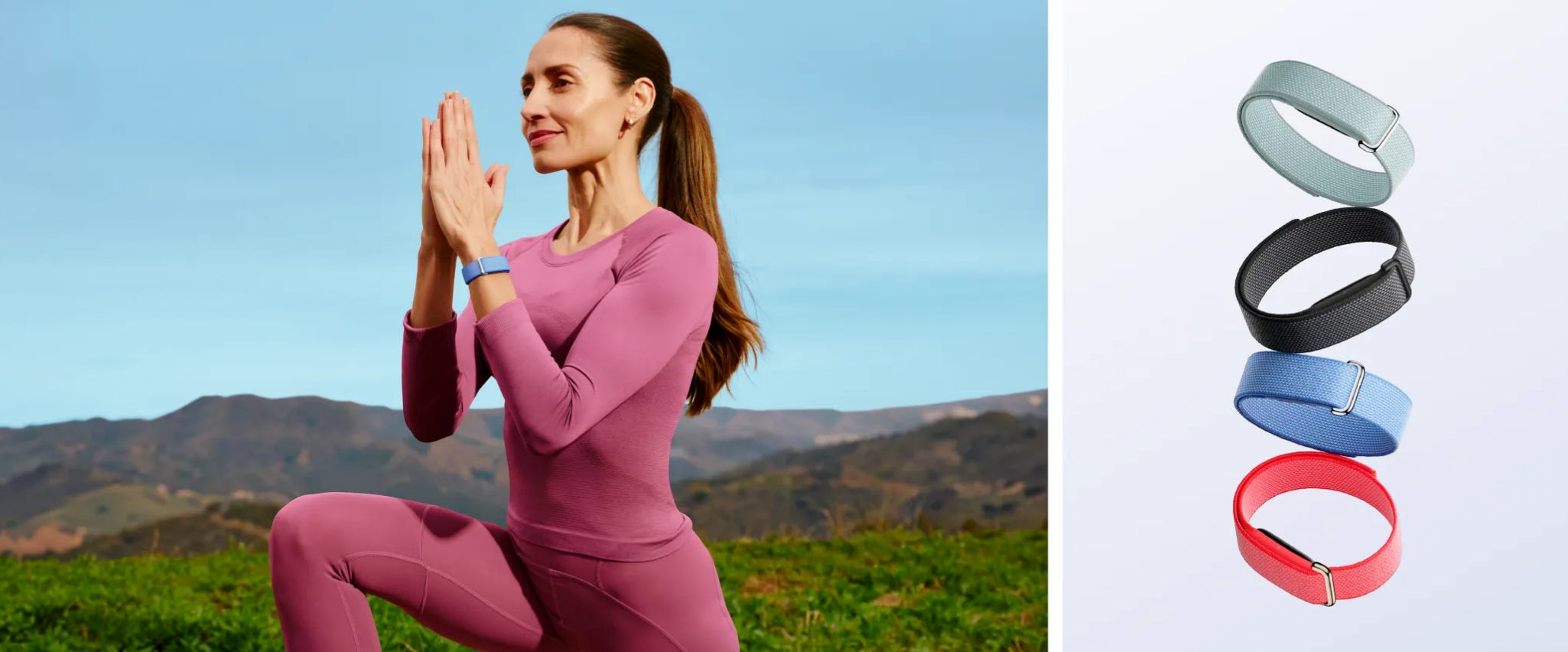
Picture: Fitbit Air
Google’s launch of the Fitbit Air and Google Health Coach marks one of the company’s most ambitious attempts yet to reshape the consumer health and wellness market. While Google has owned Fitbit since 2021, the company has spent the past several years integrating Fitbit technology into its broader ecosystem of Android devices, Pixel hardware, Gemini AI systems, and cloud-based health infrastructure.

Picture: The Fitbit Air Special Edition Performance Loop band, Co-designed with Stephen Curry.
The Fitbit Air and Google Health Coach launches represent more than just another wearable product cycle. Together, they signal a strategic transition from traditional fitness tracking toward what Google hopes will become a fully AI-driven personal wellness ecosystem.
The broader wearable market has already evolved significantly over the last decade. Early devices focused mainly on step counting and basic activity tracking. Smartwatches then expanded the category into communication, notifications, apps, payments, and productivity. More recently, companies such as Oura and Whoop shifted the market toward passive biometric monitoring and recovery-focused wellness analytics.
Google is now attempting to take the next step: turning health data into an intelligent conversational system powered by AI.
Rather than simply tracking metrics, Google Health Coach aims to interpret data, provide recommendations, predict patterns, and eventually act as a proactive wellness companion. This transition from “tracking” to “continuous health guidance” could potentially redefine how consumers interact with wearable technology over the next decade.
What Are Fitbit Air and Google Health Coach?
Fitbit Air
Fitbit Air is Google’s new lightweight, screenless fitness tracker designed around passive health monitoring and simplicity.
Unlike most smartwatches, Fitbit Air intentionally removes:
displays,
notifications,
apps,
messaging,
and other distracting smartphone-like functions.
Instead, the device focuses exclusively on:
continuous biometric tracking,
recovery analysis,
sleep monitoring,
and wellness data collection.
Google describes Fitbit Air as its “smallest and most affordable tracker” and emphasizes that it is designed for 24/7 wearability and comfort.
The device includes sensors for:
heart rate monitoring,
heart rhythm monitoring,
SpO2 tracking,
heart rate variability (HRV),
sleep stages,
skin temperature,
resting heart rate,
and atrial fibrillation (Afib) alerts.
The hardware itself is intentionally minimalist:
no screen,
seven-day battery life,
compact “pebble” design,
lightweight build,
and interchangeable bands.
This design philosophy reflects a broader industry trend toward “calm technology” or “digital minimalism,” where devices are meant to quietly operate in the background rather than constantly compete for user attention. Reddit discussions around the launch repeatedly referenced this “less distracting” philosophy as one of the product’s most appealing aspects.
The Fitbit Air also carries a highly aggressive price point of $99, positioning it well below premium competitors such as Oura Ring, Apple Watch, and Whoop subscriptions.
Google Health Coach
Google Health Coach is the more strategically important launch.
The AI assistant is powered by Google Gemini models and is integrated into the newly rebranded Google Health platform, which replaces the legacy Fitbit app.
Google Health Coach combines:
fitness coaching,
sleep optimization,
recovery analysis,
nutrition guidance,
behavioral recommendations,
and conversational AI interfaces.
The system can:
generate personalized fitness plans,
analyze recovery trends,
answer natural-language health questions,
adapt recommendations based on injuries or travel,
and synthesize information from multiple health sources.
The broader Google Health app also aggregates data from:
Fitbit devices,
Pixel Watch,
Health Connect,
Apple Health,
and potentially medical records.
This means Google is not merely building another wearable ecosystem. It is attempting to build a centralized AI health operating system capable of integrating data from multiple devices and services.
This shift is critically important because it changes the value proposition from:
“Here are your metrics”
to:
“Here is what your metrics mean and what you should do next.”
That transition may ultimately prove more valuable than the wearable hardware itself.
Are Fitbit Air and Google Health Coach a Game Changer?
The answer depends on what aspect of the market one examines.
The Fitbit Air hardware itself is probably not revolutionary. Screenless wellness wearables already exist through:
Oura Ring,
Whoop,
Hume,
and other passive tracking devices.
However, Google’s larger ecosystem strategy may prove highly disruptive.
Why It Could Be a Game Changer
1. AI Becomes the Primary Interface
Most current wearables still rely on dashboards, scores, graphs, and charts.
Google Health Coach attempts to create a conversational interface for wellness.
Instead of manually interpreting data, users can ask:
“Why did I sleep poorly this week?”
“Why am I feeling fatigued?”
“How should I adjust training after travel?”
“Why is my recovery lower today?”
This significantly lowers the cognitive burden on users.
Historically, many wearable users eventually disengaged because:
there was too much data,
metrics became repetitive,
or insights lacked actionable meaning.
AI interpretation could dramatically improve long-term engagement if executed effectively.
2. Google’s AI Infrastructure Is a Major Advantage
Unlike smaller wearable companies, Google has enormous AI capabilities through Gemini.
This gives Google several structural advantages:
large-scale model training,
multimodal AI,
conversational interfaces,
cloud infrastructure,
search integration,
and behavioral personalization.
Competitors like Oura and Whoop possess strong wellness expertise, but Google’s AI infrastructure is likely much larger in scale.
This could accelerate:
personalization,
predictive analytics,
and adaptive coaching.
3. Affordable Pricing Could Expand the Market
The $99 Fitbit Air dramatically lowers the barrier to entry.
This is important because premium wellness devices have become expensive:
Apple Watch Ultra exceeds $700,
Oura Rings can exceed $400,
Whoop requires expensive recurring subscriptions.
Google may significantly expand the wellness wearable market by offering:
lower hardware costs,
optional subscriptions,
and cross-platform compatibility.
This creates pressure on competitors whose models rely heavily on premium pricing.
4. The “Screenless” Strategy May Be Perfectly Timed
Consumers increasingly experience notification fatigue and screen exhaustion.
The Fitbit Air’s lack of a display is not a limitation — it is the product strategy.
The device intentionally avoids:
notifications,
social feeds,
apps,
and constant interruptions.
This aligns with growing demand for:
mindfulness,
digital minimalism,
and low-distraction technology.
Many Reddit users specifically praised the absence of a screen as the product’s strongest feature.
Why It May Not Be a Game Changer
Despite the excitement, major challenges remain.
1. Privacy Concerns Are Significant
Health data is among the most sensitive categories of consumer information.
Google still faces trust issues related to:
advertising,
data collection,
platform dominance,
and surveillance concerns.
Even if Google maintains strict separation between health data and advertising systems, many users remain skeptical.
This may limit adoption among privacy-conscious consumers.
2. AI Health Advice Still Has Limitations
AI-generated wellness recommendations can:
oversimplify problems,
hallucinate explanations,
miss medical nuance,
or create overconfidence.
Fitness and wellness are highly contextual fields.
For example:
poor sleep may result from illness,
recovery issues may reflect stress,
or HRV fluctuations may be completely normal.
Human interpretation still matters.
This is especially important if Google expands deeper into preventative health recommendations.
3. Wearable Fatigue Is Real
The market is already crowded.
Consumers already own:
Apple Watches,
Garmins,
Oura Rings,
Whoop bands,
and legacy Fitbit devices.
Convincing users to:
switch ecosystems,
migrate data,
and adopt another subscription
is difficult.
4. Subscription Resistance Could Slow Growth
Google Health Coach requires Google Health Premium, priced around $10/month.
Consumers increasingly resist recurring subscriptions for:
fitness apps,
streaming,
productivity software,
and wellness services.
Many Reddit users already expressed skepticism about paying for AI-generated health coaching.
The Types of AI Insights Provided by Fitbit Air and Google Health Coach
The central promise of Google Health Coach is transforming raw health data into actionable intelligence.
The AI insight system appears to operate across several major categories.
1. Sleep Intelligence
Sleep is one of the most valuable areas for wearable analytics because:
it affects recovery,
mental performance,
mood,
metabolism,
and long-term health.
Google Health Coach analyzes:
sleep stages,
HRV,
consistency,
interruptions,
breathing patterns,
and recovery signals.
The AI then generates:
bedtime suggestions,
sleep optimization recommendations,
recovery guidance,
and behavioral interventions.
Over time, Google may build predictive sleep models that identify patterns linked to stress, illness, or burnout before users consciously notice them.
2. Recovery and Readiness Scores
Recovery analysis appears heavily inspired by Whoop and Oura.
The AI examines:
HRV,
resting heart rate,
sleep quality,
activity load,
and stress signals.
It can then recommend:
lighter workouts,
recovery days,
hydration,
or sleep prioritization.
This category is particularly valuable for athletes and highly active users.
3. Adaptive Fitness Coaching
Rather than static plans, Google Health Coach aims to generate adaptive recommendations.
For example:
reduced training after poor sleep,
modified workouts during travel,
progressive cardio load targets,
or injury-aware recommendations.
This creates a far more dynamic coaching system than traditional fitness apps.
4. Behavioral Pattern Recognition
Longitudinal analysis may become one of Google’s strongest advantages.
Over time, the AI may detect:
recurring fatigue cycles,
declining recovery,
elevated stress,
reduced activity consistency,
or changes in behavioral habits.
This moves wellness tracking from isolated daily scores toward deeper behavioral intelligence.
5. Conversational Health Interfaces
The conversational layer is arguably the most transformative feature.
Users can ask natural-language questions such as:
“Why was my recovery poor?”
“What habits are affecting my sleep?”
“How can I improve energy levels?”
This fundamentally changes the relationship between users and wearable data.
Instead of interpreting charts manually, users interact conversationally with an AI wellness system.
The Impact of Competition: Oura, Whoop, Apple, Garmin and Others
Google enters an extremely competitive market.
Each major competitor occupies a different position within the wearable ecosystem.
Oura Ring
Oura Ring pioneered passive wellness tracking and recovery-focused analytics.
Its strengths include:
elegant industrial design,
strong sleep analysis,
high comfort,
and premium branding.
Oura remains especially popular among:
wellness enthusiasts,
executives,
celebrities,
and biohacking communities.
However, Google potentially has advantages in:
AI infrastructure,
broader ecosystem integration,
pricing,
and data aggregation.
Oura may maintain differentiation through:
hardware design,
simplicity,
and luxury positioning.
Whoop
Whoop 5.0 may face the greatest competitive pressure.
The Fitbit Air closely mirrors the Whoop philosophy:
screenless design,
continuous monitoring,
recovery analysis,
and coaching-driven experiences.
However, Google significantly undercuts Whoop’s pricing model.
Reddit reactions repeatedly highlighted that:
Fitbit Air offers lower hardware costs,
free functionality exists without mandatory subscriptions,
and Google Health integrates broader AI capabilities.
Whoop appears to be responding by emphasizing:
human coaching,
clinical expertise,
and performance specialization.
This may become a broader industry trend:
AI systems handling routine coaching while humans focus on higher-value expertise.
Apple
Apple Watch Series 10 remains the dominant mainstream wearable.
Apple’s strengths include:
hardware quality,
medical-grade sensors,
ecosystem lock-in,
and brand loyalty.
However, Apple Watch is fundamentally a smartwatch first and wellness tracker second.
Google is betting that many users:
no longer want another screen,
do not need apps on their wrist,
and prefer passive wellness systems.
The two companies may ultimately converge toward different philosophies:
Apple = multifunction wearable computing,
Google = AI wellness intelligence.
Garmin
Garmin dominates endurance and outdoor athletics.
Garmin excels in:
advanced training metrics,
GPS accuracy,
multisport ecosystems,
and athletic performance analysis.
Google is unlikely to displace Garmin among elite athletes anytime soon.
Instead, Fitbit Air targets:
mainstream wellness,
casual fitness,
and AI-driven lifestyle optimization.
How Fitbit Air and Google Health Coach Are Likely to Evolve Over Time
The long-term evolution will likely center more on software than hardware.
1. Predictive Health Intelligence
Google’s future likely involves predictive wellness systems.
The AI may eventually forecast:
illness risk,
burnout,
stress overload,
recovery decline,
or behavioral deterioration.
This would move wearable technology closer to preventative healthcare.
2. Deeper Medical Integration
Google already references medical record integration within Google Health.
Future capabilities could include:
doctor-facing summaries,
medication management,
chronic condition monitoring,
and preventative screening support.
This would move Google closer to regulated digital healthcare.
3. Multimodal AI Wellness Systems
Google’s Gemini ecosystem enables multimodal inputs.
Future systems may combine:
biometrics,
meal photos,
voice analysis,
behavioral data,
location patterns,
and calendar stress indicators.
This would create increasingly personalized wellness intelligence.
4. More Sophisticated Behavioral Coaching
The future of AI wellness likely depends less on raw data and more on behavioral psychology.
Google may increasingly optimize:
habit formation,
adherence,
motivation,
and long-term engagement.
This could make wellness systems substantially more effective.
5. Hardware May Become Less Important
Ironically, the wearable itself may eventually matter less.
Google’s larger strategy appears to center around:
data aggregation,
AI interpretation,
and ecosystem intelligence.
The AI platform could ultimately become more important than any individual device.
Recommendations to Teams on How to Best Utilize Fitbit Air and Google Health Coach
Organizations, sports teams, employers, and wellness programs can potentially derive substantial value from these systems if implemented carefully.
1. Focus on Long-Term Trends
Daily fluctuations are often noisy and misleading.
The greatest value comes from:
longitudinal analysis,
behavioral consistency,
workload balance,
and recovery patterns.
Teams should emphasize trends over isolated metrics.
2. Combine AI With Human Expertise
AI should support — not replace — coaches, physicians, trainers, or wellness experts.
The strongest model is likely:
AI for continuous monitoring,
humans for judgment and interpretation.
3. Prioritize Privacy and Consent
Health data is extremely sensitive.
Organizations should establish:
transparent data policies,
consent frameworks,
sharing boundaries,
and clear governance structures.
Trust is essential for adoption.
4. Educate Users on Metrics
Many users misunderstand:
HRV,
recovery scores,
cardio load,
and readiness metrics.
Proper education is necessary to avoid:
overreaction,
anxiety,
or misinterpretation.
5. Use Wearables to Reinforce Habits
The ultimate value is not the data itself.
It is behavioral change.
Organizations should use Google Health Coach to reinforce:
sleep consistency,
recovery discipline,
stress management,
and sustainable training practices.
Conclusion
Google’s Fitbit Air and Google Health Coach represent one of the most important shifts in the wearable industry since the rise of the smartwatch.
The Fitbit Air hardware itself is intentionally minimalist:
affordable,
screenless,
lightweight,
and designed for passive wellness monitoring.
But the larger strategic ambition is much broader.
Google is attempting to build an AI-powered health operating system capable of:
aggregating data,
interpreting wellness signals,
predicting behavioral trends,
and delivering continuous personalized coaching.
The launch also reflects several broader industry trends:
AI becoming the interface layer for health,
growing consumer interest in passive wellness tracking,
digital minimalism,
and increasing demand for personalized preventative health guidance.
Whether this becomes a true industry breakthrough depends on several unresolved factors:
user trust in Google’s handling of health data,
the quality and reliability of AI-generated advice,
competitive responses from Apple, Oura, and Whoop,
and consumers’ willingness to pay recurring subscription fees.
Even if Fitbit Air itself does not dominate wearable hardware sales, Google Health Coach may still prove highly influential because it points toward the likely future of consumer wellness technology: not simply tracking data, but continuously interpreting, contextualizing, and guiding human behavior through AI-powered health intelligence.
You may also like:
📈 Upside Analysis: Enhancing, Not Replacing: How AI Empowers Practitioners in Elite Sports

Artificial Intelligence (AI) is rapidly transforming elite sports, offering tools that elevate training, recovery, performance analysis, and tactical planning. Yet, one major misconception persists: that AI threatens to replace human practitioners. In reality, AI’s true value lies in its ability to