
How Physical AI, robotics, digital twins, and intelligent simulation could transform athlete performance, injury management, rehabilitation, and sports technology.
Introduction: AI Is Moving From the Digital World Into the Physical World
Over the past three years, artificial intelligence has attracted enormous attention across the sports industry.
Professional teams across the NBA, NFL, NHL, MLS, MLB, NCAA, and European soccer are increasingly exploring AI-powered solutions for athlete monitoring, scouting, performance analytics, injury-risk assessment, and operational productivity.
Much of this innovation has focused on large language models (LLMs), generative AI assistants, predictive algorithms, and automated data analysis.
But another development could have even greater long-term implications for elite sports: Physical AI.
Companies such as NVIDIA, Google DeepMind, and robotics researchers are developing AI systems capable of understanding physical environments, learning how objects and bodies move, predicting physical interactions, and controlling actions in the real world.
NVIDIA describes this shift through technologies that combine AI foundation models, physical simulation, robotics, and autonomous systems.

For elite sports, the potential implications are substantial.
Imagine a future in which:
An NBA team can simulate thousands of basketball landing movements to investigate how different movement strategies affect joint loading.
An NFL team can create a biomechanical model of a quarterback to explore how changes in throwing mechanics influence performance.
An NHL team can use intelligent robotic systems to create repeatable, adaptive rehabilitation exercises.
An MLS club can develop a personalized digital twin of a player to explore training loads, movement patterns, and recovery scenarios.
A sports scientist can test proposed training interventions in a simulation before deciding whether they warrant evaluation with athletes.
Some underlying technologies already exist in research environments. Others remain speculative, particularly when it comes to accurate, individualized predictions of injury or training outcomes.
The central opportunity is not simply to collect more athlete data.
It is to move from observing and analyzing human movement toward modeling, simulating, and eventually interacting intelligently with the physical demands of elite sports.
That could represent a major evolution in how professional teams train, evaluate, rehabilitate, and develop athletes.
What Is Physical AI?
Physical AI refers to artificial intelligence systems that can perceive, reason about, predict, or act within the physical world.
Unlike AI systems that primarily generate text or analyze digital information, Physical AI must account for real-world constraints such as gravity, movement, force, balance, collisions, spatial relationships, and the behavior of physical objects.
A Physical AI system might use cameras, sensors, and other inputs to understand an environment, then apply learned models or physical simulation to predict outcomes or control an action.
The core components of Physical AI
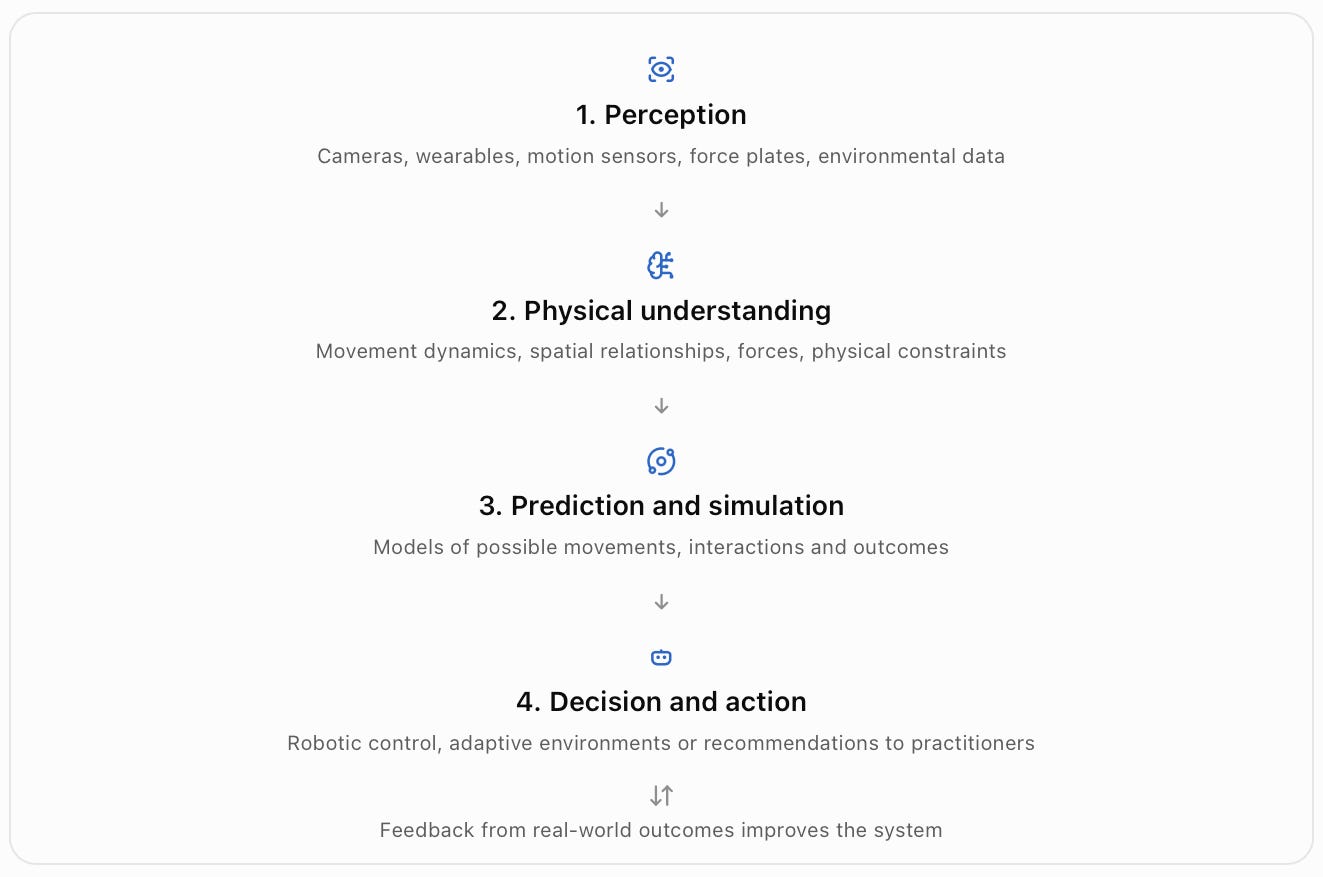
For example, an AI-powered robotic table tennis system must identify the ball’s location and velocity, predict its trajectory, determine how to position a racket, and execute a physical movement quickly enough to return the shot.
That is fundamentally different from asking ChatGPT to summarize a match or explain table tennis tactics.
Physical AI is not simply another name for sports analytics
This distinction is important.
A machine-learning model that predicts an athlete’s workload from GPS data is not automatically a Physical AI system.
Similarly, markerless motion capture does not necessarily constitute Physical AI on its own.
However, motion capture can become an important component of a broader Physical AI system when its measurements are integrated with physical models, simulation, decision-making, and potentially real-world control.
For sports, I would divide the emerging opportunity into three categories:
Embodied Physical AI: Robots and intelligent machines that perceive and interact with the real world.
Physics-aware athlete simulation: Systems that combine biomechanics, physics-based models, and AI to simulate movements or training scenarios.
Intelligent physical environments: Training facilities and equipment that adapt to athletes using sensors, AI, and real-time feedback.
The first category most closely matches the conventional definition of Physical AI. The second and third represent adjacent technologies that could become important sports applications.
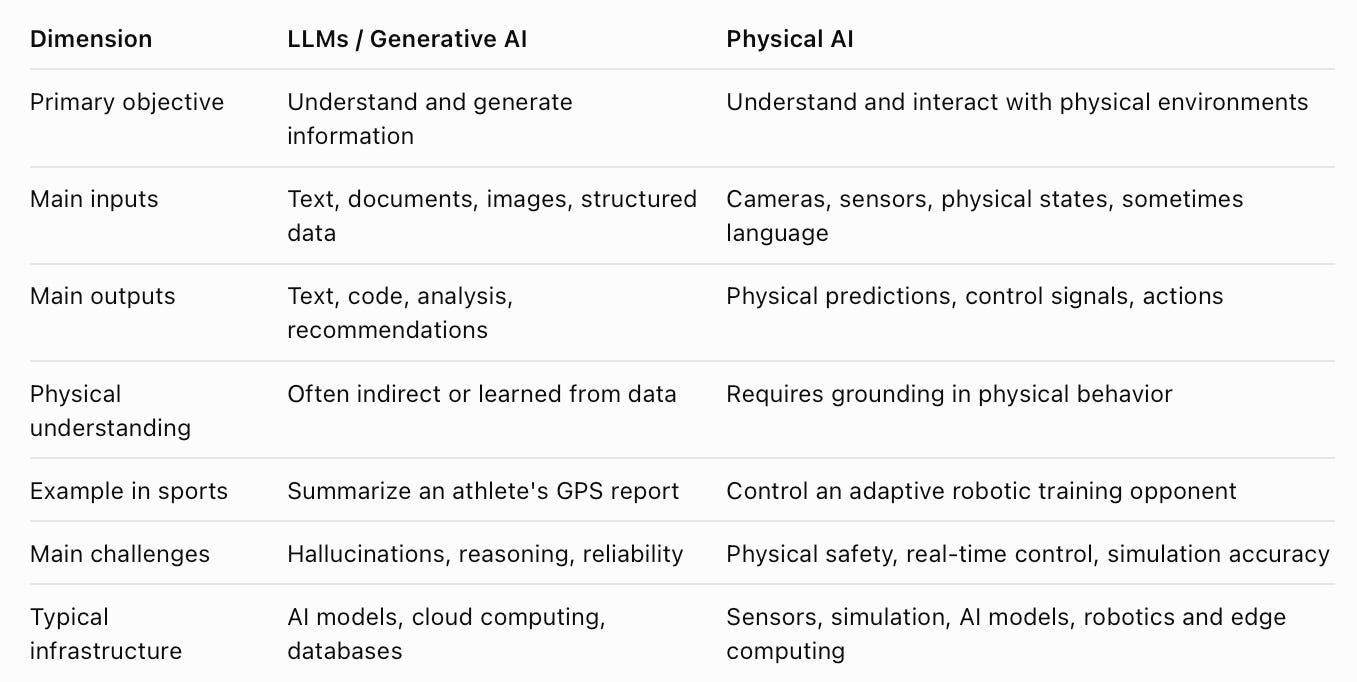
Physical AI vs. Large Language Models: What’s the Difference?
LLMs and Physical AI share some underlying machine-learning technologies, but they are designed to solve different problems.
Example: An NFL quarterback
Consider a quarterback whose throwing mechanics are being evaluated.
An LLM-based sports assistant could analyze existing reports and answer questions such as:
How has this quarterback’s throwing velocity changed over the past six weeks?
A physics-aware simulation system could potentially investigate a different question:
What happens to estimated joint loading and ball release characteristics when the quarterback changes trunk rotation or arm position?
An embodied Physical AI system might eventually control a robotic training device that adapts defensive pressure or ball delivery in response to the quarterback’s actions.
These systems are not mutually exclusive.
In fact, I expect the most interesting sports technology platforms to combine conversational AI, biomechanical modeling, physical simulation, and sensor-driven feedback.
LLMs could become the interface, while physical models and intelligent machines provide the underlying physical understanding and execution.
Seven Potential Use Cases for Physical AI in Elite Sports
The greatest opportunity is likely to come from combining Physical AI with technologies that professional teams already use: GPS, force plates, motion capture, IMUs, athlete management systems, and video analysis.
Use case 1: Athlete digital twins and personalized simulation
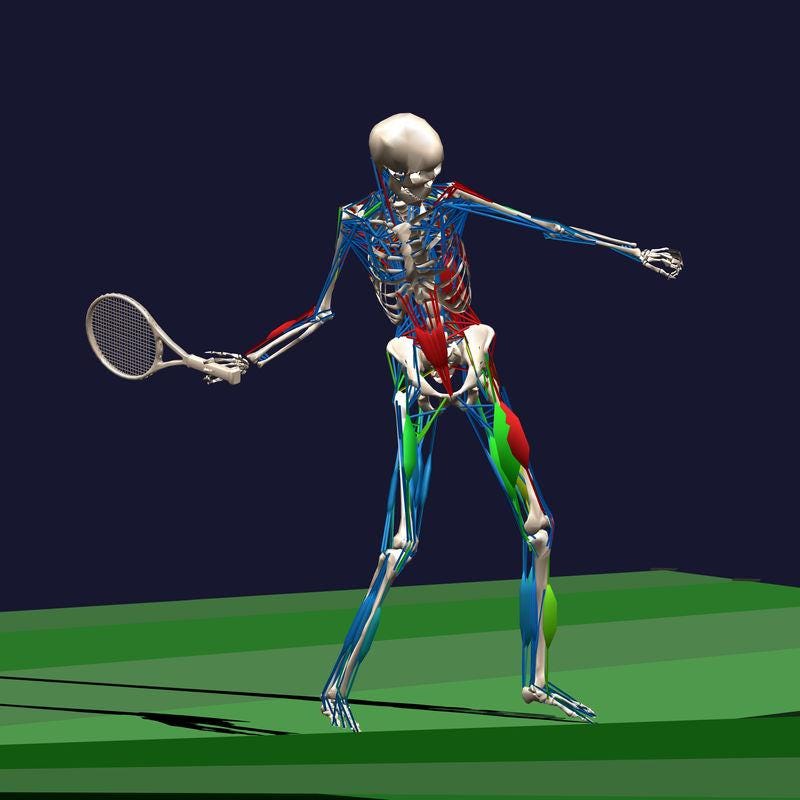
An athlete digital twin is a computational representation of an athlete that can be updated using relevant measurements.
A sophisticated version might combine body geometry, joint kinematics, muscle-tendon models, force measurements, workload history, and other physiological variables.
The long-term ambition is to simulate how an individual athlete might respond to specific physical demands.
For example, a performance department could investigate how different landing techniques affect modeled knee loading, or how changes in running mechanics influence estimated muscle forces.
The distinction between a generic biomechanical model and a truly personalized digital twin is critical. A system must be calibrated and validated against the individual athlete before its predictions can be treated as reliable.
Potential applications: Movement optimization, rehabilitation planning, technique analysis, equipment evaluation, and training research.
Use case 2: Biomechanics and skill acquisition
Physical AI could help teams understand how athletes execute complex sporting movements.
Potential examples include:
NFL: Quarterback throwing mechanics, footwork, and movement under pressure.
NBA: Shooting mechanics, jumping, landing, and change of direction.
NHL: Skating biomechanics, acceleration, and shooting mechanics.
MLB: Pitching, batting, and throwing.
Soccer: Kicking, sprinting, cutting, and deceleration.
Today, markerless motion capture and biomechanical modeling already make aspects of these analyses possible.
The next step would be to connect movement analysis with physics-aware simulations and individualized training interventions.
Rather than simply telling an athlete that their mechanics differ from a reference pattern, a system could explore the consequences of alternative movement strategies.
However, the most efficient movement is not necessarily identical across athletes, and a simulation cannot independently establish that a technique change will improve performance.
Use case 3: Injury-risk research and return-to-play
Physical AI could be particularly relevant to sports medicine and rehabilitation.
Consider an athlete recovering from an ACL reconstruction.
A future system could combine repeated motion assessments, force plate data, muscle strength, and a calibrated musculoskeletal model to investigate how loading changes across rehabilitation exercises.
This could help practitioners understand movement strategies and select appropriate assessments.
But there is a major distinction between estimating joint loading and accurately predicting a future injury.
Physical AI should not be presented as a proven solution for injury prediction.
Current evidence supports carefully defined biomechanical measurements more strongly than reliable individual injury forecasting.
Use case 4: Intelligent robotic training partners
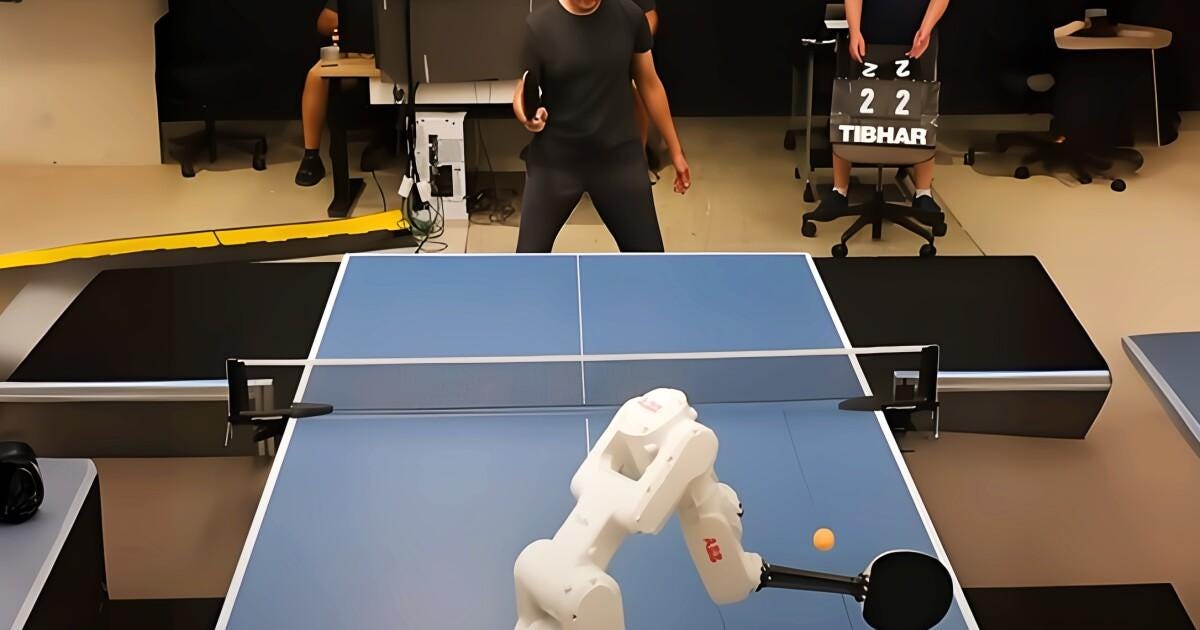
This is one of the clearest examples of Physical AI moving beyond conventional sports analytics.
Researchers have demonstrated robots that learn to play simplified soccer and table tennis using reinforcement learning, simulation, and real-world control.
In the future, robotic training partners could provide repeatable or adaptive challenges in tennis, table tennis, goalkeeper training, and other skill-based environments.
A robotic system could vary ball trajectories, speed, timing, and difficulty according to an athlete’s responses.
The opportunity is not necessarily to replace human coaches or training partners, but to create controlled practice environments.
Use case 5: Intelligent training facilities
Imagine a professional training facility where multiple systems communicate in real time.
Cameras capture athlete movement, sensors measure physical outputs, and intelligent equipment adjusts training conditions within predefined safety limits.
Potential applications include adaptive resistance devices, automated ball delivery, controlled rehabilitation equipment, and responsive training environments.
Many components already exist independently. The longer-term Physical AI opportunity is to coordinate them through a shared understanding of the physical environment.
Use case 6: Tactical simulation and player development
Physical simulation could also become useful for tactical training.
For example, a soccer club might explore how players move into available space under different defensive arrangements.
An NFL team could simulate constrained movement scenarios involving quarterbacks, receivers, and defenders.
A basketball team might investigate spacing, movement trajectories, and player interactions.
These applications would require models that capture not only physical constraints but also human decisions and tactical behavior.
Consequently, they should be viewed as decision-support or research tools rather than accurate predictions of how real athletes will behave in every situation.
Use case 7: Automated physical operations
Some of the earliest commercial applications of Physical AI in sports may occur outside direct athlete performance.
Autonomous systems could potentially assist with equipment movement, inventory management, facility inspection, field maintenance, and selected operational tasks.
These are attractive applications because their success can often be measured more clearly than improvements in athletic performance.
For example, teams could evaluate time saved, task completion rates, operational reliability, and safety.
Which use cases should teams prioritize?
Upside assessment of potential adoption—not a ranking of clinically proven effectiveness.
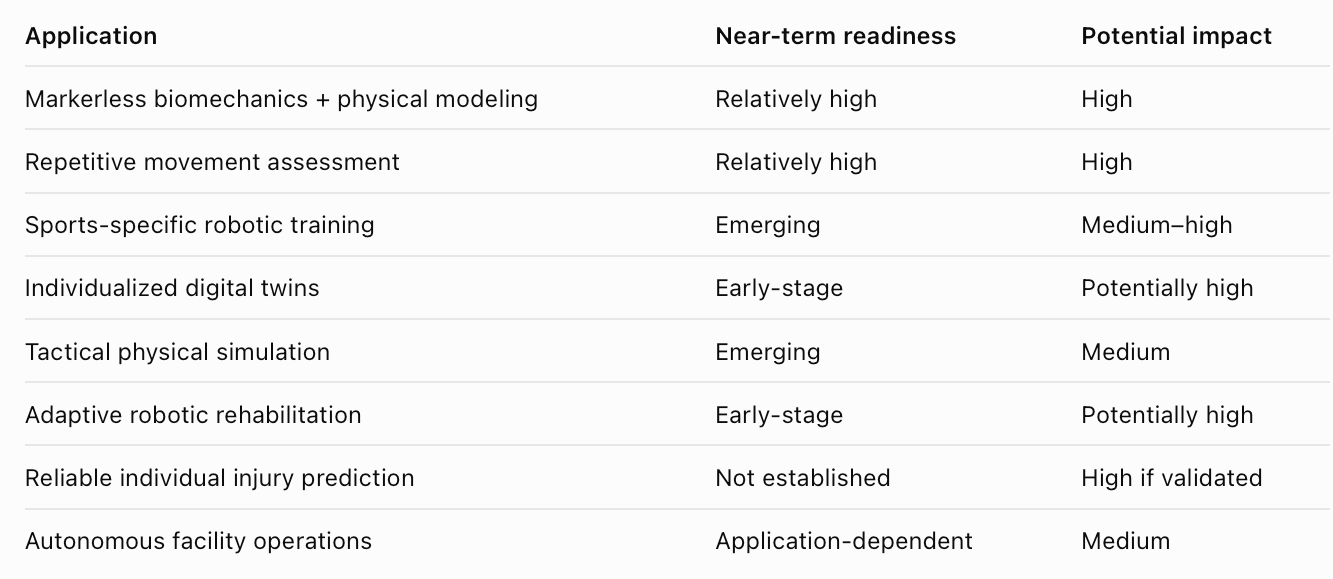
My assessment is that biomechanics, physical modeling, and movement assessment are likely to offer more practical near-term opportunities than fully autonomous robotic coaches or highly accurate athlete digital twins.
Latest Research: What Does the Science Actually Show?
Several important studies published between 2023 and October 2026 illustrate the progress being made in Physical AI and closely related technologies.
It is important to distinguish studies of actual embodied AI from studies of biomechanical measurement and simulation.
Study 1: Google DeepMind — Robots Learning to Play Soccer
Science Robotics | April 2024
Paper: Learning Agile Soccer Skills for a Bipedal Robot with Deep Reinforcement Learning
Researchers trained miniature humanoid robots to play simplified one-on-one soccer using deep reinforcement learning.
The robots learned skills such as walking, turning, kicking, recovering from falls, and reacting to an opponent.

Improvements relative to a scripted robotic baseline, not human athletes.
The system learned in simulation and transferred its behavior to real robots.
Why it matters for elite sports: This demonstrates that AI can learn coordinated physical sporting skills rather than merely classify or describe movement.
It does not demonstrate improved training outcomes for human soccer players.
Study 2: Google DeepMind — Competitive Robotic Table Tennis
Research preprint, 2024; ICLR workshop version, 2025
Paper: Achieving Human Level Competitive Robot Table Tennis
Google DeepMind developed a robotic table tennis system that combined real-time perception, learned movement policies, and simulation-to-reality transfer.

The robot won 13 of 29 matches against previously unseen human players, achieving amateur-level performance. It lost against the most advanced players in the evaluation.
Why it matters: Intelligent training machines may eventually adapt to human opponents in real time, creating new possibilities for skill development.
Study 3: LATENT — Humanoid Robots Learning Tennis From Imperfect Human Motion Data
arXiv preprint | March 2026
Paper: Learning Athletic Humanoid Tennis Skills from Imperfect Human Motion Data
Researchers introduced LATENT, a framework that enables humanoid robots to learn tennis movements using incomplete human motion demonstrations.
Rather than requiring complete recordings of every possible movement, the system learned from fragments of tennis-related skills and combined them into more complex behaviors.
The researchers demonstrated the approach on a Unitree G1 humanoid robot, including multi-shot rallies with human players.
Why it matters: Human movement data may become a valuable training resource for physical AI systems, including robotic training partners.
This is an experimental robotics result, not evidence that the system improves human tennis performance.
Study 4: ATHLETE — Reactive Humanoid Tennis
arXiv preprint | October 2026
Paper: ATHLETE: Learning Reactive Humanoid Tennis via Trajectory-Guided Motion Matching
This recent research explores how humanoid robots can learn responsive tennis movements using locomotion data and ordinary tennis videos.
The researchers reported the following real-robot results:

These results were achieved under the researchers’ experimental conditions and should not be interpreted as general competitive tennis performance.
Why it matters: Physical AI systems are becoming better at combining human movement examples with real-time responses to moving objects.
Study 5: Stanford — OpenCap and Human Movement Dynamics
PLOS Computational Biology | October 2023
Paper: OpenCap: Human Movement Dynamics From Smartphone Videos
This is one of the most relevant studies for sports performance practitioners, although OpenCap is better described as an AI-assisted biomechanics and simulation platform than a complete embodied Physical AI system.
Researchers combined smartphone video, computer vision, machine learning, and musculoskeletal simulation to estimate movement kinematics and dynamics.
In a field study involving 100 participants, the researchers reported that their approach estimated musculoskeletal dynamics approximately 25 times faster than a laboratory-based approach at less than 1% of the cost.
Why it matters: Physics-based biomechanical analysis could become more accessible to professional teams, universities, and rehabilitation departments without requiring every assessment to take place in a sophisticated biomechanics laboratory.
Study 6: OpenCap Validation During Return-to-Sport Tasks
Journal of Biomechanics | June 2024
Researchers evaluated OpenCap against a traditional marker-based motion capture system in athletes recovering from ACL reconstruction.
The study examined 437 movement trials involving hopping and landing tasks.
The reported grand mean error across joint angles and movements was 3.85° for mean absolute error and 4.34° for root mean squared error.
Agreement was strongest for selected sagittal-plane hip and knee movements, with weaker agreement in other planes.
Why it matters: Accessible movement analysis is promising, but measurement accuracy varies by joint, movement, and plane. Teams should validate the specific metrics they intend to use.
Study 7: Markerless Motion Capture vs. Wearable Sensors
Medicine & Science in Sports & Exercise | March 2025
This study compared several movement analysis technologies across dynamic exercises, including jumps, squats, lunges, and cutting movements.
The researchers found that the evaluated markerless system generally demonstrated higher validity than the tested IMU and RGB-depth camera systems, although errors varied considerably across joints and movement planes.
Why it matters: Physical AI applications will depend heavily on the quality of the underlying movement data. A sophisticated simulation built on inaccurate measurements can still produce misleading results.
Study 8: Athlete-AI — Multimodal Monitoring and Training Simulation
Scientific Reports | October 22, 2026
This newly published study presents a computational framework combining wearable sensor information, human motion features, multimodal machine learning, and reinforcement learning.
Its significance lies in demonstrating how different sources of athlete information can be combined in a simulation environment.
However, the authors explicitly state that the results are preliminary computational findings and do not constitute prospective real-world athlete validation.
Why it matters: The research illustrates a possible direction for intelligent athlete simulation, while reinforcing the need to distinguish experimental modeling from clinically validated injury-risk prediction.
What does the evidence tell us?
The scientific literature supports three important conclusions.
First, Physical AI can already learn and execute complex physical behaviors in controlled robotic environments.
Second, AI-assisted biomechanics and physics-based simulation can provide useful movement estimates, although accuracy depends on the specific task and measurement system.
Third, evidence that these technologies improve long-term athlete performance, reduce injury incidence, or reliably predict individual injury outcomes remains much less mature.
A 2026 scoping review of AI in sports science similarly found that technical measurement applications have stronger evidence than injury prediction and athlete digital twins, with a lack of demonstrated sustained improvements in real-world organizational or athlete outcomes.
How Physical AI Could Transform Elite Sports
I believe Physical AI could create five major shifts in how sports organizations operate.
A. From descriptive analytics to physical simulation
Today, teams use GPS, force plates, and athlete management systems to understand what happened during training or competition.
Physical AI could introduce another layer: investigating what might happen under alternative physical conditions.
For example, instead of only reporting that an athlete experienced a certain external workload, a team could use a calibrated biomechanical model to estimate how different movements distribute forces across joints and muscles.
This could help performance departments formulate more precise questions and design better experiments.
B. From generic training programs to individualized movement models
Most professional teams already individualize training.
Physical AI could potentially take personalization further by combining an athlete’s movement characteristics with physical simulation.
Rather than assuming that one technical intervention works equally well for every player, practitioners could investigate athlete-specific responses.
However, individualization would require reliable calibration, longitudinal data, and validation against actual training outcomes.
C. From static equipment to adaptive training environments
Many training technologies currently follow predefined programs.
Future systems could adjust the physical environment based on an athlete’s actions.
For example, a robotic ball-delivery system could adapt its trajectories based on the player’s reaction time, accuracy, or movement strategy.
Similarly, intelligent resistance equipment could adjust within safe operating limits according to measured performance.
This could support more repeatable and individualized skill acquisition.
D. From isolated technology platforms to integrated intelligence
One of the biggest challenges in elite sports is that technologies often operate independently.
A team might use:
GPS to measure external workload.
Force plates to assess neuromuscular performance.
Motion capture to evaluate biomechanics.
Wearables to collect physiological information.
An AMS to organize athlete information.
Physical AI could increase the value of these systems by providing models that connect measurements to physical mechanisms.
This creates an opportunity for technology vendors that can integrate high-quality data across different modalities.
E. From reactive rehabilitation to simulation-informed rehabilitation
Sports medicine departments could potentially use biomechanical simulations to investigate movement strategies and rehabilitation exercises before implementing changes.
For example, clinicians could compare estimated loading patterns across different exercises or movement techniques.
The objective would not be to automate return-to-play clearance.
Instead, Physical AI could provide additional information to support practitioners’ decisions.
The biggest transformation may be the shift from collecting information about athletes to building validated models of how athletes move and respond to physical demands.
Main Companies and Technology Platforms to Watch
The Physical AI ecosystem includes foundational technology companies, robotics developers, biomechanics platforms, and sports-specific vendors.
Not every company in this section currently markets a Physical AI product. Some provide essential components that could enable future applications.
A. Foundational Physical AI and robotics companies
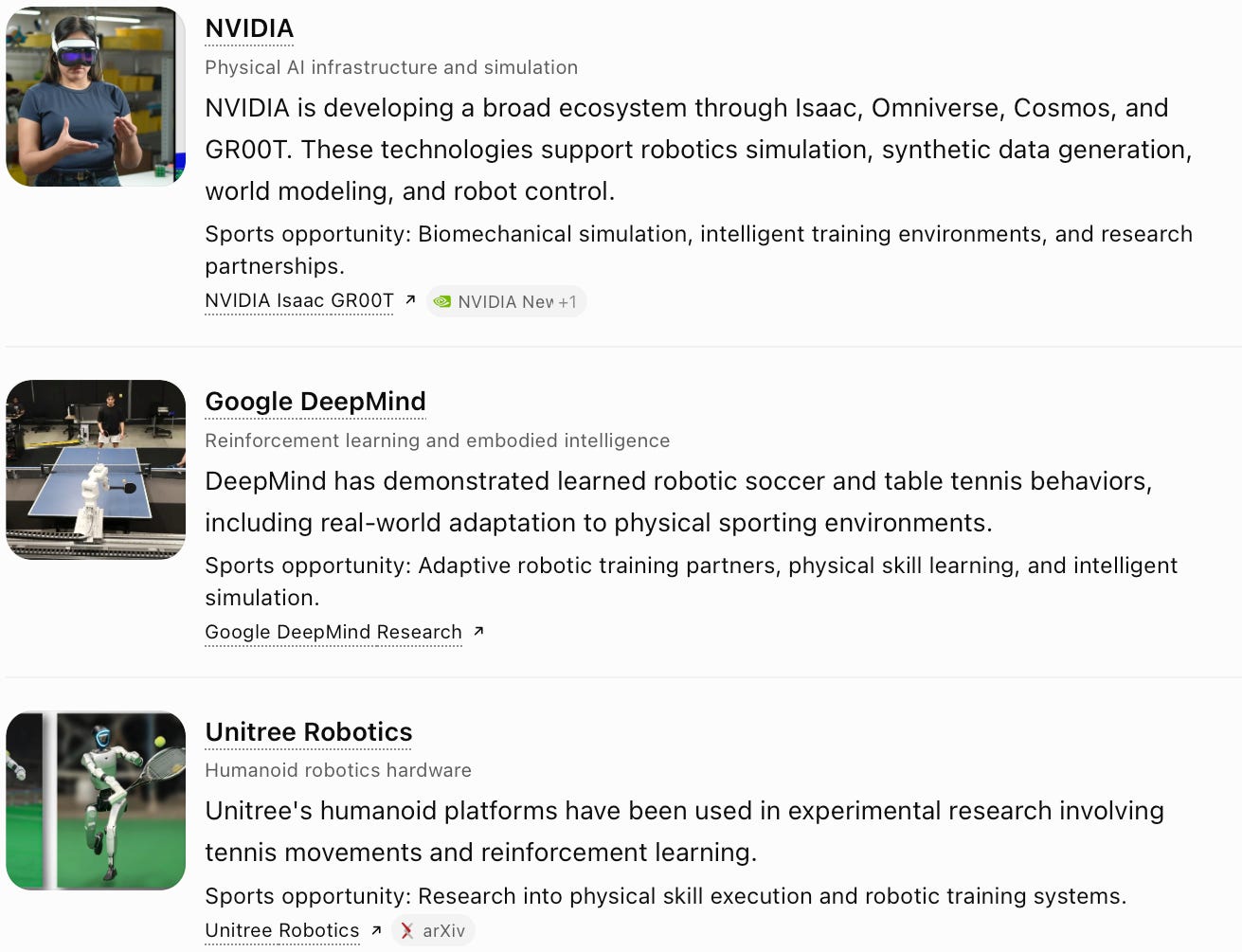
Other organizations worth monitoring include Boston Dynamics, Figure AI, and robotics research groups developing vision-language-action models. Their relevance to sports is primarily prospective rather than evidence of established elite-team deployments.
B. Sports biomechanics and simulation platforms
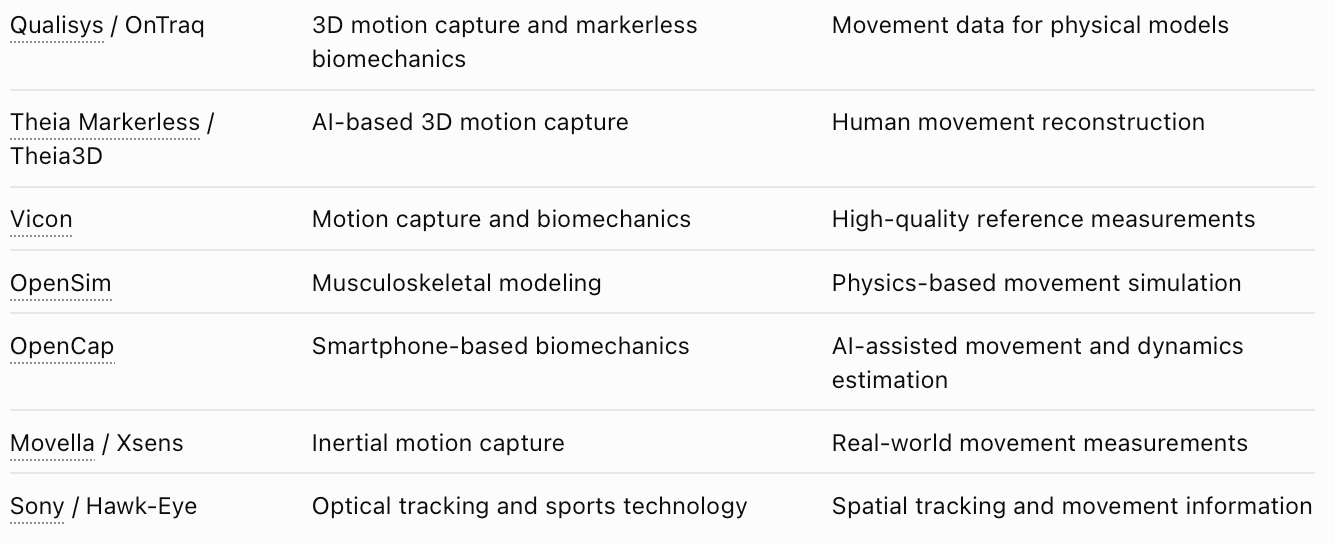
These companies and platforms occupy different positions in the technology stack. Most are not autonomous Physical AI vendors today.
Their potential importance lies in providing the movement data, measurement tools, and biomechanical models that future Physical AI systems may require.
For example, Theia’s 2026 baseball developments illustrate how markerless capture is expanding beyond athlete movement to include bat and ball tracking in a single system.
C. Where could new sports technology startups emerge?
I expect new opportunities in several categories:
1. Athlete digital twin platforms: Combining motion capture, force measurements, and musculoskeletal modeling to create individualized simulation environments.
2. AI-powered biomechanics companies: Moving beyond descriptive joint-angle reporting toward validated physics-aware assessments.
3. Intelligent robotic training systems: Developing adaptive equipment for skill acquisition and controlled practice.
4. Simulation platforms for sports medicine: Supporting research into exercise selection, joint loading, and rehabilitation progression.
5. Physical AI infrastructure for sports: Integrating video, wearables, force plates, and other sensors into reusable simulation and modeling environments.
For investors, the critical question will be whether these startups have defensible technology and demonstrated value rather than simply incorporating the term Physical AI into their marketing.
What Will Elite Sports Look Like With Physical AI?
A possible scenario for 2030–2035, not a forecast of confirmed deployments. Imagine the daily workflow of a professional soccer club.
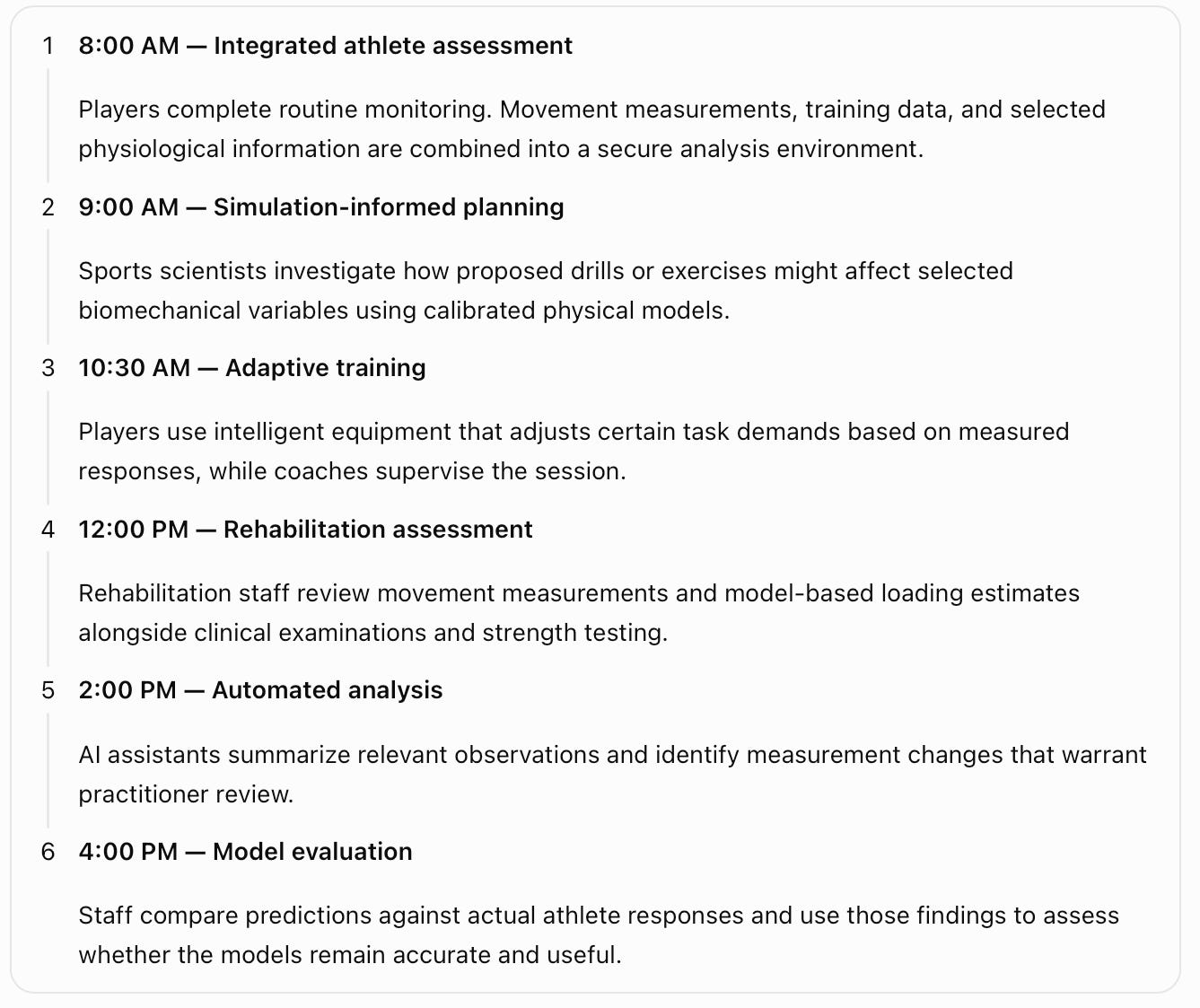
In this environment, Physical AI would not replace coaches, sports scientists, or medical professionals.
It would provide an additional layer of modeling, experimentation, and feedback.
The most sophisticated organizations could develop integrated systems connecting performance departments, biomechanics laboratories, rehabilitation teams, and technology vendors.
However, not every team will need humanoid robots or expensive simulation infrastructure.
For many organizations, the most valuable implementation could be a relatively modest system that combines reliable movement measurements with validated biomechanical models.
Recommendations to Professional Teams
I would recommend that teams take a proactive but disciplined approach to Physical AI.
1. Understand what Physical AI can and cannot do
Performance directors and medical staff should distinguish among robotics, biomechanical simulation, motion capture, conventional machine learning, and generative AI.
These technologies overlap, but they are not interchangeable.
2. Audit existing movement and performance data
Before investing in advanced simulation, determine whether the organization has sufficiently accurate, consistent, and accessible data.
A team may already possess valuable information from GPS, force plates, motion capture, and rehabilitation assessments.
The challenge is making those measurements usable together.
3. Start with one or two measurable applications
Prioritize problems such as improving movement assessment workflows, estimating selected biomechanical variables, or automating repetitive analysis.
Avoid beginning with ambitious promises about predicting injuries or accurately simulating an athlete’s entire season.
4. Partner with universities and research laboratories
Universities with expertise in biomechanics, robotics, AI, and computational modeling could become important partners.
Research groups at Stanford, Carnegie Mellon, and other institutions provide examples of relevant technical expertise.
Such partnerships could help teams evaluate emerging technologies before making large commercial commitments.
5. Require independent validation
Teams should ask vendors to demonstrate measurement accuracy, repeatability, external validity, and meaningful improvements in practitioner workflows.
For high-stakes applications, simulation predictions should be evaluated against real-world outcomes before being relied upon.
6. Protect athlete data and maintain human oversight
Detailed movement models and athlete digital twins may involve sensitive biometric and health-related information.
Teams need clear policies covering consent, data ownership, cybersecurity, access permissions, model training, and retention.
Medical and return-to-play decisions should remain under appropriately qualified professional oversight.
Recommendations to Sports Technology Companies
Physical AI could also create significant opportunities for established sports technology vendors and startups.
A. Motion capture and biomechanics companies
Companies such as Qualisys, Theia, and Vicon could explore how their movement data might support more advanced physical simulations.
Potential development priorities include:
Improved interoperability with musculoskeletal modeling software.
APIs for research and simulation environments.
Validated estimates of biomechanical variables.
Support for longitudinal athlete assessments.
Integration with physics-aware AI models.
The opportunity is to move beyond reporting movement measurements toward supporting more advanced biomechanical decision-making.
B. Athlete Management System providers
Companies operating in the AMS ecosystem could eventually integrate simulation outputs alongside conventional athlete monitoring data.
For example, a performance director might ask an AI assistant to compare selected movement measurements across rehabilitation sessions or retrieve model-based loading estimates.
However, AMS companies do not necessarily need to build Physical AI foundation models themselves.
Partnerships with biomechanics specialists, universities, and simulation providers may be more practical.
C. Sports AI startups
For startups, I see three priorities.
First, build defensible technology around a clearly defined physical problem.
Second, validate the technology with appropriate research partners and real sporting environments.
Third, demonstrate that the solution improves an existing workflow or enables a useful capability that teams could not previously access.
A startup that can reliably solve one important biomechanics problem may be more valuable than a company promising a complete AI-powered digital twin of every athlete without sufficient evidence.
D. Strategic partnerships with Physical AI leaders
Sports technology companies should monitor developments from NVIDIA, Google DeepMind, robotics laboratories, and simulation researchers.
They may not need to develop every underlying model internally.
Instead, their competitive advantage could come from combining foundational Physical AI technology with proprietary sports data, domain expertise, validated workflows, and established team relationships.
Key Challenges and Barriers to Adoption
Despite its potential, Physical AI faces substantial technical and commercial challenges.
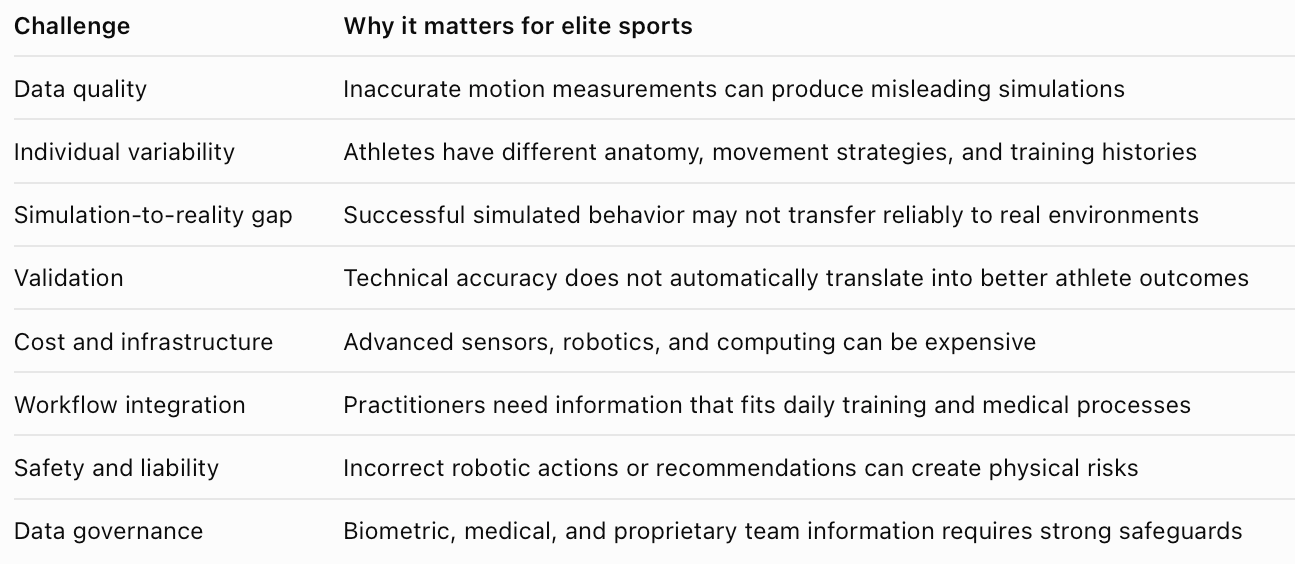
One of the biggest challenges will be the difference between creating an impressive demonstration and delivering a dependable product that can be used every day by professional sports organizations.
This is particularly important for startups.
Teams should not confuse technological sophistication with commercial readiness or scientific validity.
Conclusion: Physical AI Could Become a New Frontier in Sports Performance
The emergence of Physical AI represents an important development in artificial intelligence.
While large language models have transformed how organizations interact with information, Physical AI is expanding what intelligent systems can learn and accomplish in the physical world.
For elite sports, the potential implications extend across biomechanics, skill acquisition, rehabilitation, athlete monitoring, intelligent training equipment, and facility operations.
Research from Google DeepMind has already demonstrated that AI-powered robots can learn complex sporting movements.
Developments in markerless motion capture and musculoskeletal simulation are also making detailed biomechanical analysis more accessible.
And emerging research into athlete digital twins and multimodal simulation suggests that more personalized physical models may eventually become possible.
However, the industry must distinguish between what Physical AI can demonstrate in a laboratory and what has been proven to improve outcomes in professional sports.
That distinction will be essential for teams evaluating new technologies and investors assessing sports technology startups.
I believe the most significant near-term opportunities will emerge from combining three elements:
High-quality athlete movement data + validated physical models + practitioner expertise.
Over time, these capabilities could support more sophisticated simulation, intelligent training environments, and new forms of athlete-specific decision support.
For established sports technology companies, Physical AI could become an opportunity to expand beyond data collection and visualization.
For startups, it could create entirely new product categories.
For professional teams, it could provide new ways to investigate human movement and evaluate training interventions.
My prediction for the next 5–10 years
We will see growing collaboration between Physical AI companies, robotics laboratories, universities, biomechanics specialists, and professional sports organizations.
I expect progress to begin with narrowly defined applications where accuracy and practical value can be measured, before expanding toward more ambitious athlete simulation and adaptive training systems.
The biggest winners may not be the companies building the most sophisticated robots.
They may be the companies that successfully connect advanced physical modeling with the real-world needs of coaches, sports scientists, medical professionals, and athletes.
The next chapter of AI in elite sports may not simply be about understanding athlete data. It may be about understanding, simulating, and intelligently interacting with human movement itself.
And that could fundamentally change the future of sports performance technology.
You may also like:
📈 Upside Analysis: Enhancing, Not Replacing: How AI Empowers Practitioners in Elite Sports

Artificial Intelligence (AI) is rapidly transforming elite sports, offering tools that elevate training, recovery, performance analysis, and tactical planning. Yet, one major misconception persists: that AI threatens to replace human practitioners. In reality, AI’s true value lies in its ability to