
August 12, 2026
Introduction
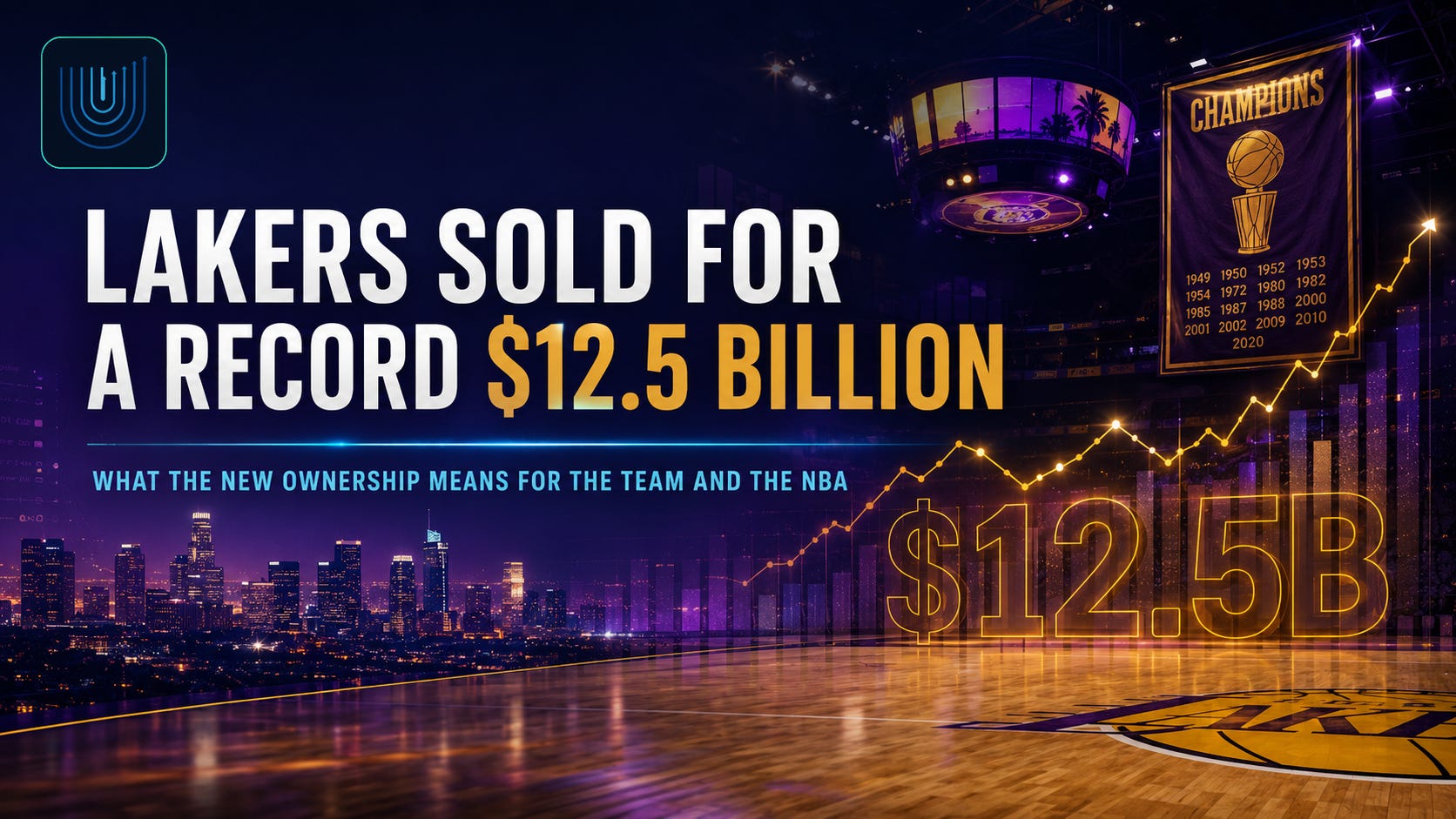
The Los Angeles Lakers are changing hands again. Josh Kushner and former Disney CEO Bob Iger have agreed to acquire the franchise from Mark Walter for a reported $12.5 billion, setting a record for the sale of a professional sports team.
The transaction remains subject to approval by the NBA Board of Governors. That review is expected to take several weeks.
The essentials:
Buyers: Josh Kushner and Bob Iger
Seller: Mark Walter
Reported price: $12.5 billion
Previous valuation: Approximately $10 billion in 2025
Status: Awaiting NBA approval
The 25-percent increase in the Lakers’ reported value in less than a year illustrates the scarcity of elite sports franchises and the exceptional commercial power of the Lakers’ global brand.
Who are the buyers?
Josh Kushner
Josh Kushner, 41, is the founder of Thrive Capital, a venture-capital firm known for investing in prominent technology companies. He also co-founded Oscar Health and serves as its vice chairman.
Kushner brings significant capital, technology expertise and relationships across venture capital and artificial intelligence. His involvement could lead the Lakers to invest more heavily in analytics, digital products, fan data and performance technology.
Bob Iger
Bob Iger, 75, is best known for leading The Walt Disney Company. During his tenure, Disney expanded its global portfolio across entertainment, streaming, sports and intellectual property.
Iger also has sports-ownership experience. He and his wife, Willow Bay, became controlling owners of Angel City FC in 2024. His history with Disney and ESPN gives him extensive knowledge of sports media, content distribution, sponsorships and global brand management.
Together, Kushner and Iger offer a powerful combination of investment capital, technology knowledge, media experience and brand-building expertise.
Implications for the coaching staff and players
The immediate impact on the coaching staff should be limited. The sale still requires league approval, and the buyers will need time to evaluate the organization before making major decisions.
For head coach JJ Redick, his future will probably depend more on basketball performance than the ownership change itself. Maintaining stability may be particularly important as the Lakers build a new competitive identity around Luka Dončić.
Nevertheless, Redick and the basketball staff should expect greater scrutiny. A group paying $12.5 billion will eventually review coaching, scouting, player development, analytics, sports medicine and performance operations.
New ownership could provide additional resources for assistant coaches, medical staff, analytics, recovery technology and training facilities. Because those expenses generally fall outside the player salary cap, they represent an area where wealthy owners can create a genuine competitive advantage.
For the players, Dončić remains the central figure. His three-year, $165 million extension includes a player option for 2028–29, giving the new owners a limited period to prove they can construct a championship-level organization around him.
The sale should not automatically result in major roster turnover. However, every personnel decision will now be judged against one question: Does it maximize Dončić’s prime and improve the Lakers’ championship prospects?
Implications for other teams and the NBA
The $12.5 billion price will increase valuation expectations across the league. Major-market franchises such as the Knicks, Warriors and Bulls may be viewed as even more valuable, while smaller-market owners will also benefit from the rising financial benchmark.
The sale also continues the NBA’s movement from traditional family ownership toward sophisticated investment groups with interests in technology, media, real estate and global commerce. This could result in more professionally structured organizations, but it may also increase concerns about whether financial growth is becoming as important as competitive performance and service to local supporters.
The transaction could affect NBA expansion as well. Kushner and Iger reportedly considered pursuing a Las Vegas expansion franchise before deciding to purchase the Lakers. Their pivot may remove a prominent bidding group, but it also demonstrates how attractive NBA ownership has become. The record Lakers price could ultimately increase the entry fee for future expansion teams.
The deal will also place the NBA’s approval process under scrutiny. Walter’s acquisition was approved only months ago, making this an unusually rapid second transfer of control.
When the NBA approved Walter’s purchase in October 2025, it announced that the Buss family would retain an interest and that Jeanie Buss would remain team governor for at least five years. Whether that arrangement will continue unchanged is one of the transaction’s most important unanswered questions.
What changes are likely under the new ownership?
No detailed operating plan has been announced. The most likely changes are:
A review of basketball and business leadership
Greater investment in technology, analytics and sports science
A more ambitious international media and content strategy
Improvements to training facilities and the fan experience
Increased pressure to build a sustainable contender around Dončić
Kushner’s technology background makes expanded use of analytics and artificial intelligence likely. That could include advanced scouting models, injury-risk monitoring, ticketing intelligence and better integration of information across basketball, medical and business departments.
Iger’s experience could help position the Lakers as an international entertainment property rather than only a basketball team. Potential opportunities include original programming, documentaries, international sponsorships, direct-to-consumer content and expanded partnerships across sports, entertainment and lifestyle.
The new owners may also examine training facilities, premium hospitality, retail operations and digital arena services. No arena development or relocation has been announced, but long-term venue strategy could eventually become part of the organization’s plans.
Most importantly, the ownership group will be expected to compete. That does not necessarily mean making impulsive trades. The Lakers could pursue a disciplined strategy centered on financial flexibility, player development and acquiring players who complement Dončić. However, if the team does not show meaningful progress, changes to basketball leadership, coaching or roster strategy will become more likely.
Conclusion
The proposed $12.5 billion sale represents a landmark moment for the Lakers and professional sports. It confirms that the franchise is not simply an NBA team but a scarce global media, entertainment and cultural asset.
Short-term stability is likely while the transaction awaits league approval. Over time, the Lakers should become more technology-driven, internationally focused and institutionally structured.
For the NBA, the transaction raises franchise valuations, reinforces the league’s appeal to global investors and could influence the economics of future expansion. For the Lakers, the central challenge is translating the buyers’ financial, technological and media expertise into sustained championship success around Luka Dončić.
The purchase price establishes a record. The new ownership group’s legacy will depend on what it builds after the transaction closes.