
Upside Case Study: INEOS Britannia, The Science of Recovery with Orreco
Original article published here
The America’s Cup is sailing’s most elite competition, boasting a history going back more than one hundred and seventy years. The current boats demand a brutal level of athletic performance, combined with an engineering, design and innovation competition that’s a match for F1 in its complexity. The 37th iteration of the event saw a British team win the Louis Vuitton Challenger Series for the first time since it was established in the 1970s as the route to the America’s Cup Match.

The British outfit combines the sailing team of four-time Olympic gold medallist Ben Ainslie, with the Mercedes-AMG Petronas F1 team, all backed financially by Sir Jim Ratcliffe to form INEOS Britannia. The scientific focus isn’t just on the technological marvels that are the AC75 foiling yachts that compete for the Cup at speeds of over 60mph.
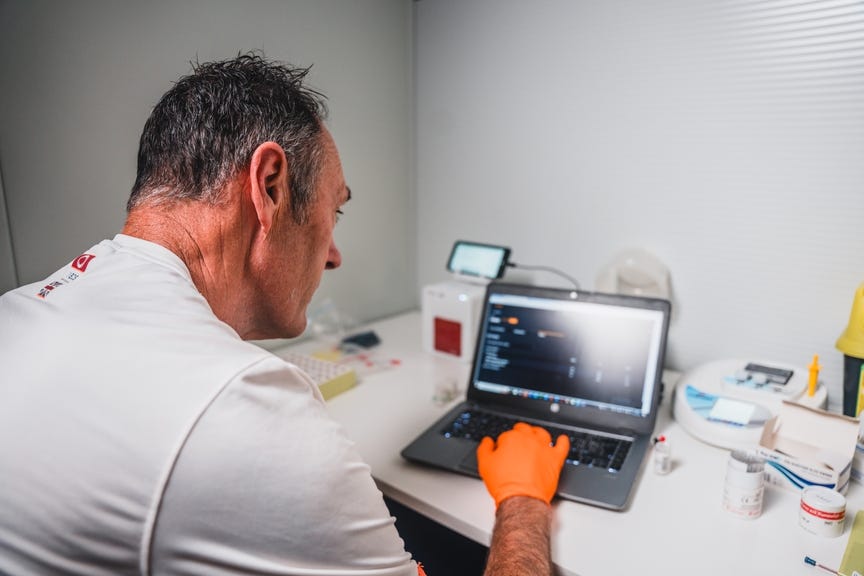
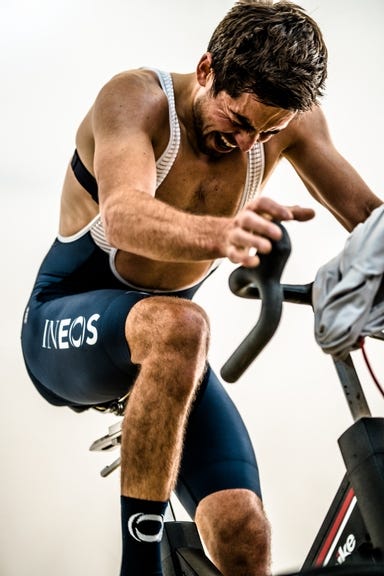
The physical demands on the crew -- required to supply the power to adjust the sails -- are immense. Four “Cyclors” must pedal hydraulic oil pumps at peak outputs of up to 500 watts with a baseline of 250 watts. These athletes need all the help they can get. INEOS Britannia turned to the Irish sports performance business Orreco, as official bioanalytics supplier.
“Orreco are the market leaders in analysing blood and looking at recovery,” said INEOS Britannia’s Head of Human Performance, Dr Pete Cunningham.
Orreco’s CEO and co-founder is Dr Brian Moore, who previously worked with Cunningham on the Olympic programme of the British Sailing Team.
“I was obsessed with performance and what makes someone the best they can be,” said Moore. “In the past 25 years I’ve been privileged to work with athletes competing in the Premier League, Formula 1, NFL, NBA and multiple Olympic and World Champions and they all have the same principles – it’s all about the athletes performing, competing, training optimally and recovering as quickly as possible”.
“Every person is different and training has evolved a lot due to the science we have now, it’s no longer the “no pain, no gain” show in sport. It’s about what is the smartest way the athletes can train to deliver the power needed. The wattages the INEOS Cyclors are putting out are phenomenal”.

“I’ve known Brian for about 20 years,” added Cunningham. “We worked together in the Olympic days, but his company now are world leaders and work with most of the Premier League football clubs. The science they bring certainly helps you decide what to do on a day-to-day basis when looking at recovery.”
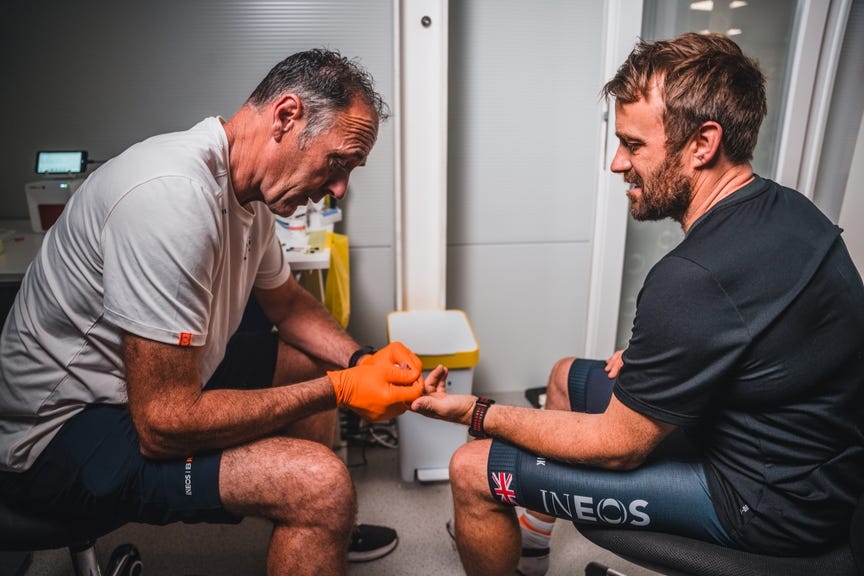
The science is complex, but Orreco have made the process straightforward for the users. “We take a little capillary of blood as a sample from each Cyclor,” explained Cunningham.
“Prior to racing we tended to do that once week and usually after a rest day. We can see how the data varies from the previous week. Once into the racing we did it a bit more often to see how the Cyclors were coping with the demands. It’s really interesting as it can spot things like infections and illnesses early on, even when the person is asymptomatic. It gives us an early warning that something’s not quite right, so we can make changes to their training and recovery if needed.”
“We need a few drops of blood from each athlete,” added Brian Moore. “Pete then runs this through a machine he has at the base, and it goes into our software platform and tells him how each Cyclor is performing. He can measure that information within minutes. It has a red, amber, green system which tells you how the athlete is doing. Green is good to go, amber means to be a bit careful, and red is that we need to understand what’s happening. Using the numbers we provide, Pete can then tune each athlete’s programme. The science and analytics help to fine tune the human power by getting a snapshot of what is happening in the body. We can see how the athletes are responding to the training and what their engines need to recover and perform again the next day.”
There is a significant quantity of science and research behind Orreco’s analysis. They measure Cyclors inflammation levels and their Free Oxygen Radical Test (FORT) and Free Oxygen Radical Defense (FORD) to measure the antioxidant level in the body, and thus assess the individual’s training response and capacity.
“Orreco is refreshing because they have a lot of peer reviewed papers in good journals that support their work,” said Cunningham. “They also have advisors that can back up the science and tell us what to do in practical terms.
“There are lots of recovery markers we can look at, we look at body battery, sleep quality, HRV (heart rate variability) and resting heart rate, but it’s always good when you get some really good scientific data that helps back up everything else you’re looking at. We certainly change daily loads based on the results we get from Orreco. It’s not to say we dampen down the training but it’s certainly good at high stress times like racing when the days are quite long and very high intensity. It’s always good to have some markers to see how the Cyclors are coping with it. Even for things like crew rotation on a day-to-day basis, it helps you decide those things based on who’s more fatigued.
“At the beginning of the campaign we ran a decentralized programme where the Cyclors were based at their homes in the UK and followed a specific training programme. The intensity was quite low and the volume was quite high, so we did a lot of zone two training”.
“It’s moderately hard, probably about 70% of max heart rate and sometimes training for 28 hours a week. At that time, I don’t think we were overly worried about fatigue levels, it was more as we were coming to the racing period when we really started looking at blood markers and recovery. We’ve used the Orreco system now for about six months. The Cyclors have really bought into it, once you see the benefits from it and how useful it is, everyone comes on-board with it.”
“It’s really challenging to optimize the loads and the work for athletes and also protect them from getting sick or hurt,” added Brian Moore. “I was lucky enough to work with Pete nearly 20 years ago with the British Sailing Team and that work was all about how to optimize athletes and their recovery, using data analysis to help make decisions. At Orreco, we have evolved that a lot from what it was back then, to what it is now. So when Pete explained the Cyclor concept to us, we created custom metrics and tuned the algorithms to adapt to each athlete and give suggestions about what their bodies needed to recover optimally”.
“The demands on the Cyclors in the America’s Cup racing is immense, in terms of the power they need to achieve. The human power requirement for the boat to be able to execute all the maneuvers, I’ve never seen anything like this in the sporting world. The fact that they were able to deliver the power needed when they were racing five days in a row is testament to all the hard work of these amazing athletes and Pete’s training programme. The stress that’s on the Cyclors is truly immense and we love being a small part of that challenge, Orreco live and breathe innovation, and it’s an honour to be involved in the Cyclor programme with INEOS Britannia.”
You may also like:
🔎📈 Upside Study: Blood Biomarker Profiling and Monitoring for High-Performance Physiology and Nutrition: Current Perspectives, Limitations & Recommendations

Title: Blood Biomarker Profiling and Monitoring for High-Performance Physiology and Nutrition: Current Perspectives, Limitations & Recommendations
⚡ 📈 Upside: Injury Risk Assessment Solutions Ecosystem (Key Trends, Vendors, Recommendations to Teams) Analysis

Over the last decade, injury risk assessment has become a major challenge for many pro teams and leagues. For example, as shown in the graph below, among US sports leagues, the cost of injuries has skyrocketed over the years and totaled $700M and $500M for the MLB and NFL, respectively, in 2017. This is why pro teams and leagues are now investing heavil…