
This week our guest writer is Jordan Stewart-Mackie, a high-performance Scientist and PhD researcher with expertise in wearable technology integration and performance intelligence systems across elite football (Leicester City FC, West Bromwich), basketball (NBA), rugby, swimming, and academy environments.
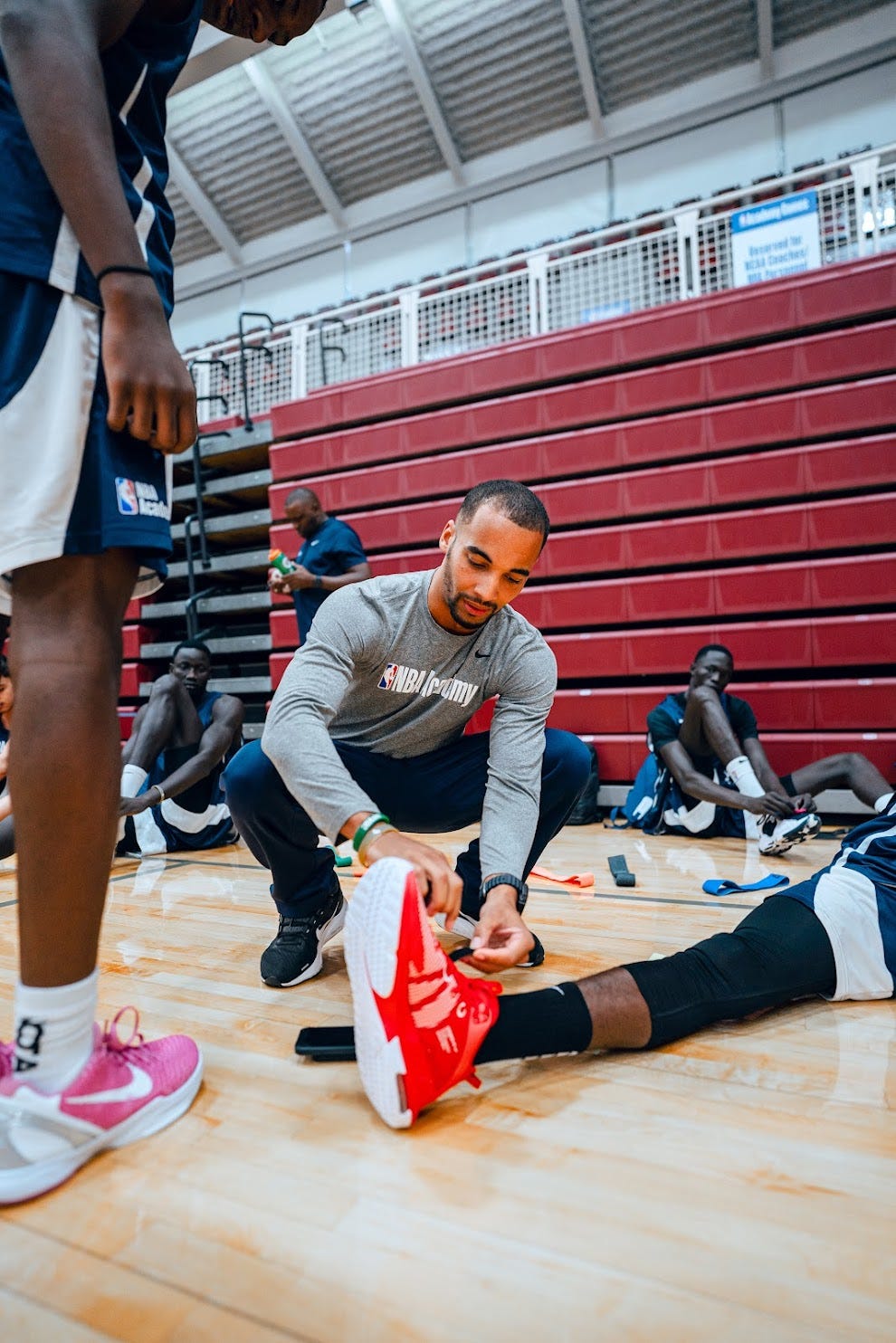
Picture: Jordan Stewart-Mackie
The Trust Architecture in Performance Innovation
Sport Tech ROI Lives or Dies in the “Decision Window”
By Jordan Stewart-Mackie MSc, CSci, PhD Researcher
In the quiet hours before a game, or in the compressed minutes after a session, there is a decisive exchange between coach and athlete. It is shaped by intuition. Refined by experience. And increasingly mediated by a screen. But here is the non-negotiable truth: if the data on that screen does not command immediate trust, it does not exist.
As an industry, we have mastered measurement. We are failing intervention. We are not short of data. We are short of decisions.
What we are building, at scale, are “Data Graveyards”: repositories of highly accurate, poorly timed, and ultimately unused information. The shift required is simple but not easy: from accuracy to Contextual Intelligence. From outputs to decisions. From data systems to trust systems.
The Human Cost of Noise
Data fatigue and data latency are not technical problems. They are system design failures.
When an athlete inputs daily wellness data and sees no change in their environment, engagement does not dip. It dissolves. When a practitioner spends 60 minutes cleaning data to extract one insight, they are not data-driven. They are operating inside friction.
At the highest level, the cost is not inefficiency. It is a misinterpretation. The inability to distinguish between one fatigue state and another is not a small error. It is the difference between adaptation and injury.
If your technology cannot provide that distinction within the “Decision Window”, the time between session completion and the next prescription, you have not built a performance tool. You have built a digital autopsy.
The Decision Window Is the Constraint
The Decision Decay Curve (Figure 1) defines the constraint. Data utility peaks within the first 15 to 30 minutes post-session, the Golden Hour, where insight becomes intervention. From that point, value erodes. At 60 minutes, the window closes. The athlete has left. The plan is set. By two hours, information is retrospective only. Beyond that, your data enters the Data Graveyard, where it carries no decision impact.
Figure 1 is not a visual. It is a system test. Where does your output land in time? The further right of the Decision Window it falls, the sharper the decline in decision impact. Data still holds value, but its potency to influence the next training block diminishes with every hour of latency.
A critical caveat: this curve describes real-time decision utility, not the value of data itself. Aggregating data over weeks, months, and seasons remains essential for identifying long-term trends, understanding cause-and-effect relationships, and building the evidence base that informs future decision thresholds. The curve does not argue against big data. It argues against confusing retrospective analytics with real-time intervention. Both matter. They serve different purposes.
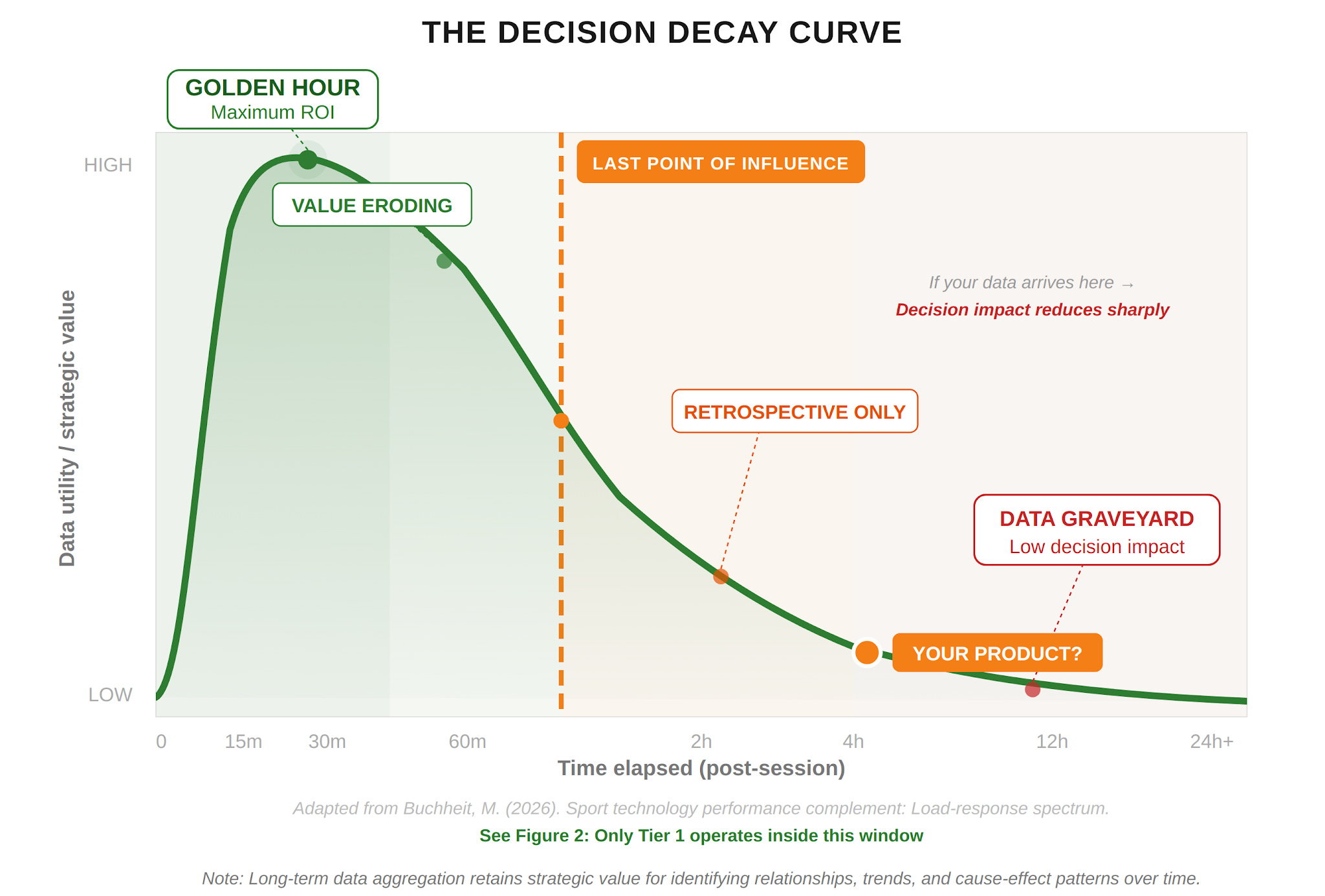
Figure 1: The Decision Decay Curve — a system test. Where does your product’s output land?
Mapping the Landscape: Where Does Your Product Sit?
Not all sports technology fails equally. The Sport Tech Landscape (Figure 2) separates solutions not by innovation but by decision impact under pressure.
Tier 1 — Contextual Intelligence. Delivered in minutes. Filtered. Actionable. Drives behaviour inside the Decision Window.
Tier 2 — Reporting Loop. Valuable insight, delivered too late. Latency kills impact.
Tier 3 — Baseline Monitoring. Low friction, low consequence. Necessary, not differentiating.
Tier 4 — Data Graveyard. Continuous monitoring without action pathways. Trust erodes, adoption collapses.
Figure 2 is a positioning tool. Tier 2: reduce latency. Tier 4: rebuild feedback loops. Tier 1: protect speed and clarity. Only Tier 1 operates where performance intelligence actually happens.
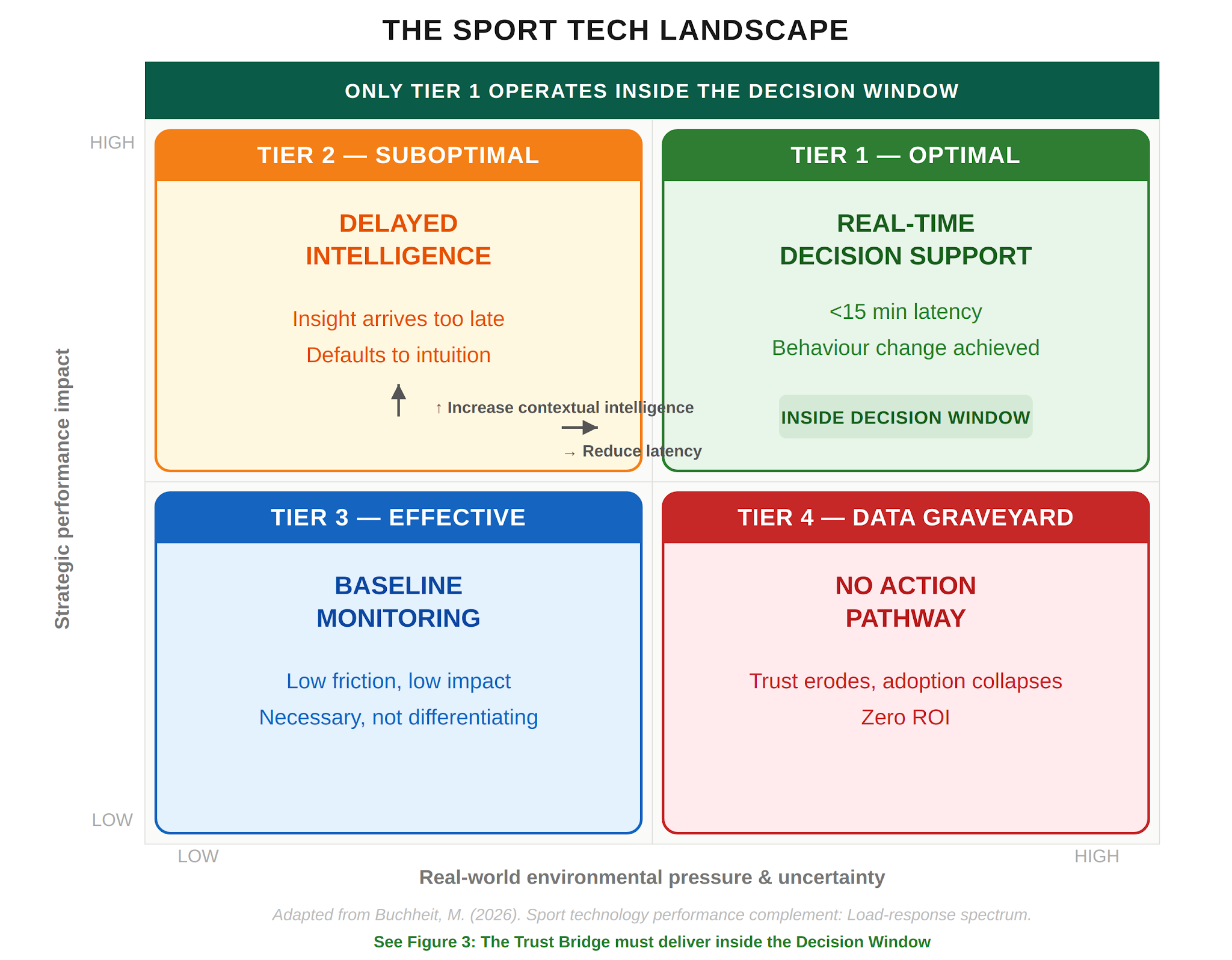
Figure 2: The Sport Tech Landscape — a positioning tool. Plot your solution. Identify your engineering priority.
The Blind Spot: Reporting ≠ Value
The most persistent fallacy in sport tech: more data equals more value. In high-performance environments, the opposite is true:
• Clarity beats Complexity.
• Timing beats Volume.
• Relevance beats Resolution.
There is a deeper discipline beneath these principles: decision quality is bounded by data quality. If the underlying measurement carries unacceptable error, or if the same metric means something different across two systems, then speed and clarity only accelerate a flawed conclusion. Every performance department must define its internal tolerance for measurement error and understand how meaning shifts between technologies. This is not a technical exercise. It is a strategic one. Without that foundation, even Tier 1 delivery produces Tier 4 outcomes.
The same principle applies to product teams: a unified system is the way forward, not one exceptional technology that cannot integrate with the wider purpose. The performance departments that generate the greatest return are not those with the best individual tools. They are those where every tool speaks the same language, feeds the same decision architecture, and operates within agreed tolerances. If your product exists in isolation, its accuracy is irrelevant. Integration is the multiplier.
The real shift: from Reporting (what happened) to Performance Intelligence (what to do next).
Engineering the Trust Bridge
The Workflow of Action (Figure 3) defines the minimum system required to convert data into impact. Raw signal is collected without disrupting the athlete. A filter suppresses noise and elevates what matters. Context interprets meaning and assigns priority. The Trust Bridge then demands clarity, timing, and confidence before anything reaches a decision-maker. If all three hold, behaviour changes and performance follows. If any one breaks, data falls into the Reporting dead-end: delayed, untrusted, unactioned.
The test is simple: can a coach or athlete act on this in under 10 seconds? If not, it is not performance intelligence.
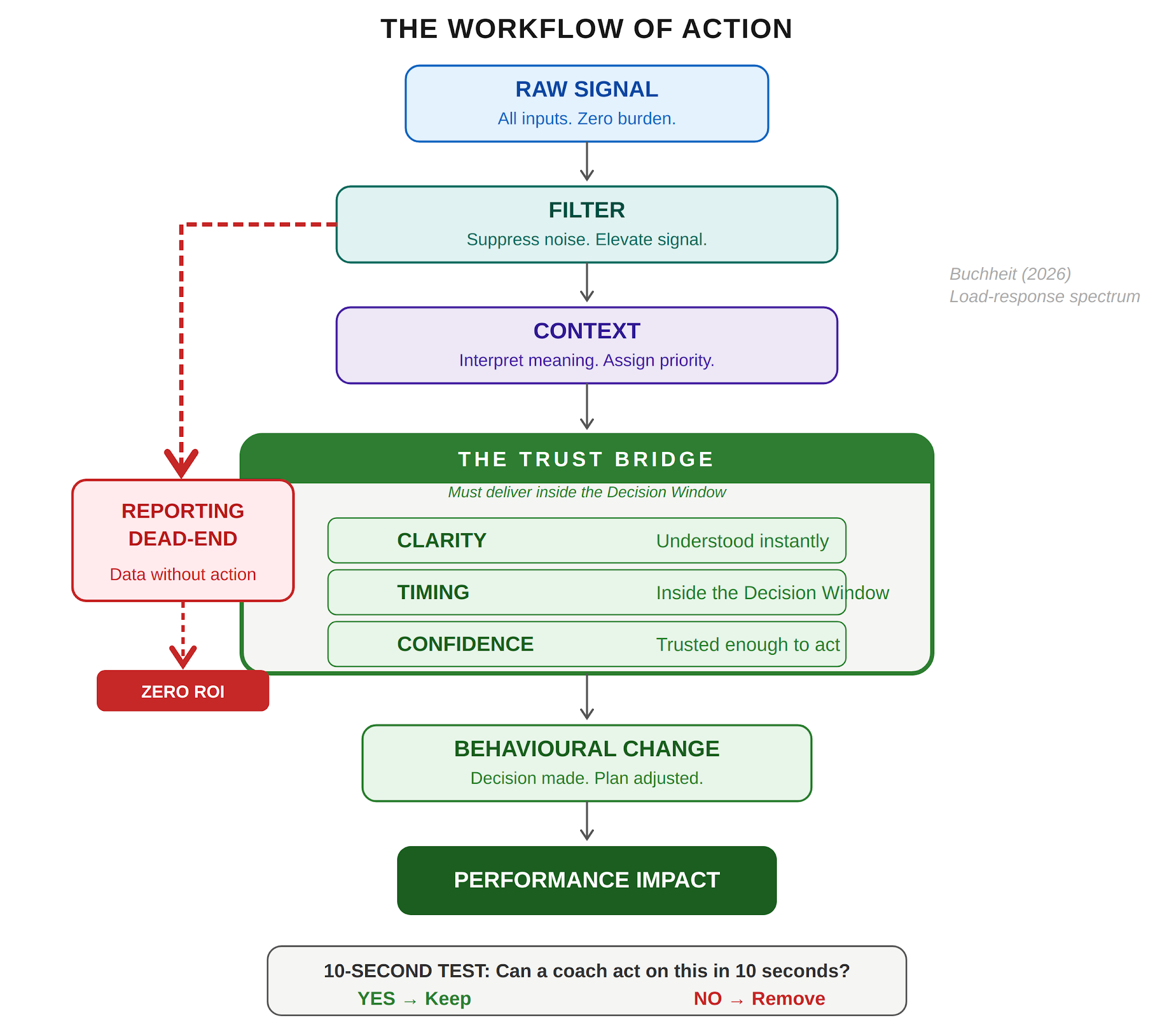
Figure 3: The Workflow of Action — every stage must be crossed. The 10-second test is the standard.
A Call to Build Differently
For investors evaluating sport tech:
– Ask founders to define their decision latency in minutes, not hours. If they cannot, the product is a reporting tool, not a performance tool.
– Plot the product against the Sport Tech Landscape. Tier 2 and Tier 4 solutions carry structural ROI risk regardless of the underlying technology.
– Evaluate whether the product drives measurable behaviour change at the coaching level, not just data collection volume.
For product teams:
– Map every output against the Decision Decay Curve. If your insight arrives after the Decision Window closes, re-engineer delivery before adding features.
– Build every feature against the Trust Bridge standard: does it deliver clarity, timing, and confidence simultaneously?
– Apply the 10-second test to every dashboard, alert, and report. If a coach cannot act on it in 10 seconds, simplify or remove it.
For practitioners:
– Audit your current technology stack against the Sport Tech Landscape. Identify which tier each solution occupies and prioritize accordingly.
– Demand visible, timely return on every data point your athletes contribute. If a technology takes input without returning actionable insight, it is extraction, not partnership.
– Use the Decision Window as the non-negotiable benchmark when evaluating new technology purchases. Speed of insight to decision is the metric that matters.
Looking Ahead: From Wearables to Humanwear
There is a deeper shift emerging beneath the problems described in this piece, and it will redefine the relationship between athlete and technology entirely.
Most performance systems today are built around wearables: devices athletes strap on, charge, sync, and tolerate. They require conscious engagement. They demand workflow. They introduce friction at precisely the moments when friction is least affordable. The athlete adapts to the technology, when it should be the other way around.The next generation will not be wearable. It will be humanwear.
Imagine biometric fabrics woven into training kit that monitor internal load states without a single sensor being attached. Smart materials that detect changes in muscle stiffness, hydration, and thermal regulation through the garment itself. Surfaces embedded with force-sensing capabilities that capture ground reaction data from every stride, every change of direction, every landing, without the athlete knowing the system exists.
Imagine ambient intelligence systems in training environments that fuse optical tracking, environmental sensing, and physiological inference into a single contextual layer, delivered to the practitioner before the athlete reaches the changing room. No syncing. No cleaning. No delay.
This is not science fiction. The component technologies already exist across adjacent industries: adaptive textiles in medical monitoring, soft robotics in rehabilitation, embedded sensing in automotive and aerospace. What sport needs is the integration architecture to bring them together in a way that serves the Decision Window.
The goal is not more data. It is less friction between signal and decision. The ultimate performance technology is the one the athlete never thinks about, the practitioner trusts completely, and the coach acts on instinctively. Invisible in operation. Indispensable in impact.
Because the real constraint has never been measurement. It has always been decision velocity under pressure. The organizations and innovators who solve for that, who engineer trust into the fabric of the system rather than bolting it on afterward, will not just build better products. They will define the next era of elite performance.
Final Thought
We do not need more data. We need better decisions. The organizations that understand this will not just build better tools. They will build Trust Architectures: systems where data moves at the speed of performance, and decisions happen when they still matter.
You may also like:
✍️ 🧠 Upside Guest Writer: The Power of Your Breath, By Leonard Zaichkowsky

This week our guest writer is Dr Len Zaichkowsky, PhD. Len is a world-class expert in biofeedback, psychophysiology, and cognitive fitness, specializing in the application of neuroscience and psychology to elite sports performance. With decades of experience as a professor, researcher, and consultant, he has worked with top professional teams across the…
🏎️ Upside F1 Guest Writer Series: Engineering a F1 driver, By Pieter Bulink, CEO, Maverick Training

This week, as part of our content series on F1, our guest writer is Pieter Bulsink, CEO of Maverick Training, a sports performance company focused on elite athletes in F1 and other sports. Pieter has been working with top athletes such as 4 times world champion in F1 Max Verstappen (Red Bull). Pieter has also worked with top women drivers such as Emely …
Great piece.
I would add that trust is not a UX feature, dashboard design principle, or confidence score. It is an architectural constraint enforced before interpretation is allowed to reach the user.
A rush to judgment can result in something no better than a faster error.