
2026 FIFA World Cup: The Tournament That Changed Football Forever
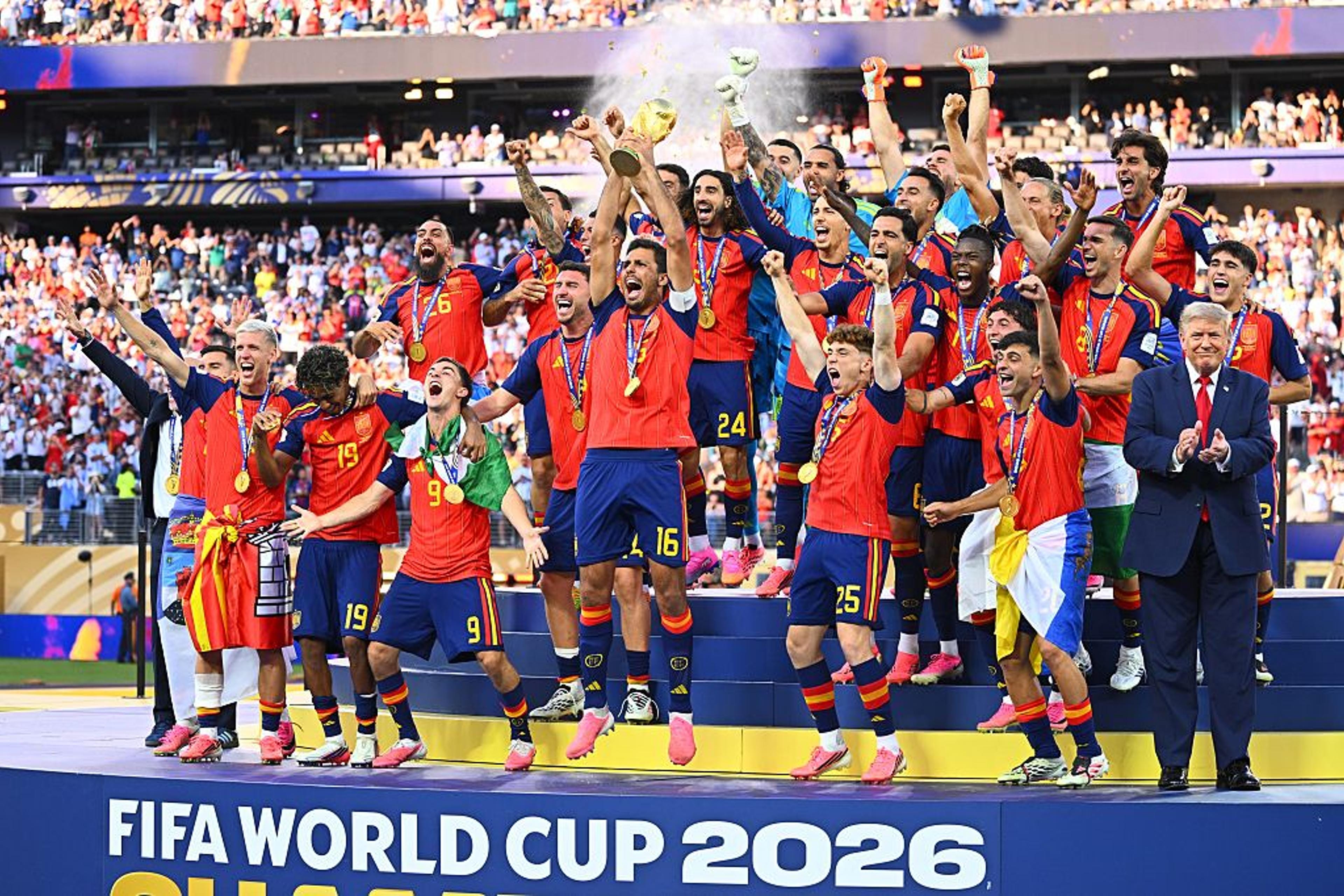
The 2026 FIFA World Cup will be remembered as one of the most significant tournaments in the history of the sport. Hosted jointly by the United States, Canada and Mexico, it was the first World Cup to feature 48 teams, the first to be played across three host nations, and the largest sporting event ever organized by FIFA. With 104 matches, record-breaking commercial success, and the introduction of new technologies both on and off the pitch, the tournament represented a turning point for international football.
On the field, Spain captured its second FIFA World Cup title with a disciplined 1–0 victory over Argentina in the final, completing a tournament in which tactical intelligence, technical quality and squad depth proved more valuable than individual brilliance alone. Off the field, FIFA reported unprecedented revenues, broadcasters attracted global audiences numbering in the billions, and innovations in sports science and officiating demonstrated how rapidly football is embracing technology.
The 2026 World Cup was therefore more than simply another international tournament—it was a preview of football’s future.
The Largest World Cup Ever
The expansion from 32 to 48 teams had been one of FIFA’s most debated decisions. Critics feared that the tournament would become too long, include too many one-sided matches, and reduce the quality of play. Instead, the competition largely proved the opposite.
The new format created opportunities for countries making their World Cup debuts while allowing more teams from Africa, Asia and CONCACAF to compete on football’s biggest stage. Several emerging nations exceeded expectations, demonstrating that the gap between traditional football powers and developing football nations continues to narrow.
The tournament also featured a new knockout structure beginning with a Round of 32, increasing the total number of matches from 64 in Qatar 2022 to 104 in 2026. Although this created a longer tournament, it also generated more high-profile fixtures, more television content and significantly greater commercial opportunities.
Perhaps most importantly, fans quickly embraced the expanded format. Stadiums across North America consistently sold out, and supporters travelled between the three host nations in remarkable numbers, creating one of the most cosmopolitan atmospheres ever seen at a World Cup.
Tournament by the Numbers
Commercially, the 2026 FIFA World Cup surpassed every previous edition.
Some of the tournament’s headline statistics include:
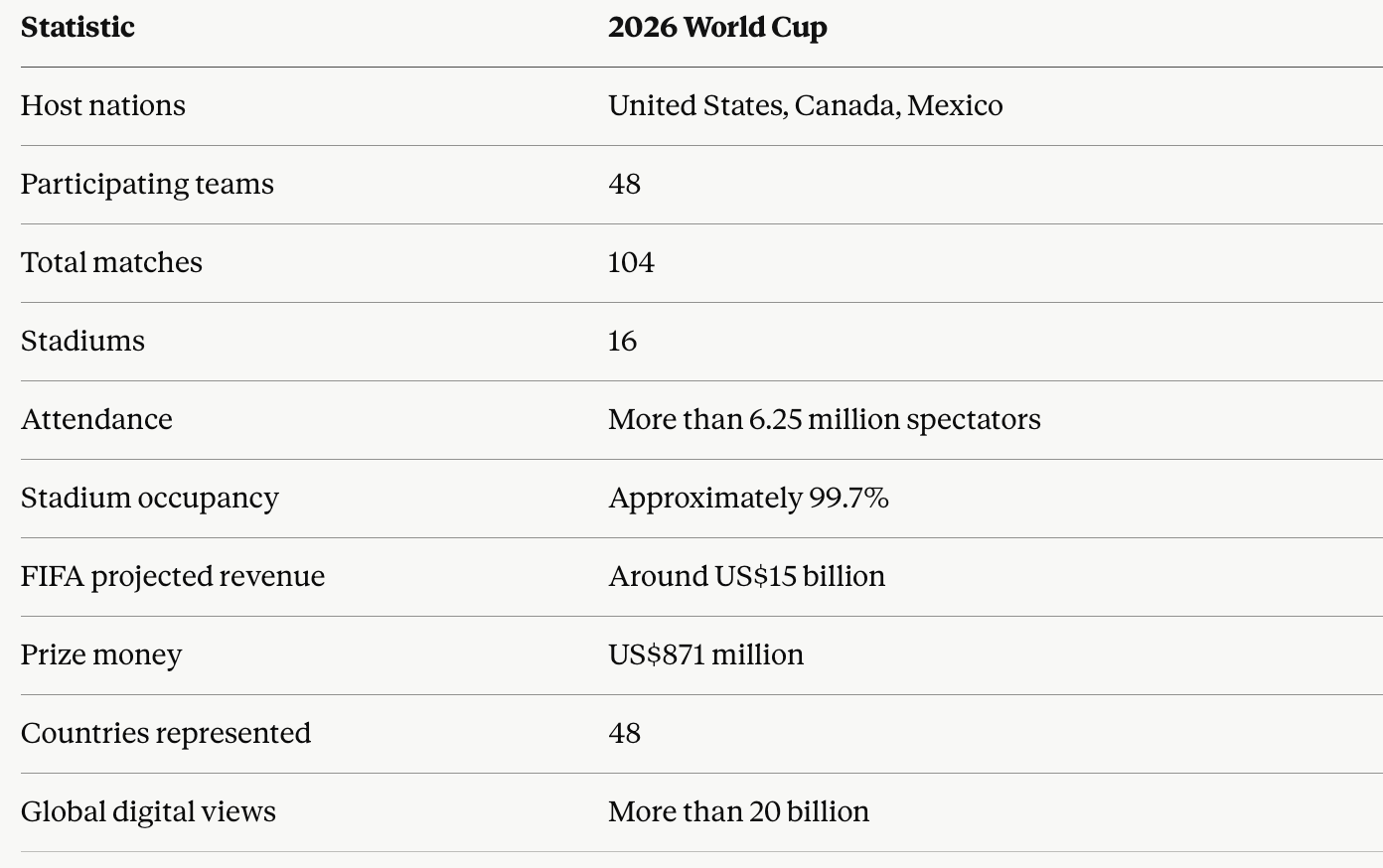
Source: Upside Global, July 2026
The tournament generated record revenues through multiple channels, including television rights, sponsorship agreements, hospitality packages, merchandise sales and ticketing. FIFA’s commercial partnerships reached unprecedented levels, with global brands investing heavily to capitalize on the expanded audience.
Ticket sales also exceeded expectations. While standard tickets remained available for many matches, premium hospitality experiences and VIP packages sold exceptionally well, particularly in the United States. Dynamic pricing models enabled FIFA to maximize revenue for high-demand fixtures, although they also generated criticism from supporters who argued that attending matches had become increasingly expensive.
Broadcasting figures reflected football’s continuing worldwide appeal. Billions of viewers watched matches through traditional television broadcasts and digital streaming platforms, while social media engagement reached record levels through highlights, player interviews and behind-the-scenes content.
Technology Shapes a New Era of Football
One of the defining features of the 2026 World Cup was the widespread use of technology. Innovations that would have seemed experimental only a decade ago became standard practice throughout the tournament.
Hytro Recovery Wear
Recovery technology has become an increasingly important part of elite football, particularly as fixture schedules become more demanding.
Several national teams used Hytro recovery garments before and after matches. Unlike traditional compression clothing, Hytro garments incorporate raised micro-massaging elements that gently stimulate circulation during movement. The aim is to improve blood flow, reduce muscle soreness and accelerate recovery between matches.
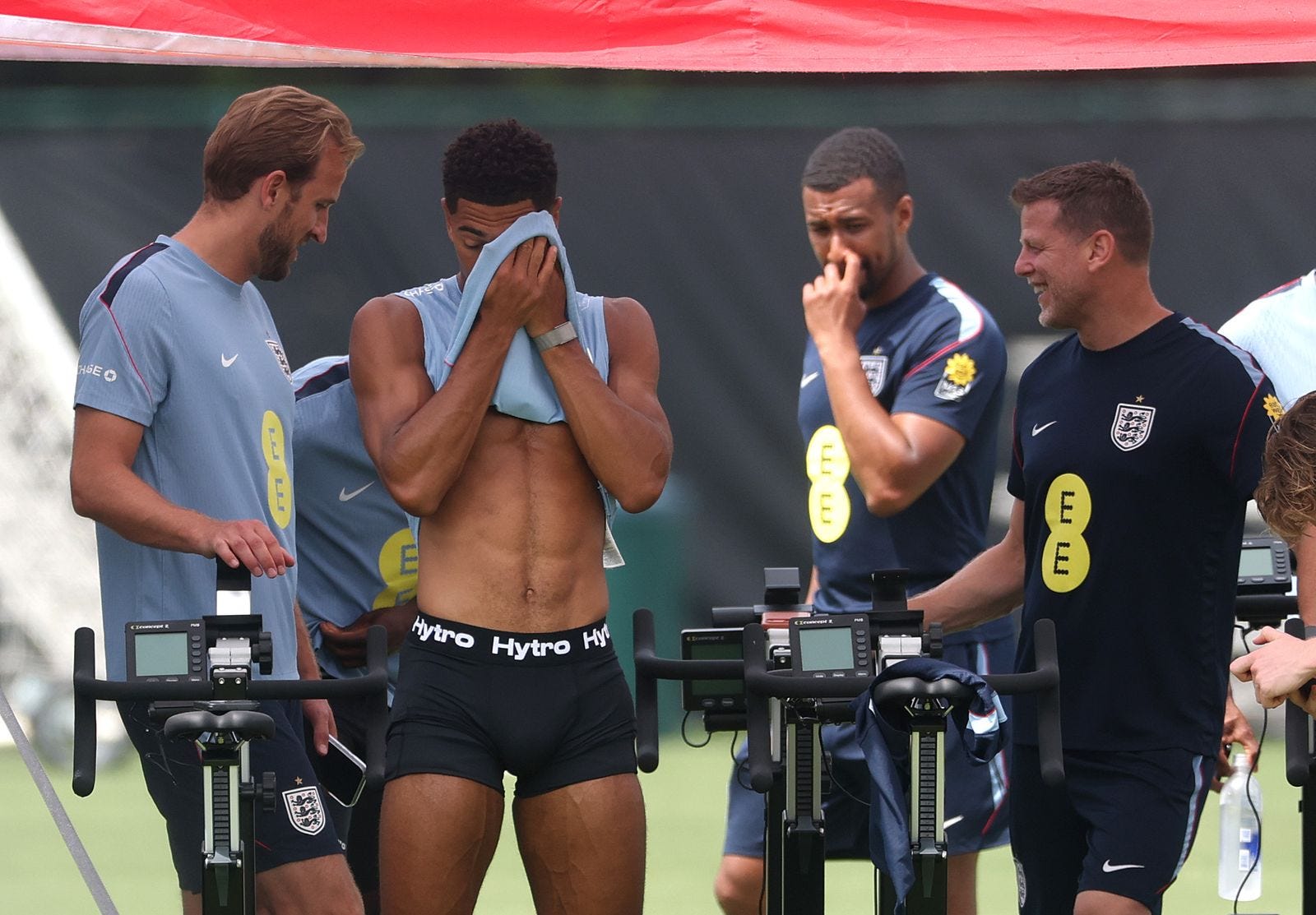
Picture: Jude Bellingham wearing the hydro short.
For teams facing only a few days between knockout fixtures, marginal gains in recovery could provide a meaningful competitive advantage.
Referee Body Cameras
One of the tournament’s most talked-about innovations was the introduction of referee body cameras during selected matches.
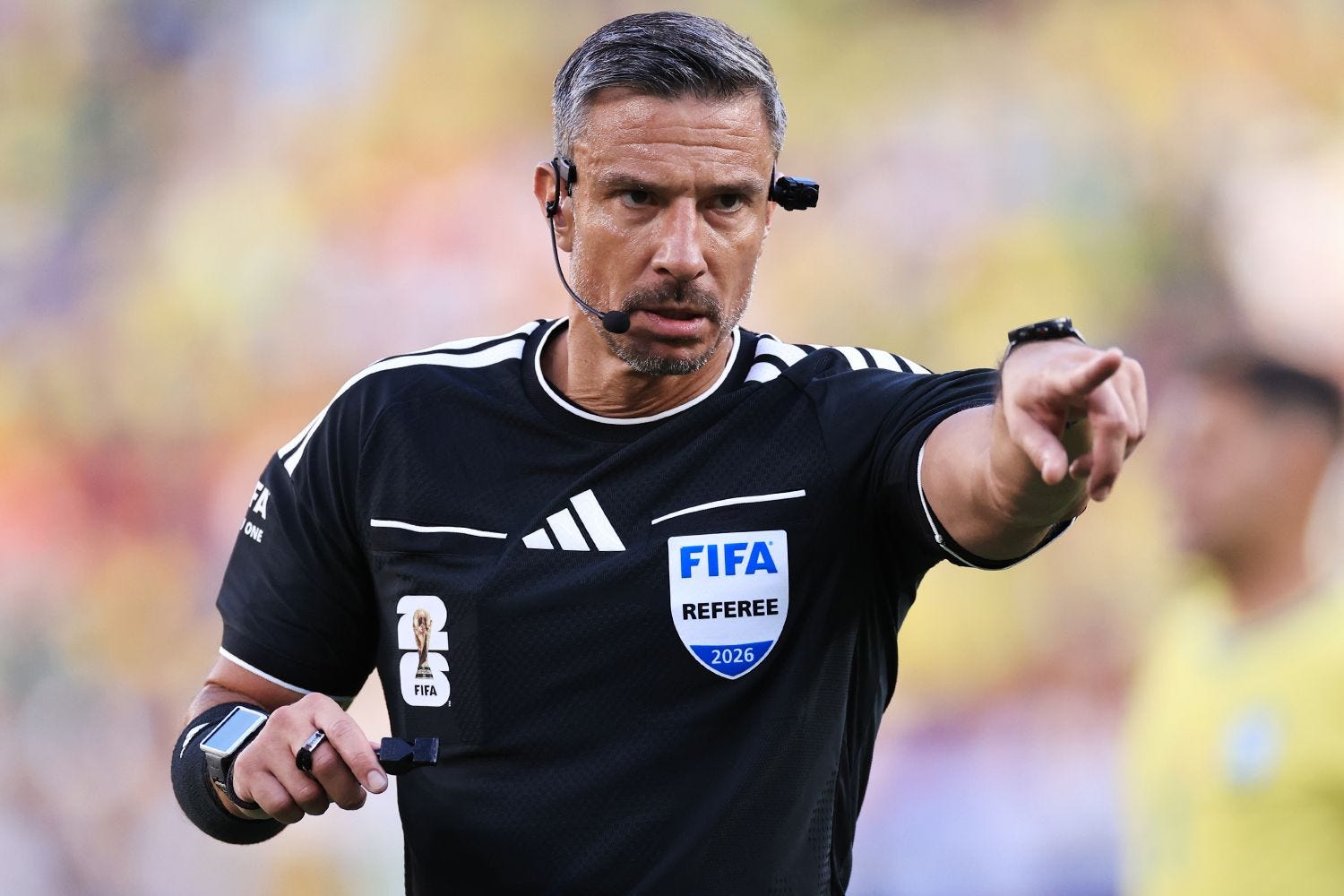
These cameras gave broadcasters unique first-person perspectives of key incidents, allowing supporters to experience the speed and intensity of elite officiating. They also offered valuable educational material for referee development and increased transparency surrounding controversial decisions.
Although the cameras were primarily introduced for broadcasting purposes, FIFA may eventually expand their role in referee training and match analysis.
Semi-Automated Offside Technology
The 2026 tournament featured an improved version of FIFA’s Semi-Automated Offside Technology (SAOT).
Using multiple stadium cameras, artificial intelligence and real-time player tracking, the system detected offside positions within seconds. Combined with the connected match ball, officials received highly accurate information almost instantly, significantly reducing delays compared with earlier implementations of VAR.
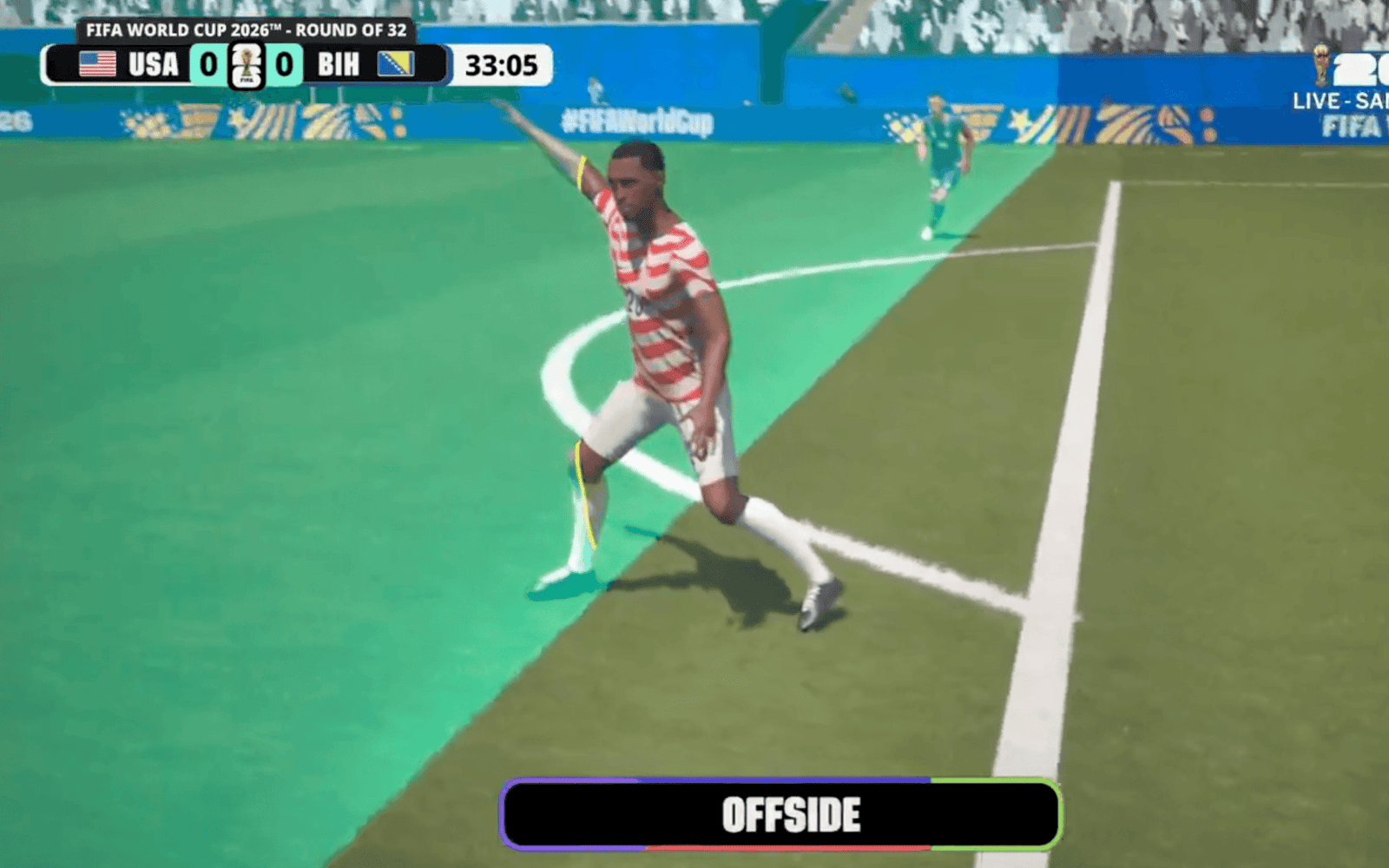
The faster decision-making process improved the overall viewing experience while maintaining the accuracy expected at the highest level.
Connected Match Ball
The official Adidas match ball contained an embedded motion sensor capable of transmitting positional information hundreds of times each second.
This data was integrated with optical tracking systems throughout the stadium, helping officials determine precise ball contact, improve offside calculations and support goal-line technology.
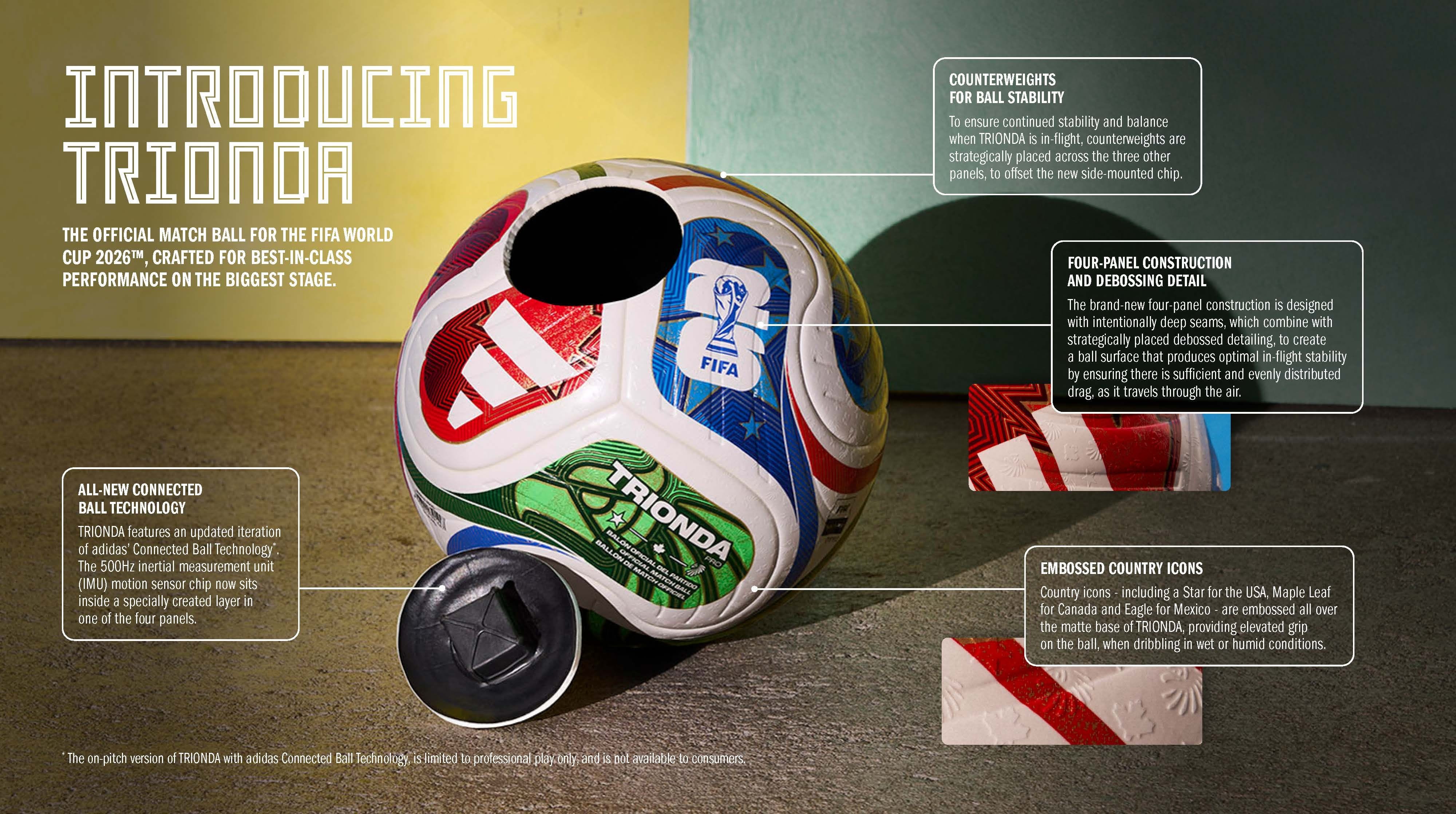
Beyond officiating, the data also gave analysts, coaches and broadcasters deeper insights into passing speed, shot velocity and tactical movement.
It is also worth pointing out that research aboard the International Space Station and testing in NASA wind tunnels directly contributed to the science used to evaluate World Cup soccer balls, helping manufacturers avoid the problems that plagued one of the most controversial balls in tournament history.
AI and Performance Analytics
Artificial intelligence played a larger role than ever before.
Coaching staffs relied on advanced data models to analyse opposition tactics, identify pressing patterns and optimise substitutions. Wearable GPS devices tracked player movement, workload and fatigue throughout the tournament, allowing sports scientists to tailor recovery programmes for individual athletes.
As football becomes increasingly data-driven, performance analysis is now as essential as tactical coaching.
Defining Moments of the Tournament
Every World Cup produces unforgettable moments, and the 2026 edition delivered no shortage of memorable stories.
Spain’s victory over Argentina in the final represented the culmination of years of investment in youth development. Their possession-based football was complemented by greater defensive discipline and tactical flexibility than previous Spanish teams.
Argentina once again demonstrated extraordinary consistency on the international stage by reaching another World Cup final. Despite falling just short of retaining the title, their campaign reinforced the country’s reputation as one of football’s most resilient tournament teams.
England’s run to the semi-finals reignited optimism among supporters, while Morocco once again demonstrated that its remarkable performances in recent World Cups were no accident. Norway emerged as one of the tournament’s surprise packages with disciplined defensive performances and efficient attacking football.
The expanded tournament also produced memorable underdog stories. Smaller football nations competed fearlessly against traditional powers, providing further evidence that global investment in coaching and player development is reducing historical competitive gaps.
Several knockout matches required extra time or penalty shootouts, producing dramatic finishes that captivated audiences around the world.
Commercial Success and Lasting Impact
From a business perspective, the 2026 World Cup established a new benchmark for global sporting events.
Corporate sponsorship reached record levels, with technology companies, financial institutions and consumer brands all competing for visibility during the tournament. Hospitality programmes expanded significantly compared with previous editions, reflecting growing demand from corporate clients.
Digital content also transformed the fan experience. Broadcasters increasingly delivered personalised match highlights, multiple camera angles and interactive statistics through streaming platforms. Younger audiences engaged with the tournament primarily through social media clips and mobile-first content, illustrating changing patterns in sports consumption.
The tournament also demonstrated the logistical complexity of hosting a World Cup across three nations. Extensive investment in transportation, stadium infrastructure and border coordination allowed millions of supporters to travel between venues efficiently, although travel distances remained one of the competition’s greatest challenges.
The Ballon d’Or Race
As always, performances at the World Cup are expected to play a significant role in determining the Ballon d’Or winner.
Spain’s triumph has naturally strengthened the case for several of its players.
The leading candidates include:
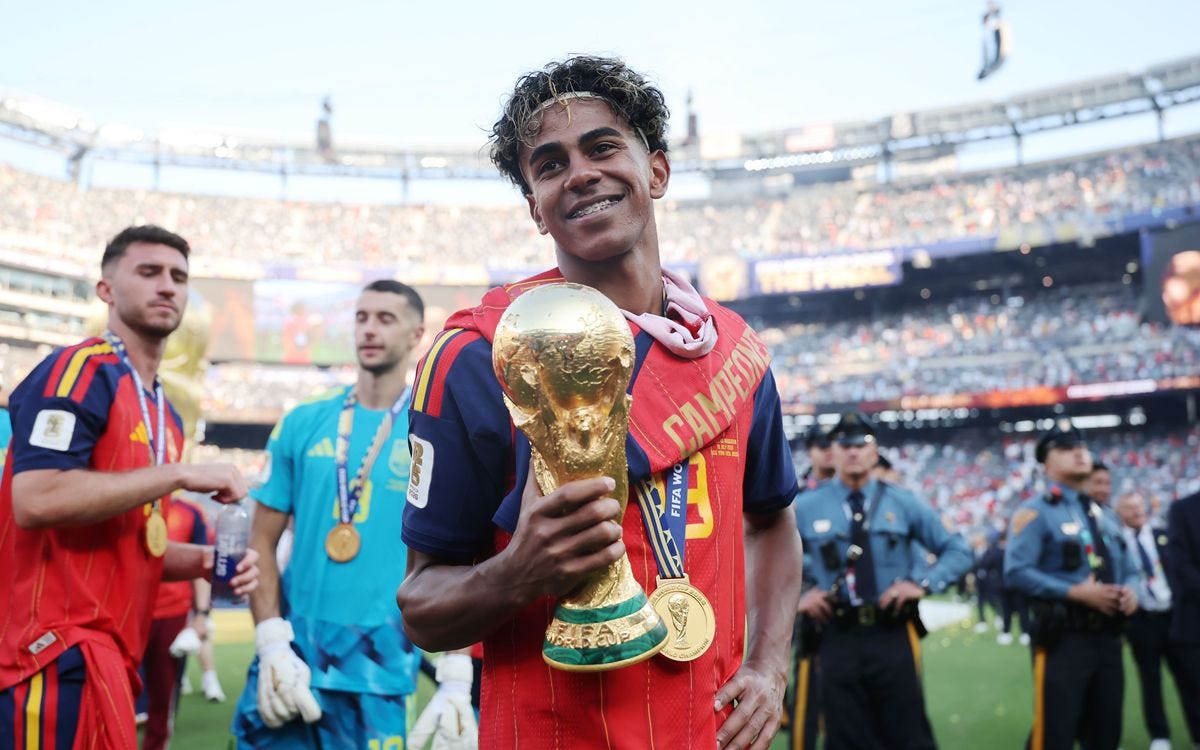
Lamine Yamal, whose creativity and attacking influence throughout both the club season and World Cup make him one of the strongest contenders.
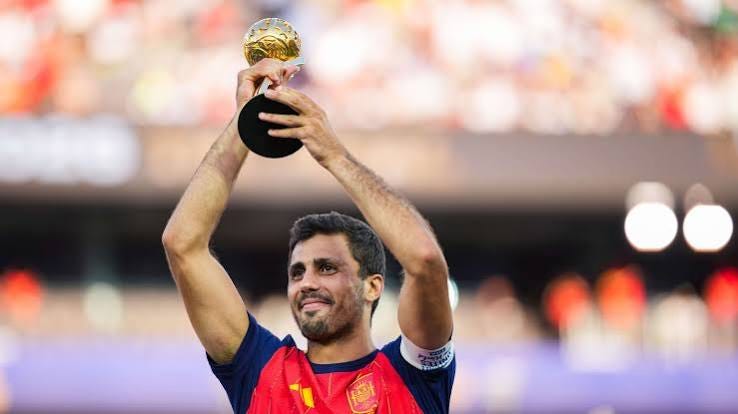
Rodri, whose control of midfield and tactical intelligence continue to redefine the defensive midfield position.
Pedri, whose technical quality and consistency have earned widespread praise.
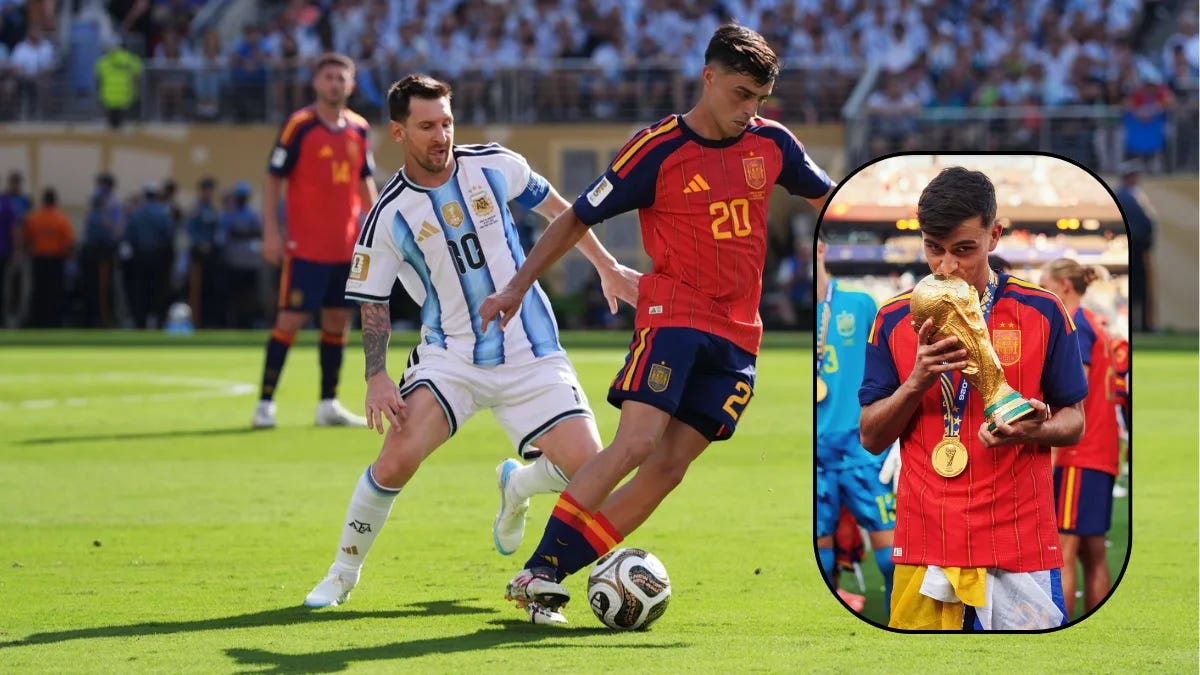
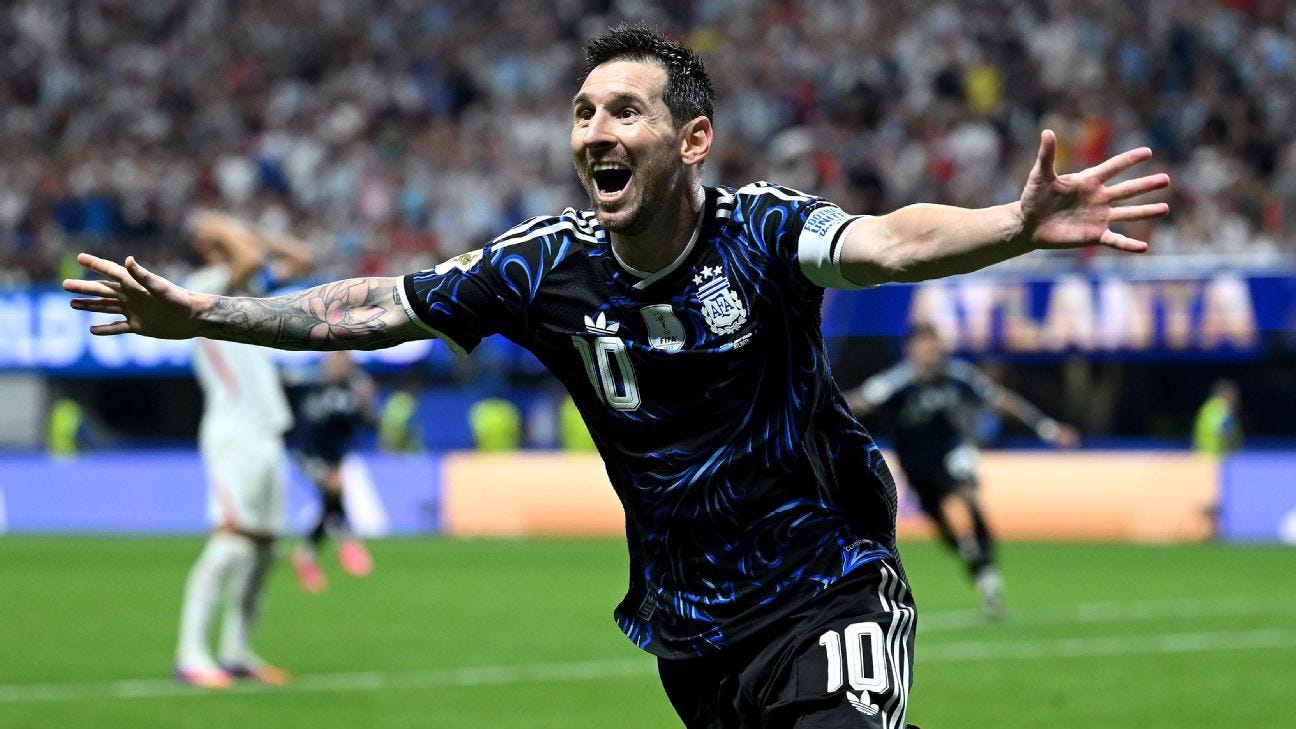
Lionel Messi, who, despite being in the latter stages of his legendary career, remains a player whose influence extends beyond statistics. If he played a meaningful role in Argentina's run to the World Cup final and maintained a high level of performance at club level, his legacy and continued excellence could keep him in the Ballon d'Or conversation.
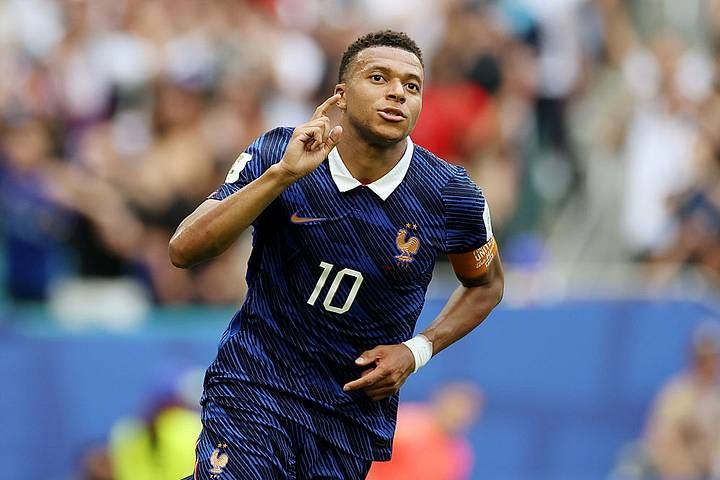
Kylian Mbappé, who remains among world football’s elite despite France falling short of the title. He also retained the World Cup Golden Boot after Lionel Messi failed to score in Sunday's final against Spain. The France forward netted 10 goals in eight games to edge out Lionel Messi in a high-quality race. Mbappe is also now the men's World Cup all-time top scorer with 22 goals - one ahead of Messi.
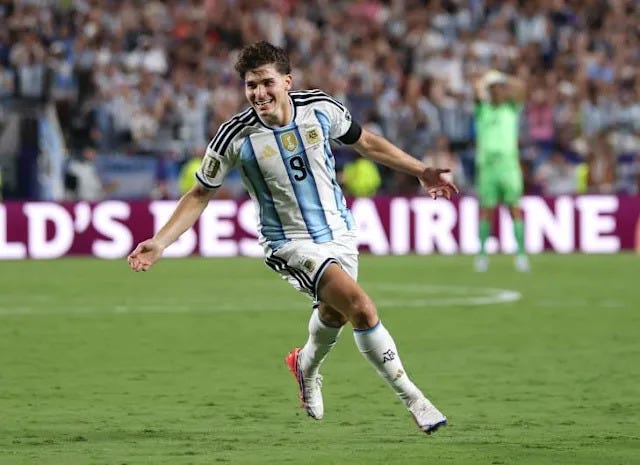
Julián Álvarez, whose performances helped Argentina reach another World Cup final.
Although club football after the tournament will influence the final voting, Spain’s World Cup victory gives its leading players a significant advantage heading into the Ballon d’Or ceremony.
Looking Ahead to the 2030 FIFA World Cup
With the conclusion of the 2026 tournament, attention now turns towards an even more symbolic event.
The 2030 FIFA World Cup will celebrate the 100th anniversary of the competition. The tournament will be hosted primarily by Spain, Portugal and Morocco, while Uruguay, Argentina and Paraguay will each stage one opening match to commemorate the inaugural World Cup held in Uruguay in 1930.
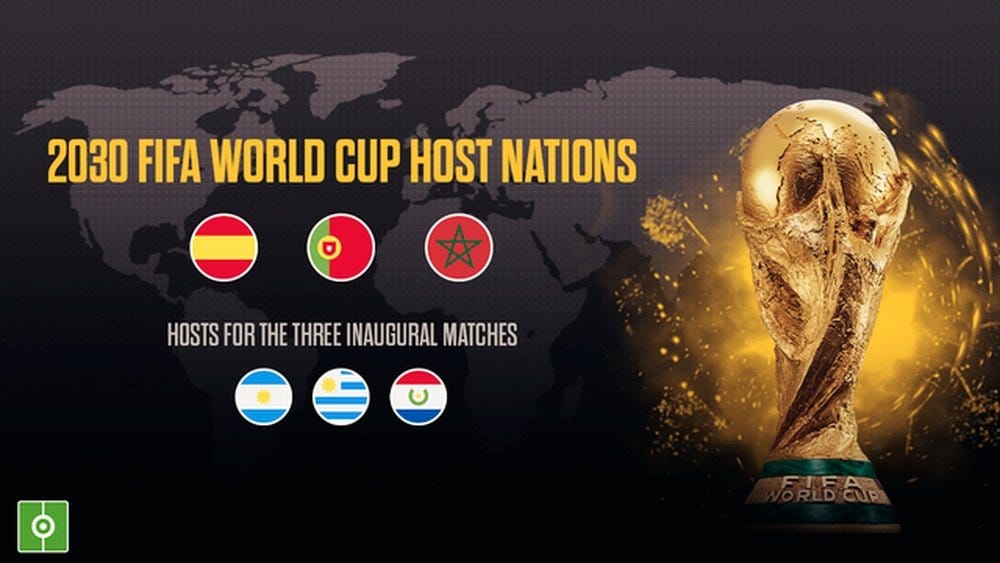
The centenary tournament is expected to continue using the successful 48-team format introduced in 2026 while placing even greater emphasis on sustainability, digital fan engagement and technological innovation.
Artificial intelligence is likely to play an expanded role in officiating, tactical preparation and broadcasting. Fans may also experience enhanced augmented reality features, personalised streaming options and increasingly immersive viewing experiences both inside stadiums and at home.
For FIFA, the challenge will be to preserve football’s traditions while embracing innovations that improve fairness, entertainment and accessibility.
Conclusion
The 2026 FIFA World Cup demonstrated that football continues to evolve both on and off the pitch. The expanded tournament format proved more competitive than many critics expected, while technological innovations improved officiating, player performance and the overall fan experience.
Commercially, the tournament established new financial records, confirming football’s position as the world’s most valuable sporting property. At the same time, debates surrounding ticket affordability, fixture congestion and commercialisation reminded governing bodies that growth must be balanced with accessibility for supporters.
Most importantly, the competition delivered memorable football. Spain’s triumph, Argentina’s resilience, the emergence of new footballing nations and the successful integration of technology ensured that the 2026 FIFA World Cup will be remembered as a landmark event in the history of the game.
As preparations begin for the centenary World Cup in 2030, FIFA now has a blueprint for the future—one that combines tradition, innovation and global participation on a scale never seen before.
You may also like:
⚽ The Soccer Tech Ecosystem Analysis: From wearables, VR training, NFTs Metaverse..to DNA testing.

Soccer is by far the most popular sports in the world with 4B soccer fans globally, according to Worldatlas.