
Introduction
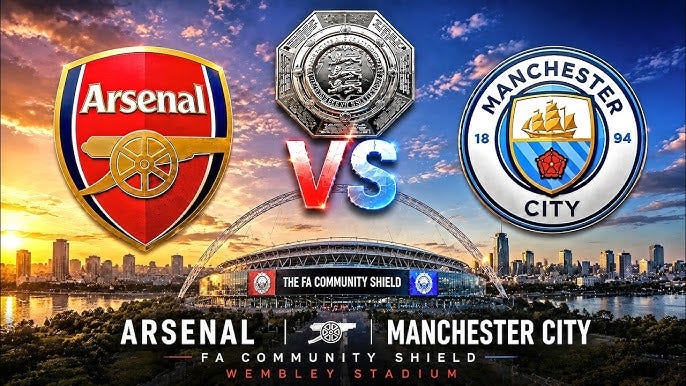
The FA Community Shield returns this weekend with a high-profile meeting between Arsenal and Manchester City at Cardiff’s Principality Stadium. Scheduled for Sunday, August 16, 2026, the match brings together Arsenal, the reigning Premier League champions, and Manchester City, the FA Cup winners. Beyond determining the first trophy winner of the new English football season, the contest will offer supporters an early look at both teams’ new players, tactics and ambitions.
Every year, before the Premier League campaign begins, two of England’s most successful clubs meet in the FA Community Shield. The match traditionally features the reigning Premier League champions against the winners of the FA Cup. If one club wins both competitions, the Premier League runners-up usually take the second place.
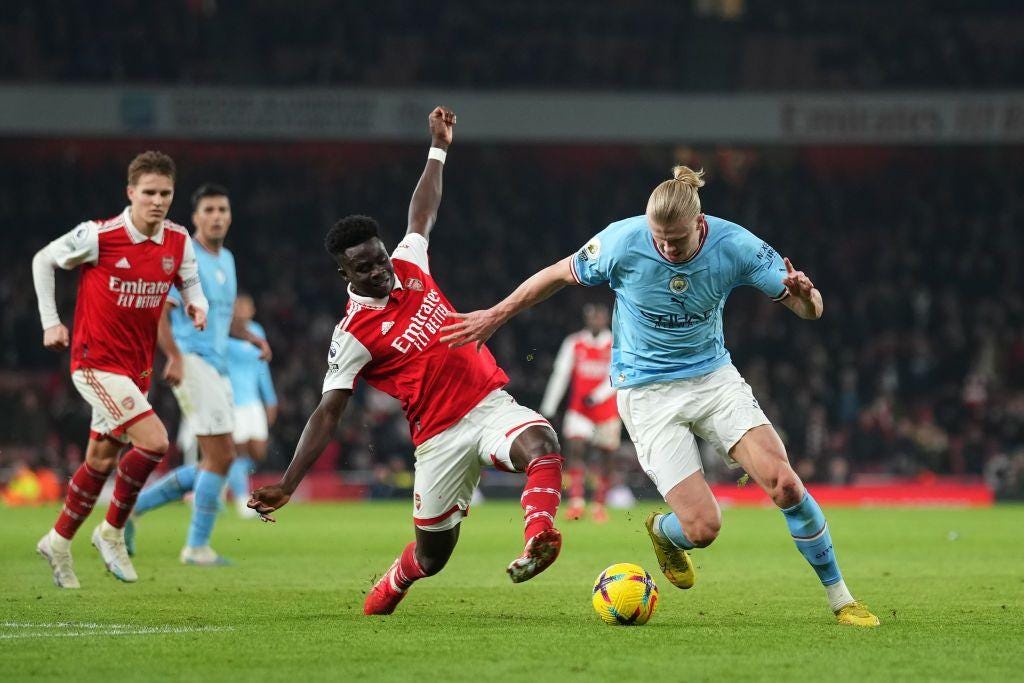
The Community Shield occupies an unusual position in English football. It is an official trophy and a prestigious occasion, but it also serves as a bridge between preseason and competitive league football. Managers may use the match to evaluate new players and tactical systems, yet both teams still want to win. For Arsenal and Manchester City, this year’s encounter is therefore more than a final preseason test: it is an opportunity to make an early statement against a major rival.
Supporters view the Shield as the ceremonial opening of the domestic season and an early opportunity to measure their club against elite opposition. More importantly, the event has always possessed a charitable purpose. Its long history connects professional football, community organizations and the continuing development of the English game.
History of the Community Shield
The Community Shield can trace its origins to the Sheriff of London Charity Shield, a competition established in the late 19th century. That match usually placed a leading professional club against a leading amateur team. It reflected a period when English football was divided between professional players and supporters of the amateur tradition.
One of the most remarkable matches from this earlier competition occurred in 1904, when the amateur club Corinthians defeated FA Cup holder Bury 10–3. Corinthians represented the sporting ideals associated with amateur football, including fair play and playing for enjoyment rather than financial reward.
The first official FA Charity Shield was contested in 1908. Manchester United, the Football League champions, faced Queens Park Rangers, the Southern League champions, at Stamford Bridge. The first match ended in a 1–1 draw, so a replay was arranged. Manchester United won the replay 4–0. No Community Shield match has required a replay since.
During its early decades, the format was not consistent. The participants could include league champions, cup winners, representative teams, amateur selections and even groups of players assembled for a particular purpose. The venue also changed frequently because the match did not yet have a permanent home.
A particularly unusual edition took place in 1950. Instead of two clubs, a team made up of players from England’s 1950 World Cup squad faced a Canadian Touring Team consisting of players who had participated in an FA tour of Canada. The World Cup Team won 4–2 at Stamford Bridge. This match demonstrates how flexible the competition remained during the first half of the 20th century.
The modern identity of the event began to take shape in 1974. FA secretary Ted Croker proposed that the Charity Shield should be staged at Wembley Stadium as the official curtain-raiser to the new season. The match would bring together the reigning league champion and the FA Cup winner. This established a recognizable qualification system and gave the event a prestigious national venue.
Wembley remained its regular home from 1974 until the old stadium closed in 2000. During the construction of the new Wembley, the match was held at the Millennium Stadium in Cardiff. It returned to Wembley in 2007.
There have been occasional moves to other grounds. Villa Park hosted the 2012 match because Wembley was being used during the London Olympic Games, while the 2022 Shield was staged at Leicester City’s King Power Stadium because Wembley was hosting the UEFA Women’s Euro final. The 2026 match between Arsenal and Manchester City will take the event back to Cardiff, this time at the Principality Stadium. Such changes illustrate the competition’s adaptability, although Wembley remains the stadium most closely associated with its modern history.
The event was known as the FA Charity Shield until 2002, when it was renamed the FA Community Shield. The new title emphasized that the money generated by the match supports community programs, charities and nonprofit organizations. According to the Football Association’s official history, more than £5 million was distributed to charities during the years in which the old Wembley hosted the event from 1974 to 2000. Modern proceeds continue to support communities throughout England and organizations in the area surrounding Wembley.
Key Moments in Community Shield History
Several matches and incidents have helped create the Shield’s distinctive history.
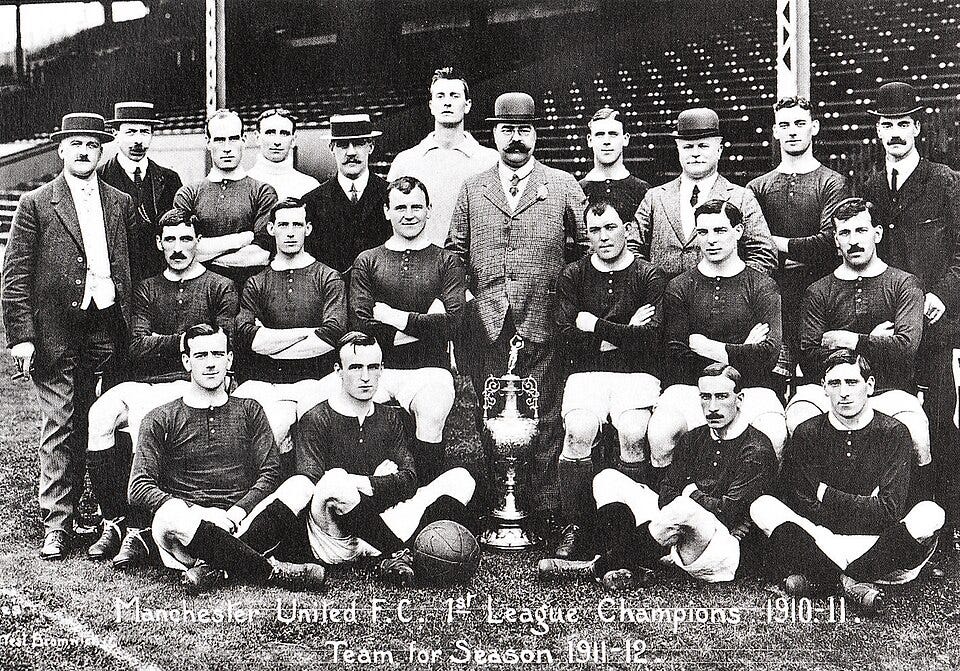
Manchester United’s 8–4 victory in 1911
The highest-scoring match in the competition occurred in 1911, when Manchester United defeated Swindon Town 8–4. The 12-goal contest remains one of the most extraordinary scorelines in the history of English football. The following year, some of the money generated by the Shield was contributed to the relief fund established after the Titanic disaster, demonstrating the competition’s charitable importance beyond football.
Pat Jennings scores from his own penalty area in 1967
One of the Shield’s most unusual goals came in 1967. Tottenham Hotspur goalkeeper Pat Jennings launched the ball from inside his own penalty area, and it traveled over Manchester United goalkeeper Alex Stepney before entering the net. The match ended in a 3–3 draw. The goal remains a famous example of the unpredictable entertainment the Shield can produce.
The dramatic move to Wembley in 1974
The first Shield played under the modern Wembley arrangement featured Liverpool and Leeds United. The match finished 1–1, and Liverpool won the penalty shootout 6–5.
However, the game became famous for the confrontation between Liverpool’s Kevin Keegan and Leeds captain Billy Bremner. Both players were sent off after fighting and later received suspensions. The incident showed that, despite the event’s charitable image and its frequent description as a friendly, competition between England’s leading clubs could be intense.
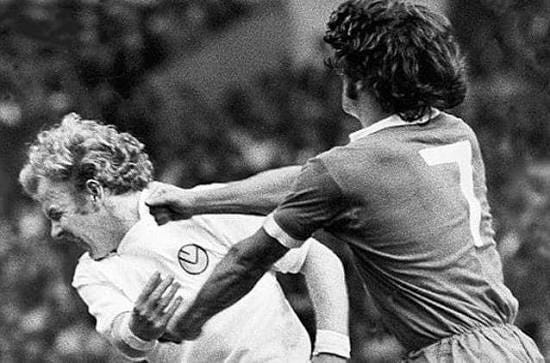
Picture: Confrontation between Liverpool’s Kevin Keegan and Leeds captain Billy Bremner in 1974 at Wembley.
Shared trophies and the return of penalty shootouts
For parts of its history, a drawn Community Shield was shared. During the 1980s and early 1990s, the two clubs could each hold the trophy for six months following a draw. Penalty shootouts were permanently reintroduced in 1993, ensuring that every match would produce one winner.
The first Shield after their return ended with Manchester United defeating Arsenal 5–4 on penalties. Goalkeeper Peter Schmeichel saved the final kick from Arsenal goalkeeper David Seaman.
Eric Cantona’s 1992 hat-trick
The 1992 match between Leeds United and Liverpool produced a seven-goal thriller. Eric Cantona scored a hat-trick as Leeds won 4–3. The performance was especially significant because Cantona moved to Manchester United later that year and became one of the central figures in the club’s dominance of English football during the 1990s.
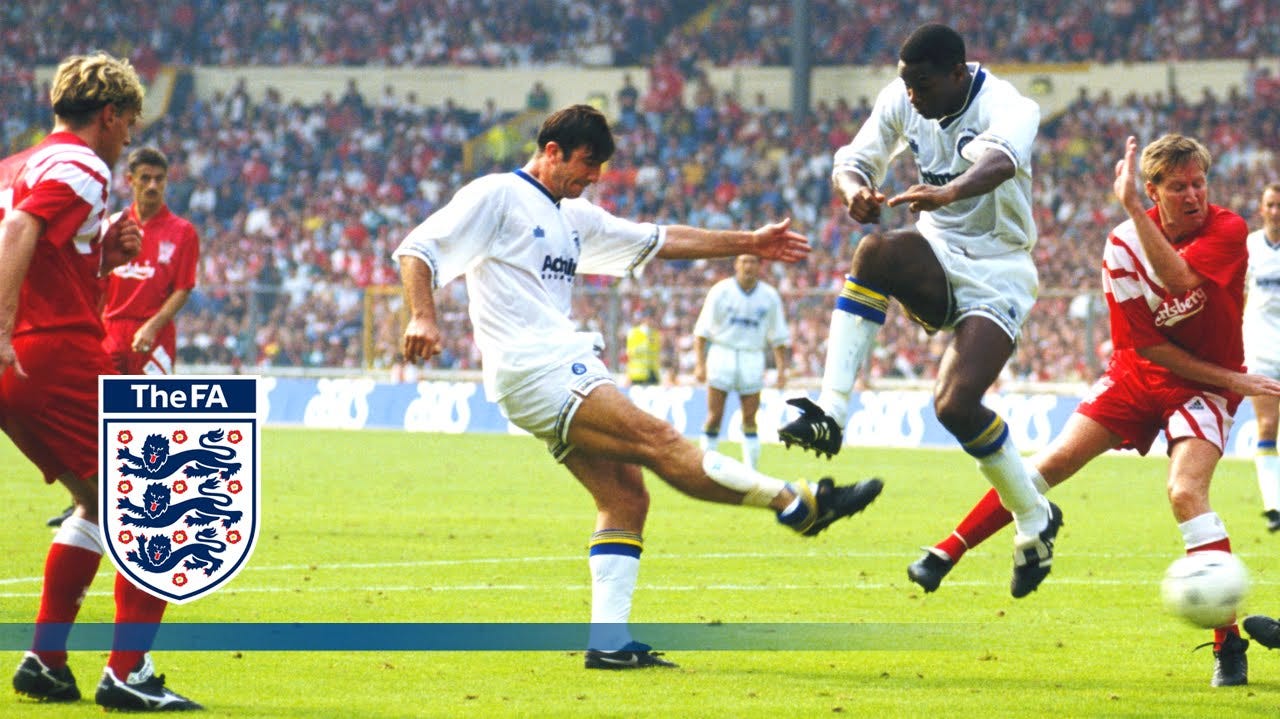
Picture: Eric Cantona, 1992, Wembley
Manchester United’s comeback against Manchester City in 2011
The 2011 Shield provided a dramatic preview of the rivalry that would shape the following Premier League season. Manchester City led 2–0 at halftime, but Manchester United responded through Chris Smalling and Nani. In stoppage time, Nani took advantage of a defensive mistake and scored the winning goal, completing a 3–2 comeback.
The match was an early indication of the growing competition between the Manchester clubs. City would eventually win that season’s Premier League title on goal difference following Sergio Agüero’s famous final-day goal.
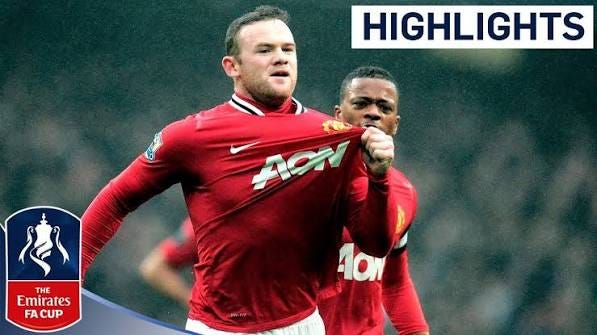
Picture: Wayne Rooney, 2011
Why the Community Shield Is a Special Sporting Event
The Community Shield is special because it combines competition, ceremony and community service.
First, it signals the return of English domestic football. After weeks of transfers, preseason tours and speculation, supporters can once again watch leading teams compete for a trophy. The occasion creates anticipation for the Premier League season and offers the first major indication of how the country’s strongest clubs may perform.
Second, the match often brings together two different forms of achievement. The Premier League champion represents excellence over a 38-match season, while the FA Cup winner represents success in a knockout tournament. The Shield therefore creates a symbolic meeting between consistency and cup performance.
Third, the event gives supporters an early view of new signings, managers and tactical systems. Although the result does not determine the direction of the entire season, performances can shape expectations. A strong victory may build confidence, while a poor display may expose weaknesses before league competition begins.
The match is also special because of its charitable identity. Revenue is distributed through community and charitable initiatives rather than existing only for commercial or competitive purposes. This connection reflects football’s wider responsibility to the communities that sustain it.
Finally, the national-stadium setting adds a sense of occasion. Playing at venues such as Wembley or Cardiff’s Principality Stadium gives players and supporters a major-event experience before the league campaign begins. The entrance onto the pitch, the presentation of the Shield and the post-match celebration give the event an importance that an ordinary preseason friendly cannot reproduce.
The Impact of Technology
Technology has changed both the way the Community Shield is played and the way it is experienced.
On the field, goal-line technology allows match officials to determine almost instantly whether the entire ball has crossed the goal line. This reduces the likelihood that a disputed goal will decide the trophy. Video review systems can also assist officials with major decisions, including goals, penalties, red cards and cases of mistaken identity when used under the competition’s rules.
These systems can improve accuracy, but they also produce debate. Video reviews can interrupt the flow of a match, and supporters may disagree about how laws involving handball, fouls or offside are interpreted. Technology has therefore not eliminated controversy; it has changed its focus. Discussions now often concern how technology is applied rather than whether officials saw an incident.
Broadcasting technology has had an even greater effect on the event’s reach. High-definition cameras, slow-motion replays, aerial views, advanced graphics and tactical analysis allow audiences to examine the action in detail. The FA reported that the 2004 match between Arsenal and Manchester United had a potential worldwide television audience of approximately 270 million. Streaming services and international broadcast partnerships have since made the Shield accessible to supporters across many countries.
Social media has transformed the match into a global, continuous conversation. Goals, interviews, tactical clips and supporter reactions can circulate within seconds. Clubs use digital platforms to reveal team news, introduce new players and communicate directly with supporters. The event no longer lasts only for 90 minutes; it generates online discussion before, during and after the game.
Data analysis has also affected team preparation. Coaches can study opponents using video databases, player-tracking information and performance statistics. GPS devices and medical monitoring help teams manage players who may not yet be fully fit after preseason. This is particularly relevant to the Community Shield because it occurs before most players have reached peak competitive condition.
Stadium technology has improved the experience for spectators as well. Digital ticketing, advanced security systems, large video screens and upgraded playing surfaces help major stadiums manage large crowds and present the game as a modern sporting spectacle.
However, these developments create an important tension. The Community Shield is valuable partly because of its history and tradition. Technology should support fair competition, player safety and supporter access without removing the emotion and spontaneity that make football appealing.
Conclusion
The FA Community Shield is far more than a preseason exhibition. Since its establishment in 1908, it has developed from a match connected to the divide between amateur and professional football into the traditional opening event of the English domestic season.
Its history includes record-breaking scorelines, remarkable goals, fierce confrontations, memorable comebacks and unusual formats. The establishment of Wembley as its regular home in 1974 gave the competition a consistent identity, while its charitable mission preserved the social purpose at the center of its creation.
The 2026 meeting between Arsenal and Manchester City represents the latest chapter in this history. It brings together England’s league champions and FA Cup winners while giving both clubs an opportunity to begin the new season with a trophy and an early psychological advantage.
Technology has made decision-making more accurate, preparation more scientific and the event more accessible to a worldwide audience. Nevertheless, the central appeal of the Shield remains unchanged: two successful teams, one national stage and the promise of a new season.
Its status will always be debated. Some supporters consider it a major trophy, while others see it as a prestigious friendly. That uncertainty is part of its character. The Community Shield exists between celebration and competition, between the achievements of the previous season and the possibilities of the next. That unique position is exactly what makes it one of English football’s most enduring and special occasions.
Sports Events Happening this Weekend
Here are the biggest sports events happening this weekend (August 15–16, 2026), with times in Eastern Time:
Saturday
NASCAR Cup — Cook Out 400 at Richmond: 7 p.m., USA Network.
WNBA — Minnesota Lynx at Las Vegas Aces: 8 p.m., CBS.
NFL preseason: Browns–Bears at 1 p.m., Rams–Chiefs at 4 p.m., and Cowboys–Seahawks at 8 p.m., all on NFL Network.
PGA Tour — FedEx St. Jude Championship, Round 3: 1–6 p.m., Golf Channel/CBS.
U.S. Amateur semifinals: 3–6 p.m., NBCSN/NBC.
Formula E London season finale, Race 1: 10:05 a.m., Roku.
Pan Pacific Swimming Championships: 3 p.m., NBC.
Cincinnati Open tennis: ATP and WTA second-round play beginning at 11 a.m., Tennis Channel.
MLB national window: Brewers–Dodgers, Red Sox–Pirates or Diamondbacks–Braves at 7:15 p.m., FOX.
Sunday
FA Community Shield — Arsenal vs. Manchester City: 9:55 a.m., ESPN. This is the English season’s traditional curtain-raiser.
IndyCar — inaugural Markham street race: Noon, FOX.
FedEx St. Jude Championship final round: Noon–6 p.m., Golf Channel/CBS.
U.S. Amateur final at Merion: 3–6 p.m., NBCSN/NBC.
Formula E London season finale, Race 2: 10:05 a.m., Roku.
WNBA: Indiana Fever–Atlanta Dream at 5 p.m.; Portland Fire–Phoenix Mercury at 7 p.m., ESPN.
MLB: Cardinals–Cubs at 3 p.m., ABC; Mariners–Astros at 7:20 p.m., NBC/Peacock.
Pan Pacific Swimming Championships: 2 p.m., NBC.
AVP Manhattan Beach Open finals: 4 p.m., The CW.