
Introduction
For years, wearable companies have competed on battery life, comfort, design and the number of metrics they can generate. The next battleground may be very different: whether those metrics are accurate enough to support the claims being made about them.
A proposed class-action lawsuit filed against Oura in August 2026 alleges that the company overstated the accuracy of its sleep-stage tracking. The case does not establish that Oura did anything wrong, the allegations remain disputed, but it highlights a broader issue for the wearable industry.
Many devices do not directly measure sleep, recovery, stress or readiness. They measure signals such as heart rate, movement, temperature and heart-rate variability and then use algorithms to estimate higher-level outcomes.
That distinction between what a wearable measures, what it estimates and what its marketing claims may become one of the industry’s greatest legal and commercial risks.
Examples of Wearable Companies Facing Accuracy-Related Litigation
Oura
On August 20, 2026, a consumer filed a proposed class action against Oura in the Northern District of California. The complaint challenges the company’s marketing around sleep-stage tracking, including an alleged claim of “95% Sleep Staging Accuracy compared to clinical sleep lab.”
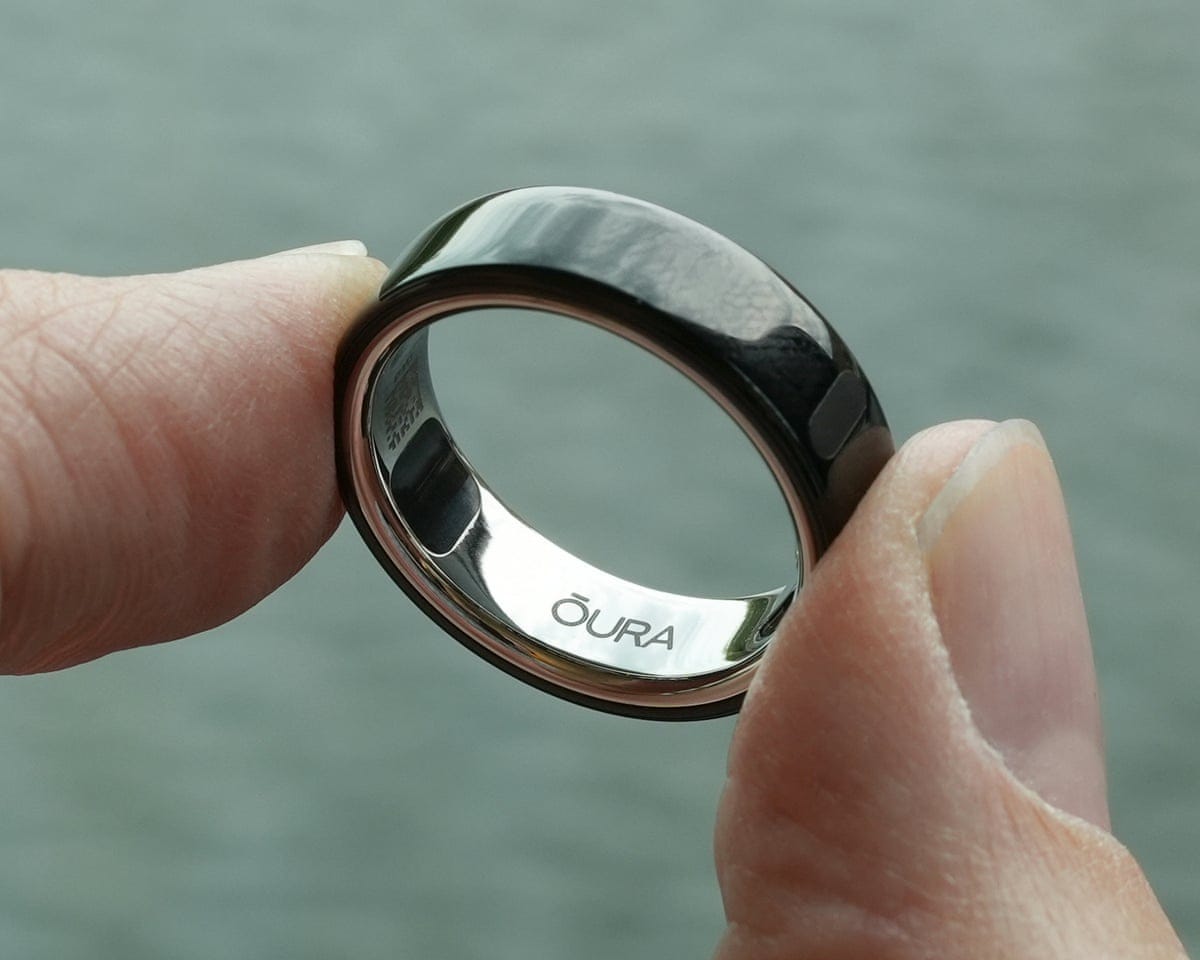
The plaintiff argues that the Oura Ring cannot directly measure the brain activity, eye movements and muscle activity used during polysomnography—the clinical reference standard for identifying sleep stages. Instead, the ring collects signals from the finger, including heart rate, heart-rate variability, temperature, breathing patterns and movement, and uses algorithms to estimate whether someone is awake or experiencing light, deep or REM sleep.
The lawsuit cites a 2025 study published in Scientific Reports that reported approximately 53% agreement for four-stage sleep classification with the Oura Ring Gen3. The complaint alleges that Oura’s accuracy claims are therefore misleading.
These remain allegations, not judicial findings, and Oura has publicly rejected them.
Oura’s Public Response
In its public response, Oura stated: “Our models are not guesswork.”
The company maintains that sleep stages are associated with measurable and reproducible physiological changes, allowing algorithms to estimate sleep stages from peripheral signals even though a ring does not directly measure brain waves.
Oura made several arguments in its defense:
Its sleep algorithm was trained using thousands of nights during which ring data was collected simultaneously with clinical polysomnography.
The training data included people of different ages, skin tones, health conditions and sleep profiles.
Recent Oura-funded and independent studies reportedly found approximately 70% to 79% agreement with polysomnography for four-stage sleep classification and at least 90% agreement for distinguishing sleep from wakefulness.
Agreement between two human sleep experts is itself imperfect—approximately 83% in healthy adults—making 100% agreement an unrealistic benchmark.
The 2025 study cited in the lawsuit evaluated older Oura hardware and an algorithm that had since been updated.
According to Oura, the researchers used only two ring sizes across all participants, contributing to poor fit and unusable data for 14 of the 45 participants.
Oura argues that the study compared five-minute wearable outputs with 30-second polysomnography periods, which may have reduced the reported agreement.
The company says the “coin flip” comparison used in the complaint is misleading because random selection among four sleep stages would result in expected accuracy of approximately 25%, not 50%.
Oura acknowledges that its ring is not equivalent to a clinical sleep study and does not directly measure electrical activity in the brain or eye movements. However, it argues that this does not make sleep-stage estimation scientifically invalid. Its algorithms infer sleep stages from physiological patterns associated with each stage.
The company also recognizes that its technology remains imperfect. It says accuracy still needs to improve among older adults, people with sleep disorders and other clinical populations.
Oura’s response exposes the central question the court may eventually have to consider: not whether the ring performs identically to polysomnography, but whether the company adequately substantiated and clearly communicated the specific accuracy claims used to market it.
There is a meaningful difference between saying that a wearable estimates sleep stages using validated physiological signals and implying that it provides the same measurements as a clinical sleep laboratory.
The case may therefore become as much about marketing language, disclosures and consumer interpretation as it is about sensor performance.
Oura’s detailed positions are available in “Sleep Staging Is Not Guesswork” and “Standing Behind Our Science”. The allegations can be reviewed in the filed class-action complaint.
Fitbit
Fitbit faced a class action in 2016 alleging that its PurePulse devices produced inaccurate heart-rate measurements, particularly during higher-intensity exercise. Fitbit disputed both the allegations and the methodology of research commissioned by the plaintiffs’ lawyers.
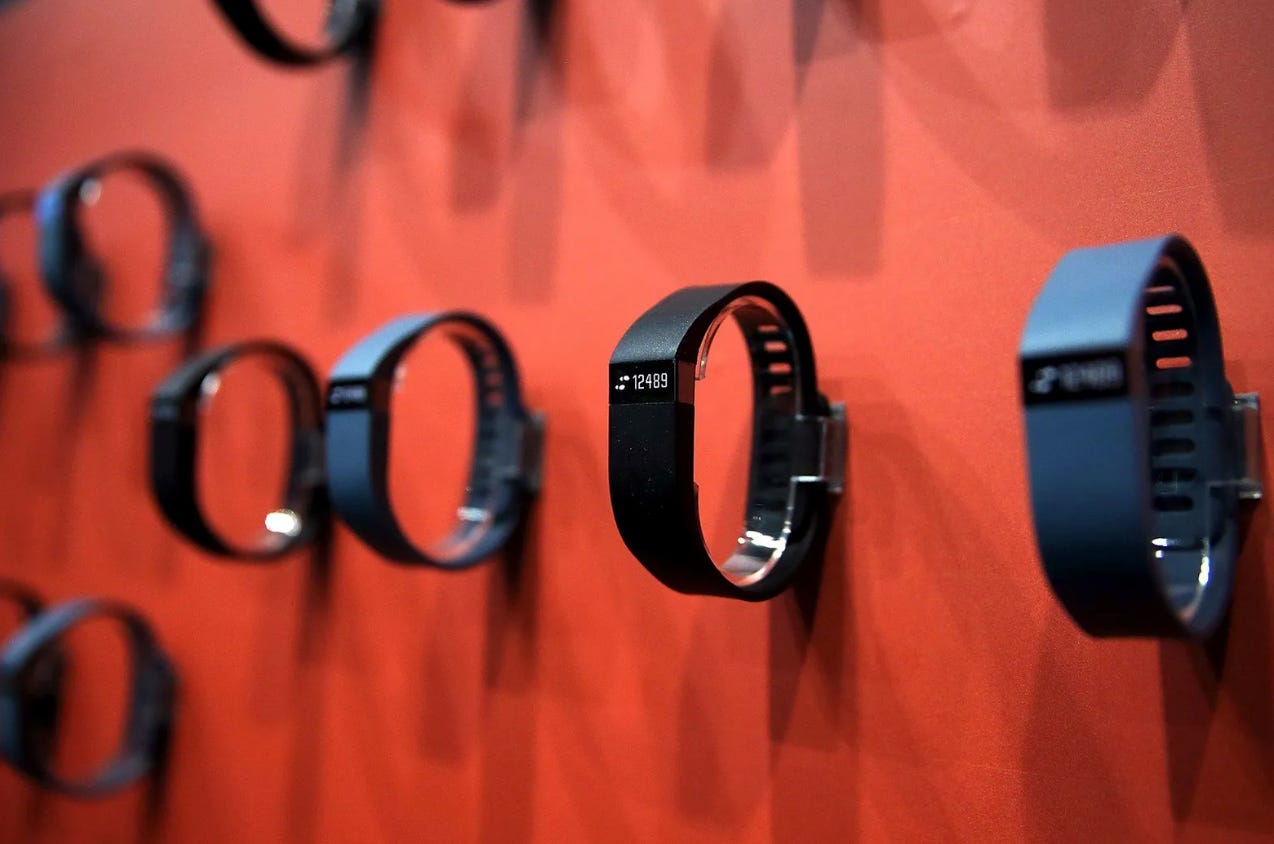
Although this was an earlier case, it exposed an issue that remains highly relevant: a sensor may perform reasonably well at rest but become less accurate during sprinting, resistance training, rapid arm movements or other activities involving motion artifacts. (Read the case background).
Dexcom
Wearable medical devices face even greater exposure because inaccurate readings can influence treatment. A 2026 proposed class action against Dexcom alleged problems involving certain continuous glucose-monitoring sensors, including allegedly inaccurate readings and premature sensor failures.
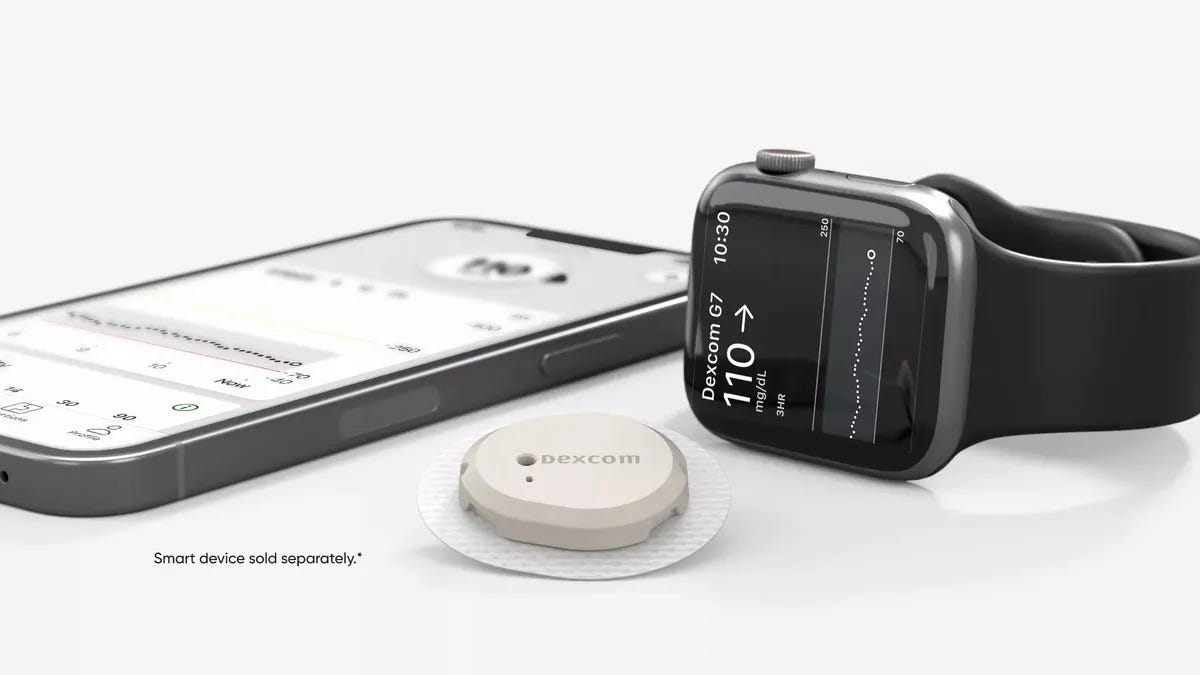
Separately, the FDA listed a 2026 Class II recall involving specific stolen Dexcom G7 lots that had originally been designated for destruction. One affected lot carried an increased risk of missing readings or producing inaccurate readings that could contribute to incorrect treatment decisions.
This particular recall involved the unauthorized distribution of rejected products, so it should not be interpreted as an accuracy judgment covering all Dexcom G7 devices. Read the FDA recall notice.
Together, these examples demonstrate that accuracy-related legal exposure is not limited to smart rings. It can affect fitness trackers, sleep wearables and regulated medical sensors.
Why Wearable Accuracy Matters
No wearable will be perfectly accurate under every condition. The more important questions are:
Is the device sufficiently accurate for its intended use?
Has it been validated against an appropriate reference standard?
Does its marketing accurately describe its capabilities and limitations?
Could an incorrect measurement lead to a harmful decision?
For a consumer counting daily steps, a modest error may have little consequence. In elite sports, the same error could influence training load, recovery protocols, player availability or return-to-play decisions.
A false recovery score could encourage an athlete to train when additional recovery is needed. An inaccurate heart-rate reading could distort internal-load calculations. Poor sleep classification could lead practitioners to make unnecessary interventions. Incorrect hydration, glucose, temperature or fatigue readings could create even more serious risks.
Accuracy must also be separated into several layers:
Sensor accuracy: Did the device correctly capture the underlying physiological signal?
Algorithmic validity: Did the algorithm correctly translate that signal into sleep stages, stress, fatigue or readiness?
Reliability: Does the device produce consistent results across repeated measurements?
Population validity: Does it work across different skin tones, body types, ages, sexes, sports and health conditions?
Field validity: Does it remain accurate during movement, sweating, contact, temperature changes and competition?
Decision validity: Is the resulting metric appropriate for the decision a practitioner wants to make?
A device could perform well when measuring resting heart rate but poorly when estimating calorie expenditure. It could accurately distinguish sleep from wakefulness while being less reliable at identifying individual sleep stages.
The FTC expects health-related advertising claims to be supported by appropriate scientific evidence, while the FDA distinguishes many low-risk general-wellness products from devices intended to diagnose, treat or manage diseases.
Calling something a wellness product does not automatically protect a company against false-advertising allegations. You can check out the FTC health-products guidance and FDA general-wellness guidance.
The Potential Impact on the Wearable Market
The Oura lawsuit could accelerate several important changes across the industry.
Greater scrutiny of marketing claims
Statements such as “clinical-grade,” “medical-grade,” “95% accurate” or “predicts injuries” will attract more attention. Vendors may need to explain exactly how an accuracy percentage was calculated and which measurement, population and environment it covers.
More independent validation
Internal studies may no longer be enough for sophisticated buyers. Teams, investors, insurers and consumers will increasingly request independent, peer-reviewed studies performed in representative populations and real-world conditions.
A clearer separation between measurements and estimates
Wearable interfaces and marketing materials may need to distinguish more clearly between directly collected signals and algorithmically inferred outcomes.
For example:
Heart rate is measured.
HRV is calculated from beat-to-beat intervals.
Sleep stages are estimated.
Readiness is a proprietary composite score.
Injury risk is a probabilistic prediction—not a diagnosis.
Higher costs for startups
Clinical validation, regulatory advice, insurance and legal review are expensive. That could create an additional barrier for early-stage companies, but it may also favor vendors that invest in evidence before making aggressive commercial claims.
More transparent reporting
Vendors may begin publishing confidence intervals, missing-data rates, known limitations and performance across different populations.
Instead of presenting a recovery or readiness score as an exact fact, a platform could communicate the level of confidence in the result and identify when data quality is insufficient.
More cautious adoption by professional teams
Teams may become less willing to run paid pilots based primarily on sales presentations and internal white papers. Procurement processes will likely involve sports scientists, medical personnel, IT, privacy specialists and legal teams much earlier.
Which Vendors Are Most Exposed?
It would be irresponsible to predict that a specific company will be sued without evidence. However, certain types of vendors face considerably greater exposure:
Smart rings and sleep wearables making highly specific sleep-stage claims.
Recovery platforms that convert multiple signals into a single readiness score without clearly explaining validation or uncertainty.
Optical heart-rate wearables promoted for high-intensity or stop-and-start sports.
Companies claiming to predict injuries before they occur.
Non-invasive glucose, lactate or hydration wearables making medical-like claims without appropriate authorization and validation.
Thermography platforms claiming to diagnose injuries or medical conditions from images.
Wearables claiming to detect concussions, cardiovascular conditions or illnesses.
AI platforms presenting inferred outputs as directly measured biological facts.
Vendors using terms such as “clinical-grade” without evidence supporting the specific product, population and use case.
The FDA has already warned consumers against smartwatches and rings that claim to measure blood glucose non-invasively without piercing the skin, noting that it has not authorized such devices for that purpose. You can read more about the FDA warning.
The companies most at risk are not necessarily those with imperfect technology. Every wearable has limitations. The greatest exposure belongs to vendors whose commercial claims go beyond what their evidence can reasonably support.
Recommendations for Teams
Professional teams should not simply ask whether a wearable “works.” They should determine whether it is valid for the specific athlete, activity and decision involved.
Before adopting a wearable, teams should:
Define the exact decision the technology will support.
Identify which outputs are measured and which are inferred.
Request independent validation against the appropriate reference standard.
Confirm that testing included athletes and activities comparable to the team’s environment.
Evaluate accuracy during intense movement, sweating, travel and competition—not only under laboratory conditions.
Review performance across skin tones, sexes, ages and body types.
Ask which hardware, firmware and algorithm versions were evaluated.
Determine how missing data and low-confidence readings are handled.
Establish acceptable error thresholds before beginning a pilot.
Compare the wearable’s results with existing clinical and performance-assessment methods.
Require vendors to disclose algorithm changes that could alter historical comparisons.
Review marketing claims against the evidence provided.
Include accuracy, support, data ownership, privacy and liability provisions in contracts.
Avoid using one wearable score as the sole basis for medical, selection or return-to-play decisions.
Maintain human oversight from qualified medical and performance practitioners.
Teams should also remember that a wearable can still be valuable without being clinically diagnostic. A device may help monitor long-term trends, support conversations with athletes or identify when further assessment is warranted.
The problem begins when a directional wellness signal is treated as an unquestionable clinical fact.
Conclusion
The wearable market is entering an accountability phase.
For the past decade, companies have benefited from excitement around sensors, biomarkers and AI. The next phase will demand more than impressive dashboards and proprietary scores. Vendors will need to demonstrate what their devices measure, how well they measure it, how their algorithms reach conclusions and where their limitations lie.
The Oura lawsuit could ultimately succeed, fail or be settled. Regardless of its outcome, it sends a clear message to the market: precise health and performance claims require precise evidence.
The wearable companies that succeed will not necessarily be those promising the greatest number of metrics. They will be those that communicate uncertainty honestly, validate their technology rigorously and help practitioners understand what the data can, and cannot tell them.
For teams, the lesson is equally clear: do not simply buy the score. Validate the signal, understand the algorithm and evaluate the decision it is being used to make.
You may also like:
⌚️ 👟 The Sports Wearables Market: Where we are heading.

In the past few years, the world of sports has seen the emergence of a new wave of advanced wearables such as smart patches that can measure hydration or electrolyte, level, smartwatch that can measure blood pressure, or even contactless biosensors capable of measuring HR, blood pressure, sleep quality without any contact to the skin. As shown in the gr…
⌚ 🎽 ⚽ 🏀 Upside Analysis: Sports Leagues' regulation towards wearables

Since 2012, a growing number of sports leagues have started to allow pro teams to use wearable during live games or training in order to track players’ performance data. But not all the leagues are equal in this area. in this analysis we are going to provide an overview of current offline and online rules around the use of wearable data in pro sports.