
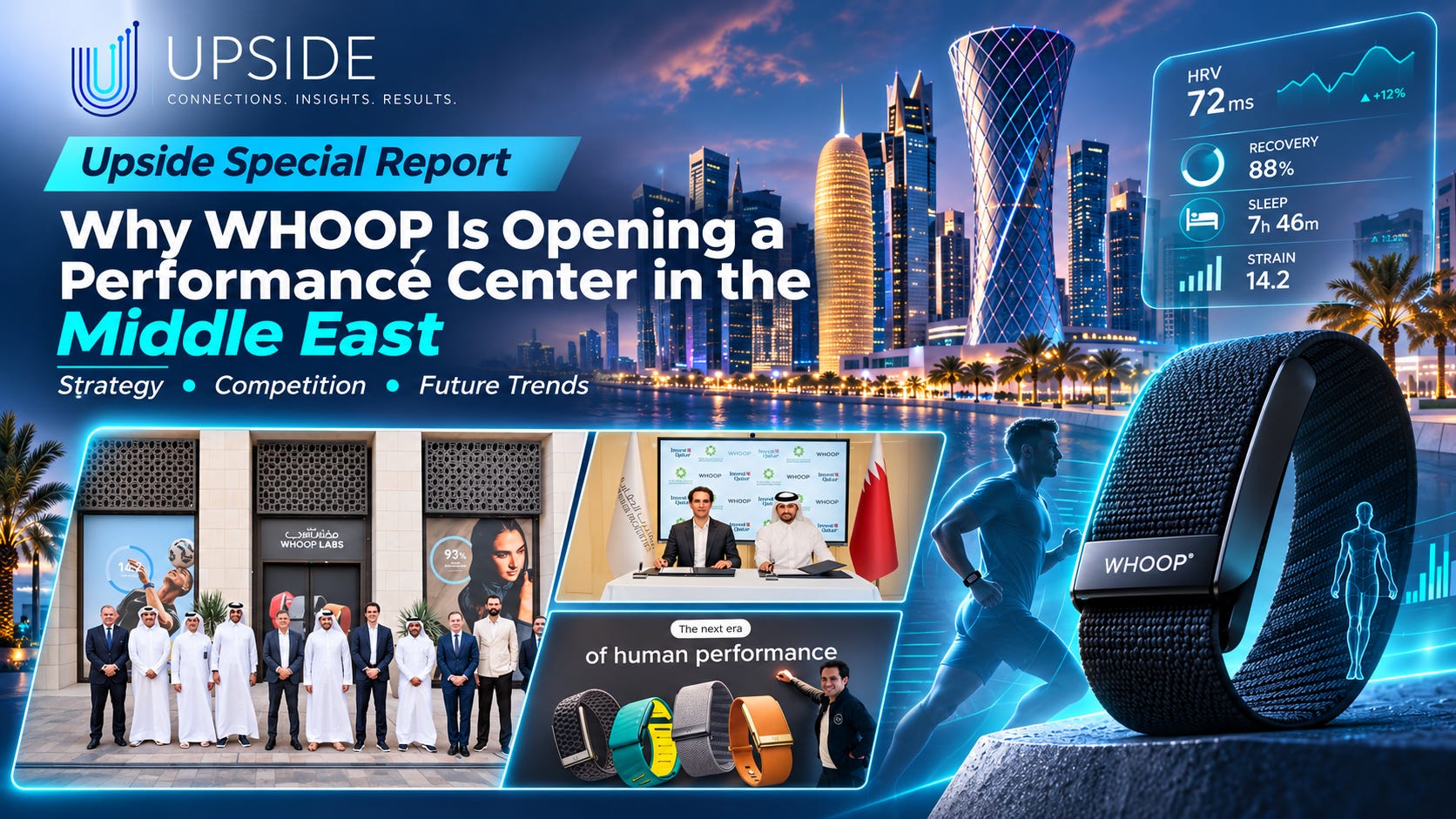
Introduction
This week, WHOOP reached an important milestone in its international expansion with the opening of WHOOP Qatar, a new human performance center located in Msheireb Downtown Doha.
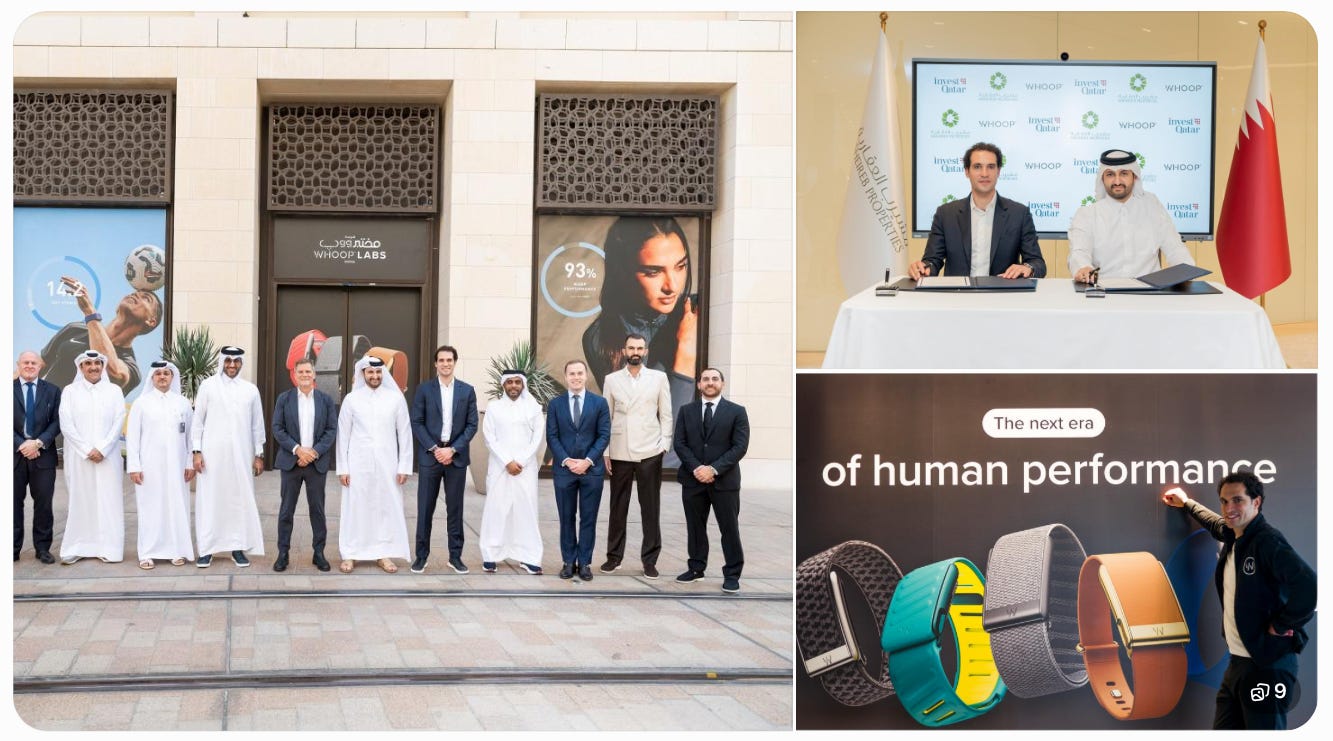
Officially announced on November 24, 2026, and subsequently covered by several international media outlets on November 27, the facility brings together three important components:
WHOOP Labs Doha: The company’s first international research and performance science laboratory outside the United States.
WHOOP flagship retail store: The company’s first-ever dedicated flagship store globally.
Corporate offices: A permanent regional presence to support WHOOP’s expansion across the Middle East.
The opening builds on a strategic partnership announced in October 2025 between WHOOP and Invest Qatar, the country’s investment promotion agency.
Will Ahmed, Founder and CEO of WHOOP, described the opening as a “major investment in the future of human performance here.”
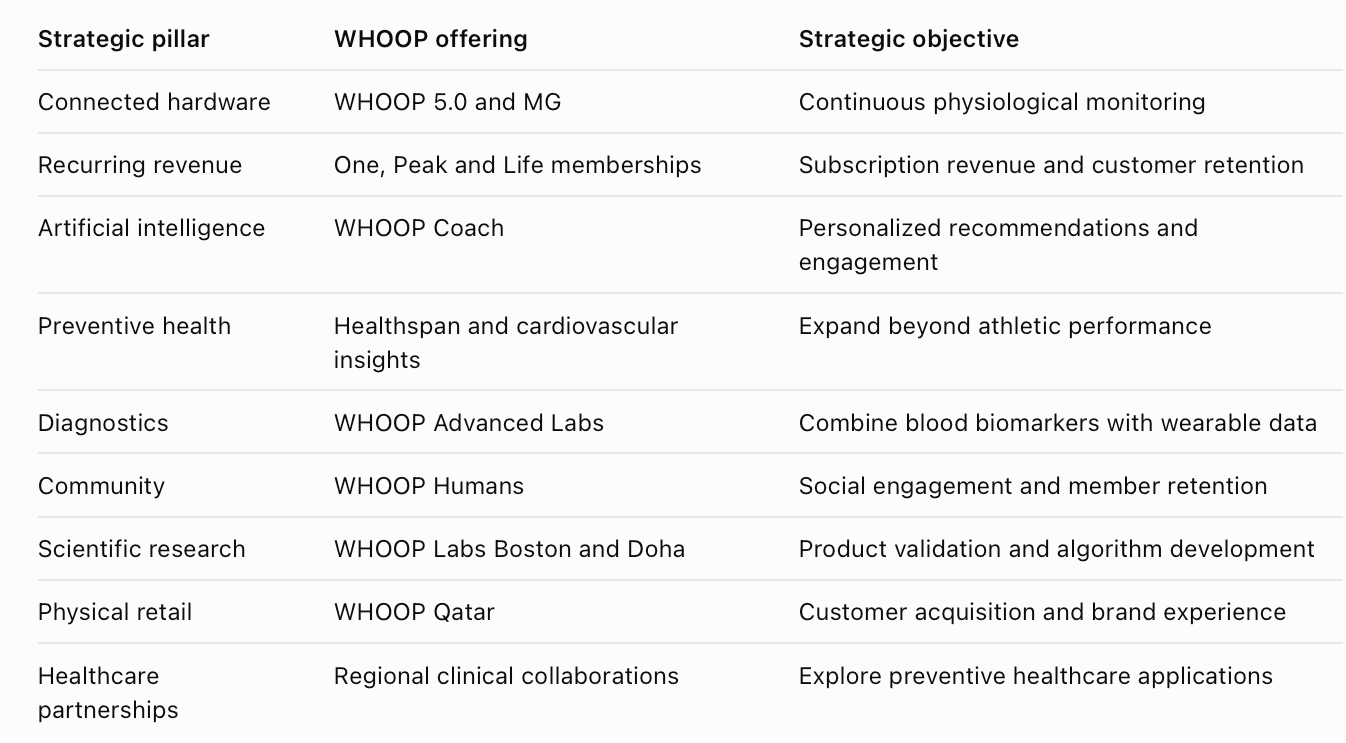
At Upside, we believe this announcement represents something potentially much more significant than the opening of a new office or retail location. It could signal the emergence of a new business model in which performance technology companies combine connected hardware, AI-powered software, scientific research, physical infrastructure, healthcare partnerships and direct customer experiences.
The central question is whether WHOOP is simply expanding its international footprint or gradually transforming itself from a wearable technology company into a vertically integrated human performance and preventive health platform.
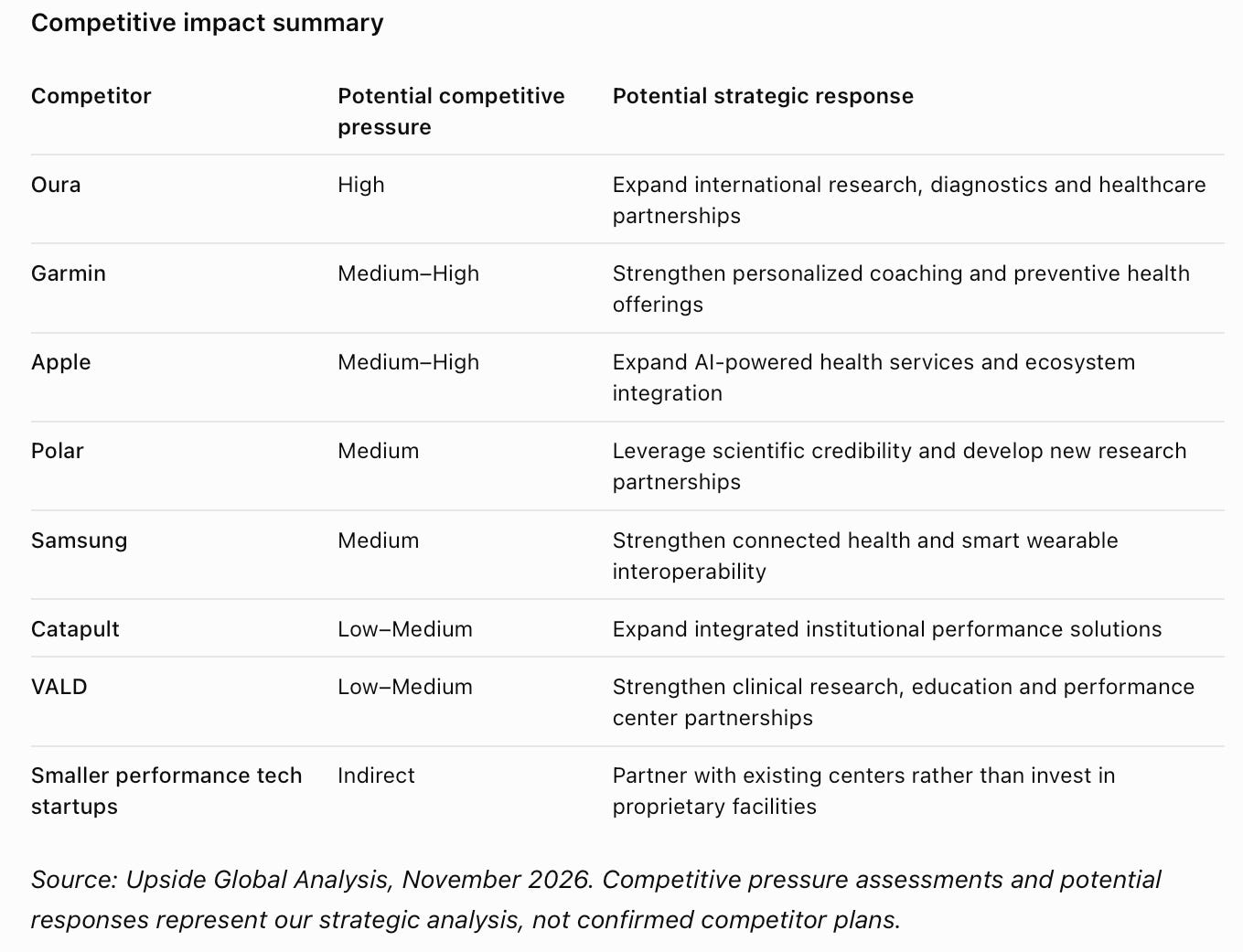
This strategy could have significant implications for competitors such as Oura, Garmin, Apple, Polar and Samsung, as well as for sports technology startups targeting professional performance and medical departments.
2. Why is WHOOP opening a performance center in the Middle East?
2.1. Capitalizing on the rapid growth of the Middle Eastern market

The decision to establish WHOOP’s first international performance laboratory and flagship store in Qatar rather than London, Paris or another major US city is particularly interesting.
Over the past decade, Qatar, Saudi Arabia and the United Arab Emirates have invested heavily in professional sports, sports medicine, healthcare infrastructure, artificial intelligence and international sporting events. The region is increasingly positioning itself as a destination for human performance, preventive healthcare and technological innovation.
For WHOOP, this expansion is also supported by significant existing customer demand.
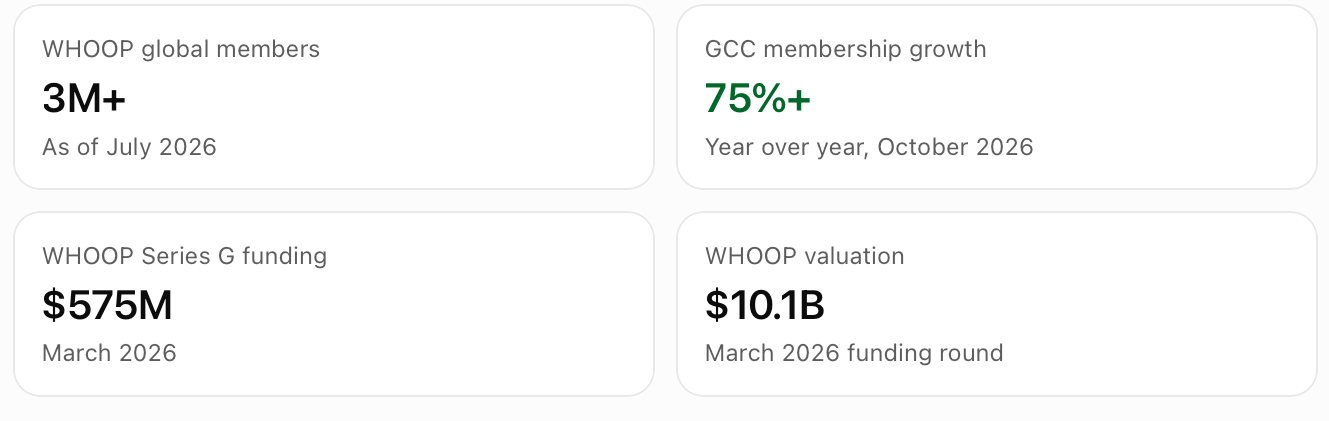
In October 2026, WHOOP also launched a fully redesigned Arabic-language application, illustrating its willingness to localize its products rather than simply distribute its existing US offering internationally.
Establishing a permanent presence in Qatar could enable WHOOP to develop stronger relationships with regional sporting organizations, government agencies, healthcare institutions, universities and commercial partners.
2.2. Strengthening relationships with Middle Eastern investors
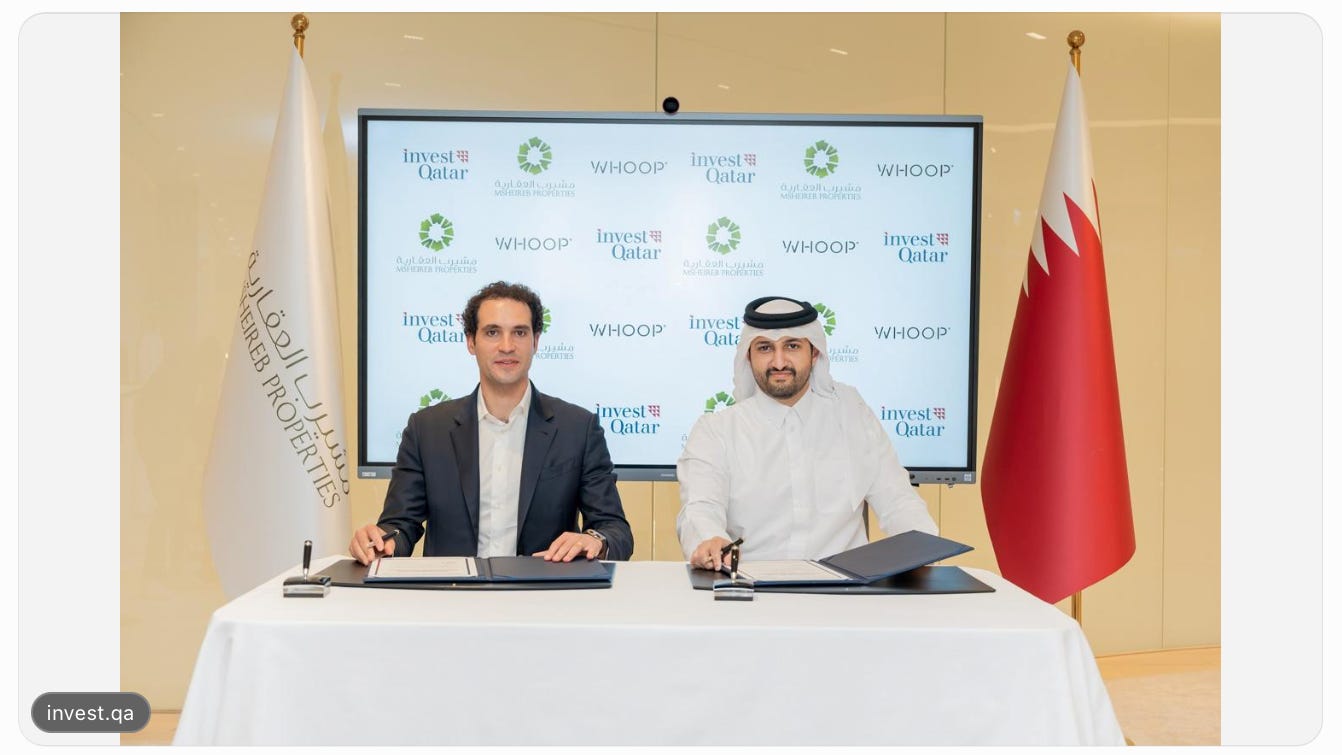
WHOOP and Invest Qatar announcing their strategic partnership in October 2025. Source: Invest Qatar.
Another important element of WHOOP’s Middle Eastern strategy is the increasing involvement of regional institutional investors in the company’s capital structure.
In March 2026, WHOOP raised $575 million at a $10.1 billion valuation. The funding round was led by three major Gulf investors:
Mubadala Investment Company.
Qatar Investment Authority (QIA).
2PointZero Group.
In May 2026, WHOOP also announced a strategic partnership with Mubadala, anchored by a $75 million investment, to advance preventive healthcare, performance science and research capabilities in the UAE.
This illustrates how the relationships between sports technology companies and institutional investors are evolving. Investors are increasingly able to provide value beyond financial capital, including access to local markets, healthcare systems, research institutions and government-backed innovation ecosystems.
The Doha performance center could therefore represent an important mechanism for translating these financial relationships into operational and commercial opportunities.
2.3. Accelerating scientific research and product development
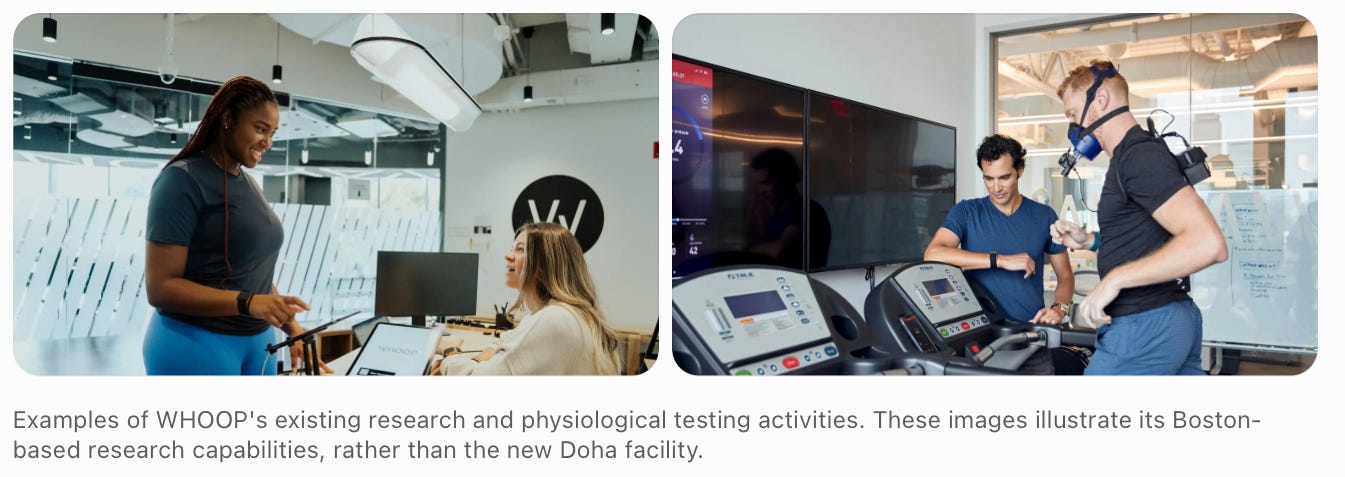
WHOOP Labs Doha will complement the company’s existing research infrastructure in Boston, providing an additional environment for scientific studies, data collection and collaboration with regional researchers.
From a product development perspective, establishing international research laboratories could provide several important benefits:
Recruiting research participants from more geographically and culturally diverse populations.
Evaluating sensor accuracy across different physiological characteristics and environmental conditions.
Developing a better understanding of training and recovery in hot climates.
Investigating sleep, nutrition, hydration and recovery patterns across different populations.
Validating emerging algorithms and physiological metrics.
Establishing relationships with universities, hospitals and sports medicine organizations.
The ability to collect and analyze more diverse datasets could become increasingly important as WHOOP expands into personalized health, artificial intelligence and longevity.
However, additional data collection alone does not guarantee better algorithms. WHOOP will need to demonstrate that its research methodology, validation procedures and product improvements translate into reliable outcomes across different populations.
2.4. Moving from e-commerce to experiential retail
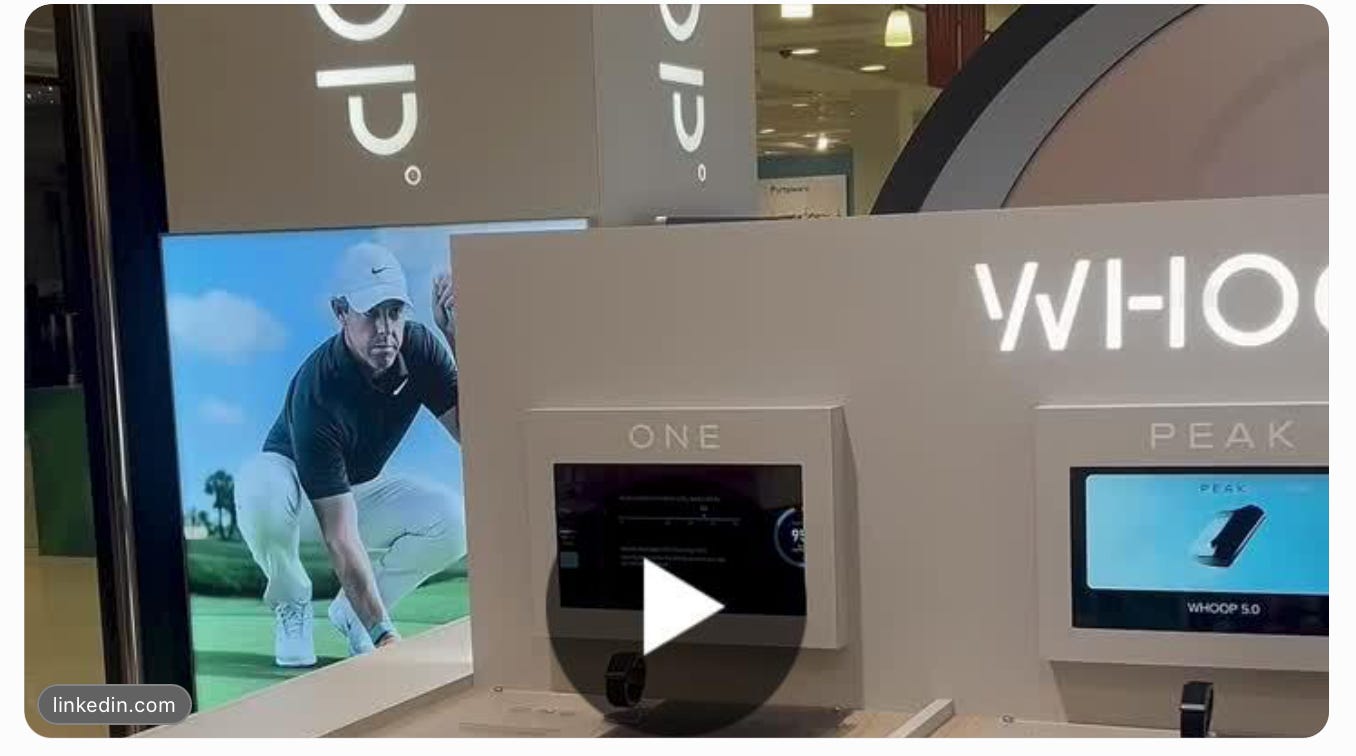
One of the most interesting elements of the announcement is that WHOOP selected Doha for its first dedicated flagship retail store anywhere in the world.
Historically, WHOOP has relied heavily on direct-to-consumer online distribution, athlete endorsements, digital marketing and third-party retail partnerships.
The new flagship store introduces a different approach, enabling consumers to discover products, explore membership options, customize wearable accessories and interact directly with the brand.
The store will feature WHOOP 5.0, WHOOP MG, accessories, apparel and a customization experience called WHOOP Your Way.
This could help WHOOP address several commercial objectives, including reducing barriers to product adoption, improving customer education, increasing accessory sales and establishing a stronger emotional connection with its members.
For a subscription-based business, the value of a physical store should not necessarily be measured exclusively by immediate product sales. Its contribution to customer acquisition, membership conversion, retention and lifetime customer value could be equally important.
3. How does the performance center fit into WHOOP’s overall strategy?
At Upside, we believe the Doha performance center should be analyzed in the context of WHOOP’s broader transformation from an athlete-focused wearable company into a global human performance and personalized health ecosystem.
3.1. The evolution of WHOOP’s business model
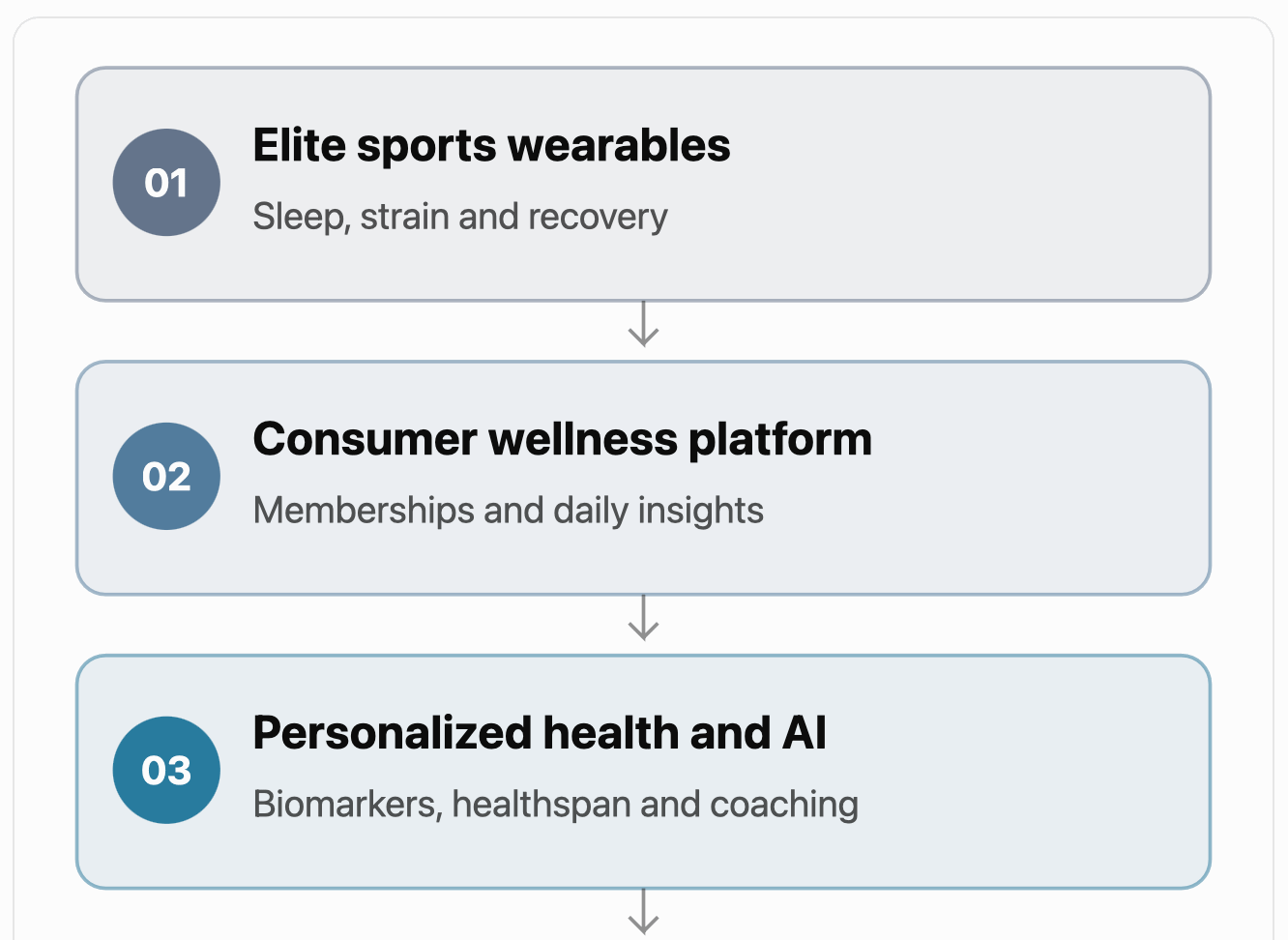
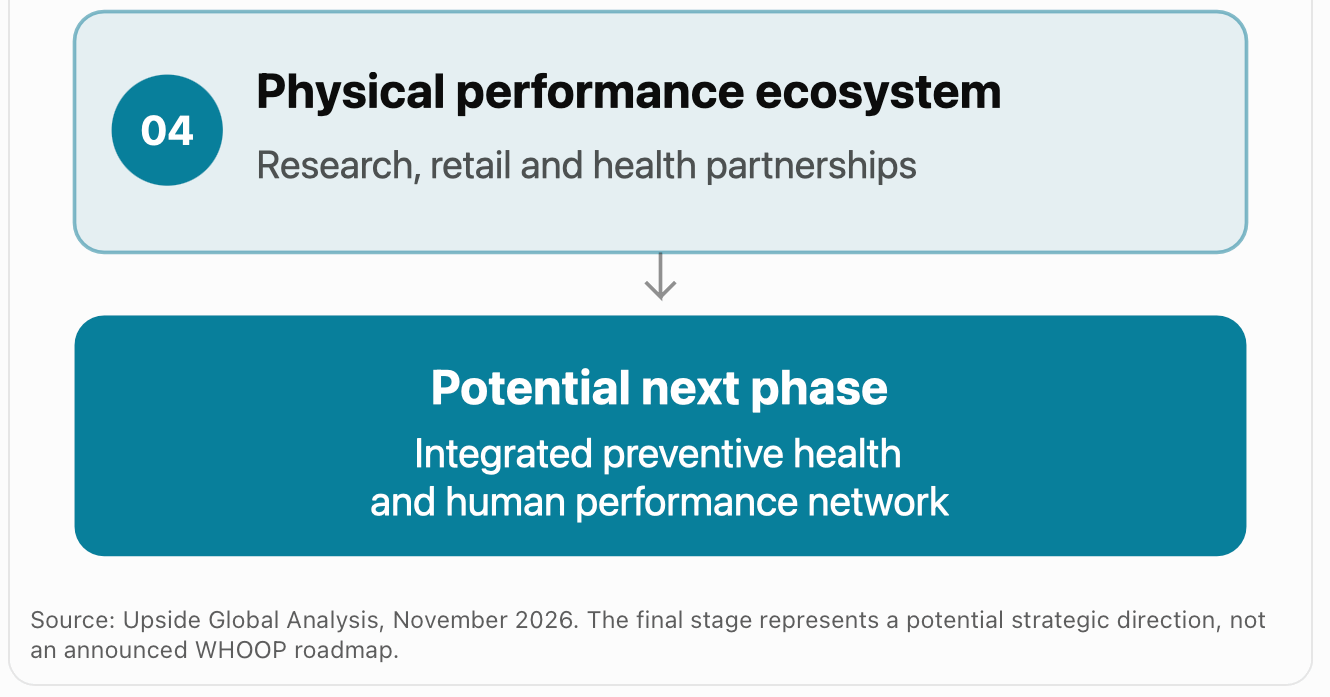
WHOOP’s original competitive advantage was its ability to provide athletes with continuous insights into sleep, cardiovascular strain and recovery. However, its recent product announcements demonstrate a much broader ambition.
3.2. Expanding from sports performance into preventive healthcare and longevity
One of the most significant strategic changes at WHOOP has been its expansion beyond the traditional sports performance market.
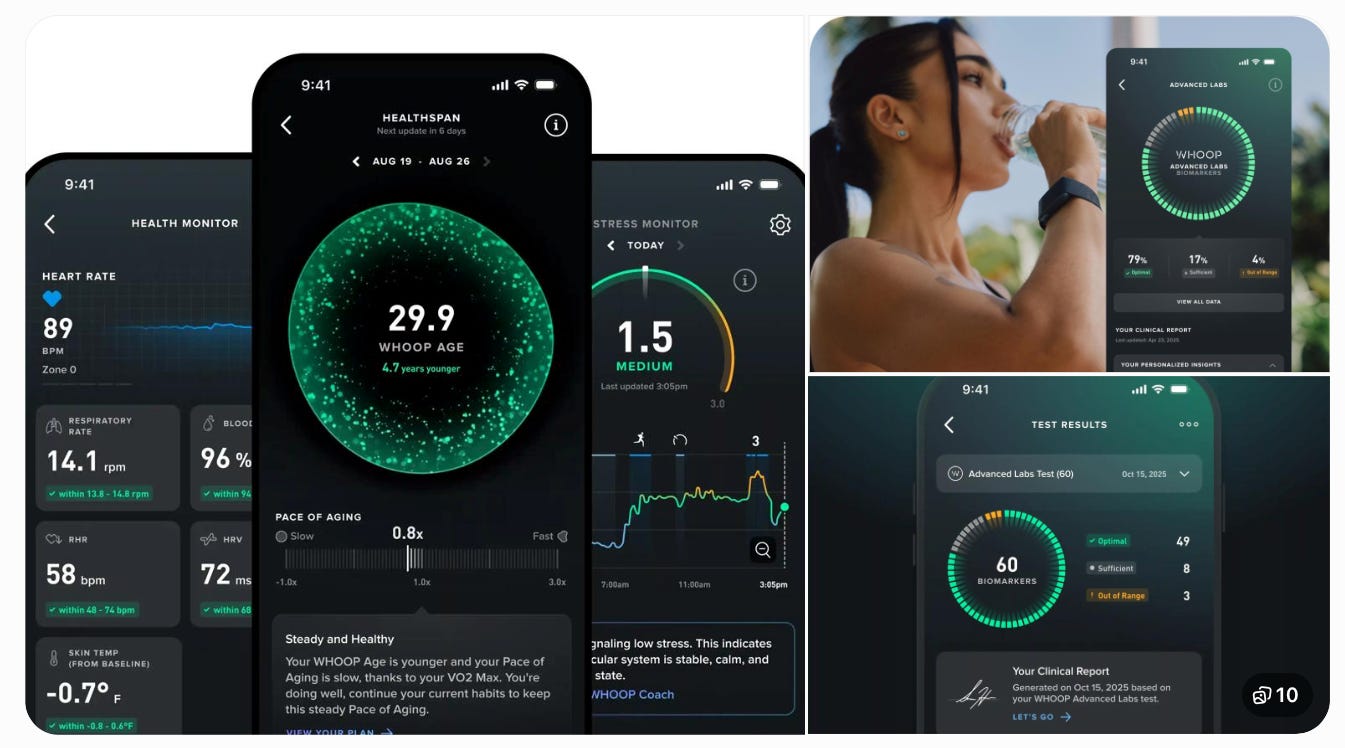
In September 2025, WHOOP launched Advanced Labs, combining blood test results with continuous wearable information. Its Healthspan features also introduced estimated physiological aging metrics, while subsequent AI and clinician-access features broadened its health offering.
According to WHOOP’s July 2026 documentation, Advanced Labs measures more than 122 biomarkers across its offering.
In our view, the Doha research facility could help accelerate this transformation by establishing a stronger scientific foundation for the company’s future products.
WHOOP could increasingly compete across several adjacent markets, including consumer wellness, corporate health, executive performance, longevity, personalized nutrition and preventive healthcare.
The total addressable market for these applications is potentially much larger than the original market of professional athletes and highly committed fitness enthusiasts.
3.3. Developing a healthcare ecosystem in the Middle East
On October 21, 2026, WHOOP announced a strategic research collaboration with the Department of Health – Abu Dhabi.
The first planned clinical study will investigate whether continuous health monitoring and coaching can support meaningful cardiometabolic improvements among adults with obesity and high blood pressure.
Earlier, in February 2026, WHOOP announced a partnership with international diagnostics provider Unilabs to expand its Advanced Labs offering in the UAE.
These developments indicate that WHOOP’s Middle Eastern strategy involves more than selling wearable devices to consumers.
By establishing relationships with healthcare regulators, diagnostics companies, researchers and institutional investors, WHOOP could explore new business models involving healthcare providers, employers and preventive health programs.
However, there is an important distinction between offering consumer wellness guidance and providing clinically validated medical services. Expansion into healthcare will require appropriate regulatory approvals, clinical evidence, data protection safeguards and clearly defined responsibilities.
3.4. Creating a stronger competitive advantage through research and customer engagement
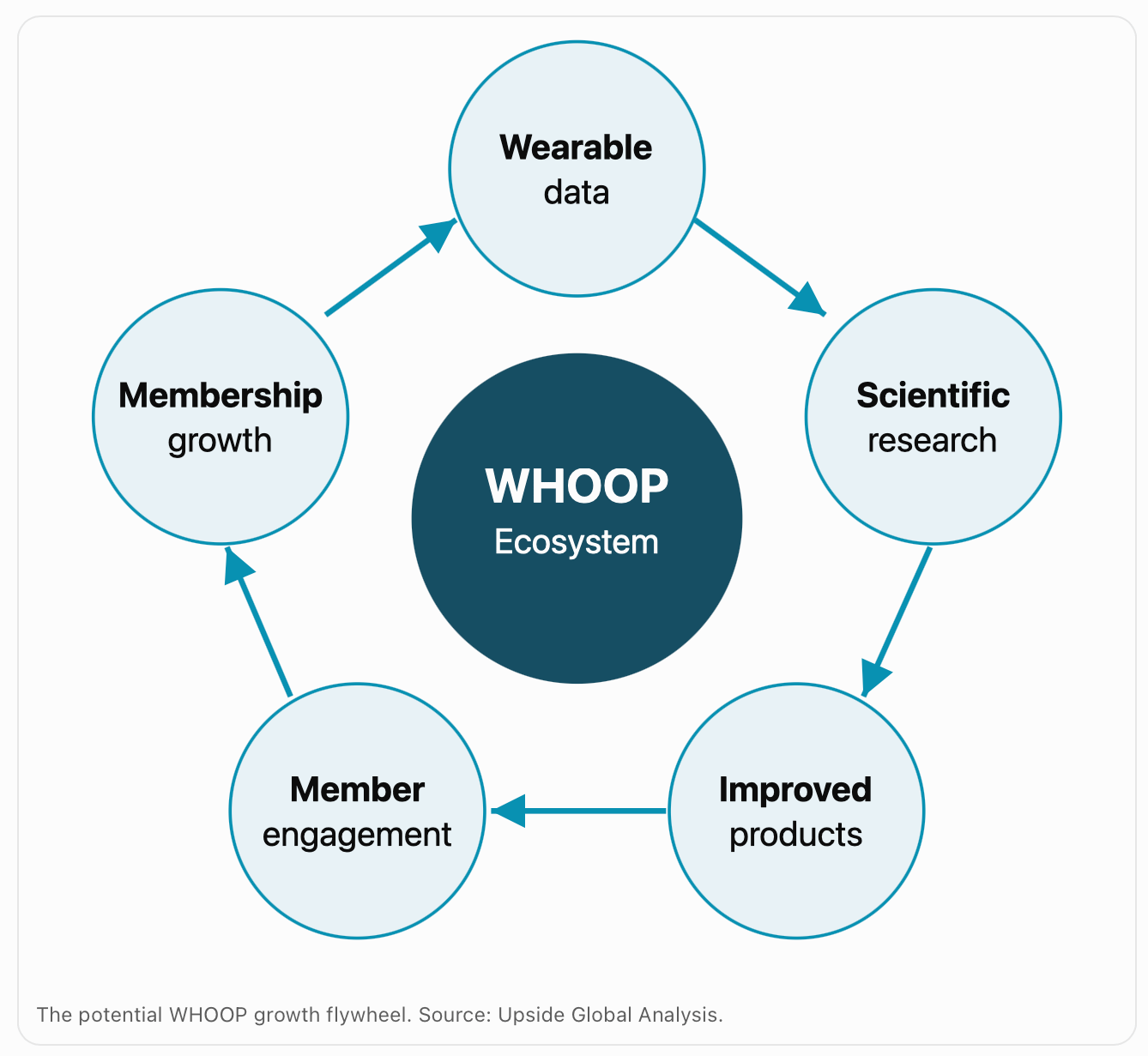
WHOOP’s long-term competitive advantage may increasingly depend on its ability to combine five complementary assets: longitudinal physiological data, proprietary algorithms, scientific research, recurring customer relationships and a network of commercial and healthcare partnerships.
The potential WHOOP growth flywheel. Source: Upside Global Analysis.
In principle, a larger member base can generate additional opportunities for consented research, which could lead to improved products, higher customer engagement and further membership growth.
The performance laboratory could strengthen this cycle by providing controlled research environments and closer collaboration between scientists, engineers and practitioners.
Importantly, the strategic value of member data depends on appropriate consent, privacy protection and scientifically responsible use, rather than simply the volume of data collected.
4. Is this a new trend for performance technology companies?
Although WHOOP’s approach is particularly interesting, the concept of combining sports technology, scientific research and physical performance infrastructure is not entirely new.
Several established companies have already invested in similar models. However, what differentiates WHOOP is its decision to combine research, regional corporate operations and experiential retail within a single international facility.
4.1. Technogym — The wellness ecosystem model

In 2012, Italian fitness technology company Technogym inaugurated Technogym Village in Cesena, Italy, combining its corporate headquarters, research infrastructure, manufacturing operations and wellness facilities.
The campus enables Technogym to bring together researchers, engineers, fitness professionals, healthcare specialists, customers and commercial partners.
Technogym’s Science Center also focuses on translating medical, physiological and biomechanical research into new wellness solutions.
Technogym represents an important historical example of how a fitness equipment manufacturer can evolve into a broader technology-enabled wellness ecosystem.
Website: Technogym Village
4.2. Nike — Integrating athletes into the product development process
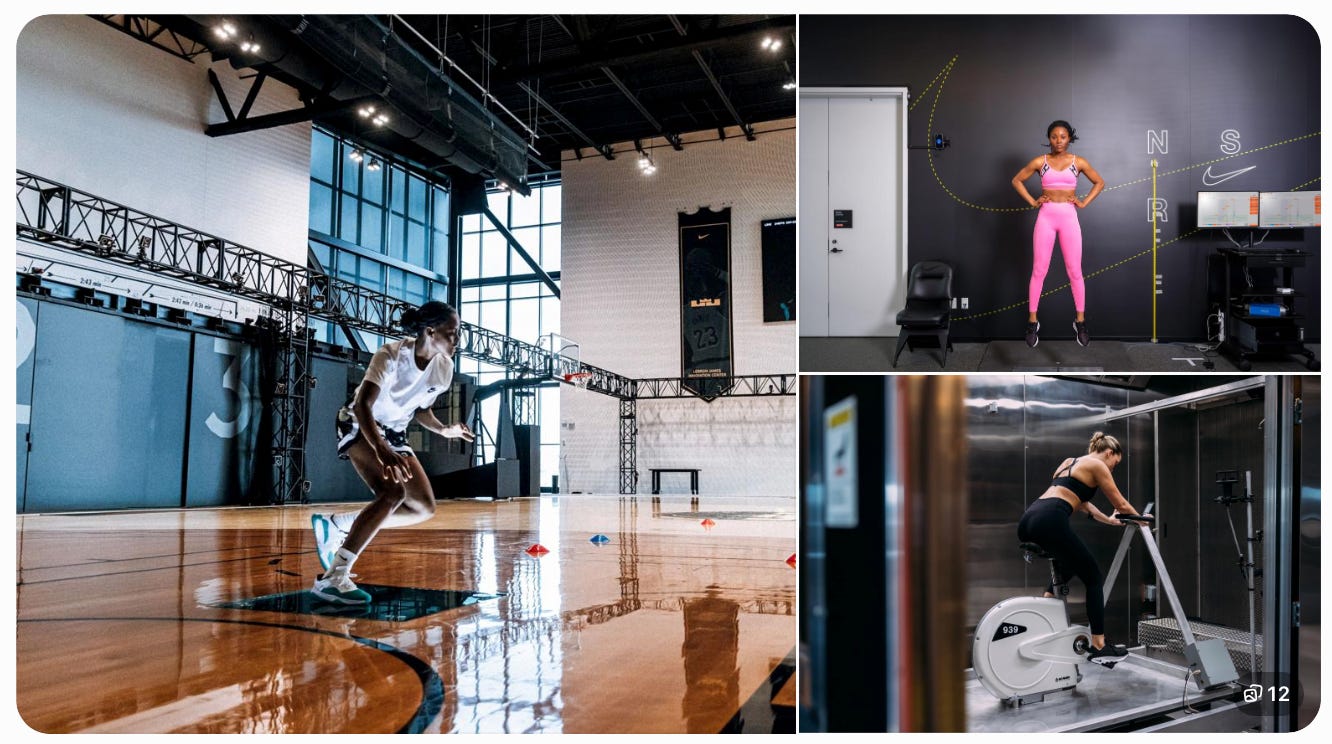
In 2021, Nike opened its LeBron James Innovation Center, which houses the Nike Sport Research Lab.
The facility incorporates advanced motion capture systems, force plates, environmental testing chambers and sport-specific training environments.
This infrastructure enables Nike’s researchers and engineers to work directly with athletes to better understand movement mechanics, physiological responses and equipment requirements.
For WHOOP, similar research capabilities could help reduce the gap between product development, scientific validation and real-world athlete requirements.
Website: Nike Sport Research Lab
4.3. Garmin — Firstbeat Analytics Lab
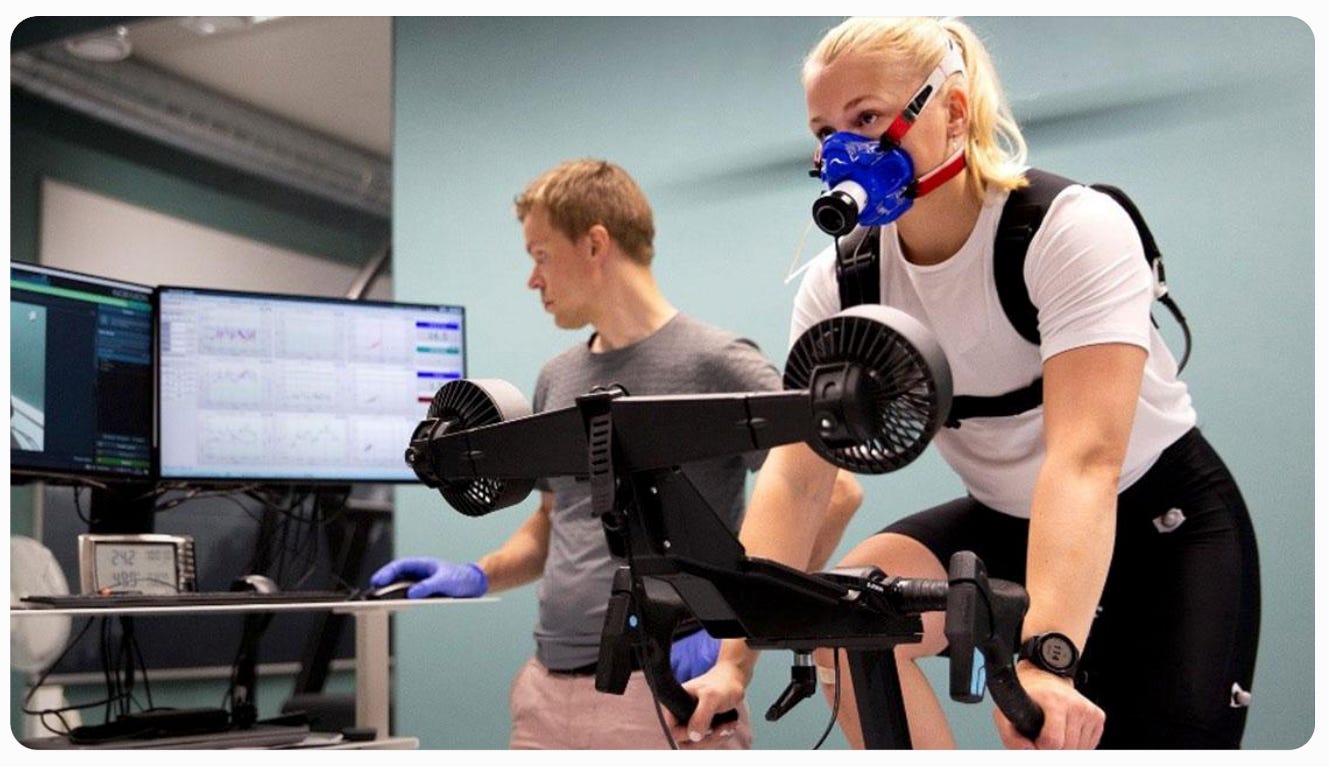
In July 2023, Garmin announced the opening of its Firstbeat Analytics Lab in Jyväskylä, Finland.
The research facility brings together physiologists, data scientists, specialized fitness equipment and proprietary monitoring technologies to support the development of Garmin’s wearable devices, cycling computers and wellness products.
Garmin had previously acquired Firstbeat Analytics in 2020, strengthening its physiological analytics capabilities.
This is arguably one of the closest historical comparisons to WHOOP’s investment in dedicated physiological research infrastructure.
Website: Garmin Firstbeat Analytics Lab
4.4. Oura — International research and preventive healthcare

On January 22, 2026, Oura and the National University of Singapore announced the opening of the Oura–NUS Joint Lab, dedicated to personalized preventive health research.
The facility represents Oura’s first research entity in the Asia-Pacific region and builds on six years of collaboration between the two organizations.
Their previous research has focused on wearable accuracy, sleep, travel-related sleep disruption, physical activity and cardiovascular health.
This is particularly significant because it demonstrates that WHOOP’s closest specialist wearable competitor is pursuing a similar international research strategy, although through an academic partnership rather than an integrated retail and corporate facility.
Website: Oura–NUS Joint Lab
4.5. Comparative analysis
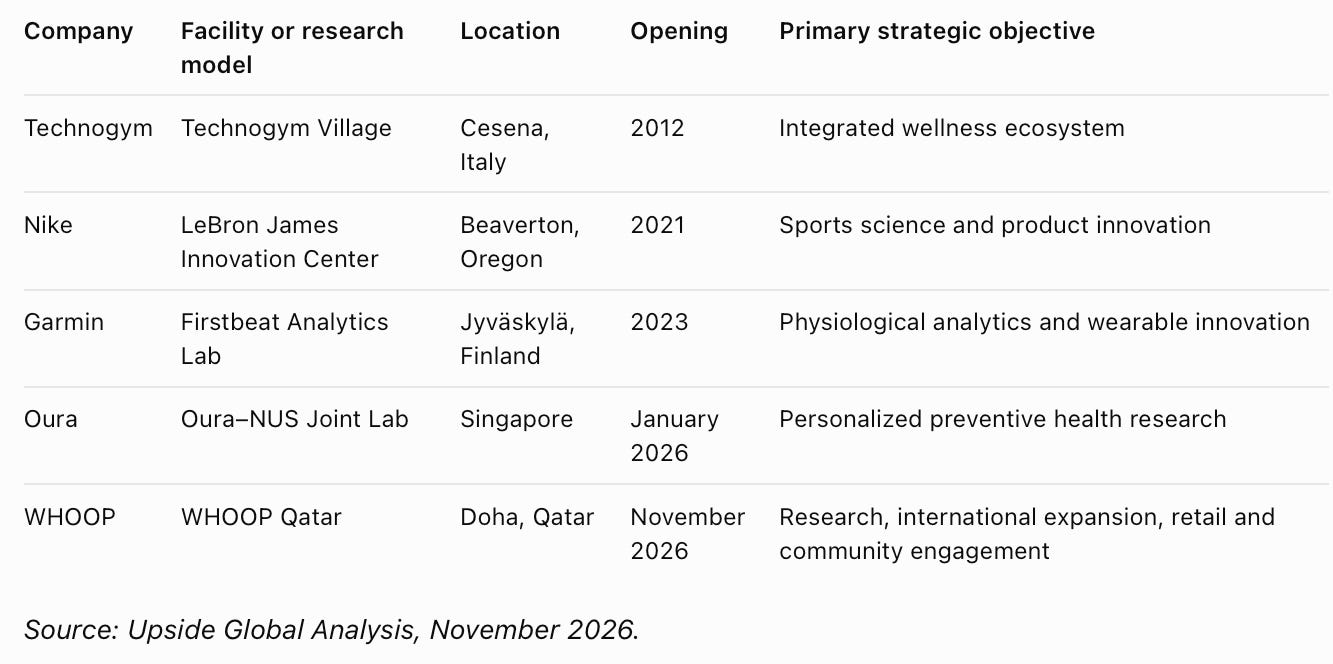
These examples suggest that the convergence of physical infrastructure, scientific research and connected technology represents an established and evolving strategic direction.
However, we do not expect every sports technology company to build its own performance centers. Larger, well-funded companies may pursue dedicated facilities, while smaller startups could achieve similar objectives through strategic partnerships with universities, professional teams, sports medicine clinics and existing performance centers.
5. Potential impact on WHOOP’s competitors
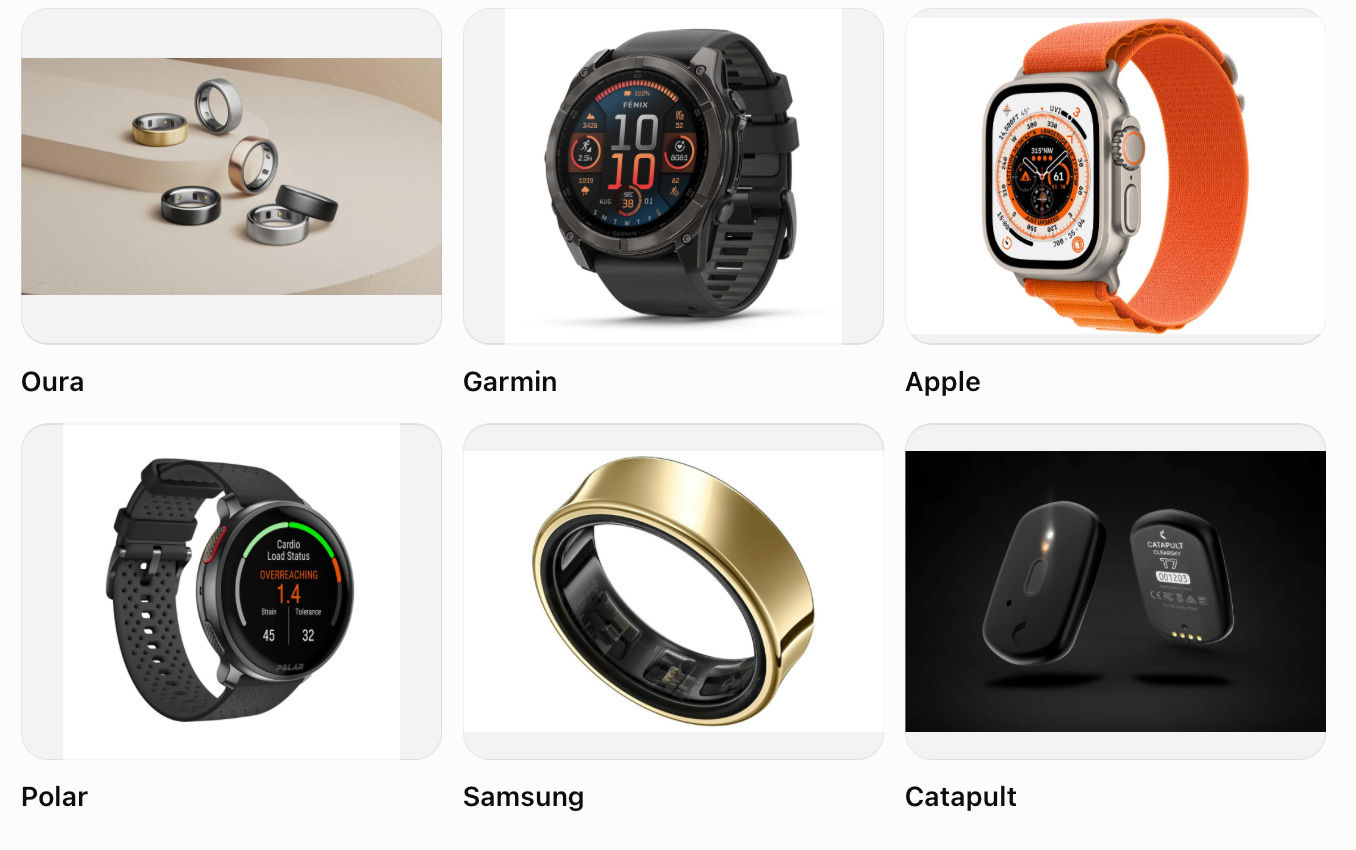
5.1. Oura: Increasing competition in personalized health
Oura is arguably the competitor most directly exposed to WHOOP’s strategic expansion because both companies are increasingly targeting sleep, recovery, personalized health and longevity through subscription-based wearable platforms.
Oura has already developed healthcare partnerships, expanded its physical retail distribution and invested in international scientific research.
Its existing ecosystem includes relationships with organizations such as Dexcom, Natural Cycles, ResMed and healthcare providers.
We expect Oura to continue strengthening its clinical research capabilities, healthcare integrations, international partnerships and retail presence. The company could also explore additional regional research centers in strategically important markets such as the Middle East.
Ultimately, competition between WHOOP and Oura may increasingly focus on which company can deliver the most valuable personalized health ecosystem rather than simply which wearable provides the most accurate sleep or recovery metrics.
5.2. Garmin: From sports performance to preventive health
Garmin benefits from an extensive hardware portfolio, established global distribution channels, sophisticated physiological analytics and a strong reputation among endurance athletes.
WHOOP’s strategy could encourage Garmin to further develop personalized coaching, preventive health services, laboratory data integration and new partnerships with healthcare organizations.
However, Garmin already possesses significant research infrastructure, including its Firstbeat Analytics Lab, and may not need to replicate WHOOP’s retail and performance center strategy directly.
Its competitive advantage remains its ability to address numerous sports and consumer segments through a diversified hardware and software portfolio.
5.3. Apple: Competing through ecosystem integration
Apple is fundamentally different from WHOOP because its health strategy benefits from a much broader consumer technology ecosystem encompassing smartphones, smartwatches, software, services and an established global retail network.
In September 2026, Apple announced new AI-powered health and fitness capabilities, including Health Age insights that incorporate wearable metrics and selected laboratory data.
WHOOP’s expansion could nevertheless increase competitive pressure in areas such as personalized recovery, longevity, preventive health and AI-powered coaching.
Apple’s existing retail infrastructure could also enable it to introduce more sophisticated health-related product demonstrations and customer education without necessarily establishing dedicated performance centers.
5.4. Polar: Leveraging scientific credibility
Polar has historically differentiated itself through heart rate monitoring, exercise physiology, training analytics and scientific research.
Its existing Polar Research Center brings together experts in physiological science, technology and data analytics.
WHOOP’s strategy could encourage Polar to place greater emphasis on translating its scientific expertise into more comprehensive consumer experiences, international research partnerships and personalized AI-driven recommendations.
Polar could also strengthen its positioning as a scientifically credible alternative for elite athletes, coaches and sports organizations.
5.5. Samsung: Strengthening its connected health ecosystem
Samsung’s advantage lies in its ability to integrate connected health technologies across smartwatches, smart rings, smartphones and its broader consumer electronics ecosystem.
Rather than competing directly through dedicated research and retail facilities, Samsung could increasingly focus on interoperability, healthcare partnerships, personalized AI coaching and connected home health applications.
Its challenge will be to establish the same level of perceived specialization and performance credibility that companies such as WHOOP, Garmin, Polar and Oura have developed.
5.6. Catapult, VALD and other elite performance technology companies
The impact on companies such as Catapult and VALD is likely to be more indirect because these organizations primarily target professional sports teams, performance departments, medical practitioners and other institutional customers.
Nevertheless, WHOOP’s strategy could reinforce the importance of providing customers with more than standalone hardware or software.
Performance technology vendors could increasingly differentiate themselves through dedicated research partnerships, practitioner education, reference performance centers, product demonstrations and the integration of multiple complementary technologies.
For example, companies operating across markerless 3D motion capture, force plates, thermography, cognitive performance, recovery and athlete monitoring could establish partnerships with performance centers to demonstrate how their technologies support real-world practitioner workflows.
6. Future trends: What can we expect over the next five years?
6.1. The emergence of branded human performance centers
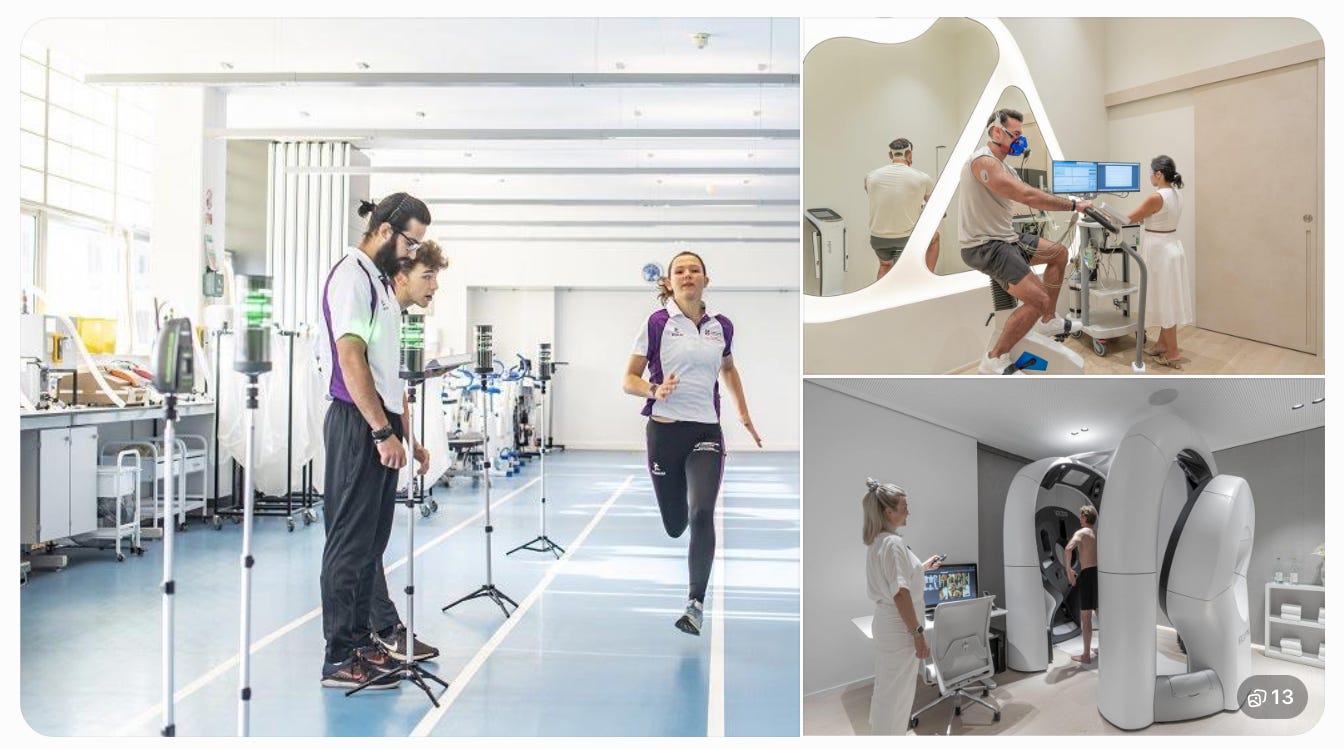
We expect more well-capitalized wearable, fitness and health technology companies to explore physical environments that bring together advanced technology, research, customer education and personalized services.
These facilities could take several forms, ranging from scientific research laboratories and flagship retail stores to technology demonstration centers and partnerships with existing sports performance or healthcare facilities.
Potential markets for this type of expansion could include New York, Los Angeles, London, Paris, Dubai, Abu Dhabi, Riyadh and Singapore.
Rather than simply purchasing a wearable online, consumers could eventually have the opportunity to experience a broader range of services, including physiological assessments, personalized coaching and consultations with qualified professionals through appropriate partnerships.
6.2. The Middle East could become a major global hub for performance technology
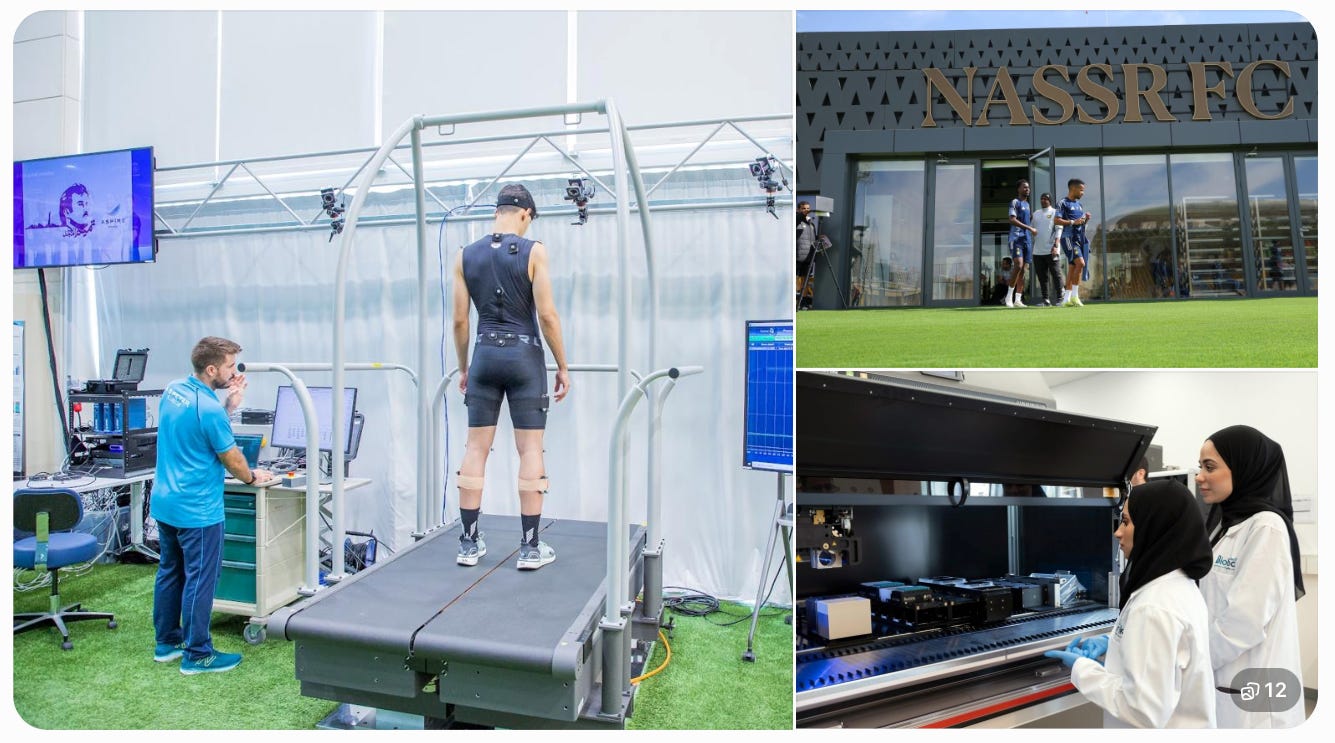
The Middle East is becoming increasingly attractive to sports technology companies because of its combination of institutional investment, sporting ambitions, healthcare innovation and demand for premium consumer technologies.
Organizations such as Aspetar and Aspire Academy in Qatar already demonstrate the region’s capabilities in sports medicine, athlete development and performance science.
We expect additional opportunities for international sports technology companies to develop partnerships in Qatar, Saudi Arabia and the UAE, particularly across:
Elite athlete performance and rehabilitation.
Wearable technologies and physiological monitoring.
Preventive healthcare and longevity.
Artificial intelligence and personalized coaching.
Biomechanics and markerless 3D motion capture.
Nutrition, sleep and recovery.
Cognitive performance and sports psychology.
However, companies entering the region will need to develop credible local partnerships, understand regulatory requirements and establish sustainable commercial models rather than rely exclusively on access to institutional capital.
6.3. Greater convergence between performance technology and healthcare
One of the most significant trends over the next five years could be the gradual convergence of sports performance, consumer wellness, diagnostics and preventive healthcare.
Historically, professional athletes had access to sophisticated performance infrastructure that was unavailable to most consumers. Today, increasingly accessible wearable devices, AI-powered applications and diagnostic services are beginning to narrow parts of that gap.
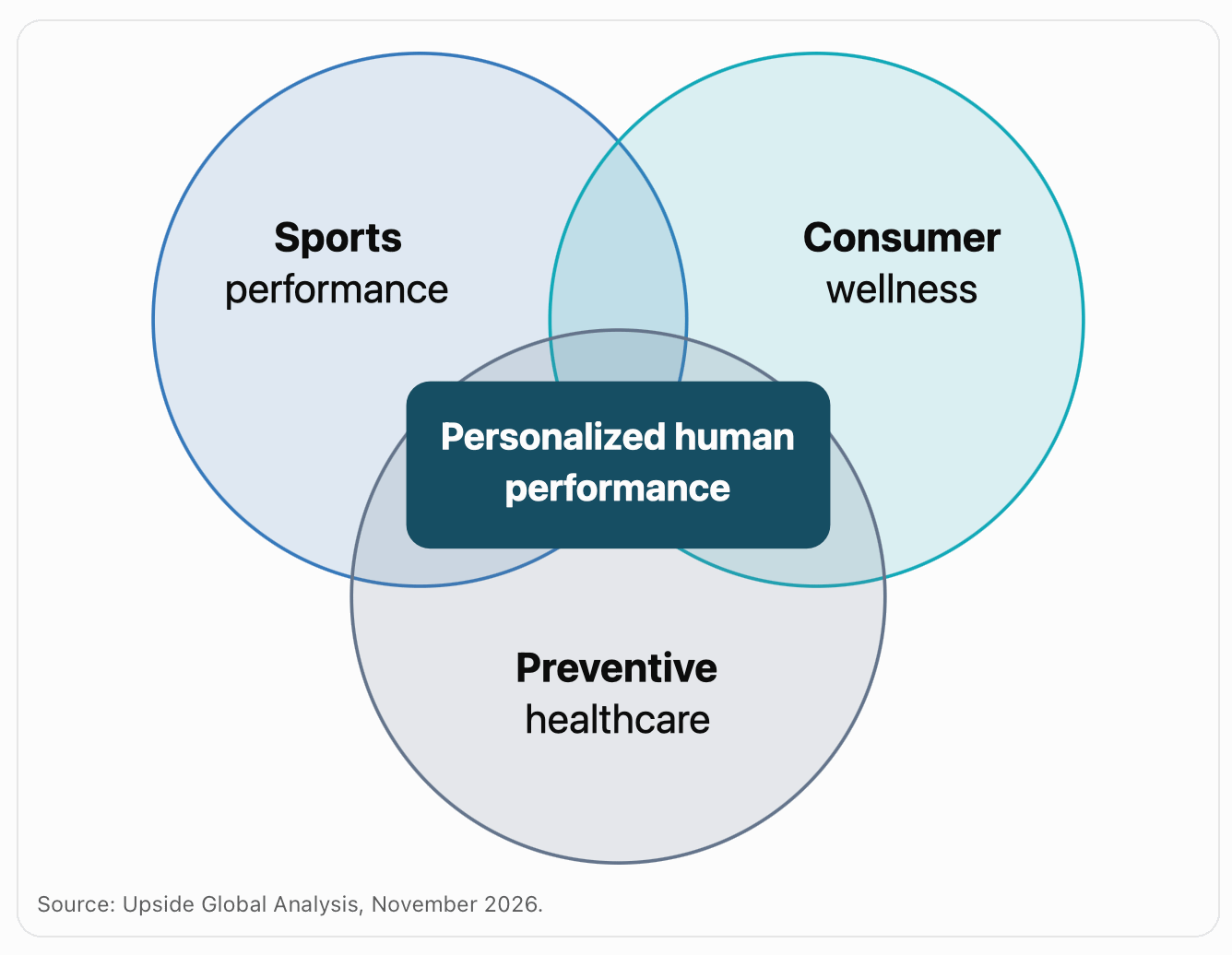
This convergence could create significant commercial opportunities for technology companies capable of combining continuous physiological monitoring, diagnostics, scientific expertise and personalized guidance.
Nevertheless, consumer wearables will not replace medical professionals, and the clinical utility of emerging technologies will require appropriate validation.
6.4. AI agents will become a central component of the performance ecosystem
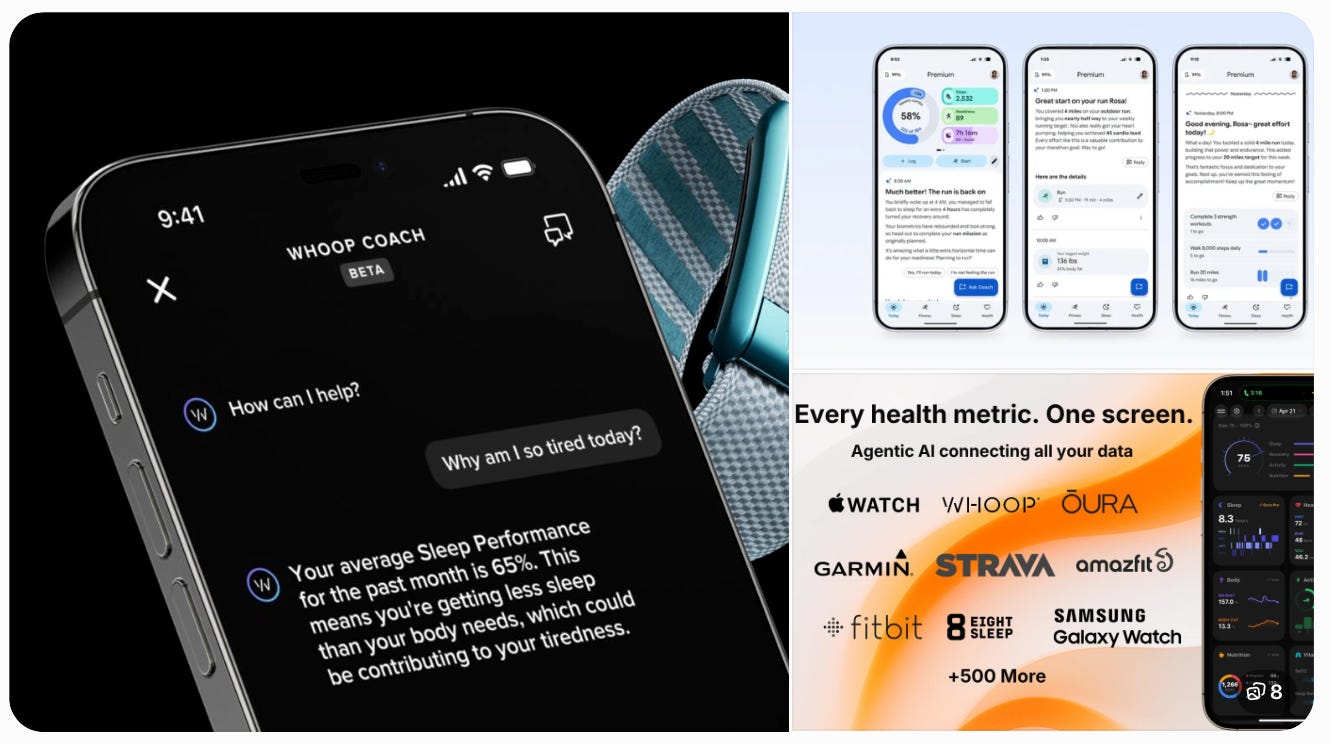
Today, many wearable technologies primarily provide users with scores, dashboards, trends and recommendations.
Over the next five years, we expect AI agents to become increasingly capable of combining information from multiple sources, including wearable devices, blood biomarkers, nutrition, training history, sleep, medical records and individual objectives.
Rather than simply informing an athlete that their recovery score is low, a more sophisticated AI agent could contextualize this information, identify relevant contributing factors and suggest adjustments to training, sleep or recovery routines.
For professional sports organizations, similar AI-powered capabilities could help reduce practitioners’ administrative workload and support individualized decision-making.
The companies with the strongest competitive position may not necessarily be those collecting the most data, but those capable of transforming reliable data into relevant, personalized and actionable insights.
6.5. New business models and revenue opportunities
WHOOP’s expansion into physical infrastructure could also create opportunities to diversify revenue beyond traditional wearable memberships.
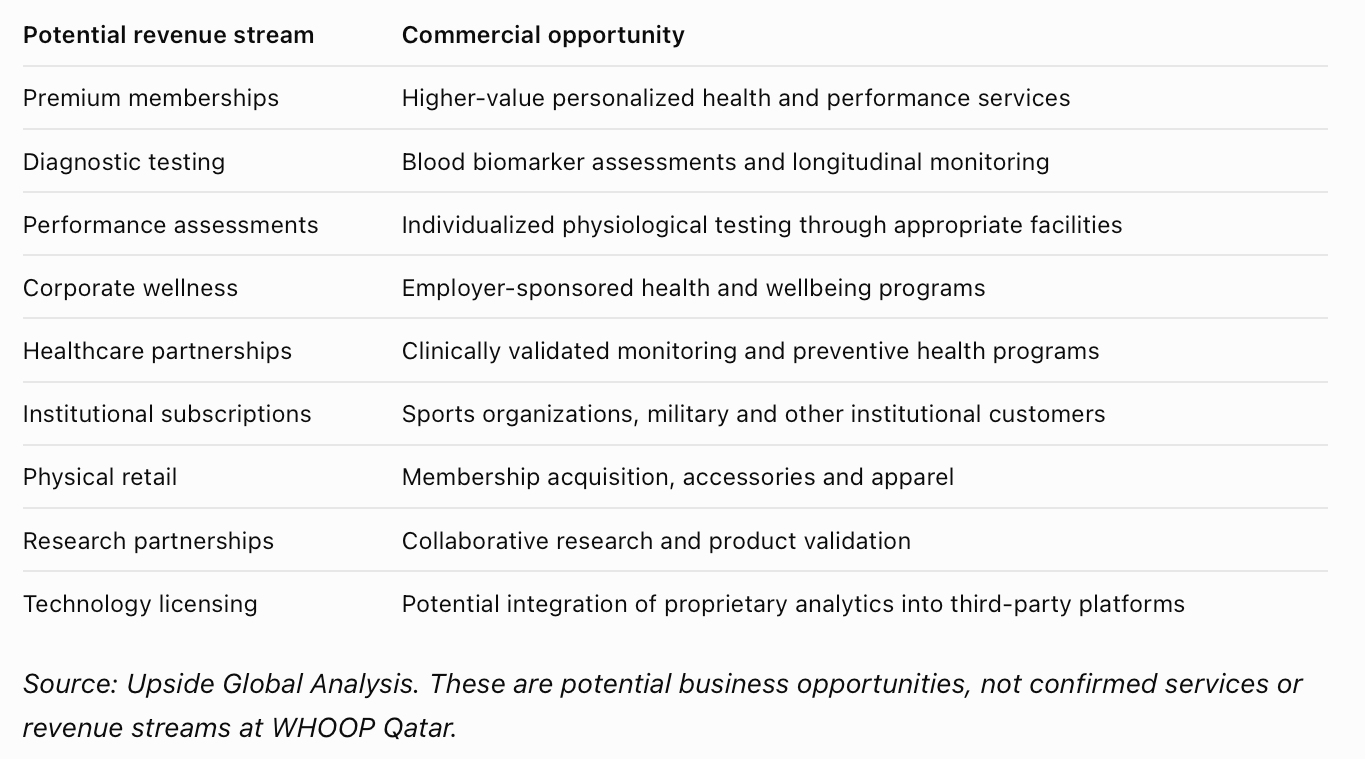
Such diversification could increase customer lifetime value and reduce dependence on a single wearable product category. However, additional services could also introduce operational complexity, higher costs and regulatory responsibilities.
6.6. More partnerships between startups and established performance centers
For smaller sports technology companies, establishing a proprietary performance center could be financially impractical.
Instead, we expect startups to increasingly partner with existing elite performance facilities, professional sports teams, rehabilitation clinics, universities and sports medicine organizations.
This approach could enable startups to demonstrate their technologies, conduct scientific studies, collect practitioner feedback and generate commercial opportunities without taking on significant real estate or infrastructure costs.
For performance technology companies, access to a credible network of reference facilities could become an increasingly important competitive differentiator.
7. Potential risks associated with WHOOP’s strategy
Despite the significant opportunities associated with WHOOP’s expansion, its strategy also introduces several challenges.
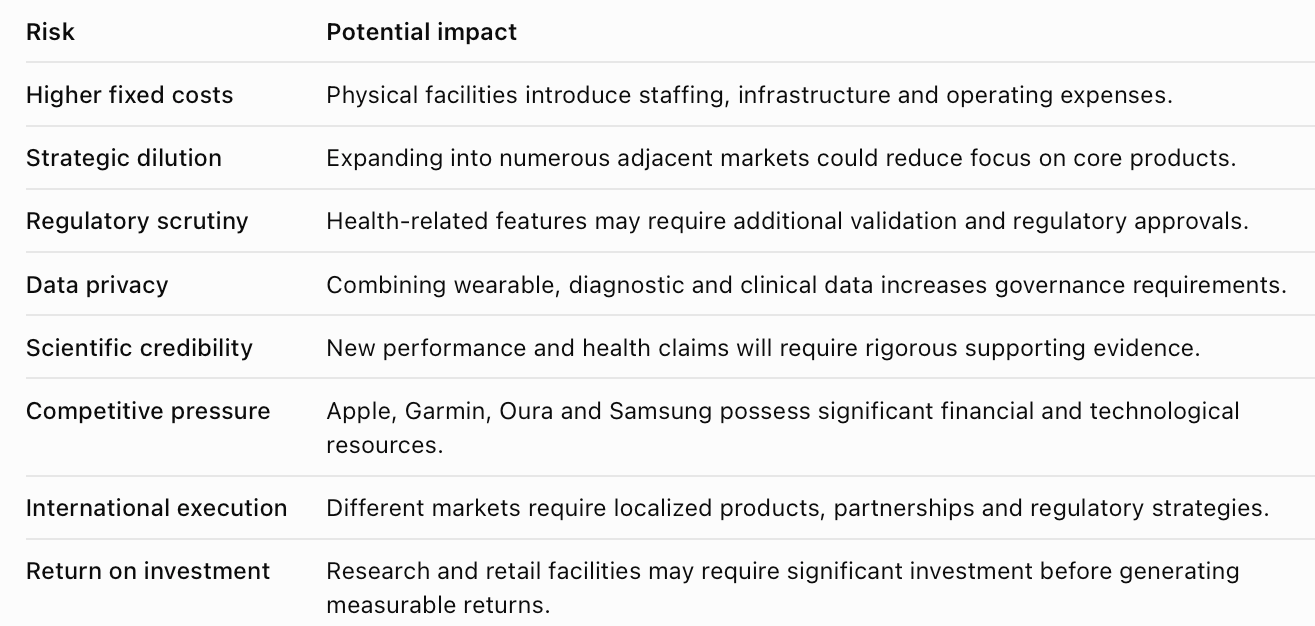
The regulatory challenge is particularly important. WHOOP has already faced FDA scrutiny in the United States over its Blood Pressure Insights feature, illustrating the increasingly complex distinction between consumer wellness technology and regulated medical devices.
At Upside, we believe one of the biggest challenges for WHOOP will be maintaining the financial attractiveness of its recurring-revenue subscription model while expanding into more capital-intensive activities.
The company has not publicly disclosed the investment required to establish WHOOP Qatar, its projected operating costs, or its expected financial return. Consequently, it is too early to determine whether this model will be commercially successful or scalable across multiple international markets.
8. Overall conclusion
The opening of WHOOP Qatar represents an important milestone not only for WHOOP but potentially for the broader sports performance technology industry.
By combining an international research laboratory, flagship retail store and regional corporate operations, WHOOP is demonstrating its ambition to evolve beyond wearable technology and establish a broader human performance and personalized health ecosystem.
The decision to establish this facility in the Middle East is also strategically significant. With strong regional membership growth, substantial institutional investment and emerging healthcare partnerships, the region could become an increasingly important component of WHOOP’s international expansion.
However, WHOOP is not the only company pursuing this direction. Oura, Garmin, Nike and Technogym have already established research facilities or integrated innovation campuses, illustrating a broader convergence between scientific research, connected technology and physical infrastructure.
At Upside, we believe the next five years will be characterized by increasing competition across personalized health, longevity, athlete performance, diagnostics and AI-powered coaching. The traditional boundaries between wearable technology companies, sports performance vendors, fitness equipment manufacturers and preventive healthcare platforms could become increasingly blurred.
For professional sports organizations and practitioners, this evolution could accelerate access to more sophisticated physiological assessments, individualized monitoring, scientific research and integrated performance solutions. For sports technology startups, it could create new opportunities to partner with established performance centers, demonstrate scientific credibility and develop innovative commercial models.
However, building physical infrastructure is not necessarily the right strategy for every technology company. Scientific credibility, product differentiation, operational execution, customer retention and financial discipline will remain fundamental.
Ultimately, the next generation of leading performance technology companies may no longer be defined exclusively by the devices they sell or the data they collect, but by their ability to build comprehensive ecosystems that help people perform better, recover more effectively and live healthier lives.
WHOOP’s investment in Qatar could represent an important step toward that future.
A lab is not validation. A store is not a moat. WHOOP raised $575M at a $10.1B valuation and opened its first lab and first flagship store in Doha. The argument is the flywheel. More members, more data, better algorithms, more members. The piece says it plainly. More data alone does not guarantee better algorithms. The test is not the building. It is whether the data becomes something a clinician trusts. A recovery score is not an outcome. The FDA already asked that question on Blood Pressure Insights. Until the lab produces validated results, this is a real estate story with a data story attached.