

This study, titled “The Effect of Quality Sleep on Basketball Three-Point Shooting Outcomes: The Mediating Role of Athletic Mental Energy,” examines how sleep quality influences basketball shooting performance, with a specific focus on three-point shooting accuracy. The study explores the psychological mechanism of athletic mental energy as a mediator, offering practical implications for performance optimization in collegiate basketball athletes.
Authors
Shu-Yueh Chan1 , Wei-Jiun Shen1,2 , Shin-Liang Lo1 , Yun Che Hsieh1,3 , Frank J.H. Lu1 and Garry Kuan4
1 Department of Physical Education, Chinese Culture University, Taipei, Taiwan
2 Graduate Institute of Physical Education, National Taiwan Sport University, Taoyuan, Taiwan
3 Department of Sport Sciences, Army Academy, R.O.C, Taoyuan, Taiwan
4 Exercise and Sports Science Programme, School of Health Sciences, Universiti Sains Malaysia, Kubang Kerian, Kelantan, Malaysia
You can download the full study by clicking on the button below:
Study Summary – Key Findings and Statistics
Study Overview
Sample Size: 145 collegiate basketball players
71 males (49%), 74 females (51%)
Mean Age: 19.6 ± 1.35 years
Competitive Level:
57% Division I
43% Division II
Positions: 43% guards, 40% forwards, 17% centers
Average Training Load:
3.81 hours per day
5.19 sessions per week
Sleep Quality
Sleep quality was measured using the Pittsburgh Sleep Quality Index (PSQI).
Average PSQI scores indicated relatively poor sleep quality, consistent with prior collegiate athlete research showing that over 40% exceed the clinical cutoff for poor sleep
Effect of quality sleep on bask…
.
Poorer sleep quality was associated with greater sleep latency and sleep disturbance.
Three-Point Shooting Performance
Mean Three-Point Shooting Performance Score: 80.1 ± 11.5
Mean Three-Point Shooting Percentage: 48.0% ± 16.0
Sleep quality was positively associated with:
Three-point shooting performance (r = 0.22, p = 0.007)
Three-point shooting percentage (r = 0.22, p = 0.009)
Effect of quality sleep on bask…
Athletic Mental Energy (AME)
AME is a multidimensional psychological construct comprising:
Vigor
Motivation
Confidence
Concentration
Tireless
Calm
Key associations:
Sleep quality was positively correlated with vigor, confidence, motivation, and concentration.
Higher AME scores were associated with better three-point shooting performance and accuracy
Effect of quality sleep on bask…
.
Mediation Effects (Core Finding)
Athletic Mental Energy partially mediated the relationship between sleep quality and three-point shooting performance:
Indirect effect = 0.18 (p = 0.031)
Proportion mediated (PM) = 0.21 (small-to-moderate effect)
Effect of quality sleep on bask…
AME fully mediated the relationship between sleep quality and three-point shooting percentage:
Indirect effect = 0.27 (p = 0.019)
PM = 0.26
Effect of quality sleep on bask…
Key Mediating Dimensions:
Vigor
Confidence
Motivation
Concentration
Tireless and calm did not significantly mediate shooting outcomes.
Sex and Demographic Differences
Female athletes showed shorter sleep latency but greater sleep disturbance than males (p < 0.05).
Male athletes reported higher AME levels and superior shooting performance (p < 0.001).
No significant moderation effects were found for:
Sex
Playing position
Training years
Training load
Practical Implications for Performance
Sleep quality impacts basketball-specific technical skill, not only general physical or endurance metrics.
Psychological readiness — particularly mental energy and focus — is a critical pathway linking sleep to performance.
Even modest improvements in sleep quality may translate into meaningful gains in shooting consistency through enhanced AME.
Limitations and Research Gaps
Cross-sectional design limits causal inference.
Reliance on self-reported sleep and mental energy measures.
Sleep quality assessed retrospectively over one month, while shooting performance was measured on a single day.
Future studies should incorporate objective sleep tracking, longitudinal designs, and broader performance metrics.
Recommendations to Teams
Integrate Sleep as a Performance KPI:
Teams should formally treat sleep quality as a key performance indicator alongside workload, wellness, and readiness metrics. Regular monitoring of sleep quality can help identify early signs of mental fatigue that may negatively impact shooting performance and decision-making.
Link Sleep Data to Skill Training:
Because three-point shooting is highly sensitive to cognitive and psychological states, coaches should consider adjusting shooting volume and intensity based on players’ reported sleep quality and mental energy levels. On poor-sleep days, emphasizing technical form or reduced-volume shooting may be more effective than high-repetition drills.
Monitor Athletic Mental Energy (AME):
Incorporating brief AME or mental readiness check-ins can help staff understand whether sleep deficits are translating into reduced focus, motivation, or confidence. This enables more precise day-to-day training decisions without over-reliance on physical load data alone.
Educate Athletes on Sleep–Skill Transfer:
Teams should clearly communicate how sleep influences not just recovery, but on-court skills like shooting accuracy, focus, and shot selection. Framing sleep as a competitive advantage rather than a recovery obligation may increase athlete buy-in.
Optimize Schedules During High-Stress Periods:
Academic pressure, travel, and late practices can disrupt sleep in collegiate environments. Teams should proactively adjust schedules around exams, road trips, and tournaments to protect sleep consistency and mental energy availability.
Avoid Over-Monitoring Pitfalls:
While wearables and sleep-tracking apps can be valuable, teams should use them judiciously to prevent anxiety or over-fixation on sleep metrics. Combining objective data with simple subjective check-ins may provide the most actionable insights.
Position Sleep Upstream in Performance Models:
Sleep should be viewed as an upstream driver that replenishes athletic mental energy, which then supports consistent skill execution under pressure. Integrating sleep into long-term athlete development and in-season performance planning may yield durable improvements in shooting consistency.
Conclusion
The findings highlight quality sleep as a critical, yet often underutilized, performance lever in basketball, particularly for cognitively demanding skills like three-point shooting. By improving sleep quality, athletes enhance their mental energy, which directly contributes to better shooting performance. The study reinforces the importance of viewing sleep not merely as recovery, but as an active performance enhancer. Future research should focus on longitudinal designs and sleep-based interventions to further clarify causal relationships and optimize evidence-based strategies for basketball performance enhancement.
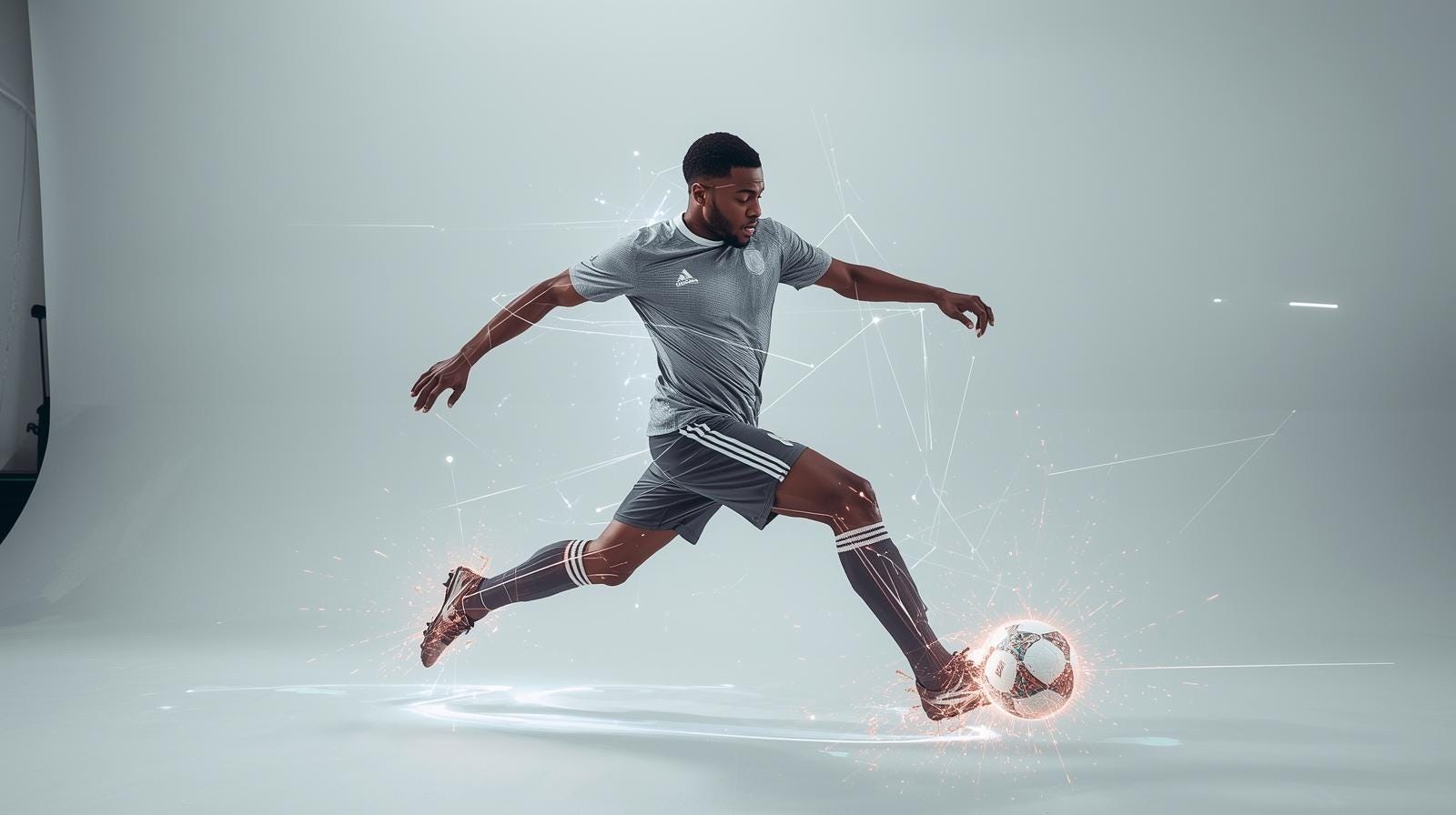
This study, titled “Motion Capture Technologies for Athletic Performance Enhancement and Injury Risk Assessment: A Review for Multi-Sport Organizations,” examines how marker-based and markerless motion capture systems are used to evaluate athletic performance, movement mechanics, and injury risk across multiple sports. The review synthesizes current technologies, applications, benefits, limitations, and adoption considerations, offering practical guidance for teams and organizations seeking to integrate motion capture into performance and medical workflows.
Authors
Bahman Adlou * , Christopher Wilburn and Wendi Weimar
To read the full study click on the button below:
Study Summary – Key Findings and Statistics
Study Overview
Study Type:
Narrative review of motion capture technologies in sport performance and injury risk assessment.
Scope:
Marker-based motion capture systems
Markerless motion capture systems
Inertial motion capture systems (IMUs)
Applications across team and individual sports
Primary Focus Areas:
Performance enhancement
Biomechanical assessment
Injury risk identification
Return-to-play decision-making
Motion Capture Technologies
Marker-Based Motion Capture
Overview:
Uses reflective markers placed on anatomical landmarks and multiple infrared cameras to capture precise joint kinematics.
Key Strengths:
Gold standard for biomechanical accuracy
High spatial and temporal resolution
Precise joint angle and segmental movement analysis
Limitations:
High cost and infrastructure requirements
Time-consuming setup and calibration
Laboratory-bound, limited ecological validity
Common Use Cases:
Gait analysis
Jump mechanics
Running biomechanics
Post-injury movement assessment
Markerless Motion Capture
Overview:
Uses computer vision and AI algorithms to track movement without physical markers.
Key Strengths:
Faster setup and greater scalability
Can be deployed in training and competition environments
Lower disruption to athletes
Limitations:
Lower accuracy for fine joint rotations compared to marker-based systems
Accuracy influenced by lighting, camera placement, and clothing
Common Use Cases:
Movement screening
Load and asymmetry monitoring
Return-to-play assessments
Team-wide biomechanical monitoring
Inertial Measurement Units (IMUs)
Overview:
Wearable sensors combining accelerometers, gyroscopes, and magnetometers.
Key Strengths:
Portable and field-ready
Suitable for continuous monitoring
Effective for velocity, acceleration, and angular motion analysis
Limitations:
Susceptible to signal drift
Limited direct joint angle accuracy without advanced filtering
Common Use Cases:
Training load tracking
Running mechanics
Jump counts and landing forces
Performance Enhancement Applications
Motion capture technologies enable:
Technique optimization (e.g., sprint mechanics, throwing motion, jump take-off)
Movement efficiency analysis
Asymmetry detection affecting power output and coordination
Individualized coaching feedback
Marker-based systems are best suited for precision biomechanical modeling, while markerless systems support high-throughput athlete monitoring across squads.
Injury Risk Assessment
Key Movement Indicators Identified:
Excessive joint valgus
Poor trunk control
Asymmetric loading patterns
Altered landing mechanics
Motion capture allows:
Early detection of maladaptive movement patterns
Quantification of changes following fatigue or injury
Objective benchmarks for injury risk screening
The review highlights strong associations between abnormal kinematics and increased risk of ACL injury, hamstring strains, and overuse injuries.
Return-to-Play (RTP) Decision-Making
Motion capture contributes to RTP by enabling:
Objective comparison between injured and non-injured limbs
Tracking biomechanical normalization over time
Reducing reliance on subjective visual assessments
Markerless systems, in particular, are highlighted as scalable RTP tools in high-performance environments due to ease of repeated testing.
Practical Implementation Considerations
Cost and Resources:
Marker-based systems require significant financial and technical investment.
Markerless solutions offer lower barriers to entry for teams.
Scalability:
Markerless and IMU-based systems are better suited for large squads.
Marker-based systems are ideal for targeted assessments.
Data Integration:
Greatest value achieved when motion capture data is integrated with:
Strength testing
Load monitoring
Medical and wellness data
Limitations and Research Gaps
Lack of standardized protocols across sports
Limited longitudinal evidence linking motion capture metrics directly to injury reduction
Variability in accuracy between different markerless systems
Need for validation studies in female and youth athlete populations
Recommendations to Teams
Match Technology to Use Case:
Teams should avoid a “one-size-fits-all” approach. Marker-based systems are best for detailed biomechanical investigations, while markerless systems support routine monitoring and large-scale screening.
Prioritize Actionable Outputs:
Motion capture systems should deliver clear, coach- and clinician-friendly insights, not just raw kinematic data.
Integrate with Existing Performance Models:
Combining motion capture outputs with strength, load, and wellness data enhances decision-making around injury risk and performance readiness.
Use Markerless Systems for Frequency, Marker-Based for Precision:
Frequent, low-friction assessments via markerless motion capture can flag issues early, while marker-based testing can be reserved for deeper analysis.
Validate Internally:
Teams should conduct internal reliability and repeatability testing before operationalizing any motion capture technology.
Conclusion
This review highlights motion capture technologies as powerful tools for enhancing athletic performance and assessing injury risk across sports. Marker-based systems remain the gold standard for biomechanical accuracy, while markerless solutions offer scalability, ecological validity, and operational efficiency. When appropriately matched to specific use cases and integrated into broader performance ecosystems, motion capture technologies can meaningfully improve athlete monitoring, injury prevention strategies, and return-to-play decision-making. Future research should focus on standardization, longitudinal injury outcomes, and real-world validation to maximize impact in elite and developmental sport environments.
You may also like:
📚 Upside Studies: (1) The Impact of Daylight Exposure on Injured Athletes: Implications for Rehabilitation. (2) Sleep Study. (3) Pattern of Injuries in Basketball Players

Upside study: The Impact of Daylight Exposure on Injured Athletes: Implications for Rehabilitation
Strong synthesis linking sleep quality directly to skill execution through Athletic Mental Energy. The partial vs full mediation finding is noteworthy, showing AME explains more of the shooting percentage variance than raw performace scores. I dunno if teams are tracking this upstream pathway enough tho, most still focus on physical recovery metrics while ignoring the psych readiness layer. The motion capture piece adds another dimension becuase you could theoretically map AME states to kinematic stability patterns during high-cognitive tasks like shooting.