
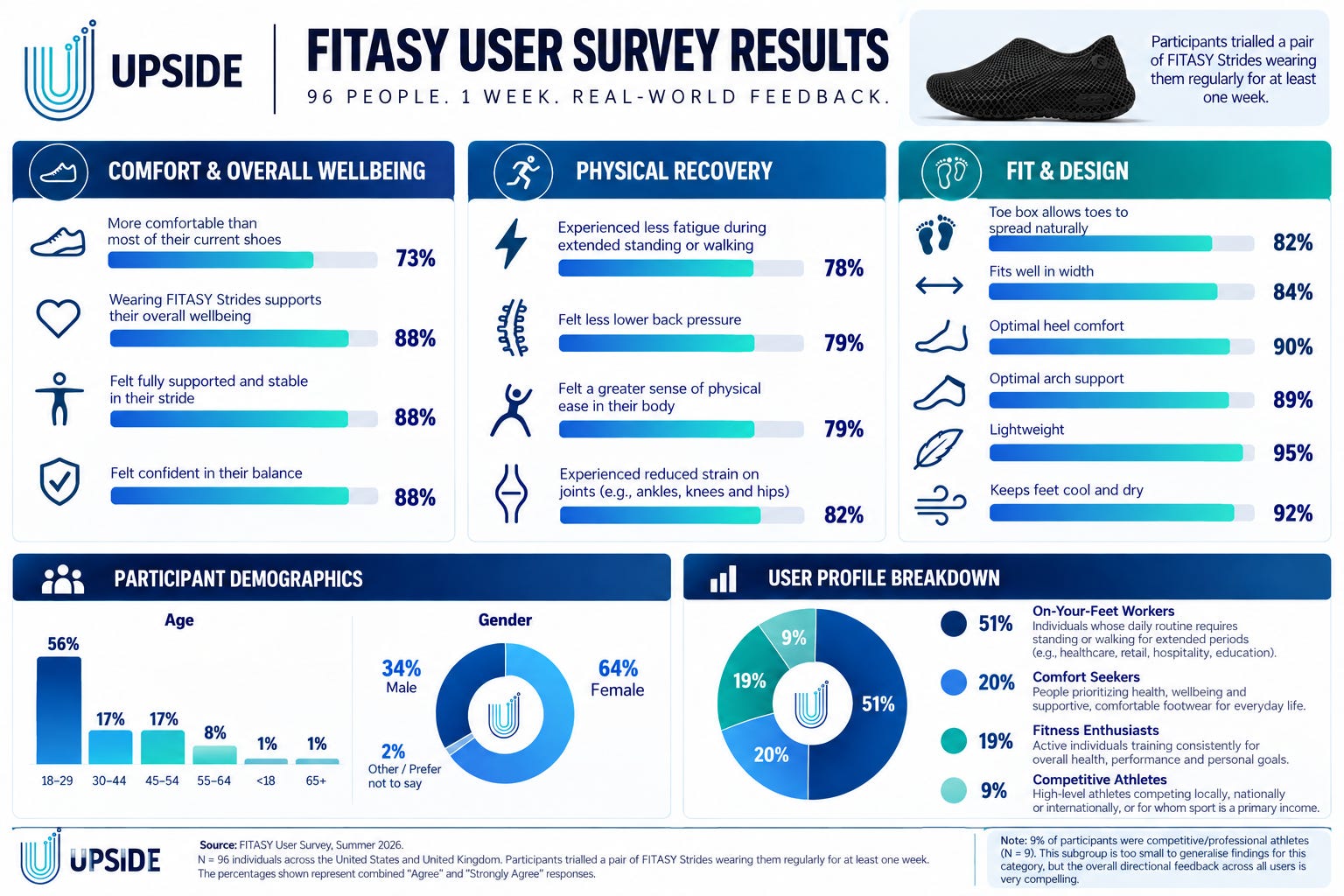
FITASY, a leading Personalized 3D Printed footwear company, recently shared with us the results of a user survey conducted with 96 individuals across the U.S. and UK during Summer 2026, and some of the directional feedback was interesting.
Participants came from a range of backgrounds, including on-your-feet workers, comfort seekers, fitness enthusiasts and a small number of competitive athletes. Each participant trialled a pair of FITASY Strides, wearing them regularly for at least one week.
The results below represent participants who selected either “Agree” or “Strongly Agree.”
Comfort & wellbeing
73% said FITASY Strides were more comfortable than most of their current shoes, while 88% felt that wearing the shoes supported their overall wellbeing.
Stability and balance were also rated highly: 88% reported feeling fully supported and stable in their stride, while the same percentage said they felt confident in their balance.
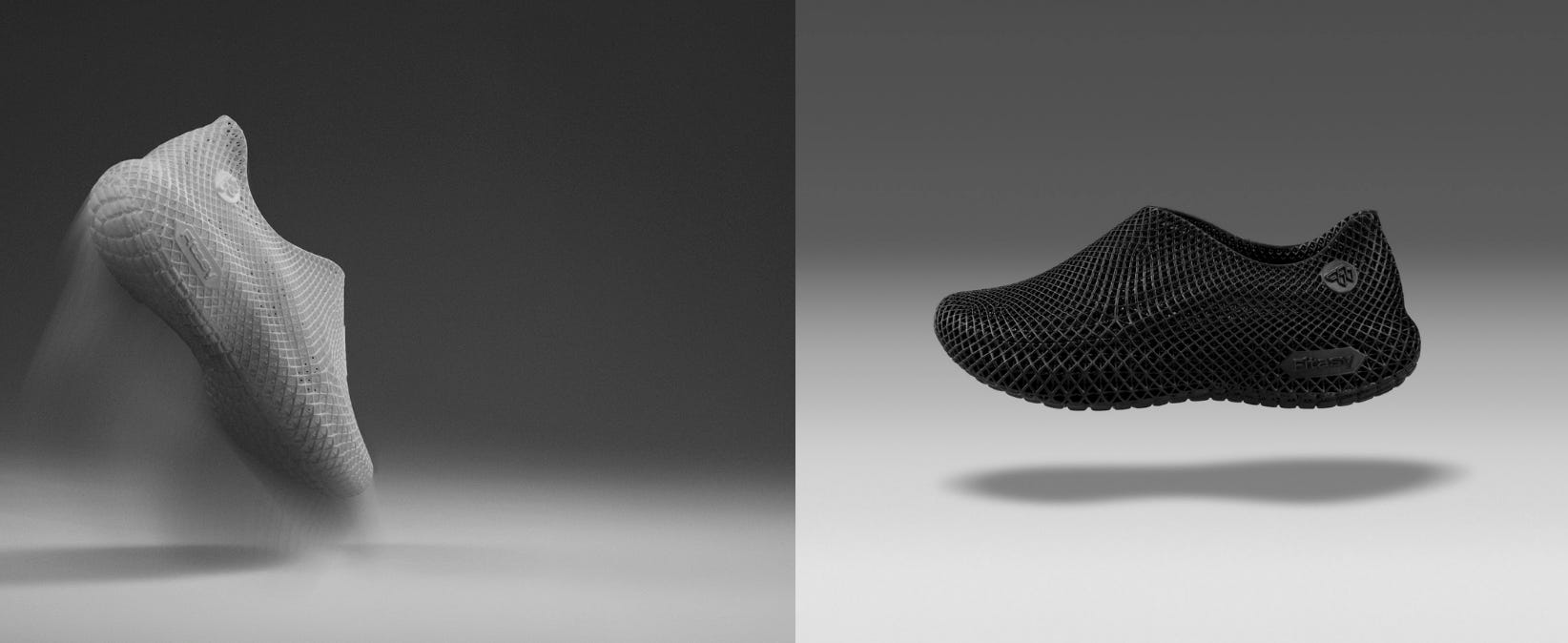
Picture: FITSAY’s Stride 2.0 Custom-Fit
Recovery & physical comfort
Some of the most interesting feedback related to how participants felt during prolonged periods of standing and walking.
78% reported experiencing less fatigue during extended standing or walking, while 79% reported less lower-back pressure.
Another 79% said they experienced a greater sense of physical ease in their body.
Perhaps most notably, 82% reported reduced strain on joints, including the ankles, knees and hips.
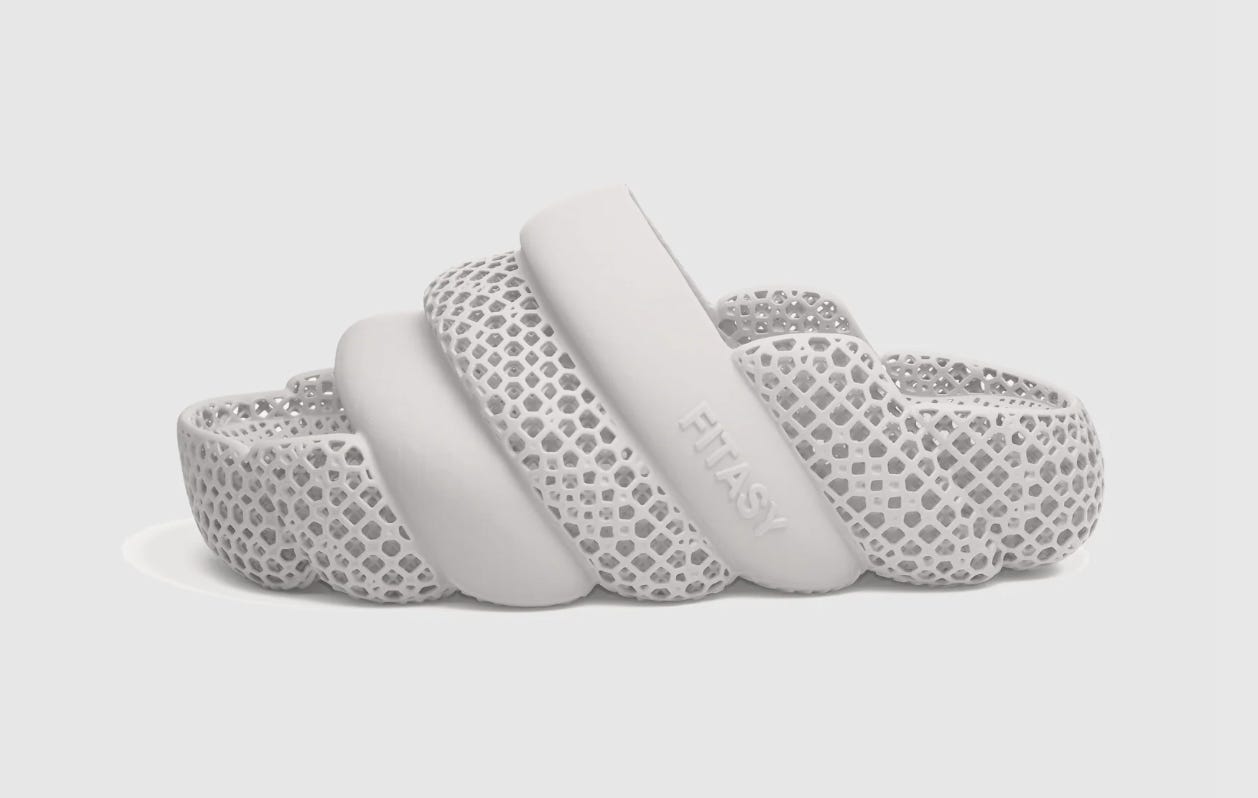
Picture: FITASY’s Croissant Slide
Fit & design
The strongest scores came around several fundamental footwear characteristics.
95% agreed that FITASY Strides were lightweight, while 92% said the shoes helped keep their feet cool and dry.
Heel and arch support also received strong feedback, with 90% reporting optimal heel comfort and 89% reporting optimal arch support.
The shoe’s wider design also appeared to resonate with users: 82% agreed that the toe box allowed their toes to spread naturally, while 84% said the shoe fit well in width.
Who participated?
The 96-person sample was made up primarily of people whose lifestyles place different demands on their footwear:
51% were on-your-feet workers, including people working in areas such as healthcare, retail, hospitality and education.
20% were comfort seekers focused on health, wellbeing and supportive everyday footwear.
19% were fitness enthusiasts who train consistently.
9% were competitive or professional athletes.
One important caveat: the competitive-athlete subgroup included only nine participants, so the results should not be generalized to competitive or professional athletes specifically. The findings are much more useful as directional feedback across the overall group of users.
This also wasn’t a controlled clinical study, so self-reported improvements such as reduced fatigue, joint strain or lower-back pressure shouldn’t be interpreted as proof that the footwear caused those outcomes.
That said, the overall feedback is interesting—particularly around comfort, stability, joint strain, fatigue, heel/arch support and everyday wearability.
For teams and practitioners evaluating new footwear technologies, it would be interesting to see FITASY take the next step and conduct a larger, controlled study specifically with elite athletes, incorporating objective measures alongside subjective feedback.
Could footwear designed around comfort, stability and natural movement ultimately play a bigger role in athlete recovery and everyday load management?
Check out the FITASY website by clicking on the Botton below:
You may also like:
🎙️ Upside Chat with Kevin Wu, Co-founder & CBO at Fitasy, a Leading Personalized 3D Printed Footwear Company.

Today we have the honor of interviewing Kevin Wu, Co-founder & Chief Business Officer at Fitasy, a leading Personalized 3D Printed footwear company.