
Today we have the honor of interviewing Steve Tashjian, Founder and CEO of ELEVATION project. He is also a high performance consultant.
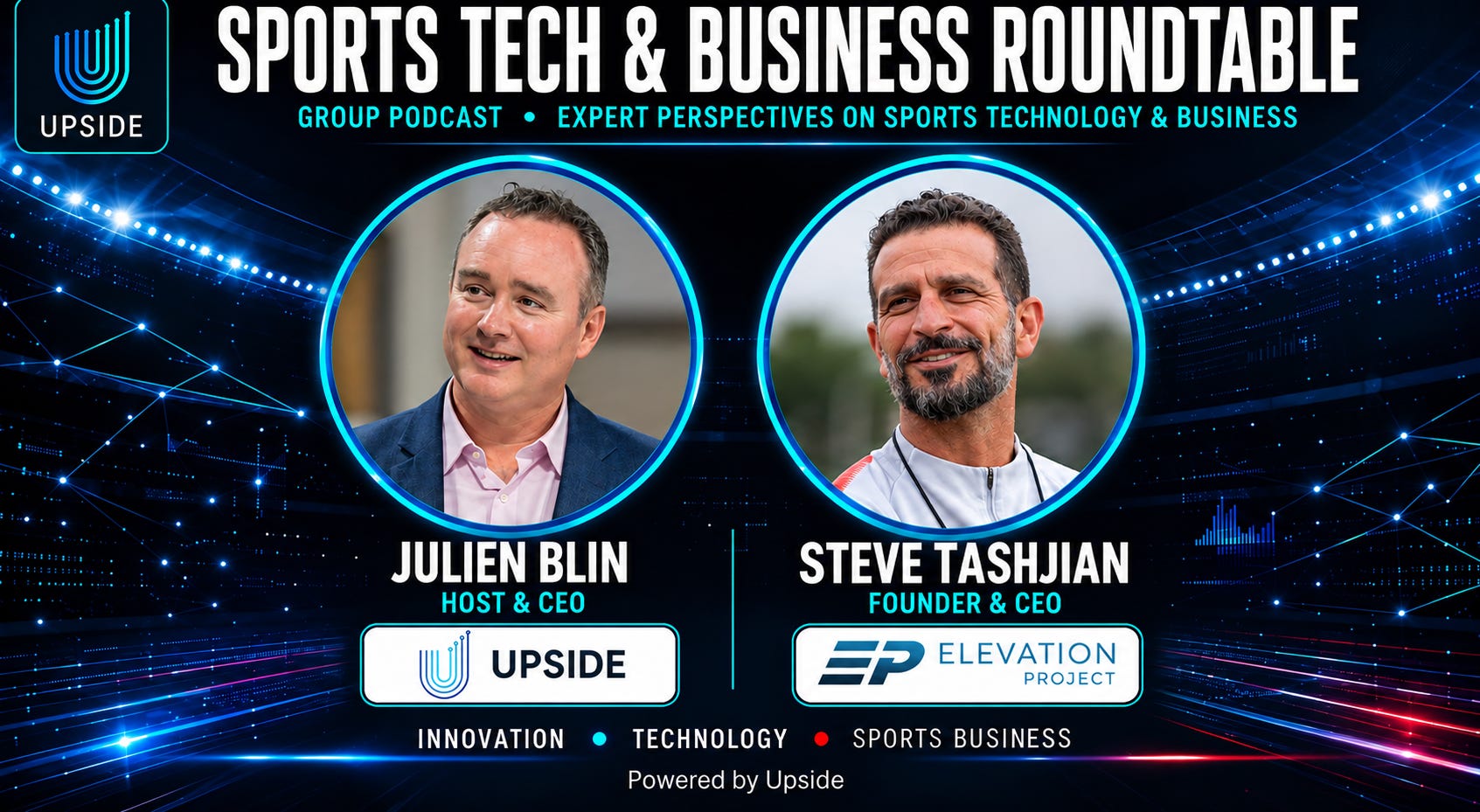
Steve Tashjian is a highly experienced sports performance leader, physical therapist, and founder of Elevation Project, a consultancy focused on leadership development, organizational culture, and high performance. With more than two decades of experience in elite sports, Steve has held leadership roles at Everton FC in the English Premier League, Columbus Crew in Major League Soccer, and the U.S. Men’s National Soccer Team, where he helped apply high-performance principles at the international level, including the FIFA World Cup.
Throughout his career, he has worked closely with coaches, medical professionals, and sports scientists to optimize athlete health, performance, and organizational effectiveness. Today, Steve advises sports organizations and businesses on building high-performing cultures, developing effective leaders, and creating environments where people can thrive. He is also the creator of Atholos, a leadership development initiative designed to help current and aspiring athlete health and performance leaders strengthen their communication, strategic thinking, and organizational leadership skills.
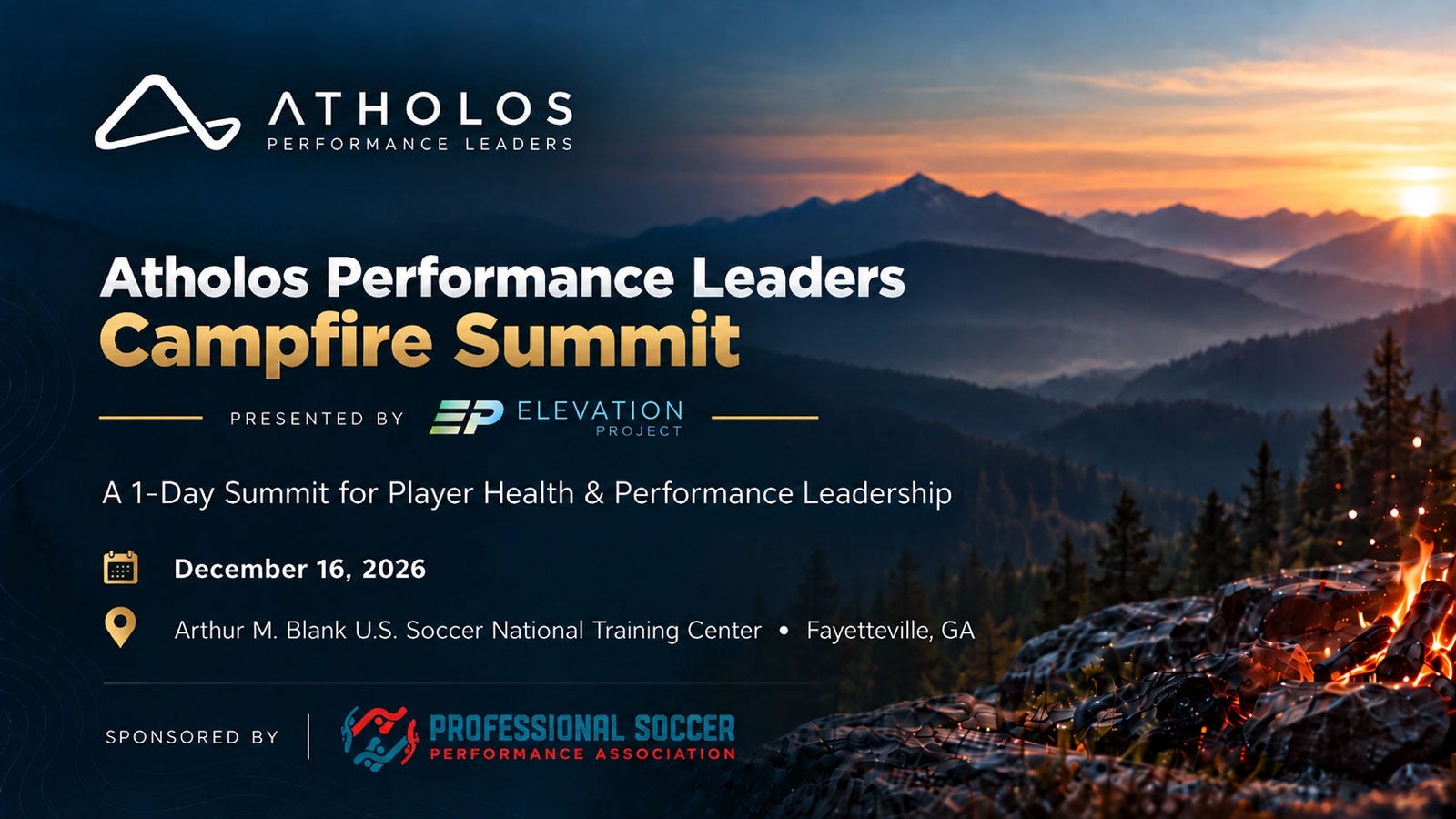
Here is the Link to register to the Atholos conference:
You can watch the video interview below by clicking on the Youtube link. You can also listen to the audio interview by clicking on the link at the top of the page:
📝Show Notes: During the interview with Steve Tashjian, founder of Elevation Project and former high-performance leader at Everton FC, Columbus Crew, and the U.S. Men’s National Soccer Team, we discussed the critical role of leadership in elite sports, the importance of building a strong organizational culture, and how effective communication and collaboration between performance, medical, and coaching departments can help teams succeed. We also explored the challenges of injury reduction, the growing role of AI and predictive analytics in sports performance, and why data quality, infrastructure, and human expertise remain essential when making decisions about athlete health. Steve shared his perspective on the differences between MLS and European soccer clubs in adopting sports technologies, as well as the need to develop stronger leadership skills among sports performance practitioners.
Finally, we discussed his upcoming Atholos Leadership Summit on December 16 in Atlanta, including its focus on leadership development, communication, change management, organizational alignment, and creating high-performing environments where athletes and staff can thrive.
Here are the best quotes from the interview with Steve:
1. Tell me about your background
Steve Tashjian — Founder, Elevation Project; Former Head of Sports Science, Everton FC; Former USMNT High Performance Leader
“My focus is still in sport, but also in the corporate space and, and also in the performing arts space.”
“How can I get into places, help organizations and help people understand how to create thriving environments through shaping culture.”
2. What does leadership mean?
This was one of the strongest sections of the interview.
Steve Tashjian
“There’s a difference between acknowledging that communication is important and then answering the question, do you all know what great communication looks like, feels like, sounds like?”
“Cultures are way more affected by the behaviors you allow than, more than anything else.”
“Our leaders in these departments are promoted because of their skill sets as a practitioner, not their skill sets as a leader.”
“You have to let go of coaching to give yourself space to sit at a place in the club where you have a view of what’s happening.”
“It’s the cohesion of how it all fits within a system that operates a certain way that creates alignment, that creates empowerment, that has connection, that eventually creates resiliency.”
Julien Blin
“I think the communication piece is very important. And sometimes department don’t communicate as much as they should.”
“When teams are winning, you’re not looking at what you’re not doing correctly”.
3. Let’s talk about injury reduction and AI
This section contains some of the most thought-provoking exchanges, particularly around AI-powered injury prediction and the importance of data quality.
Steve Tashjian
“The amount of detail, infrastructure, data hygiene and data modeling that would be required to get to a point where we could accurately predict injuries is massive.”
“I don’t think we’ll ever get to a place where we’ll be bringing things down to a minute. I don’t think it’s ever gonna be possible.”
“There’s too much nuance to human physiology. It’s such a complex system.”
“We have to have an incredibly well-organized and well-engineered data ecosystem in order to use AI in a powerful way.”
“It’s only going to be as powerful as the volume and hygiene of whatever it’s going to grab to give you that particular answer.”
Julien Blin
“I remember some AMS vendors, I won’t name who they are, but they were telling me, ‘Hey, we can prevent injuries,’ right? ‘By X percent of accuracy.’”
“Now we got this emergence of AI technology where I feel like every time I talk to an AI company that say we can predict injury, reduce injury, here you go again.”
“The problem is practicality, right? Let’s say if the model say, okay, Steph Curry is going to get hurt in the fourth quarter of the NBA finals, do you really believe that Steve Kerr is going to listen to the AI?”
“You need to get the oversight of a practitioner at the end of the day because it just give them clues of what might be happening with players and when there might be a risk.”
“We have too much data, and whoever figures out how to make sense of GPS, sleep, cardio, mental performance data and figured out how to put everything together will get the most traction but I have not seen anyone who can do it right yet.”
4. Tell us about the Atholos event. Who should attend?
Steve Tashjian
“As we start to evolve as an industry, we need to keep developing player health and performance leaders, not just in soccer, in sport in general.”
“I created Atholos, which is a blending of two Greek words: Athleta, which means athlete, holos, which means holistic.”
“That’s what we want is holistic athlete-centric, athlete-centered performance leaders.”
“This one-day summit, we’re gonna have some of the most well-recognized leaders in athlete health management, Danny Donachie, Angus Mogford, Nick Winkelman.”
5. What topics will be covered?
Steve Tashjian
“We’re going to cover two big buckets. What’s the internal journey leading to being a great leader, and the external journey leading to be a great leader?”
“The internal journey is how do we start to understand our own characteristics? Our own biases that are blocking us from being a great leader.”
“Your communication is only as good as how it lands, not how it comes out of your mouth, but how it lands.”
“How do you lead teams through change? I come in, how do you be successful as the new boss?”
“How do I create a vision? How do I communicate a vision? How does that then turn into a strategic plan that I can align people to?”
“How do we create empowerment in our teams? How do we create connection in our teams? How do we create resiliency in our teams?”
6. Why should anyone attend?
Steve Tashjian
“We wanna deliver information that, for the most part, we’re pretty certain they’ve never heard before.”
“We wanna start grassroots, present material that makes people think, but then ask them questions.”
“If we’re gonna fill this gap for you, what do you need to learn? What are you feeling you’re falling short on?”
“Athlos is gonna turn into a resource for people, a curriculum-based resource that won’t just be live events. It’ll be online learning. It’ll be certifications. It’ll be fellowships.”
You may also like:
🎙️ Upside Chat with Pierre Barrieu, Director of Performance (Canada Soccer) & UEFA Technical advisor & FIFA Freelancer

Today we have the honor of interviewing Pierre Barrieu, the director of performance for the Canadian national men soccer team, and a technical advisor for the UEFA and also works as a freelancer for the FIFA.
