

Introduction
The NHL is entering a new era of player preparation.
The NHL and NHLPA’s new Collective Bargaining Agreement, which takes effect September 16, 2026 and runs through September 15, 2030, introduces several important changes to how teams prepare and manage players.
Among the most visible are the elimination of traditional strenuous fitness testing—including conditioning tests such as timed sprints, exercise-bike tests and the infamous “bag skate”—and a reduction in the formal training-camp window for experienced players to 13 days. At the same time, the regular season increases from 82 to 84 games.
This creates an interesting paradox.
Players will be subjected to less punitive testing and less formal camp time, but they will be asked to play more regular-season games.
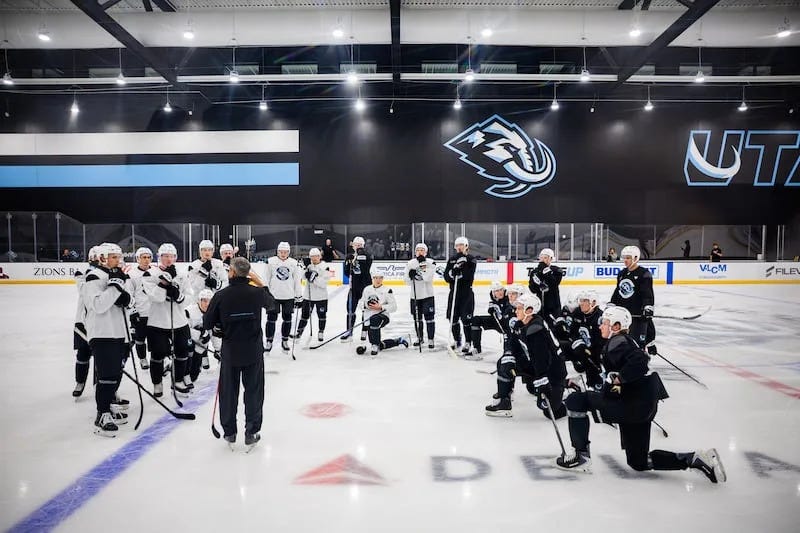
That changes the performance equation for NHL organizations.
Historically, teams could use demanding fitness tests and extended camps to determine whether players were physically prepared for the season. The new CBA removes much of that traditional approach. The question therefore becomes:
How can NHL teams verify that players are ready for an 84-game season without relying on traditional fitness tests?
The likely answer is a shift toward continuous, individualized and data-driven monitoring rather than one-off physical tests.
That could accelerate the adoption of athlete-monitoring systems, force and power testing, biomechanics, recovery monitoring, workload management, wearable technology and AI-based performance analytics throughout the NHL.
1. What exactly is changing?
The new CBA makes several changes that are particularly relevant to performance and medical departments.
1.1 Traditional strenuous fitness testing is gone
Teams can no longer conduct certain traditional conditioning tests such as:
timed sprint tests
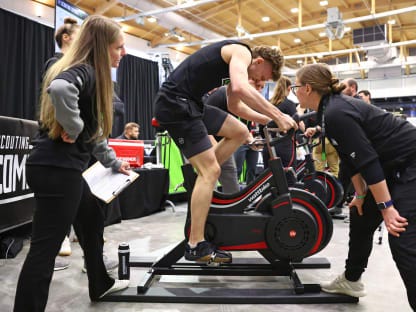
strenuous exercise-bike tests
repetitive conditioning tests
“bag skates”
other highly demanding conditioning assessments
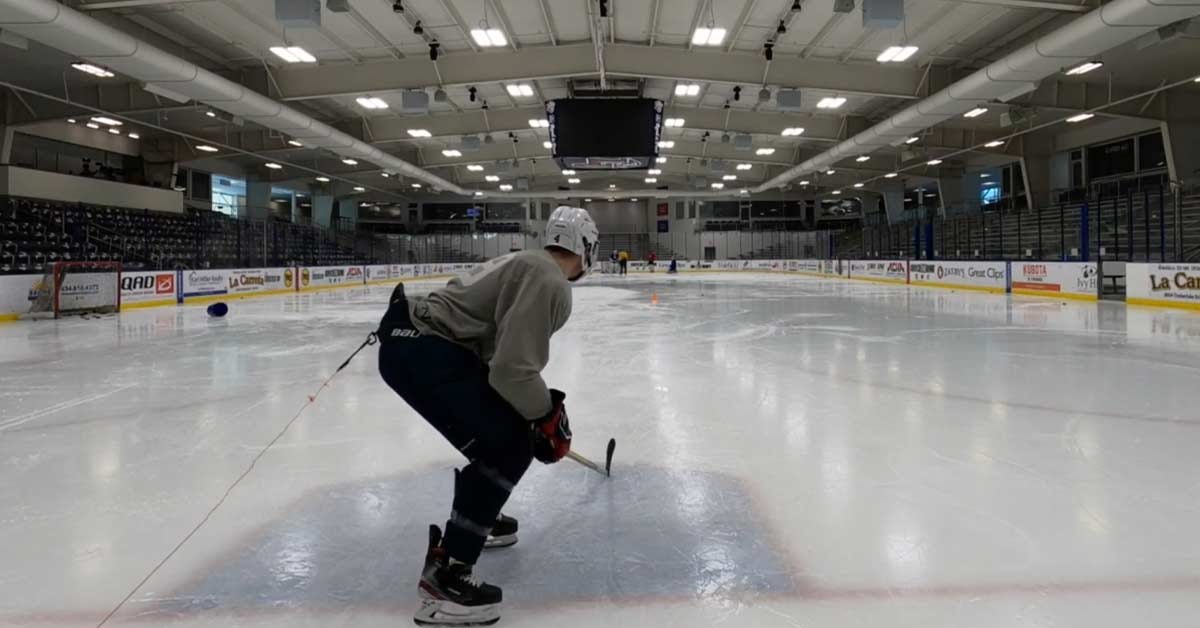
The change represents a significant departure from the traditional hockey mentality of using highly strenuous tests to determine whether players are “in shape.”
The previous CBA already required fitness tests to be legitimate and relevant from a fitness-evaluation perspective and prohibited tests that subjected players to undue injury risk.
The new agreement goes substantially further by eliminating several of the traditional tests altogether.
1.2 Training camps become shorter
Experienced players will have a 13-day training-camp window, compared with the previous 20-day structure. Teams will also have fewer preseason games.
This means teams have less formal time to:
evaluate physical readiness
build conditioning
integrate players
test systems
assess younger players
identify physical limitations
prepare players for game intensity
1.3 The regular season increases to 84 games
The NHL regular season moves from 82 to 84 games.
That is particularly important from an injury-management perspective because the additional games aren’t simply replacing training sessions—they increase the number of competitive exposures across an already demanding season.
The preseason, meanwhile, is reduced to a maximum of four games per team.
This produces a very different preparation-to-competition ratio.
2. What does this mean for players?
Less punitive preparation
For players, the immediate benefit is obvious.
The traditional bag skate and similar conditioning tests can be extremely physically demanding. Removing them should reduce the possibility of players entering the regular season with unnecessary fatigue or soreness caused by testing itself.
It also reflects a broader evolution in professional sports:
Being exhausted is not necessarily evidence that an athlete is well prepared.
Modern sports science increasingly focuses on whether training produces the desired physiological and neuromuscular adaptation rather than whether an athlete can survive a punishment-oriented conditioning session.
But players still need to be ready
The challenge is that eliminating a fitness test doesn’t eliminate the need for fitness.
An NHL player still needs:
aerobic capacity
anaerobic capacity
repeated-sprint ability
skating power
lower-body strength
eccentric strength
neuromuscular readiness
mobility
tissue resilience
recovery capacity
And now the player has to sustain those qualities across 84 regular-season games.
The CBA therefore shifts the responsibility from:
“Can you pass this test?”
to:
“Can the organization continuously demonstrate that this player is prepared for the demands being placed on him?”
That is a much more sophisticated question.
3. What does this mean for NHL teams?
The biggest impact may actually be on team performance departments.
Teams now have less formal camp time to establish readiness and more games to manage.
That increases the importance of individualized preparation before and during the season.
Teams will increasingly need to understand:
How much training can a player tolerate?
Is his neuromuscular performance declining?
Is his skating power changing?
Is his asymmetry increasing?
Is his recovery deteriorating?
Is his sleep adequate?
Is his workload increasing too quickly?
Is he showing signs of accumulated fatigue?
Is he ready to return from injury?
Does he need a modified practice?
This is already happening in some NHL organizations.
For example, the Dallas Stars describe an expanded performance structure involving strength and conditioning, nutrition, medicine and sports science, with player workload, hydration, nutrition and recovery being monitored.
The Toronto Maple Leafs also recently expanded their Sport Performance department across strength and conditioning, sport science, nutrition, rehabilitation and mental performance.
This suggests that the CBA is arriving at a time when NHL organizations are already moving toward integrated performance departments.
4. What could happen to the number of NHL injuries?
This is probably the most important question.
Our view: the CBA itself will not necessarily cause more injuries—but it increases the risk of poor preparation and makes injury-prevention systems more important.
There are two opposing forces.
Factor #1: Removing strenuous fitness testing could reduce some unnecessary injury exposure
A player does not need to demonstrate fitness by being pushed to exhaustion immediately before a season.
Eliminating aggressive testing could reduce:
acute muscle soreness
excessive fatigue
soft-tissue stress
unnecessary overload
situations where players push beyond their individual limits
So this element of the CBA could potentially be positive for player health.
Factor #2: Shorter camps + fewer preseason games + 84 regular-season games create another risk
This is more concerning.
The scientific literature suggests that changes in preparation and game density can influence NHL injury rates.
A study of NHL injuries from 2018-19 through 2021-22 found that the 2020-21 season had a 19% higher overall injury rate than baseline seasons and a 71% higher rate of season-ending injuries. The authors identified decreased offseason preparation and increased game density among possible contributors.
Another large epidemiological analysis covering 2012-13 through 2022-23 recorded 24,776 NHL injuries. It found injury incidence of 51.3 injuries per 1,000 athlete exposures during the regular season and 67.9 during the playoffs.
That is important.
The problem isn’t necessarily the absence of the bag skate.
The bigger concern is:
Does a shorter preparation window combined with a longer regular season create more opportunities for players to enter games insufficiently prepared or accumulate fatigue?
That remains unknown.
5. The 84-game season makes monitoring more important
The additional two games may sound insignificant.
But across 32 teams, they represent:
64 additional team-game exposures per season.
And every NHL player who participates in those games experiences additional competitive exposure.
The historical data also suggest that game density matters. During the NHL’s compressed COVID-era schedule, a study found a strong relationship between playoff game density and injury rates. The modified 2019-20 playoffs had an injury rate 84% higher than baseline.
This does not mean that adding two games will produce an 84% increase in injuries.
It would be incorrect to make that extrapolation.
Instead, it demonstrates a broader principle:
The more important question is not simply how many games players play, but how much total load and recovery demand exists between those games.
That is exactly where athlete monitoring becomes valuable.
6. Could the new CBA accelerate technology adoption?
Yes. Potentially significantly.
The traditional fitness test provided teams with a simple snapshot.
Technology can provide something much more valuable:
Continuous individualized data.
Instead of testing an athlete once at training camp, teams can monitor trends throughout the season.
Potential technologies include:
Wearables
Monitoring:
heart rate
HRV
workload
sleep
recovery
movement
training intensity
Wearable GPS and inertial systems are already increasingly used in professional sports for workload monitoring, although research cautions that the relationship between workload metrics and injury risk is sport-specific.

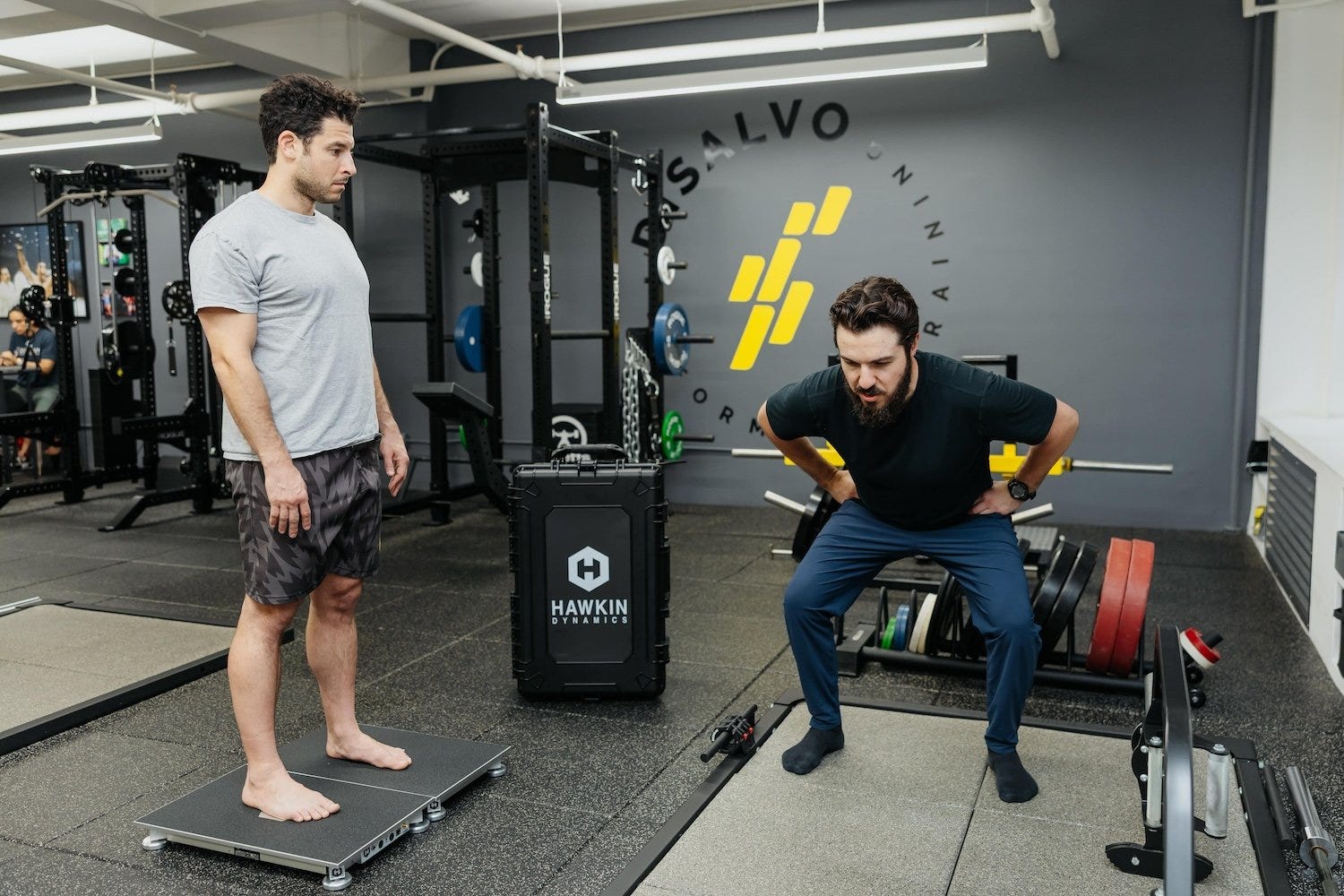
Force plates
Teams can monitor:
countermovement jump
eccentric braking
concentric power
asymmetries
neuromuscular fatigue
This can provide a quick daily readiness assessment without forcing an athlete through an exhaustive conditioning test.
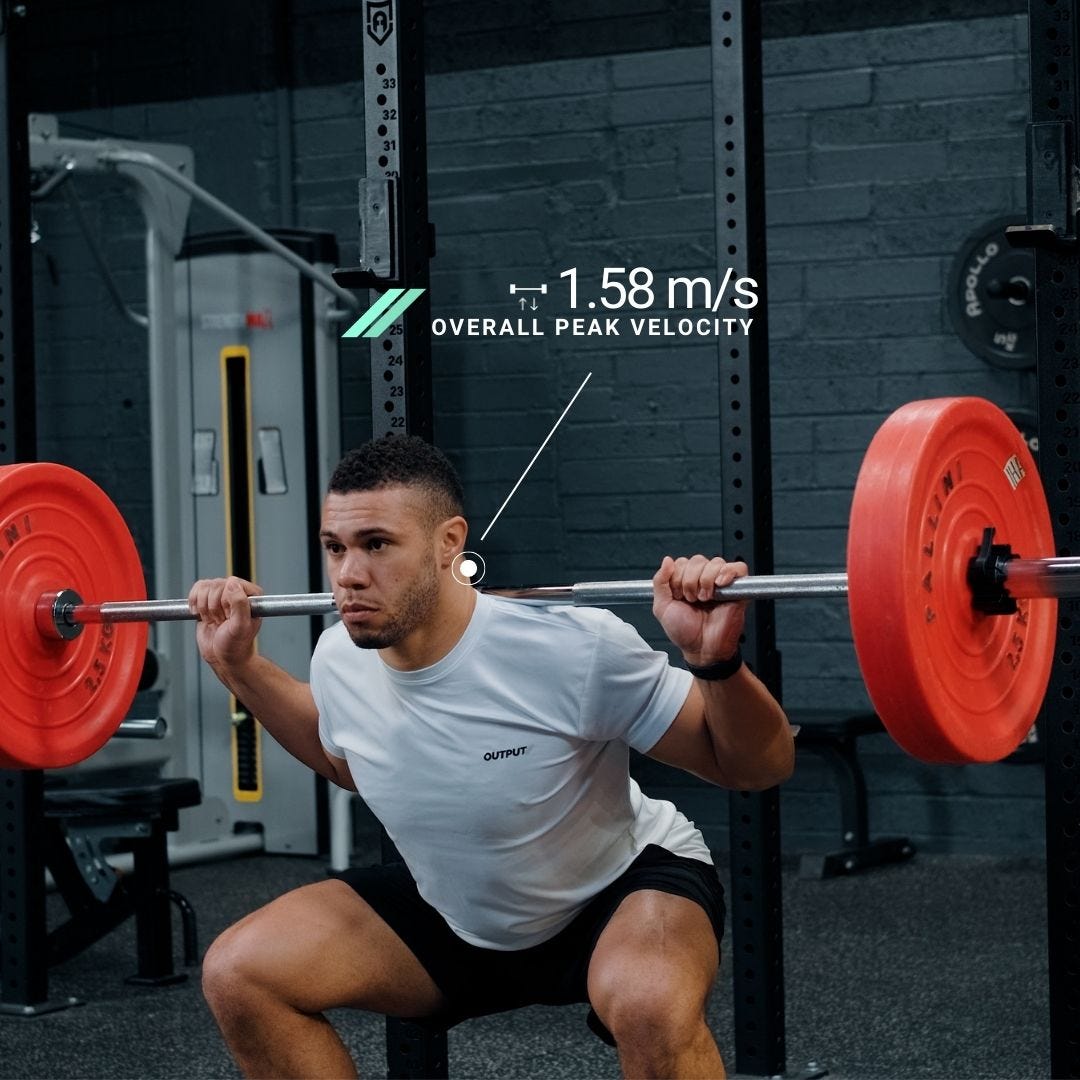
Velocity-based training
Teams can monitor bar velocity during strength exercises to understand:
force production
fatigue
readiness
changes in performance
Biomechanics
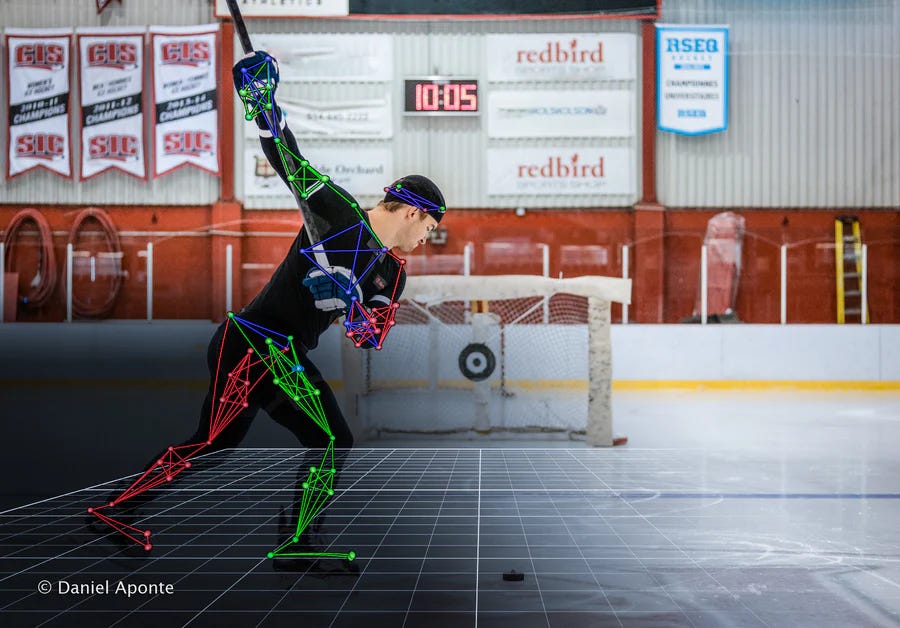
Markerless or sensor-based systems can potentially assess:
skating mechanics
joint movement
asymmetries
acceleration
deceleration
change of direction
shooting mechanics
Recovery technology
Teams can increasingly combine the modalities below to create a more complete picture of readiness.
sleep
HRV
subjective wellness
hydration
nutrition
workload
neuromuscular data
7. The biggest opportunity: replacing “fitness testing” with “readiness testing”
This is where we believe the NHL has an opportunity to become a leader.
Instead of:
Fitness test → pass/fail
NHL teams could move toward:
Daily readiness → individualized training prescription → workload monitoring → injury-risk management
For example:
A player arrives at the rink.
His:
jump performance is down 8%
HRV is below baseline
sleep was poor
previous game workload was high
skating workload has accumulated over the previous week
Instead of putting him through a conditioning test, the performance department can modify his workload.
That is a much more sophisticated approach.
8. Are other sports likely to follow?
I would expect some elements of this philosophy to spread, but I would not expect other leagues to simply copy the NHL rule.
Different sports have different labor agreements, physical demands and histories.
The NFL, for example, still explicitly permits certain conditioning testing under its CBA, although the agreement also contains extensive provisions around player health, training-camp acclimation and analysis of performance-tracking data.
So the NHL could become an interesting case study.
If NHL teams demonstrate that:
less punitive testing + better monitoring + individualized preparation = equal or better performance and fewer injuries
then the model becomes much more compelling for other leagues.
The reverse is also true.
If injury rates increase significantly following the implementation of the new system, other leagues will probably be reluctant to adopt similar restrictions.
9. Impact on sports-tech vendors
The CBA creates both winners and losers.
Potential losers
Vendors whose primary value proposition is:
“We help teams conduct a better fitness test.”
could face a more difficult market.
Similarly, technologies designed mainly around one-time testing could have less strategic importance.
Teams may ask:
“Why should I test this athlete once when I can monitor him continuously?”
Potential winners
The biggest opportunity is for companies providing low-friction, repeatable measurement.
Particularly attractive categories could include:
1. Force and power measurement
Because teams need objective readiness measurements without exhaustive conditioning.
2. Athlete monitoring
Workload + recovery + wellness + physiological data.
3. Biomechanics
Especially systems that can measure movement without cumbersome laboratory setups.
4. AI
AI could become particularly valuable if it helps teams turn dozens of data streams into actionable recommendations.
The winning proposition isn’t:
“Here is more data.”
It is:
“Here is what you should do with the player today.”
5. Recovery technology
With 84 games, recovery becomes increasingly important.
6. Injury rehabilitation
Technology that helps teams objectively determine whether a player is ready to progress through rehab or return to competition becomes increasingly valuable.
10. What this means for vendors selling into the NHL
The CBA could actually change how vendors should sell.
A vendor should not lead with:
“Our technology is more advanced.”
Instead:
“The NHL is giving teams less formal preparation time and more games. We help you objectively quantify readiness and manage workload without adding fatigue.”
That is a much stronger business case.
Vendors should also quantify outcomes wherever possible:
reduced missed games
faster return to play
improved availability
improved performance
reduced training load
improved recovery
better player development
The NHL market is sophisticated.
Teams don’t need another dashboard.
They need actionable information that improves player availability and performance.
11. Recommendations for NHL teams
1. Don’t replace fitness testing with nothing
This is the biggest mistake teams could make.
Removing the bag skate should not mean abandoning objective physical assessment.
Teams should replace it with less-fatiguing objective measurements.
2. Establish individual player baselines
Every player should have a baseline for relevant measures such as:
force
power
jump performance
movement
workload
recovery
sleep
cardiovascular metrics
The objective should be to understand each player’s normal, rather than comparing everyone against a single team standard.
3. Create a “readiness score” carefully
Teams should avoid creating a simplistic black-box score.
Instead, combine multiple inputs:
Performance + workload + recovery + medical status + subjective feedback.
The output should support—not replace—professional judgment.
4. Monitor training load continuously
With 84 games, teams need to understand cumulative load.
The question should shift from:
“Is he fit?”
to:
“How much load can he tolerate today?”
5. Integrate performance and medical departments
The best organizations will increasingly break down the traditional silos between:
Strength & Conditioning → Sports Science → Medical → Rehab → Nutrition → Performance
The CBA makes this integration even more important.
6. Measure the impact of the new CBA
NHL teams should track:
injuries per 1,000 exposures
soft-tissue injuries
lower-body injuries
missed games
recurring injuries
training-camp injuries
early-season injuries
injury severity
player availability
Teams should compare these metrics with previous seasons.
The league is effectively conducting a natural experiment.
12. Recommendations for vendors
Vendor #1: Move from testing to monitoring
Don’t sell a test.
Sell a continuous performance-management solution.
Vendor #2: Reduce friction
Technology must be fast.
If it takes 30 minutes every day, adoption will be difficult.
A five-minute measurement that practitioners actually use can be more valuable than an extremely sophisticated test that players rarely perform.
Vendor #3: Integrate
Teams don’t want 15 disconnected dashboards.
APIs, AMS integrations and interoperable data will become increasingly important.
Vendor #4: Focus on outcomes
Vendors should build case studies around:
availability → performance → injury reduction → ROI
rather than simply:
number of measurements → number of sensors → number of data points.
Vendor #5: Make the technology player-friendly
The new CBA may also reinforce the importance of player buy-in.
Technology should ideally help players understand:
how they are performing
how they are recovering
why their workload is changing
how they can improve
This is especially important as player development becomes a larger component of sports technology.
13. A potential unintended consequence
There is one issue teams should watch carefully.
The elimination of traditional testing could create less standardization between organizations.
One team might have a sophisticated monitoring system involving:
force plates
biomechanics
wearables
AI
sleep
workload monitoring
while another might simply ask players how they feel.
That could create major differences in preparation quality.
In other words:
Removing an old standardized test creates an opportunity—but also a responsibility—to build something better.
14. The bigger strategic shift
The most important aspect of this CBA isn’t actually the bag skate.
It is the philosophical shift behind it.
Old model
Train → test → make players fit → play
Emerging model
Measure → individualize → monitor → adapt → recover → play
That second model is much closer to where elite sports performance is heading.
The NHL is already investing heavily in technology and data. The league’s partnership with Sony, for example, includes expanded use of Hawk-Eye tracking technologies, with NHL tracking data also supporting player health and safety applications.
At the team level, organizations are also expanding sports-science capabilities. Dallas has integrated sports science with strength and conditioning, nutrition and medical support, while Philadelphia recently brought in Daniel Bove to lead athlete performance and wellness after his NBA experience implementing athlete-management systems.
The direction of travel is therefore quite clear.
Conclusion
The NHL’s new CBA represents more than the end of the bag skate.
It represents a potential transition away from one-time, high-fatigue fitness assessment toward continuous, individualized player monitoring.
For players, the agreement should reduce unnecessary physical stress during training camp. For teams, however, it creates a new challenge: how to prepare players adequately for an 84-game season with less formal preparation time.
The injury implications are still unknown.
There is not enough evidence today to conclude that the new CBA will increase NHL injuries. However, previous NHL research shows that reduced preparation and increased game density can be associated with higher injury rates.
That makes workload management, recovery and objective readiness assessment more important—not less.
For sports-tech companies, this could be a significant opportunity.
The strongest vendors will not position themselves as replacements for the bag skate. They will position themselves as part of the next generation of NHL player preparation:
Measure more. Fatigue less. Individualize training. Monitor continuously. Recover intelligently. Keep players available.
And ultimately, that may be the real test of the new CBA:
Can NHL teams use better science and technology to replace traditional fitness testing while simultaneously keeping players healthy enough to handle an 84-game season?
The teams that answer that question successfully could gain a meaningful competitive advantage—not just in sports science, but ultimately on the ice.
You may also like:
🏒 Upside NHL Group Chat with Alexi Pianosi (Colorado), Kevin Morley (Nashville Predators), Adam Douglas (Sportlogiq), Devan McConnell (Utah Mammoth) on NHL Offseason Preparation, Tech Audits & More

This week we have the honor to interview a group of NHL sports performance executives to talk about the latest trends in the world of sports performance.
