

Today we have the honor of interviewing Dhia Amara, the lead S&C coach of CF Montreal, an MLS team.
Dhia Amara is a Tunisian-born strength and conditioning specialist who grew up in Montreal, where he developed an extensive academic and professional foundation in exercise physiology. After earning his bachelor’s and master’s degrees, he spent five years working with varsity teams and Team Canada basketball, while also gaining experience in research at local hospitals. His career took an international turn in 2020 when his online presentations caught the attention of a professional football team in Saudi Arabia. He spent several years in Saudi Arabia’s top division and later worked with the Saudi Olympics to help athletes prepare for the 2024 Paris Olympic Games.
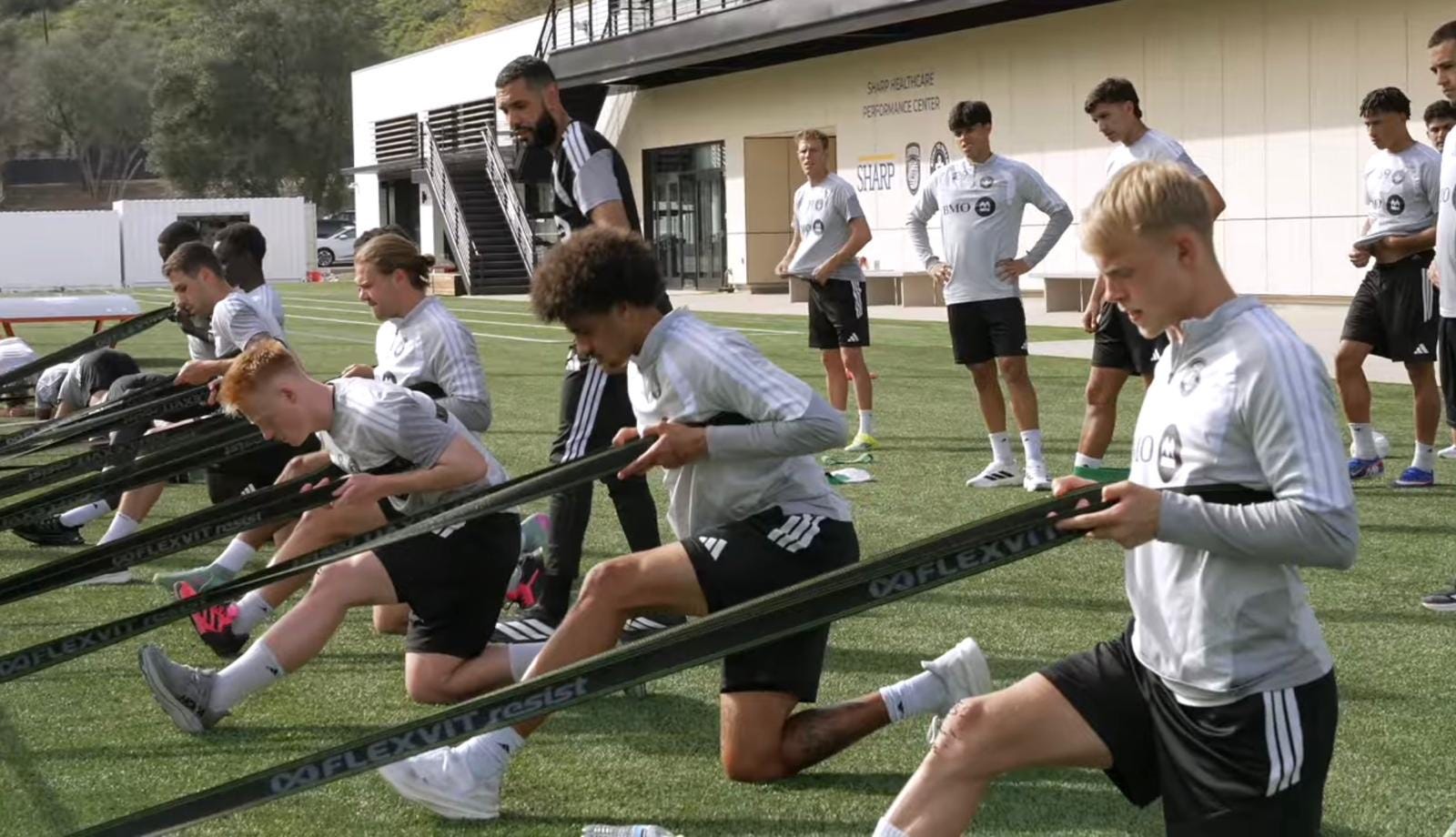
Currently serving as the Lead Strength and Conditioning Coach for CF Montreal, Amara returned to his hometown after being recruited for his specialized philosophy on player development. His approach is heavily rooted in an “outcome approach,” focusing on high-performance metrics such as deceleration capacity, isometric work, and eccentric strength to ensure athletes are robust enough to handle the demands of elite soccer. Beyond physical training, he acts as a central figure in the performance department, bridging the gap between medical, nutritional, and coaching staff while advocating for the increased individualization of player loads through the integration of wearable technology and data analysis.
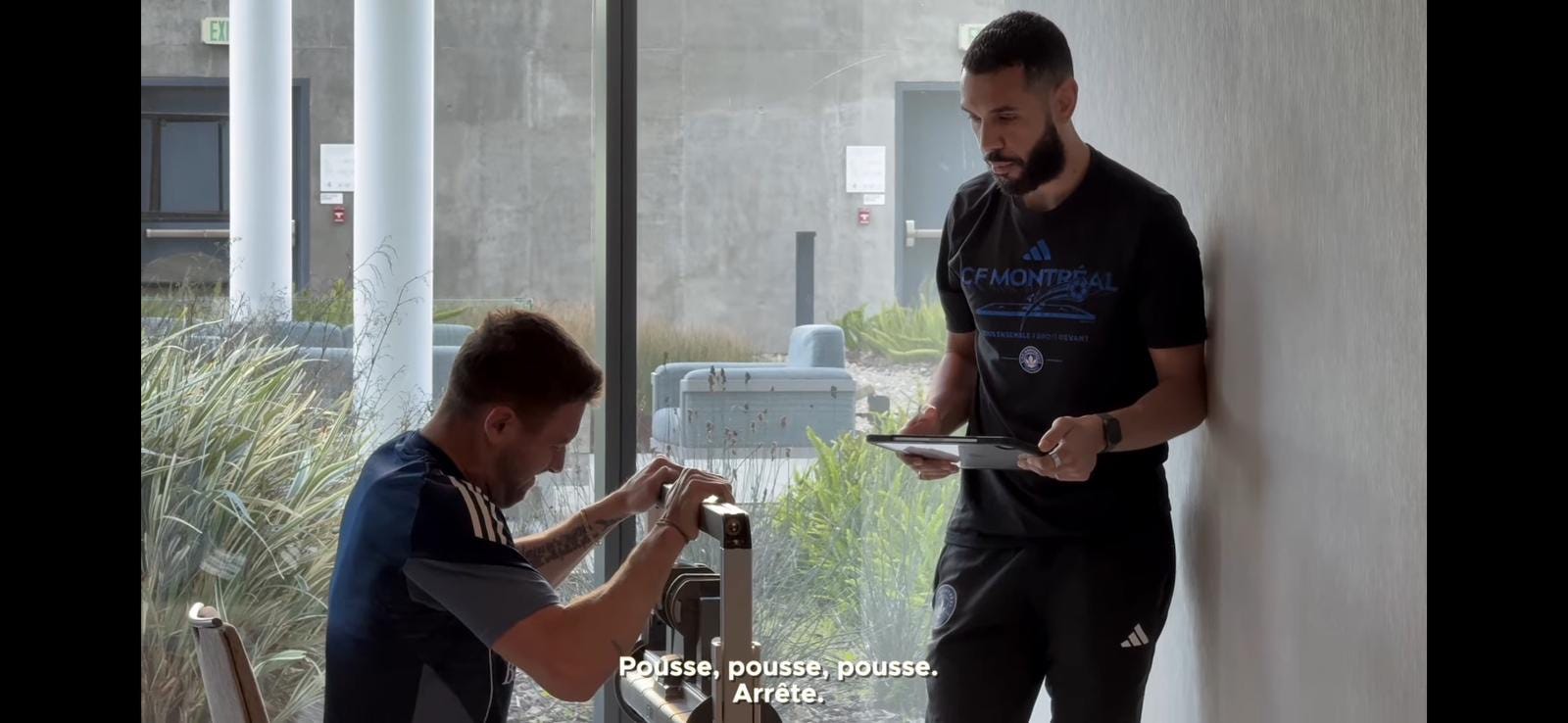
You can watch the video interview below by clicking on the Youtube link. You can also listen to the audio interview by clicking on the link at the top of the page:
📝Show Notes: Through this interview, we touched on:
His background and what led him to CF Montreal.
His role at CF Montreal, and what a typical day looks like.
His approach towards S&C, and innovation.
How he sees the world S&C in elite sports evolving in the coming years.
Which technologies he would build if he had unlimited resources.
You can read the full transcript of the podcast interview with Dhia located at the top of this blog post.
Here are the quotes from the interview with Dhia:
Q1. Tell me about your background and what led you to CF Montreal?
“I was born in Tunisia and then I grew up in Montreal... I did all my school and internships here. I did a bachelor degree and a master degree in exercise physiology... I touched base on many things like rehab, management, and performance... I even worked in a hospital to work with researchers. I worked for five years with the varsity team... and I did a couple of camps with Team Canada basketball. In 2020, during COVID, I started to do conferences online. A person responsible from a team in Saudi Arabia attended the online conference... He liked my philosophy and he offered me a contract in Saudi Arabia. I went to Saudi Arabia to work for a football division one team for two years, then I got an offer from the Saudi Olympics to prepare for the Olympic Games in Paris. Then CF Montreal contacted me... they were looking for someone who can help them to develop the physical qualities of the players... Jill Gagan, who was the first person with whom I did my internship, knew me and we stayed in contact. After four years and a half in Saudi Arabia, I decided to come back home.”
Q2. What is your role at CF Montreal? What does your typical day look like?
“Basically, we don’t have a typical day, but the days they sometimes look alike a bit. We start in the morning around 7:30 or 8:00 AM with the staff... I start to see my planning for the day. Slowly the players start to come, so we start to check their readiness—who is sick, who is overloaded. The medical team tells us about the players who are in or out, and I change my plan if I have to. In the gym, I help the guys prepare; some have individual work, some have core work for the team. We have a meeting with the coaching staff, then we do our practice. Some training we do before or after practice, depending on the quality we would like to work, like speed or hypertrophy. By 2:00 PM we are done with the players... then we have another meeting with the medical staff to see what happened during the day and talk about the next day. When we don’t have big training sessions, we have more time to analyze and talk about what we want to do next month.”
Q3. What is your approach towards S&C and innovation?
“I don’t have a magical recipe... I call it an outcome approach. I have something I want to improve, I know I need to put this amount of dose for that athlete, and I manage through the week to give them that dose. We focus a lot on deceleration work... we use a lot of work on the field to improve these qualities. For example, we have a big downhill at the club that we use for overspeed because gravity pulls you, so you use less energy to reach high speeds. We expose the athlete to something bigger than what they can get in training or a game... so when they are exposed to it, they feel it is normal. Regarding innovation, the goal is not to collect as many useful tools as we can, but to select what fits our philosophy. I am sticking to my philosophy and always look for tools that can improve it. If it is not solving a problem, then what is it for? I don’t want to buy something I’m going to use only once; I want something I need every week or every two weeks.”
Q4. How do you see the world of S&C in elite sports evolving in the coming years?
“Many football players now have their personal coaches, and it’s going to become more and more [common], so I feel we have to collaborate with them. The goal is to establish trust between me, his coach, and him because I am the only one who knows the total load he underwent. We will reach a state where we have a lot of importance because we are the ones who understand the language of the coach, the nutritionist, and the medical staff—we are the connective tissue of all the departments. Our department will become big, maybe five people minimum in every organization, because to individualize all the work and respond to all the duties, you need more people. We are getting into an era where everything is individualized—even collective football training—because some players exceed their capacity during games and need to be managed. It’s going to be individualized every day, everywhere, and this is the new era of S&C.”
Q5. If you could build any new technologies and had unlimited resources, what would you build? Why?
“What I would do is something that I was thinking about for one year now... many athletes now wear Whoop. I wish we had a tool where Whoop is connected to the GPS. Now we have different data from everywhere—wellness questionnaires, HRV, GPS, force plates—and we have to interpret all this and convince the coach. I feel with AI, it could take the GPS load, gym load, sleep, and everything, and in the morning give me a number that says ‘this player is 70% ready for today’s training.’ It would take all the data, summarize it, and give me a score with recommendations so I can decide quickly. It’s not about adding more; it’s about making sense of what we have already. I have already a lot; I just need something that helps me to decide faster.”
You may also like:
🔥Upside MLS Video Chat with Mike Messer (Nashville SC), Darcy Norman (Chicago Fire FC), Karam Al-Hamdani (CF Montreal), Jason Han (ex LAFC) On MLS' Next Competitive Edge, Future MLS Athletes & More

This week we have the honor to interview again a group of MLS sports performance executives to talk about the latest trends in the MLS, the world of sports performance and rehabilitation.
🎙️ Upside Video Chat with Darcy Norman, Director of Performance, Chicago Fire FC (MLS)

Today we have the honor of interviewing Darcy Norman, the director of performance for the Chicago Fire FC a top MLS team.


