

Today we have the honor of interviewing Curt Truhe, VP of Health & Performance at Excel Sports Management, a leading sports agency.
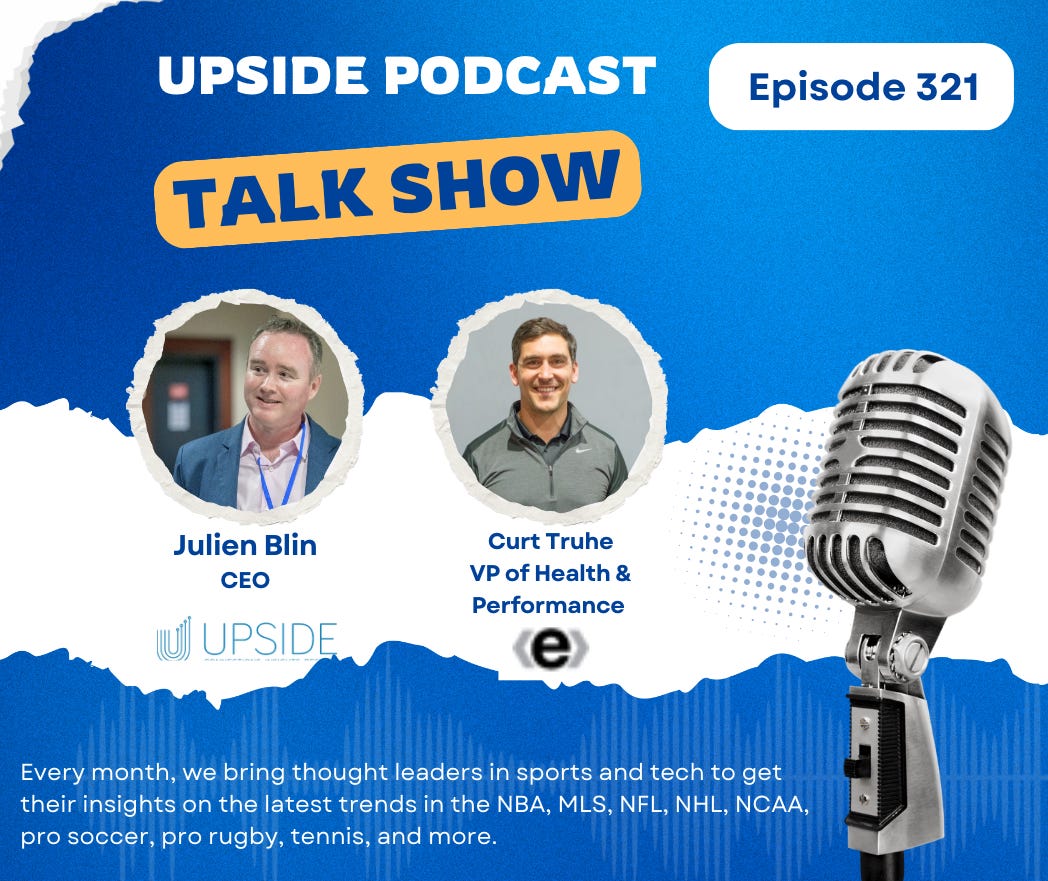
Curt built his career at the intersection of strength and conditioning and sports science, beginning as an athlete before transitioning into coaching when his playing career ended. He started out as a strength and conditioning coach, gaining hands-on experience in training and athlete development while working in environments where sports science was just beginning to emerge. During this time, he effectively operated across multiple roles—blending coaching with early sports science responsibilities—which gave him a strong foundation in both performance training and data-driven decision-making.
Prior to his current position, Curt held various performance-focused roles across team and private training settings, where he worked directly with athletes on development, rehabilitation, and performance optimization. These experiences exposed him to different systems, technologies, and athlete needs, helping him build a holistic understanding of performance environments. Today, as Vice President of Health & Performance at Excel Sports Management, he leverages that background to oversee performance, medical, and sports science initiatives, ensuring athletes receive individualized, high-level support throughout their careers.
You can watch the video interview below by clicking on the Youtube link. You can also listen to the audio interview by clicking on the link at the top of the page:
📝Show Notes: Through this interview, we touched on:
His journey & journey.
His role & day-to-day impact
His philosophy on performance training
Individualization & athlete care
What makes Excel Sports Management unique
You can read the full transcript of the podcast interview with Curt located at the top of this blog post.
Here are the quotes from the interview with Curt:
1. Background & Journey
“Growing up I would have loved to become an athlete… But at one point we fail out or the talent gets above us and we have to move on. I was more of a strength and conditioning coach by trade—that was the lens I viewed everything through. As a strength coach in that time, you kind of had to wear the hat of sports scientist before all these roles were created, and getting really good insight into the tech and what you’re looking to measure really helped me later on in my career. Having a good understanding of what those people are looking at and how those worlds come together helps create a system that sports science fuels and performance fuels.”
2. Role & Day-to-Day Impact
“My role specifically is always changing. Working within the agency is kind of this middle space between the team setting and a private setting. My role now is creating the environment and making sure the team has all the resources they need to deliver. A lot of what I do is understanding the landscape of performance and what’s out there, and if our athletes are training elsewhere, it’s about knowing who the good groups are so we can make sure they have the right support system. Ultimately, we can fill in the gaps no matter what support system they already have.”
3. Philosophy on Performance Training
“You have to look at this holistic picture of what the athlete is. There’s so much stuff out there—it’s easy to get lost in it—so it starts with asking, what problem are you trying to solve? The larger picture is that there’s a lot of context that goes into what makes someone perform well. With younger athletes, you’re still trying to grow those attributes, but once you’re established, it becomes about refining and maintaining performance. With vets, it’s about keeping you healthy so you can stay on the field—because if you’re still playing at that point, it’s because you’re a hell of a player, and we just want to keep you there.”
4. Individualization & Athlete Care
“The biggest thing you can do is the level of understanding. You know someone better after 20 years, and our goal is to get to that level of understanding with athletes. We’re never going to get it perfect, but every experience helps us learn—whether it’s something that works or doesn’t. It’s about how we utilize the tech and the numbers, but also conversations and what we’re seeing day to day, to better understand them. The better we understand them, the better we can support them—or help others support them. Ultimately, it comes down to time—time building relationships and time with the data—and I don’t think anyone is more directly aligned with the athlete than us.”
5. What Makes Excel Unique
“The differentiator for us right now is that we exist—having a performance team within an agency hasn’t really existed before. Our role is to be that internal support group for each athlete. Our North Star is on-field or on-court performance, because if you’re playing at your best, that drives contract value and opportunities. We can meet athletes at different levels, from annual checkups to fully hands-on support, but the goal is always to create a system that helps them pinpoint what’s going to move the needle. Ultimately, we’re trying to make those blurred lines less blurry when it comes to development and longevity.”
You may also like:
🎙️ Upside Video Chat with Frederick Donnell, Head Football Athletic Trainer, UNLV (NCAA).

Today we have the honor of interviewing Frederick Donnell, the Head Football Athletic Trainer at the University of Nevada Las Vegas (UNLV), an NCAA team.


