
Introduction
The first week of September produced several notable investment announcements across a wide range of asset classes.
This was not simply a week of traditional venture-capital funding. Capital moved through public-market filings, strategic mergers, minority private-equity investments, professional sports ownership and early-stage startup rounds.
The announcements also illustrate an important shift in the investment market.
Investors are still willing to deploy substantial capital, but they are becoming more selective. The strongest interest appears to be concentrated around companies and assets offering at least one of the following:
Defensible intellectual property
Recurring revenue
Proprietary data
Strong consumer brands
Strategic infrastructure
Scarce sports assets
Clear paths into large adjacent markets
Here are some of the main investment announcements from the week of September 1–6, 2026, and why they matter.
Main Announcements This Week
1. Public Markets: Oura Files for an IPO
Oura took a major step toward becoming a publicly traded company by filing its S-1 registration statement.
The smart-ring company plans to list on the Nasdaq under the ticker OURA, although it has not yet disclosed its expected IPO price, the number of shares being offered or its final public valuation.

The filing revealed a rapidly growing company with:
Approximately five million paid members
Strong revenue growth
High membership conversion and retention
Extensive daily engagement
A large longitudinal biometric dataset
Growing profitability and positive cash generation
Oura’s investment proposition extends beyond hardware. The company wants investors to view it as a health-intelligence and preventive-health platform connecting continuous biometric data, subscriptions, AI, women’s health, laboratory services and personalized guidance. (check the IPO coverage)
Why it matters
Oura could establish one of the first meaningful public-market valuation benchmarks for the smart-ring category.
Its IPO will also help determine whether public investors are willing to value wearable companies as health and software platforms—or whether they will continue to apply lower consumer-hardware multiples.
A successful listing could influence the valuations and IPO plans of WHOOP, Ultrahuman, Eight Sleep and other connected-health companies.
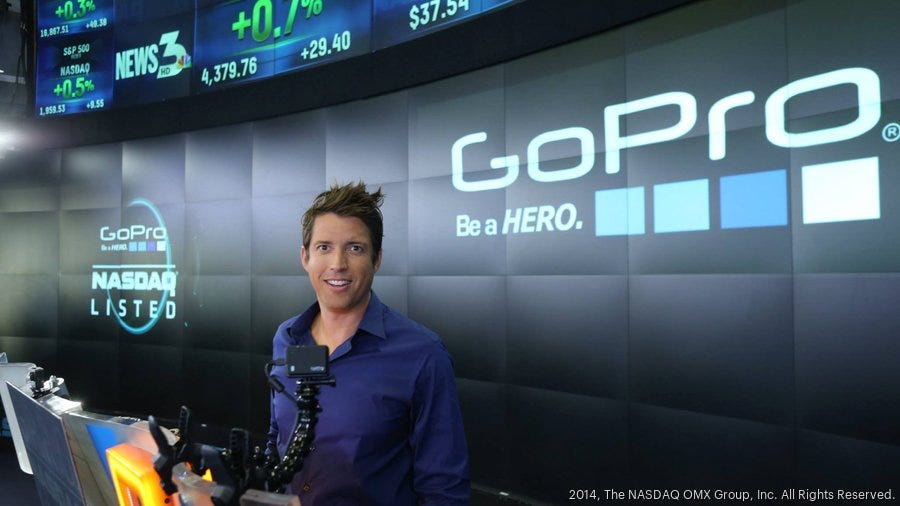
2. Strategic M&A: GoPro Agrees to Merge With Starman Optical
GoPro entered into a definitive agreement to merge with Starman Optical, a privately held optical-photonics company.
Under the proposed transaction:
GoPro shareholders will receive an aggregate cash payment of $285 million
Shareholders will retain approximately 10% of the combined company
Approximately $92 million in GoPro debt will be repaid
GoPro will remain publicly listed on the Nasdaq
The transaction is expected to close by the end of 2026, subject to approvals
GoPro plans to continue supporting its consumer cameras and subscription platform while expanding into optical transceivers, AI infrastructure, defense, government, robotics and aerospace. (Check out GoPro announcement).
Why it matters
This is more than an acquisition of an action-camera company.
The transaction shows how sports and consumer-technology assets can be repositioned around their underlying intellectual property. GoPro’s optics, imaging capabilities, brand and portfolio of more than 2,500 U.S. patents may have applications far beyond action sports.
It also highlights an important investment theme: companies struggling in their original consumer markets may still hold strategically valuable technology that can be redeployed into faster-growing industries.
3. Private Investment: SPAC Acquires a Minority Stake in Campagnolo
Swiss private investment company SPAC agreed to acquire a minority stake in Campagnolo, one of cycling’s most historic premium component manufacturers.
The financial terms and size of the stake were not disclosed.
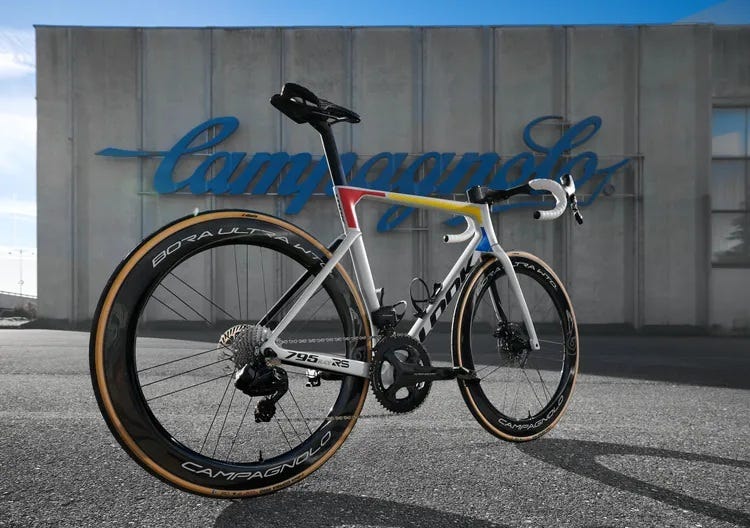
The Campagnolo family will retain majority ownership and control, while the company will continue operating from Vicenza, Italy.
The investment is expected to support:
Product development
Technology and electronics
Modernization of operations
Relationships with bicycle manufacturers
Expansion of the Campagnolo and Fulcrum brands
Greater engagement with professional cycling
Campagnolo will continue operating independently from SPAC’s other cycling investments, including Pinarello. (Check out Campagnolo announcement)
Why it matters
This transaction demonstrates the continuing appeal of premium sports brands with strong heritage, technical expertise and global recognition.
It also shows that external capital does not always require founders or families to surrender control. A minority investment can provide strategic expertise and additional resources while preserving a company’s independence and identity.
For the cycling industry, the deal reflects the growing importance of electronics, connectivity, data and advanced materials in what was once a primarily mechanical product category.
4. Sports Assets: West Ham’s Ownership Structure Could Change
Czech investor Daniel Křetínský reportedly reached an agreement that could increase his ownership of West Ham United from approximately 27% to 46%.
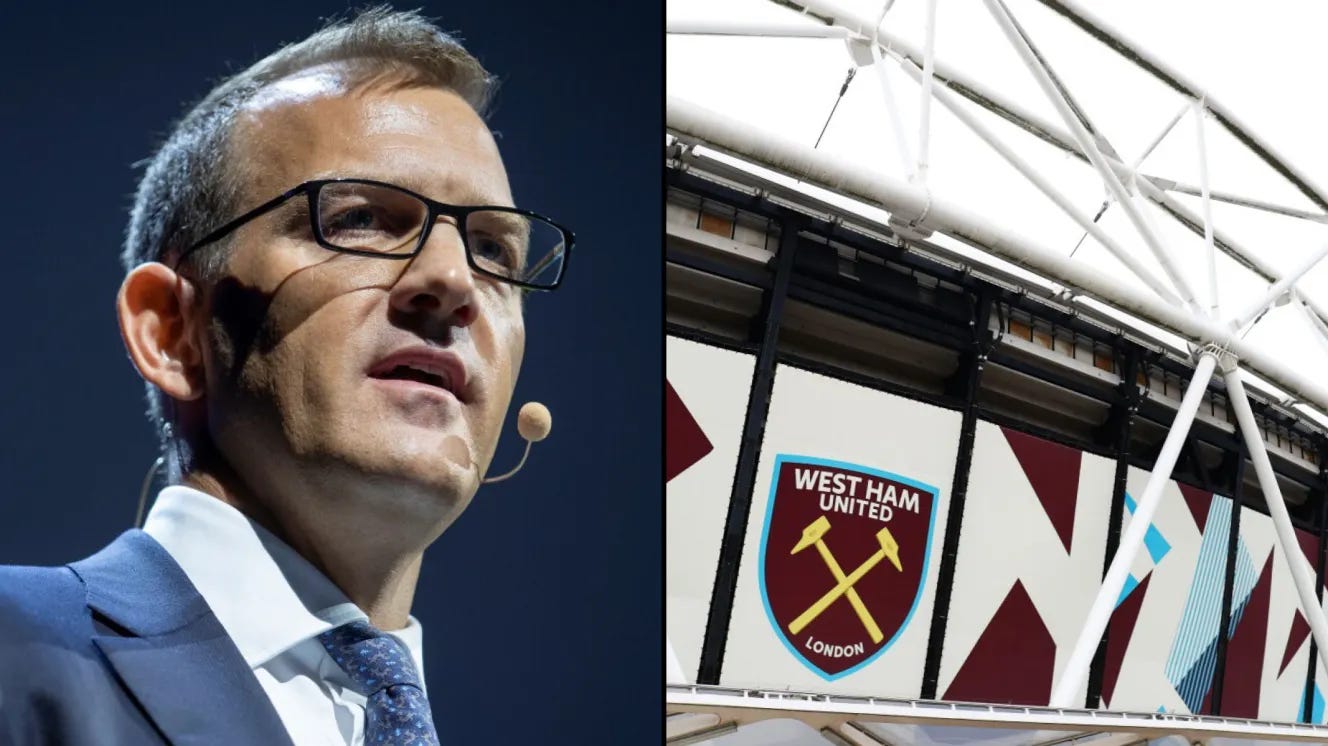
If completed, the transaction would make Křetínský the club’s largest shareholder. (check out the The Guardian’s report)
Because the transaction remains reported rather than fully completed, it should be viewed separately from the confirmed corporate announcements this week.
Why it matters
Professional sports franchises remain one of the most attractive alternative asset classes for wealthy individuals, family offices, private-equity firms and institutional investors.
Clubs provide exposure to:
Scarce intellectual property
Media rights
Global audiences
Sponsorship revenue
Matchday revenue
Stadium and real-estate opportunities
Long-term capital appreciation
The potential West Ham transaction also shows that investor appetite can remain strong even when a club faces competitive or operational challenges.
Investors are often purchasing the long-term platform—not simply the current league position.
5. Health-Tech Startup Funding: Stack Health Raises $21 Million
Stack Health raised a $21 million seed round led by 8VC, with participation from A*, Heartland Ventures and the O.H.I.O. Fund.
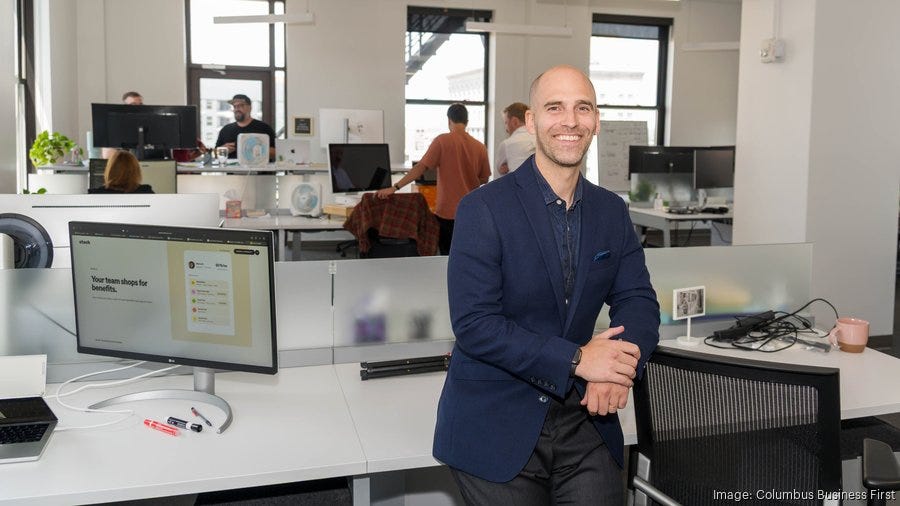
The company helps employers provide health insurance through individual coverage health-reimbursement arrangements rather than offering one traditional group plan to every employee. (Check out the Funding report).
Why it matters
A $21 million seed round is significant, particularly during a relatively quiet Labor Day funding week.
The investment reinforces continued interest in startups attempting to simplify expensive and inefficient parts of the healthcare system.
Investors are increasingly looking for health-tech businesses that do more than create engagement. They want platforms capable of reducing costs, improving access, simplifying administration and demonstrating measurable economic value.
6. Sports Gaming and Digital Collectibles: Sorare Raises More Than €10 Million
Sorare reportedly completed a new funding round valued at more than €10 million.
The round was supported by existing investors Accel, Benchmark and Partech, while Spanish venture-capital firm Kibo Ventures joined Sorare’s shareholder base. Co-founders Nicolas Julia and Adrien Montfort also participated.
The first portion of the round has reportedly closed, with a second tranche expected over the coming months.
The new capital will primarily be used to:
Strengthen Sorare’s cash position
Continue developing its fantasy-sports products
Introduce new content for its free-to-play Arcade mode
Support the launch of its 2027 card collections
Restart NBA activity in October 2026
Expand the platform’s global community
Sorare operates a fantasy-sports platform and digital marketplace through which users collect, trade and compete with officially licensed digital player cards.
The company has partnerships across soccer, basketball and baseball, including relationships with the Premier League, La Liga, Bundesliga, Serie A, MLS, NBA, NBPA, MLB and MLBPA.
Signs of Renewed Growth
The funding follows a period of restructuring and strategic change.
Sorare reportedly reduced its workforce by approximately 35% in November 2025 and closed its New York office as it sought to reduce costs and improve operational efficiency.
However, recent operating metrics suggest that the company has started to regain momentum:
Net revenue increased 85% year over year during the first half of 2026
More than 100,000 users purchased cards during the period
Over one million new users joined in the previous 18 months
Sorare now reports more than three million users
The company is targeting profitability by the end of 2027
A major driver of this renewed growth appears to be Arcade, Sorare’s free-to-play product.
The introduction of a more accessible game mode represents an important strategic shift. Sorare initially grew through blockchain-based digital cards that required users to purchase assets to compete. Arcade lowers that barrier and allows the company to attract users who may be interested in fantasy sports but are not yet comfortable purchasing digital collectibles.
Why the Investment Matters
Sorare raised $680 million at a reported $4.3 billion valuation in 2021, during the height of investor enthusiasm for NFTs, cryptocurrency and blockchain-based consumer platforms.
Since then, the market has changed considerably.
Investor interest in speculative digital assets declined, regulations became more complex and consumer behavior shifted away from products driven primarily by financial appreciation.
This new round is therefore different from Sorare’s earlier financing.
The investment is less about pursuing growth at any cost and more about supporting:
Product development
User engagement
Accessible gaming experiences
Cash preservation
Operational discipline
A credible path to profitability
The continued participation of Accel, Benchmark and Partech is significant. Existing investors frequently have the most detailed understanding of a company’s performance, risks and internal plans. Their decision to provide additional capital suggests continued belief in Sorare’s long-term opportunity.
Kibo Ventures’ participation also brings a new institutional investor into the company at an important stage of its development.
The Opportunity Ahead
Sorare occupies a potentially valuable position at the intersection of:
Fantasy sports
Gaming
Digital collectibles
Licensed sports content
Fan engagement
Blockchain infrastructure
Its partnerships with major leagues and clubs create an important competitive advantage. Official licenses provide access to teams, athletes, intellectual property and fan communities that would be difficult for a new competitor to replicate.
Sorare also benefits from the broader movement toward interactive sports consumption.
Younger fans increasingly want to do more than watch games. They want to manage teams, compete with friends, collect digital assets and interact with athletes and leagues across multiple platforms.
If Sorare can combine free-to-play acquisition with paid collectibles and sustainable retention, it could develop a more balanced business model than one dependent primarily on high-value card sales.
Key Risks
The company still faces meaningful challenges:
Uncertain consumer demand for blockchain-based collectibles
Regulatory differences across international markets
Dependence on expensive sports-licensing agreements
Competition from traditional fantasy-sports and gaming platforms
The difficulty of converting free users into paying customers
The need to rebuild confidence following restructuring
Pressure to demonstrate a sustainable route to profitability
Sorare must prove that its recent growth reflects durable engagement rather than a short-term rebound.
Overall Takeaway
Sorare’s new funding round shows that investor interest in digital sports collectibles has not disappeared—but the investment thesis has evolved.
The focus is shifting from speculative NFT growth toward accessible gameplay, licensed sports content, stronger engagement and sustainable economics.
Sorare’s next phase will depend on whether it can successfully convert its global user base and premium sports partnerships into a profitable, long-term fan-engagement platform. (Sources: 2Playbook and Dealroom)
7. AI Startup Funding: Wonderful Reportedly Raises $550 Million
Amsterdam-based Wonderful reportedly raised a $550 million Series C led by Insight Partners at a valuation of approximately $5 billion.

The company is developing an operating system intended to coordinate enterprise AI agents, workflows and applications. (Check out the Funding roundup).
Why it matters
The size of the round shows that investor enthusiasm for AI has not disappeared—but capital is increasingly moving toward infrastructure and platform companies rather than simple AI wrappers.
Enterprises are experimenting with numerous models, agents and applications. The next challenge is managing those tools securely and consistently across an organization.
That same challenge is emerging in sports. Teams are adding AI tools across performance, medical care, scouting, video, ticketing and business operations. Solutions that can connect fragmented tools and data may ultimately create more value than another standalone dashboard.
8. Hybrid Financing Becomes More Prominent
Several companies announced financing packages combining equity with debt or credit facilities.
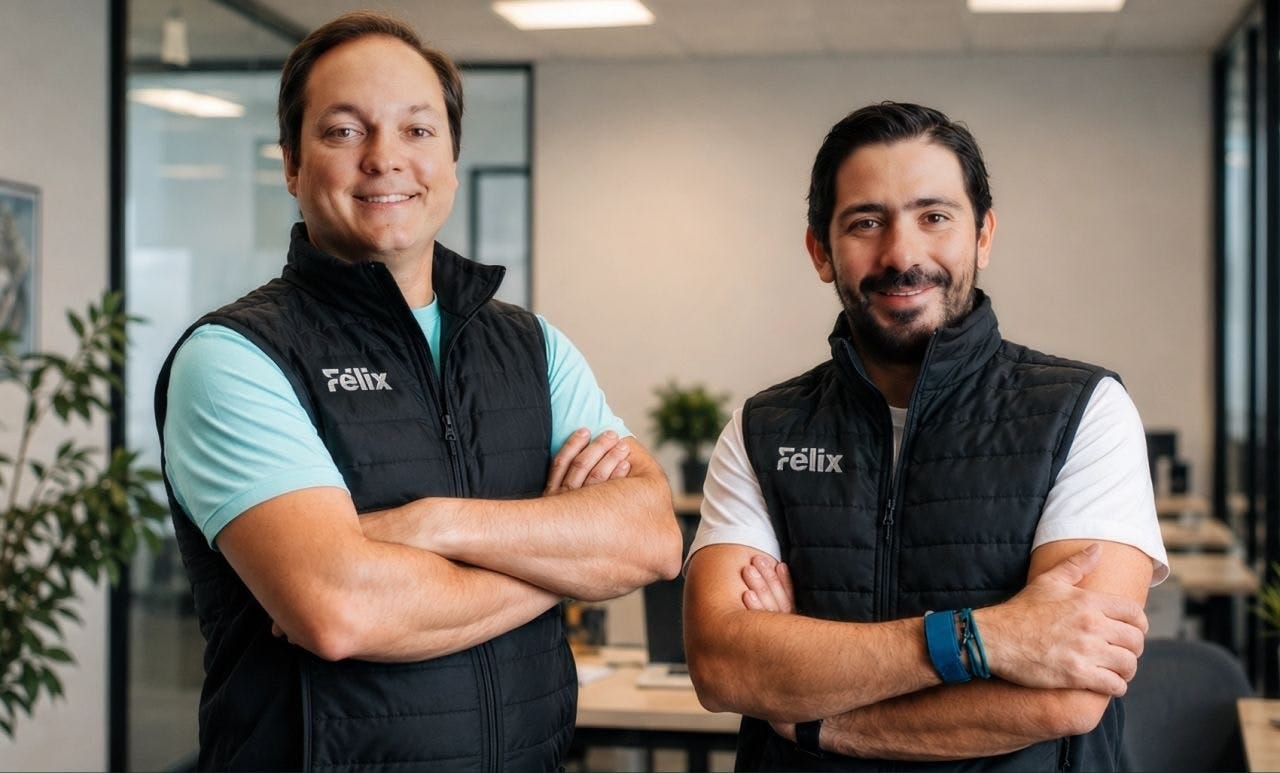
One example was Félix Pago, which reportedly secured a $200 million financing package consisting of approximately $87 million in equity and a $113 million credit facility.
Why it matters
Hybrid financing can help companies match different types of capital with different business needs.
Equity can finance technology development, hiring and expansion, while debt or credit facilities can support transactions or working capital without forcing founders to accept excessive dilution.
This structure is particularly relevant for fintech, marketplaces, ticketing, commerce and other companies in which capital is used to support transaction volume rather than only product development.
What This Week’s Announcements Tell Us
Several broader themes emerged from this week’s activity.
1. The definition of a sports investment is expanding
Sports investing now includes much more than acquiring teams or funding performance-technology startups.
It encompasses:
Wearables
Media and imaging
Consumer products
Healthcare
AI infrastructure
Data platforms
Premium equipment brands
Professional franchises
2. Intellectual property can be more valuable than the original product
The GoPro transaction illustrates how cameras, optics, patents and imaging expertise developed for sports consumers can become valuable across defense, aerospace, robotics and AI infrastructure.
3. Recurring revenue remains highly attractive
Oura’s subscription model is a critical part of its IPO story.
Investors generally value predictable, recurring membership revenue more highly than one-time hardware sales. This is why many wearable and sports-technology companies are trying to build software, services and subscriptions around their devices.
4. Strong brands remain investable assets
Campagnolo and West Ham demonstrate the value of brands that cannot easily be replicated.
Technology can become obsolete, but heritage, community, loyalty and cultural relevance can create durable long-term value when paired with sound management.
5. AI capital is concentrating around infrastructure
Investors appear increasingly interested in companies that can coordinate, deploy or secure AI at scale.
The market may become more difficult for startups whose only differentiation is placing a new interface around a third-party model.
6. Investors are demanding clearer strategic value
Capital remains available, but companies must increasingly demonstrate:
Genuine market traction
Defensible differentiation
Strong unit economics
Recurring revenue
Valuable proprietary data
Clear customer ROI
A credible route to profitability
Conclusion
This week’s investment announcements show that capital continues to move across sports, health, AI and consumer technology—but it is moving selectively.
Oura is testing public-market demand for wearable health platforms.
GoPro is attempting to transform sports-imaging intellectual property into a broader industrial and AI asset.
Campagnolo is using minority capital to modernize while preserving family control.
Investors continue to pursue scarce professional sports franchises such as West Ham.
Meanwhile, venture capital remains available for startups addressing large healthcare problems or building critical AI infrastructure.
The central takeaway is clear:
Investors are not simply buying products. They are investing in platforms, intellectual property, recurring relationships, trusted brands and scarce assets that can create value across multiple markets.
The companies most likely to attract capital will be those that can explain not only what they sell today—but what strategic position they can own tomorrow.
You may also like:
Upside Analysis: The Top 52 Sports Tech Investors (VCs, Family Offices)

In the past 10 years we have worked with some of the most prevalent sports tech investors (VCs, family offices, angel investors..) out there. We have essentially brought deal flow to those investors on a regular basis. Investors are always looking for sports tech startups to invest in. They are looking to invest in startups led by experienced founders, …
⭐Upside VC Profile: Drive By DraftKings & Chat with Meredith McPherron, CEO & Managing Partner.

VC name: Drive by DraftKings
🔥 Upside Chat: Isaiah Kacyvenski, Founder & Managing Partner of Will Ventures. Former NFL player (Seattle Seahawks, Oakland, St. Louis)

This week we have the honor to interview Isaiah Kacyvenski, the Co-Founder and Managing Partner of Will Ventures, a venture capital investment fund focused on sports technology opening up adjacent markets primarily in Consumer, Health and Media. Isaiah is also a former NFL player who played for the Seattle Seahawks, St. Louis Rams and Oakland Raiders.