
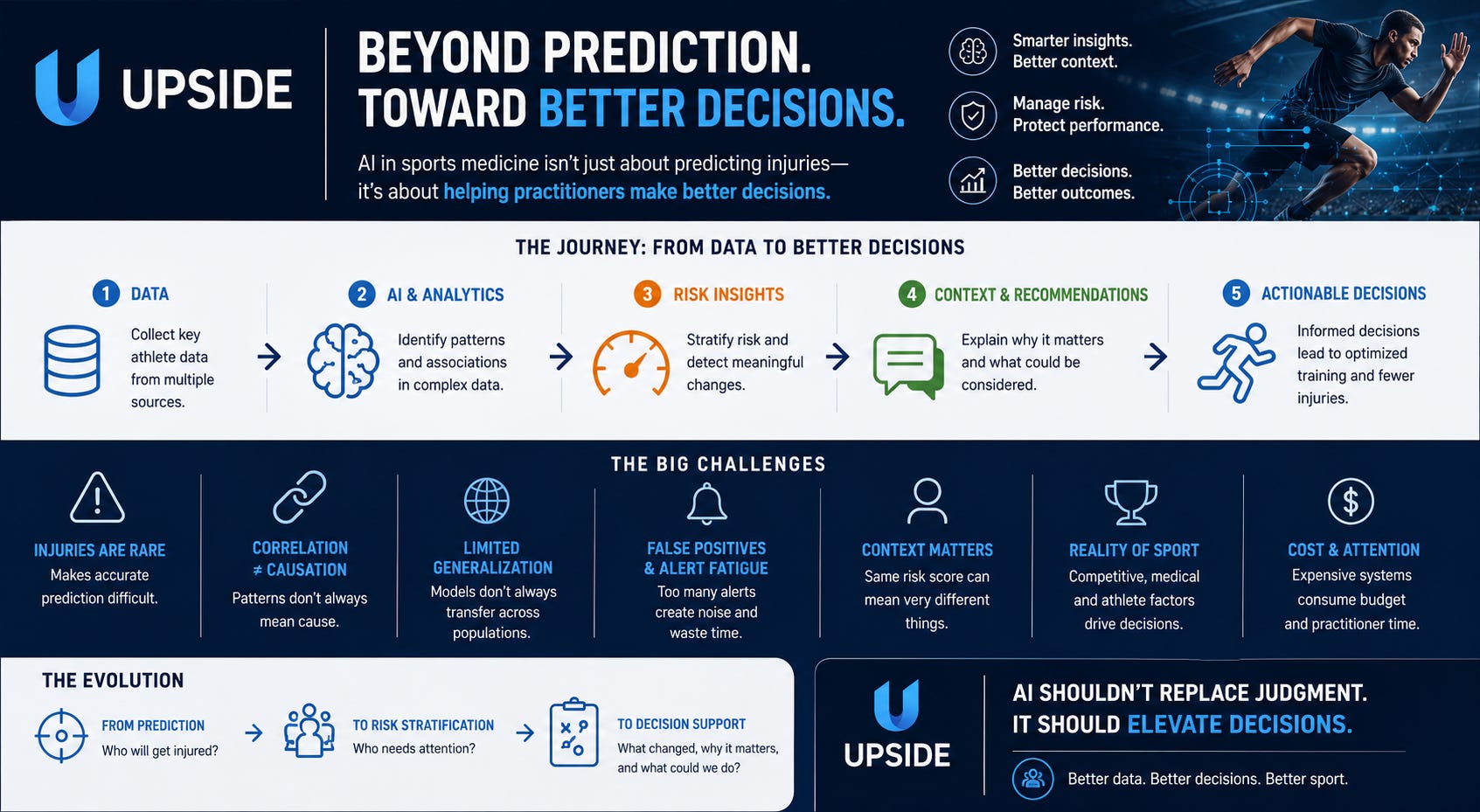
Introduction
For more than a decade, sports-tech startups have promoted one particularly compelling proposition:
“We can predict when an athlete is going to get injured.”
The idea is easy to understand.
Collect large amounts of athlete data—GPS, workload, strength, wellness, sleep, previous injuries, movement characteristics, recovery metrics, training history and other physiological variables—and use artificial intelligence to identify patterns associated with future injury.
The proposed model is:
Data → AI → Injury-risk prediction → Intervention → Fewer injuries
It is an attractive proposition for professional sports organizations.
Injury is one of the most expensive problems in elite sport. A significant injury can mean the loss of a key player, reduced team performance, increased medical and rehabilitation costs, disruption to training, and potentially millions of dollars in lost competitive or commercial value.
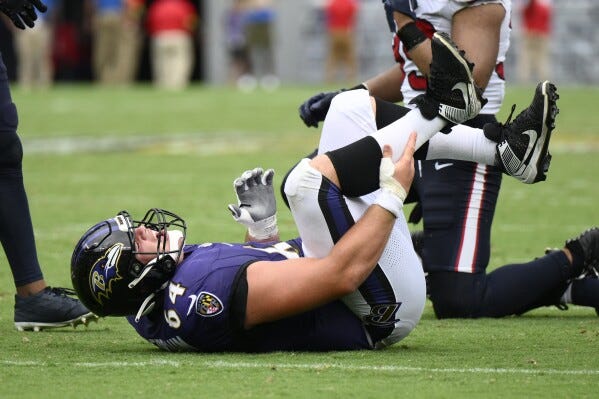
But after years of exposure to this narrative, many teams are becoming increasingly skeptical.
The skepticism does not necessarily mean that AI cannot identify patterns associated with injury.
It is a much more fundamental question:
Even if an AI model identifies elevated injury risk, can the team actually do something useful with that information?
That distinction is becoming increasingly important.
The future of AI in sports medicine may therefore be less about predicting injuries and more about helping practitioners make better decisions about workload, recovery, training and athlete availability.
1. The fundamental problem with AI-based injury prediction
The first challenge is mathematical and biological.
Injury is a relatively rare event.
A professional team can have thousands of training sessions, game exposures and athlete-days over a season, while only a relatively small number of significant non-contact injuries occur.
That creates a classic problem for predictive modeling.
A model may identify characteristics that are statistically associated with injury, but that does not necessarily mean it can accurately predict:
who will get injured;
what injury they will suffer;
when it will happen;
the severity of the injury;
or whether the injury could actually have been prevented.
For example, a model might identify an athlete with:
elevated workload;
reduced sleep;
increased high-speed running;
previous injury history;
reduced recovery;
and changes in movement characteristics.
Those factors may collectively correspond to increased risk.
But the athlete may never get injured.
Meanwhile, another athlete who looks relatively normal according to the model may suffer an injury the following day.
This creates a difficult distinction between:
Risk identification
and
Individual injury prediction.
The first is increasingly realistic.
The second is much harder.
2. Correlation is not causation
Another important challenge is understanding what the model is actually learning.
Suppose an AI system discovers that athletes who experience a certain combination of workload, sleep and movement changes are more likely to suffer an injury.
That does not necessarily mean those factors caused the injury.
They may simply be associated with another underlying variable.
For example:
Poor sleep → increased fatigue → altered movement → reduced training quality → injury
The model might identify poor sleep and altered movement as predictors.
But the intervention could need to address something else entirely.
This is particularly important because athlete performance data is highly interconnected.
Changing one variable can influence several others.
The result is that a model can become very good at recognizing patterns without necessarily explaining the mechanism behind them.
For practitioners, that distinction matters.
A sports scientist or medical professional doesn’t only need to know:
“The risk score is high.”
They often need to understand:
“Why is the risk score high, and what should I do about it?”
3. The prediction problem becomes harder when the population changes
Another challenge is generalization.
A model developed using one population may not perform identically in another.
For example, a model developed using:
Premier League soccer players
may not automatically translate to:
NBA players;
NFL players;
NCAA athletes;
female athletes;
youth athletes;
athletes returning from a specific injury;
or athletes from a different training environment.
Even within the same league, teams can have very different:
training methodologies;
playing styles;
travel schedules;
medical philosophies;
data collection systems;
athlete populations;
and coaching approaches.
This raises an important question for teams evaluating AI vendors:
Was the model validated on a population that actually resembles our athletes and our environment?
A strong result in one dataset does not automatically mean the same performance will occur in another organization.
4. False positives create a major operational problem
One of the most important issues is the false-positive problem.
Imagine an AI system identifies 20 athletes as having elevated injury risk.
But only two eventually suffer an injury.
The system may technically have identified those two athletes.
But what about the other 18?
Were they unnecessarily restricted?
Did their training change?
Did practitioners spend additional time evaluating them?
Did coaches become concerned?
Did the athletes become concerned?
Did the team lose training opportunities?
This is where statistical performance and operational performance can diverge.
A model can have impressive predictive metrics while still creating an unacceptable workload for practitioners.
And this leads directly to one of the biggest issues emerging around AI injury tools:
Alert fatigue.
5. The fatigue-alert problem
Several teams experimenting with AI-driven injury or fatigue systems have encountered a practical problem:
Too many alerts.
One Premier League example illustrates the issue particularly well.
A team using an AI injury-prediction tool reportedly received alerts identifying approximately 12 players as potentially at elevated injury risk.
The response was essentially:
“We need to put a team on the field.”
That statement captures the fundamental problem.
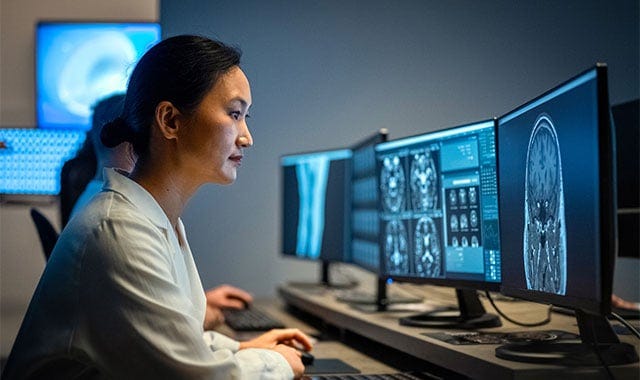
A professional team doesn’t have the luxury of eliminating every exposure associated with elevated risk.
A soccer team has to field 11 players.
An NBA team has to play the game.
An NFL team has to practice and compete.
A hockey team has to manage a long schedule.
Elite sport is inherently about managing risk.
The objective isn’t necessarily:
Zero risk.
The objective is closer to:
Acceptable risk + optimal performance + appropriate athlete management.
If an AI system flags half the roster, the system hasn’t necessarily solved the team’s problem.
It may have created a new one.
6. Not every “high-risk” athlete needs the same intervention
This is another reason why simple risk scores can be problematic.
Imagine two players receive the same:
“High injury risk”
classification.
Player A:
played 90 minutes;
has poor sleep;
has a history of hamstring problems;
experienced an unusually high sprint load.
Player B:
has poor sleep;
but has had low physical loads;
no recent high-speed exposure;
and no history of the relevant injury.
The same risk score could have very different implications.
This is why increasingly sophisticated teams may want context, not just prediction.
Instead of:
High risk
the more useful output may be:
High-speed running exposure is substantially above the player’s recent baseline, combined with reduced recovery. Consider reducing additional high-speed exposure today.
That is much closer to a practitioner decision.
7. The Steph Curry problem
There is another issue that is sometimes overlooked in injury-prediction discussions:
What happens when the model is right?
Imagine an AI model predicts:
“Stephen Curry has a high probability of suffering a lower-body injury during the fourth quarter of the NBA Finals.”
Even if we assume the model is remarkably accurate, what happens next?
Does Steve Kerr take Curry out?
Not necessarily.
If Curry is healthy enough to play, the game is close, and the NBA championship is at stake, the coaching staff may decide that keeping him on the court is worth the potential risk.
This illustrates an important point:
Injury risk is only one variable in an elite sports decision.
The decision may also depend on:
score;
time remaining;
opponent;
playoff implications;
athlete importance;
roster depth;
game strategy;
player preference;
medical assessment;
competition schedule;
and the organization’s tolerance for risk.
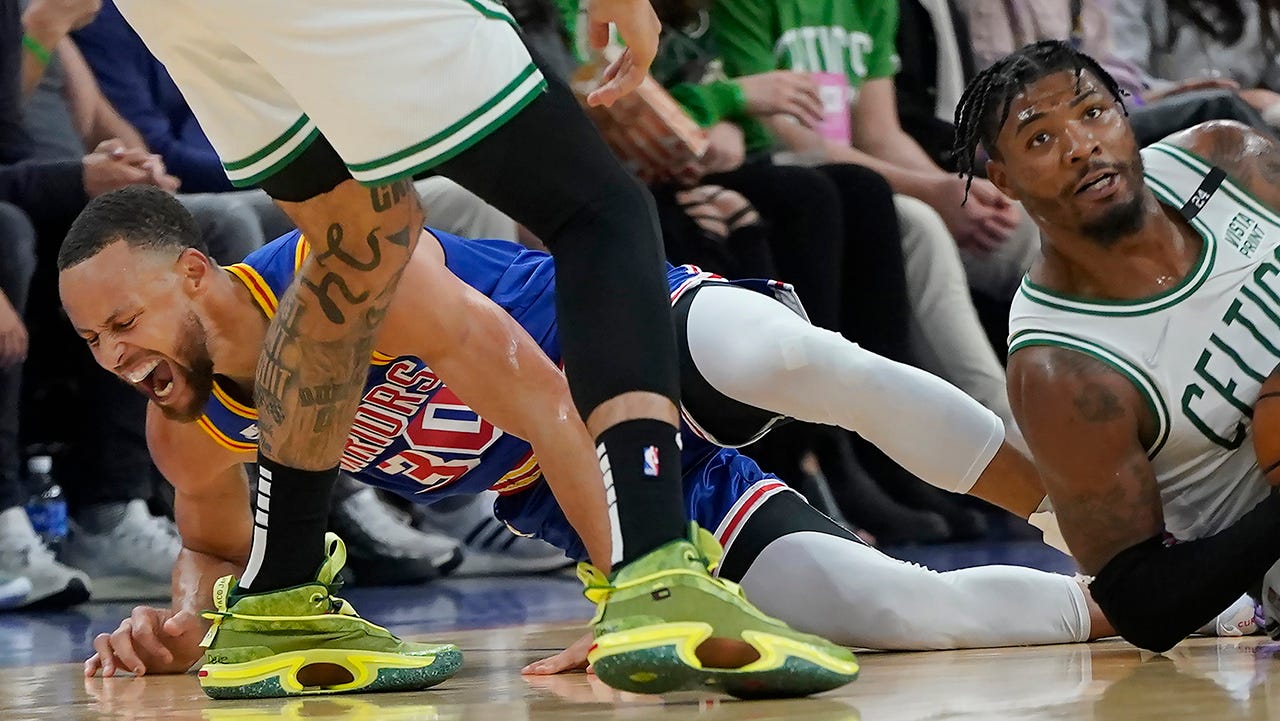
The model can inform the decision.
It cannot make the decision.
And sometimes the correct competitive decision may be to accept the risk.
8. The difference between medical risk and competitive risk
This distinction is particularly important.
A medical practitioner might reasonably say:
“This athlete has elevated risk.”
A coach might respond:
“I understand, but we need this athlete tonight.”
Neither statement necessarily contradicts the other.
They are answering different questions.
The medical/performance question is:
What is the athlete’s risk?
The competitive question is:
What level of risk are we willing to accept given the circumstances?
AI can potentially improve the first question.
But the second remains a human organizational decision.
That means vendors should be careful about positioning an AI model as an injury-prevention system when what it may actually provide is risk information.
9. Some of these systems are not cheap
There is also an economic consideration.
Advanced AI injury-risk platforms can require significant investment in:
software;
sensors;
data integration;
APIs;
implementation;
analytics;
practitioner training;
onboarding;
ongoing support;
and data infrastructure.
For a professional team, the absolute price may not necessarily be the biggest concern.
The more important question is:
What decision-making value are we getting from the system?
If a team spends tens of thousands—or potentially significantly more—on a technology platform that generates hundreds of alerts but rarely changes training or medical decisions, the ROI becomes difficult to demonstrate.
Teams are increasingly asking vendors to move beyond:
“Our AI model is sophisticated.”
toward:
“Here are the decisions your staff changed because of the system, and here are the outcomes.”
That is a much higher standard.
10. The hidden cost: practitioner time
There is another cost that vendors sometimes overlook.
Attention.
A team may have sophisticated technology but a limited number of practitioners.
Every additional dashboard, alert, report and risk score consumes attention.
If a sports scientist has to review:
GPS;
force plates;
wellness;
sleep;
strength;
readiness;
recovery;
video;
medical information;
and AI injury alerts,
the issue isn’t simply whether each technology is valuable individually.
The question becomes:
How many systems can a practitioner realistically use effectively?
Technology that adds information without reducing complexity can ultimately create more work.
This is why integration and usability may become as important as predictive accuracy.
11. More data does not necessarily mean better decisions
Sports organizations have accumulated an enormous amount of athlete data.
The problem has increasingly shifted from:
“How do we collect more data?”
to:
“How do we turn all this data into better decisions?”
This is an important transition.
Teams don’t necessarily need another number.
They need to understand:
what changed;
why it matters;
what action should be considered;
how urgent it is;
and whether the recommendation is supported by evidence.
AI could potentially be extremely valuable here.
But that is a different proposition from simply predicting injury.
12. Practicality may ultimately determine which models survive
Elite sports environments are complicated.
A practitioner may be making decisions while considering:
athlete feedback;
medical history;
workload;
recovery;
strength;
movement;
travel;
competition schedule;
coaching objectives;
roster availability;
and the athlete’s own preferences.
Adding another AI score doesn’t automatically improve the decision.
The most useful technology may therefore be the technology that reduces complexity rather than adding to it.
For example:
Instead of:
“Player X has a 31% probability of injury.”
A more actionable system might say:
“Player X’s recent high-speed exposure is significantly above baseline. Recovery indicators have also deteriorated. Consider reducing today’s high-speed exposure and reassessing before the next session.”
The second statement is not necessarily more scientifically impressive.
But it may be more useful.
13. Contact sports are a fundamentally different problem
This is an area where the injury-prediction narrative needs even more nuance.
AI-based non-contact injury prediction is already difficult.
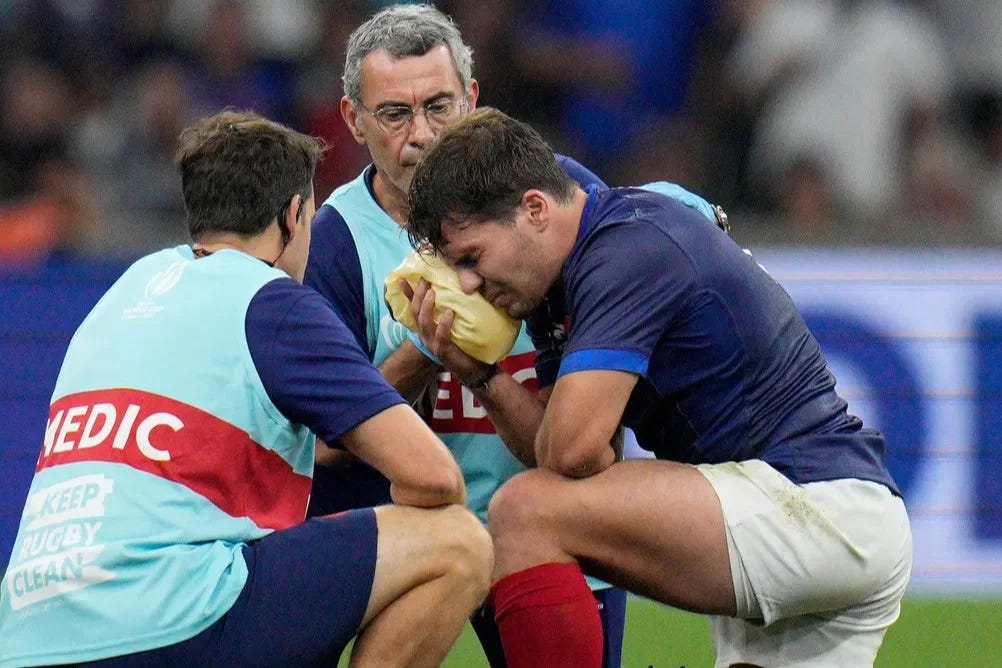
Trying to predict contact-related injuries is fundamentally different.
In sports such as:
rugby;
MMA;
boxing;
American football;
ice hockey;
lacrosse;
and other collision/contact sports,
a significant portion of injury risk comes from events that are difficult to predict at the individual level:
the collision, tackle, punch, fall, opponent interaction or unexpected movement.
In rugby, for example, a perfectly healthy athlete can sustain an injury because of a tackle or collision.
In MMA, an athlete can be in excellent physical condition and still suffer an injury because of an opponent’s strike, takedown, submission or awkward landing.
That doesn’t mean AI has no role in these sports.
Far from it.
AI may still be valuable for:
monitoring workload;
identifying fatigue;
assessing recovery;
analyzing tackle exposure;
measuring impacts;
evaluating technique;
studying movement patterns;
supporting return-to-play decisions;
identifying cumulative exposure;
and analyzing injury mechanisms after they occur.
But there is a major difference between:
“This athlete has elevated non-contact injury risk.”
and:
“This athlete will be injured during a collision tomorrow.”
The second prediction is far more difficult because the injury may be caused by an external event that the athlete and team cannot fully control.
Contact is part of the sport
This leads to an important philosophical distinction.
In some sports, the objective cannot be to eliminate contact risk.
Contact is part of the game.
A rugby team cannot eliminate tackles.
An MMA fighter cannot eliminate strikes.
An NFL team cannot eliminate collisions.
An NHL team cannot eliminate physical contact.
The objective therefore becomes:
Manage exposure, improve technique, improve preparedness, identify unacceptable risk and reduce preventable injuries.
That’s very different from promising:
“We can predict when you will get injured.”
For vendors operating in contact sports, positioning the technology around risk management, exposure analysis, injury mechanisms and decision support may therefore be more credible than claiming to predict individual contact injuries.
14. Recommendations to teams
So what should professional teams do when evaluating AI-based injury-risk technologies?
1. Start with the decision—not the technology
Instead of asking:
“What does the AI model predict?”
start with:
“What decision are we trying to improve?”
Examples might include:
Should we modify today’s training?
Should we reduce high-speed exposure?
Should we give an athlete additional recovery?
Should we perform an additional assessment?
Should we modify a rehabilitation program?
Should we prioritize an athlete for practitioner review?
If there is no clear decision, the value of the prediction becomes questionable.
2. Ask vendors to demonstrate outcomes, not just accuracy
Teams should distinguish between:
Predictive accuracy
and
real-world outcomes.
Ask:
Has the system been prospectively validated?
What happens after an alert?
How frequently do alerts result in an intervention?
How frequently are alerts false positives?
Has the system demonstrated a measurable reduction in time-loss injuries?
Has it reduced injury burden?
Has it improved availability?
The ultimate KPI shouldn’t necessarily be:
“How accurate is your algorithm?”
It should increasingly be:
“What measurable improvement did the team achieve by using it?”
3. Measure alert burden
Teams should track:
Number of alerts → Number of actionable alerts → Number of interventions → Outcomes
If a system produces 100 alerts and only five meaningfully influence decisions, the team needs to understand whether the other 95 are creating unnecessary work.
4. Don’t replace practitioner judgment
AI should ideally augment practitioners rather than attempt to replace them.
The system should provide:
Data + context + explanation + recommendation
while the practitioner remains responsible for interpreting the information within the broader athlete context.
5. Integrate rather than add another silo
Teams should prioritize technologies that can connect with existing systems.
The ideal future environment is not:
20 dashboards.
It is closer to:
One environment → multiple data sources → intelligent interpretation → actionable information.
6. Evaluate the economics
Teams should calculate the complete cost:
Software + hardware + implementation + staff time + integration + training + ongoing support
against measurable benefits such as:
increased player availability;
reduced injury burden;
reduced rehabilitation time;
improved training efficiency;
reduced practitioner workload;
or improved decision-making.
7. Be particularly cautious with “injury prediction” claims
Teams should ask vendors to clearly define what they mean by:
“predict.”
Does it mean:
statistically associated with injury?
elevated risk?
probability above a threshold?
prediction within 24 hours?
prediction within seven days?
prediction of a specific injury?
prediction of time-loss injury?
Those are very different claims.
8. Pilot before committing long-term
For expensive systems, teams could consider a structured pilot with predefined KPIs.
For example:
90–180 days
with agreed measurements around:
alerts;
interventions;
practitioner adoption;
athlete availability;
injury burden;
false positives;
false negatives;
and staff time.
This creates a much more objective basis for evaluating the technology.
15. From prediction to decision support
This may be the most important evolution in the category.
The sports-tech industry could gradually move from:
Injury Prediction
“Who is going to get injured?”
toward:
Risk Stratification
“Which athletes currently warrant additional attention?”
and ultimately:
Decision Support
“What changed, why does it matter, and what could the practitioner consider doing?”
That progression is significant.
The third model doesn’t require the AI to claim that it knows the future.
It requires the AI to help practitioners interpret complex information.
That may be a much more sustainable value proposition.
Conclusion
After more than a decade of hearing sports-tech companies claim that they can predict non-contact injuries, professional teams are becoming more sophisticated and more skeptical.
The challenge isn’t simply whether AI can identify statistical relationships between athlete characteristics and future injuries.
The bigger challenge is whether those predictions are:
Accurate → Specific → Actionable → Timely → Understandable → Economically valuable
And most importantly:
Can a team actually change what it does because of the prediction?
The Steph Curry example illustrates the problem perfectly.
Even if an AI system could accurately predict that a player was at elevated risk of injury in the fourth quarter of an NBA Finals game, the prediction would not automatically determine the decision.
And the Premier League fatigue-alert example illustrates the other side of the problem.
If an AI system flags 12 players as potentially at elevated risk, the team still has to put a team on the field.
Contact sports present an additional challenge. In rugby, MMA, American football and other collision sports, many injuries are caused by external events that cannot realistically be predicted in advance at the individual level. The objective is therefore not to eliminate all risk, but to manage exposure and reduce preventable risk while maintaining performance.
That is the reality of elite sport.
The goal cannot be to eliminate all risk.
It has to be to manage risk intelligently while maintaining performance.
This could lead to a significant evolution in sports-tech positioning:
From:
“We predict injuries.”
To:
“We identify meaningful changes in risk.”
And ultimately:
“We help practitioners make better decisions.”
That may be a less spectacular sales pitch.
But it could be a much more valuable product.
The next generation of AI sports-medicine companies may therefore not win because they have the most sophisticated prediction model.
They may win because they answer the question every practitioner ultimately cares about:
“What should I do differently today—and why?”
That is where AI injury technology needs to prove its value.
You may also like:
📚 Upside Studies: (1) Basketball Study: Injury Incidence Rate (2) NHL Study: Injury Rates Increase During Olympics? (3) NFL Study: Spending on Star Players & Team Success in the NFL

🏀 Upside Study (1): Injury Incidence Rate According to Mechanism, Body Location, and Type in Basketball Players — A Systematic Review and Meta-Analysis
📚 Upside Analysis: AI Injury Prediction in Sports: Who Ultimately Decides?

In elite sports, the difference between winning and losing often hinges on player health. Injuries can derail a season, affect team strategy, and impact player careers. Teams are increasingly turning to technology for an edge, and AI is emerging as a promising tool for injury prediction. Some startups now claim that, in the near future, AI could predict…