

Today we have the honor of interviewing Felix Proessl, Sr. Director of Sport and Data Science at the Colorado Rapids, an MLS team.
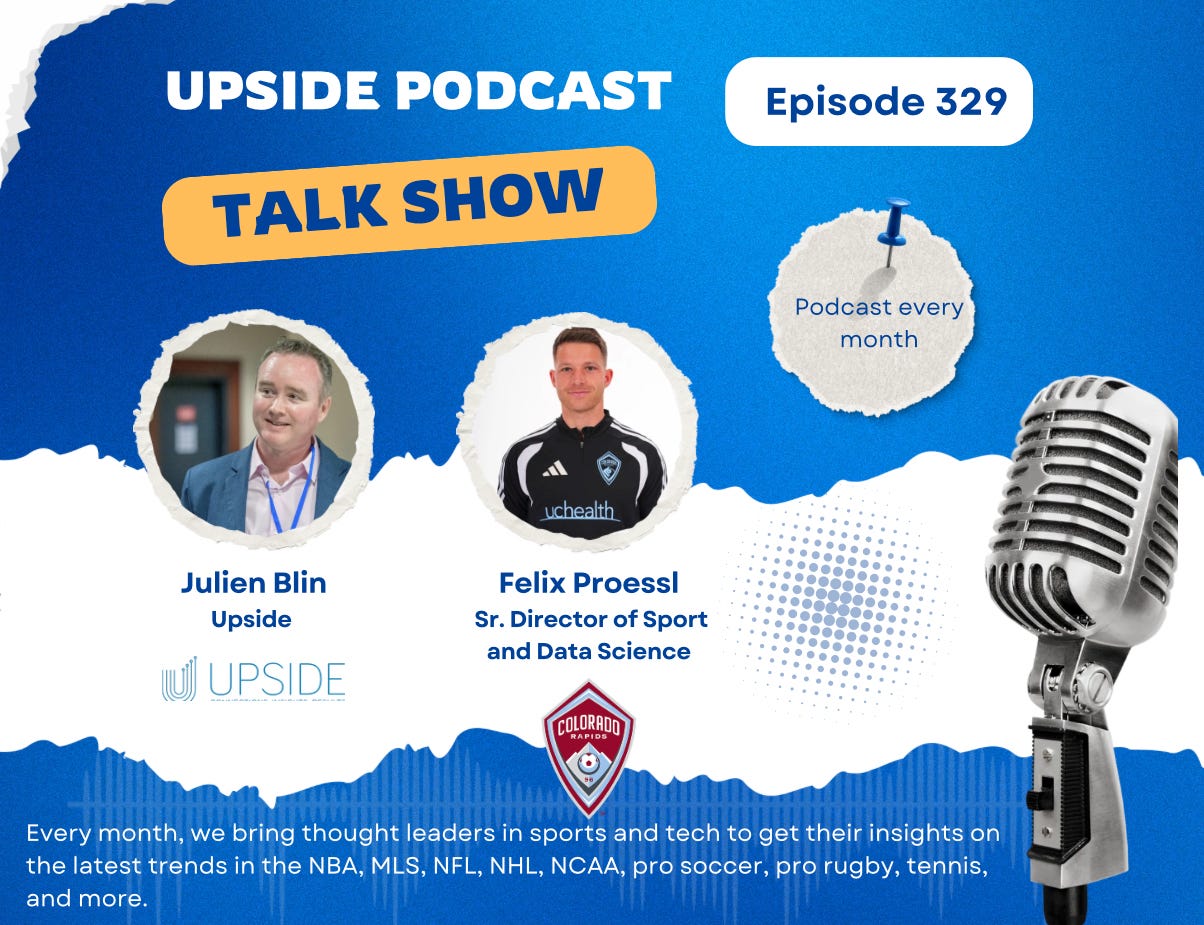
Felix Proessl is the Senior Director of Sport and Data Science for the Colorado Rapids (MLS), where he leads the club’s sports science, performance analytics, athlete monitoring, and data-driven decision-making initiatives across the first team, second team, and academy. Originally from Germany, Proessl played collegiate soccer in the United States before earning his Master’s degree at Colorado State University, where he conducted research in the Integrative Neurophysiology Lab focused on fatigue, performance, and human movement.
He later completed a PhD in Rehabilitation Science at the University of Pittsburgh, studying the neuromuscular and neurophysiological mechanisms underlying skill acquisition, fatigue, and athletic performance. During his time at Pittsburgh, he worked closely with the men’s soccer program and subsequently served as Director of Sports Science for the university’s athletic department, helping scale performance and sports science practices across multiple teams. His expertise spans sports science, performance analytics, athlete development, and the application of data and emerging technologies to optimize performance in elite sport.
You can watch the video interview below by clicking on the Youtube link. You can also listen to the audio interview by clicking on the link at the top of the page:
You can read the full transcript of the podcast interview with Felix located at the top of this blog post.
Here are the quotes from the interview with Felix:
Q1. Tell me about your background.
“I grew up in Germany playing soccer there. My journey really started to pick up when I decided to leave Germany and go to the U.S. to play collegiate soccer. I was fortunate to have that opportunity and really enjoyed being in the U.S. The excitement around sports and the interest in research were very attractive to me, so I decided to stay after completing my undergraduate degree.
I was always curious about the cognitive and perceptual aspects of sport just as much as the physical aspects. At Colorado State University, I joined the Integrative Neurophysiology Lab and spent two years trying to better understand the neuromuscular mechanisms of fatigue, while also working with the women’s soccer team because I never wanted to lose touch with the applied side of sport.
I then completed my PhD at the University of Pittsburgh, where our lab focused on understanding what happens both in the brain and muscle when we get better at something, and how that is impacted by factors like fatigue and sleep deprivation. Afterward, I became Director of Sports Science at the university before eventually joining the Colorado Rapids, where I’m now in my third season as Senior Director of Sport and Data Science.”
Q2. Can you tell me about your role in your club? What does your typical day look like?
“When I was first hired, my focus was creating the infrastructure—building a database, an athlete management system, dashboards, centralizing data streams, and creating processes that would allow data to become part of our decision-making process.
But it’s one thing to give people access to data and dashboards; it’s another thing to ensure that information is actually used in decision-making. Since then, my role has evolved into being more of a strategic decision-maker as part of the larger coaching and support staff.”
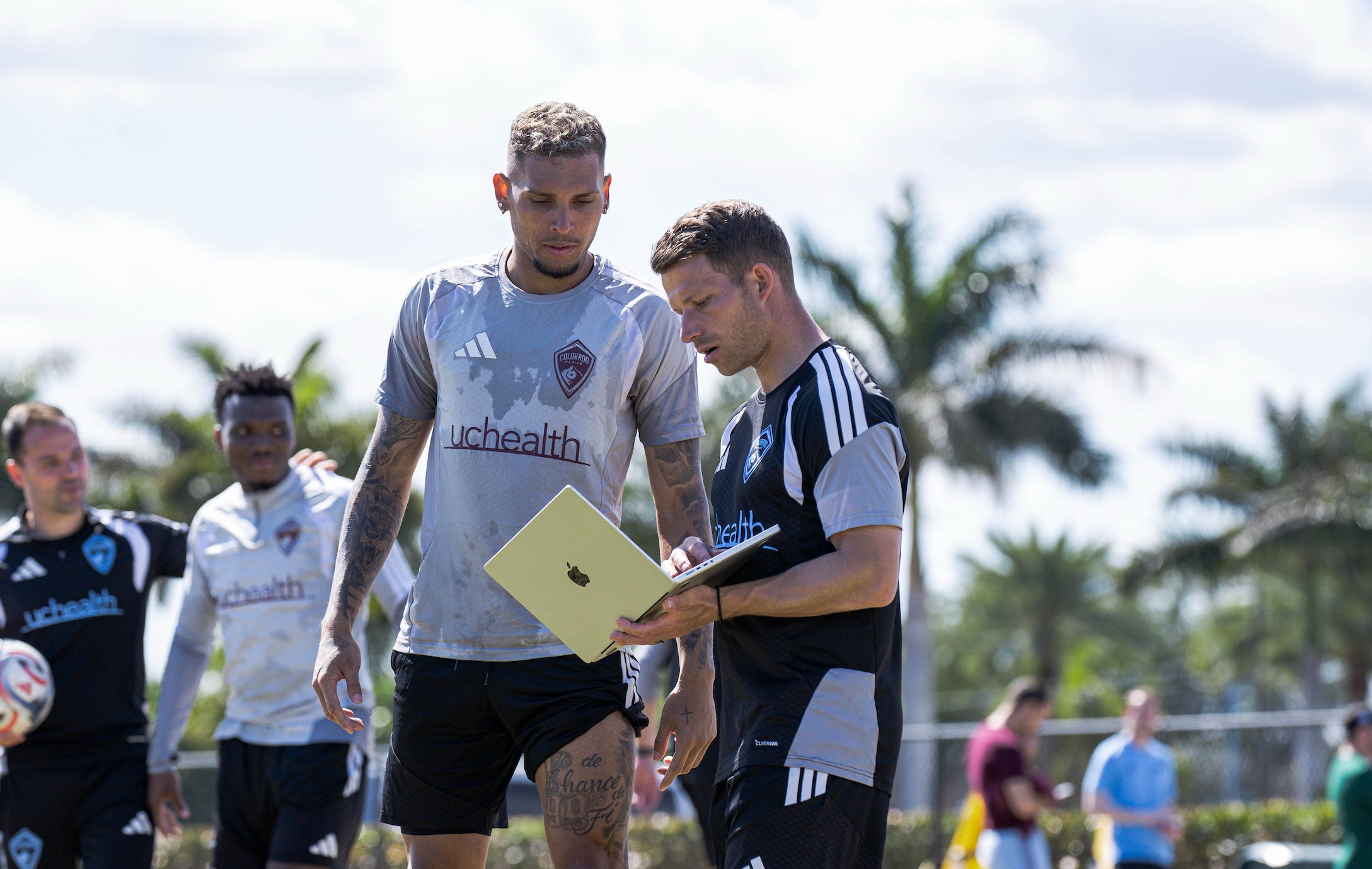
“A typical day starts with high-performance meetings and meetings with the coaching staff where we finalize the training session, discuss player health status, and incorporate information such as wellness reports. Then I’m out on the field collecting information through GPS, body-weight monitoring, and other performance metrics.
After training, the bulk of my work begins with processing and reporting that information, communicating it back to coaches, and helping inform how we train, how much we train, and how we design future sessions. We essentially sit between the performance and medical side of the organization and the coaching side.”
“Another important part of my role is making sure that what we do with the first team becomes the gold standard throughout the club. We apply the same profiling and testing models to the second team and academy, allowing us to project player development and better understand when young players are ready to transition into the first-team environment.”
Q3. What is your approach towards sports science, innovation, and training?
“I firmly believe that sports science is almost a high-performance philosophy more than anything else. To me, sports science is the application of the scientific method to solve problems in a professional sporting environment.
Because of that, it can’t happen in a vacuum or a silo. It touches medical, nutrition, performance, and technical areas, and it requires transdisciplinary collaboration. Everybody needs a shared understanding of the processes and workflows that ultimately lead to better decisions.”
“I think it’s important that these processes are data-informed, not data-driven. We collect information and incorporate it into the decision-making process, but we always have to weigh it in the context of uncertainty and understand what we’ve measured versus what we may not have measured.
The most important thing is context. That’s where collaboration with coaches becomes critical. Decisions shouldn’t happen in isolation.”
“Innovation, to me, is being critical of existing beliefs. It’s applying the scientific method to challenge assumptions and asking whether something is actually true in the environment where we’re applying it. That’s where innovation occurs—understanding there’s a gap, filling it with knowledge, and through collaboration nudging the field forward.”
Q4. How do you see AI impacting the work of practitioners in the coming years?
“I think AI is an extremely powerful method to enhance productivity, increase efficiency, and automate processes that occur on a day-to-day basis in our environment. AI functions best with large datasets, strong contextual information, and standardized questions that occur repeatedly over time.”
“I don’t think AI is going to replace people because many of the questions we face in sport are too variable and volatile. The human will always be needed to gauge the uncertainty of the model and apply rational thinking to it.”
“Where AI is helping practitioners right now is by adding new processing pipelines to existing technologies. Optical tracking is a great example. We’re now able to derive a whole host of new metrics from video and paint a much richer contextual picture.
We don’t just know how much players run anymore—we understand the phase of play, the location of the ball, the behavior of opponents, and other contextual factors.”
“In the end, these technologies are only a means to derive metrics. The effective incorporation and implementation of that information requires collaboration with actual decision-makers. There needs to be someone capable of digesting those outputs, understanding their uncertainty, and incorporating them into day-to-day workflows.”
Q5. If you had unlimited resources (funding, staff), which sports tech solution would you build? Why?
“Given my background and my passion for complex sports, I would want to build something that allows us to dive much deeper into the neurophysiological processes that underpin performance.
Sport is fundamentally a perception-action coupling activity. Whether you decide to move, sprint, pass, or shoot begins with recognizing an opportunity before the physical action ever takes place.”
“We have a tremendous number of tools to understand the muscular and fitness capacities of athletes, but relatively little insight into the earlier part of the process—which arguably may be even more important.
Ideally, we would develop better ways to quantify how athletes perceive information, make decisions, and recognize opportunities in an applied sporting environment.”
“If I had unlimited resources, I would pour them into understanding recognition, awareness, what the athlete actually sees, and the timing of the perceptual-motor response. I’d want to better understand that side of sport.”
Q6. Who is your favorite to win the Soccer World Cup? Why?
“Obviously, I’d like to see Germany lift the trophy. That would be the ideal scenario.”
“Realistically, though, I think France will be tough to beat. They’ve been in the final the last two times, won it in 2018, and I think they just have a really good squad right now that will be one of the challengers for sure.”
“The beauty—and the difficult part—of the World Cup is that it only takes one game where you’re off and you’re out. Ideally Germany, but realistically I think we’re more of a quarterfinal or semifinal team. From there, I think England or France.”
You may also like:
🎙️ Upside Video Chat with Darcy Norman, Director of Performance, Chicago Fire FC (MLS)

Today we have the honor of interviewing Darcy Norman, the director of performance for the Chicago Fire FC a top MLS team.
🎙️ Upside Video Chat with Gavin Benjafield, Performance Director, LAFC (MLS)

Today we have the honor of interviewing Gavin Benjafield, performance director at LAFC, an MLS team.


