

Today we have the honor of interviewing Luis Justiniano, a Sales Director - elite sports at Qualisys, a leading provider of precision motion capture and 3D positioning tracking systems. Luis is also joined by Oskar Lindh, Product manager at Qualisys.

Qualisys is the maker of OnTraq by Qualisys, which brings lab-quality, video-based biomechanical analysis to elite sports teams without complexity, helping teams establish and monitor consistent athlete baselines. Built on Qualisys’ proven foundation of biomechanical accuracy, OnTraq makes research-grade movement analysis accessible to any staff member while fitting naturally into regular training routines.
You can watch the video interview below by clicking on the Youtube link. You can also listen to the audio interview by clicking on the link at the top of the page:
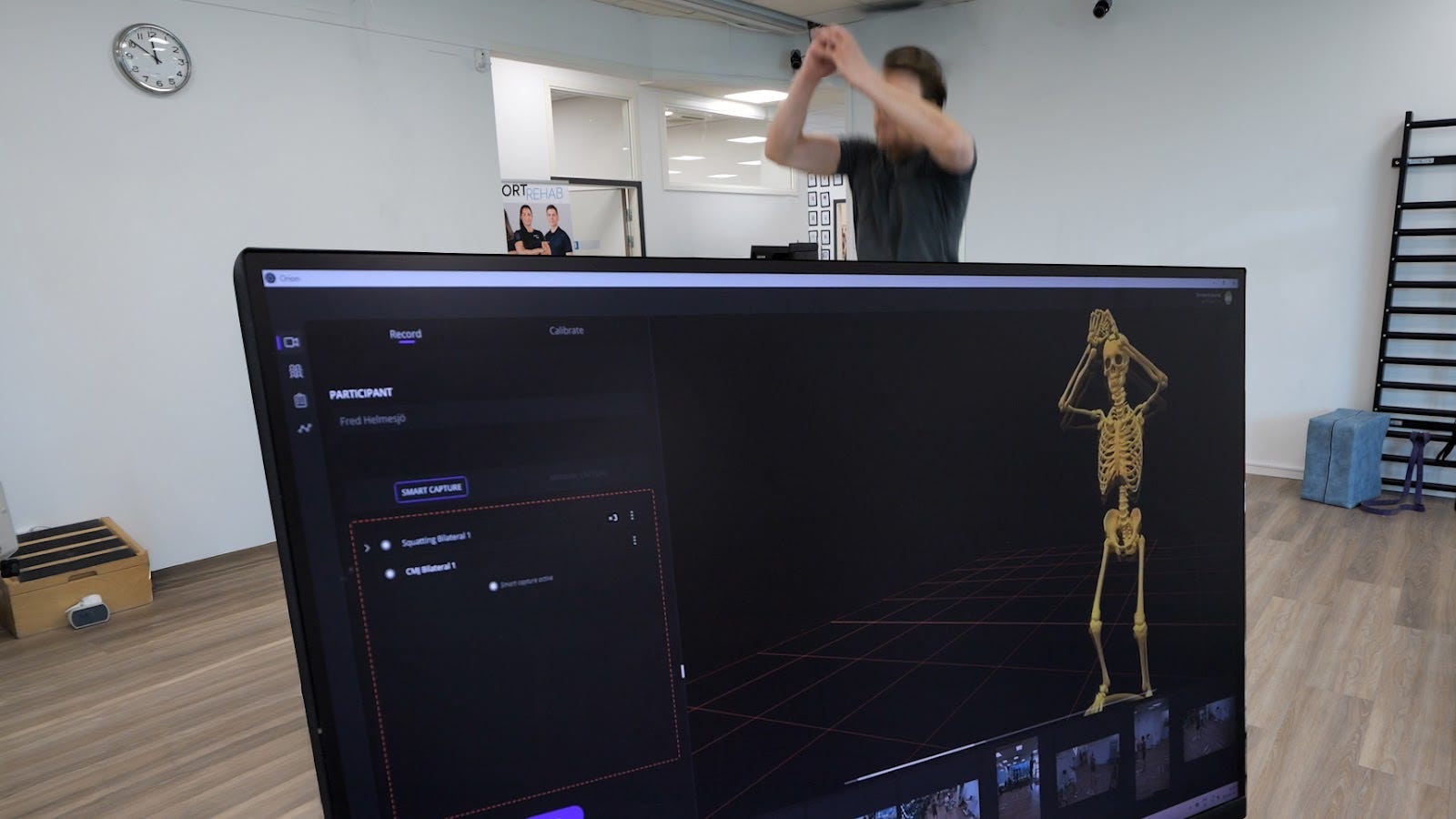
Here is a look at OnTraq software:
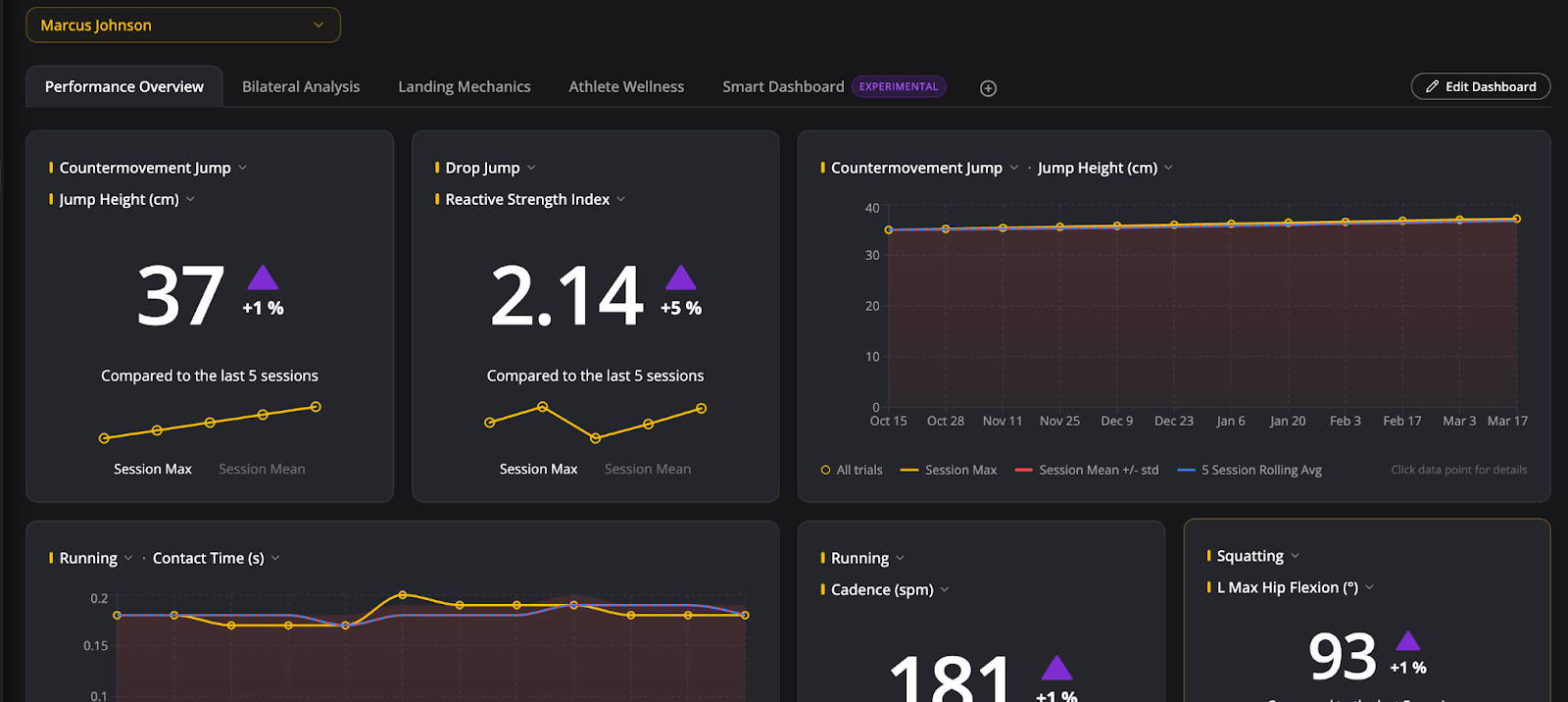
Here is below a picture of the OnTraq’s dashboard:
Here is a video explaining how OnTraq works:
📝Show Notes: During the interview with Luis Justiniano and Oskar Lindh, we discussed their backgrounds and the evolution of their work at Qualisys, a company with more than 30 years of expertise in motion capture and biomechanics. They explained how their product, OnTrack, translates this legacy into a practical solution for elite sports by combining high-accuracy data with ease of use. Designed to fit seamlessly into training environments, OnTraq enables teams to quickly collect baseline biomechanical data, monitor athletes over time, and generate actionable insights without disrupting workflows. The platform addresses key use cases such as return-to-play decision-making, performance tracking, and even scouting, allowing practitioners to identify movement deviations, track progress, and support data-driven decisions.
We also explored the core benefits and differentiation of their solution, including its speed, accuracy, and ability to deliver immediate feedback, as well as its subscription-based business model that lowers adoption barriers by bundling hardware, software, and support. Luis and Oskar highlighted the rapid growth of the sports biomechanics and markerless tracking market, driven by increasing demand for athlete data and broader adoption beyond academia. Looking ahead, they emphasized their ambition to become the standard for baseline testing in team sports, with a strong focus on continuous product development, deeper integrations, and expanding partnerships with professional teams to scale globally and refine the platform based on real-world feedback.
Here are the best quotes from the interview with Luis and Oskar:
Q1. Tell me about your background
Luis Justiniano explains:
“I’m the Sales Director for Elite Sports in the Americas, where I lead the team responsible for driving adoption of our OnTraq solution across North America. My role focuses on working closely with professional teams and organizations to understand their needs and help them integrate motion capture technology into their performance workflows.”
Oskar Lindh adds:
“I come from a background as a UX designer, where my focus has been on translating user needs and requirements into valuable, intuitive products. Over time, I transitioned into a broader role as product manager, where I now oversee the full lifecycle of the product—from design and development to launch—ensuring everything fits together and delivers real value to users.”
Q2. Tell me about your company and product
“Qualisys has more than 30 years of experience in motion capture technology, particularly within biomechanics, where we’ve built a strong reputation for delivering highly accurate systems. With OnTraq, we’ve taken that deep expertise and transformed it into a product designed specifically for sports environments.”
“OnTraq is built to provide a flexible, practical way to collect baseline biomechanical data and deliver immediate feedback to coaches and practitioners. It allows teams to capture data quickly, accurately, and reliably, while monitoring athletes throughout the season.”
“What we’re really doing is combining the ease of use you’d expect from consumer-grade tools with the high-quality data and precision of advanced motion capture systems. The goal is to make it simple to generate actionable insights without the complexity that traditionally comes with motion capture.”
Q3. What are the main use cases you are addressing in elite sports?
“One of the primary use cases is supporting return-to-play decisions. Teams can use the system to collect objective movement data during rehabilitation, helping them define clearer protocols and make more informed decisions about when an athlete is ready to return.”
“Another major use case is performance tracking—monitoring how athletes progress against their baseline over time. By testing more frequently, teams can identify trends, detect deviations, and better understand how training is impacting performance.”
“We also see applications in scouting and player development, where teams can evaluate athletes across different levels and use the data to help them improve. Ultimately, the goal is to enable regular, efficient testing that provides both immediate feedback and long-term insights.”
Q4. What are the benefits for teams to use your product?
“One of the biggest benefits is speed and efficiency. Teams can test athletes in less than five minutes, often in under a minute per player, without disrupting their regular training workflow.”
“At the same time, they’re getting high-quality, accurate data along with actionable insights. Coaches and practitioners can immediately access key metrics and use them to make faster, more informed decisions.”
“By building baselines and tracking changes over time, teams gain a much clearer understanding of athlete performance and movement patterns. This is particularly valuable for both performance optimization and injury management, as it allows them to detect asymmetries or deviations early and respond accordingly.”
Q5. What are your competitive advantages?
“Our competitive advantage comes from the combination of speed, ease of use, and data quality. We’re able to deliver high-precision biomechanical insights in a way that’s fast and practical for everyday use.”
“We also bring more than 35 years of experience in biomechanics, which gives us a strong foundation in accuracy and credibility. This isn’t just a standalone tool—we provide a complete ecosystem that includes hardware, software, data processing, and trend analysis dashboards.”
“What really differentiates us is our ability to simplify complex motion capture workflows without compromising on quality. We’re making advanced biomechanics accessible to teams in a way that hasn’t been possible before.”
Q6. Tell me about your business model
“Our goal is to make motion capture technology more accessible, which is why we use a subscription-based model. This allows teams to get started without the large upfront investment typically associated with these systems.”
“The subscription includes everything—hardware, software, installation, training, and ongoing support—so teams have a complete solution from day one.”
“We offer different tiers, such as bronze, silver, and gold, depending on the organization’s needs. It’s typically structured as a two-year commitment, but we’ve built flexibility into the model. If circumstances change, teams can return the system, which reduces the risk and makes adoption easier.”
Q7. What is your take on the state of the sports markerless market?
“The market is clearly growing, driven by an increasing demand for player data and a deeper understanding of how athletes move. Biomechanics, in particular, has expanded significantly—it’s no longer limited to academic research but is now widely adopted across sports organizations.”
“We’re seeing a broader trend where data is being collected across the entire athlete lifecycle—from games to training sessions and rehabilitation. This reflects a shift toward more data-driven decision-making in sports.”
“At the same time, there’s a strong need to make these technologies more accessible and practical for coaches and practitioners. That’s where solutions like ours come in—bridging the gap between advanced biomechanics and everyday usability.”
Q8. What are your plans for the next 12 months?
“Over the next 12 months, our focus is on continuing to develop and improve the product by incorporating feedback from teams and users. We want to ensure that what we’re building truly aligns with the needs of different sports and organizations.”
“Our broader ambition is to become the standard for baseline testing in team sports. While we’ve already built a strong foundation by simplifying workflows and maintaining accuracy, there are still many features in development.”
“This includes deeper integrations, enhanced data insights, and expanded capabilities that will further improve usability and value. At the same time, we’re looking to scale through partnerships and build more case studies with professional teams, helping us demonstrate impact and grow adoption globally.”
You may also like:
📈 Upside Analysis: Markerless Systems and Computer Vision in Elite Sports: Key Trends, Drivers, Challenges, Vendors, Recommendations to Teams

Movement analysis is an essential component of elite sports, enabling teams, coaches, and athletes to gain insights into performance, injury prevention, rehabilitation, and tactical planning. Traditional motion capture systems required physical markers and specialized environments, limiting their application in real-world sports scenarios. However, adva…


