

Today we are hosting a new group podcast on muscle fatigue, the current practices to monitor muscle fatigue, the tools used, and what the future looks like.
Participants:
Raphaël Ravet, Chief Commercial Officer, Myocene, a leading Belgian based sports tech company.
João Ribeiro, Head of performance, SC Braga (Primeira Liga).

As a reminder, Myocene is a Belgium based sports technology company revolutionizing how muscle fatigue is measured and managed. Recognizing the need for objective and precise monitoring in athletic performance, Myocene has developed an innovative device that combines a sensor, stimulator, and proprietary algorithm to assess the loss of force and speed linked to muscle fatigue. In just two minutes, the device generates a comprehensive muscle fatigue index, offering clear insights into an athlete’s readiness, recovery, and overall physical condition.
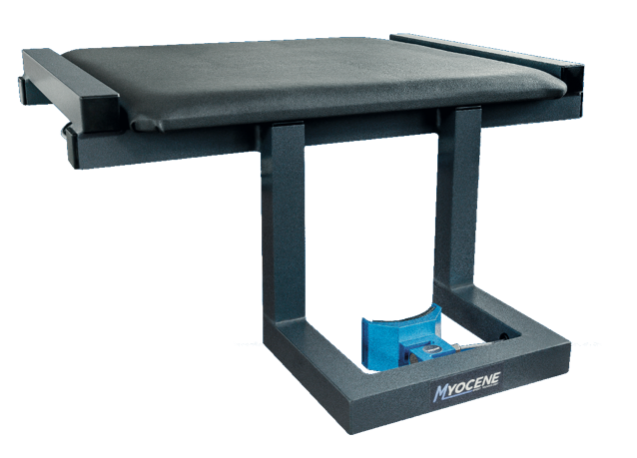
By providing objective, data-driven feedback, Myocene empowers teams and coaches to make smarter decisions about training and recovery. Myocene helps identify muscular imbalances, optimize performance, and reduce the risk of overtraining. Trusted by leading sports organizations Myocene is setting a new standard in performance monitoring and athletic recovery.
João Ribeiro is a leading performance and sports science professional currently serving as Head of Performance for S.C. Braga in Portugal’s Primeira Liga. With a background in exercise physiology, high-performance training, and sports science research, Ribeiro has played a key role in optimizing athlete performance within one of Portugal’s top football clubs. He holds a PhD in Sports Sciences from the University of Porto and has combined elite applied practice with academia through lecturing and research in human performance, monitoring, and rehabilitation. Recognized for integrating data, sports science, and performance innovation into professional football, Ribeiro is widely respected for his expertise in athlete development, recovery, and performance optimization.
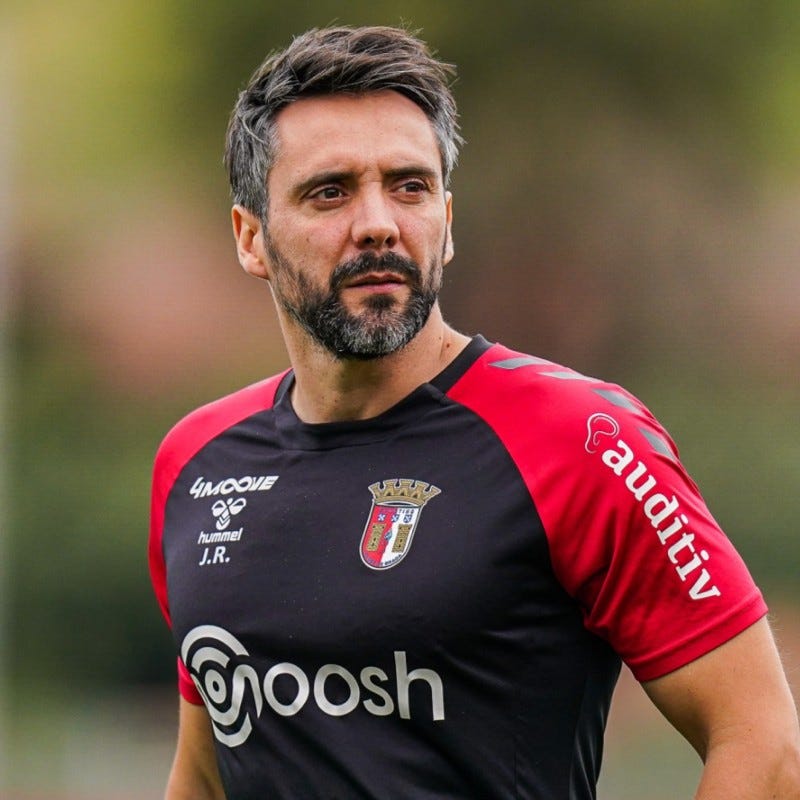
Picture: João Ribeiro (SC Braga)
You can watch the video interview below or you can listen to the audio interview above:
📝Show Notes: Through this interview, we discussed the following topics:
Q1. Current Practices
How do you currently define and measure muscle fatigue in your environment, and how consistent is that definition across your staff?
What are the primary tools or modalities you rely on today—and which have proven most actionable?
Q2. Decision-Making & Application
Can you walk through how fatigue data actually influences day-to-day decisions like training load, recovery protocols, or return-to-play?
Q3. Challenges & Limitations
Where do you see the biggest gaps or limitations in current fatigue monitoring—whether that’s accuracy, cost, athlete compliance, or interpretation?
Q4. Individualization vs. Standardization
How do you balance individualized fatigue profiles for each athlete with the need for scalable systems across an entire team?
Q5. Future Outlook
Looking ahead 3–5 years, what do you think will fundamentally change in how we monitor and manage muscle fatigue—especially with advances in technology and data integration?
You can read the full transcript of the podcast interview located at the top of this blog post.
Here are some of the best quotes of our conversation with João and Raphaël:
Q1. Current Practices
João Ribeiro:
“We face muscle fatigue as a multidimensional approach — neuromuscular, perceptual, performance decay. We cannot oversimplify the way we measure it. So we use objective data and subjective data — for external load we use GPS systems, and for internal load we use biochemical markers like CK, as well as subjective markers from wellness questionnaires.”
“We’re not measuring muscle fatigue itself, we are inferring about muscle fatigue. Imagine a player is doing more than he’s used to — we can assume he may be facing some fatigue. But we are always inferring, not measuring it directly. That’s why we also use Myocene and maximum voluntary contraction tests to get more objective measures of muscle status.”
Raphaël Ravet:
“The proper method to assess peripheral fatigue is by measuring this loss of force. The Myocene technology uses a combination of a force sensor, a specific neurostimulator, and an algorithm to calculate an index. When an athlete is in a rested state, the muscle produces a force and the system computes an index.”
“When there is muscle fatigue, the muscle responds less to a given stimulation — in this case produced by the neurostimulator of the Myocene system — and therefore the index drops. We have here a specific marker of a key aspect of performance, which is muscle fatigue, and we also address something which other methods cannot: objectivity.”
Q2. Decision-Making & Application
João Ribeiro:
“We make adjustments based on that data. The player maybe cannot train at all — he’s completely out of training according to the data we have from fatigue. Or, the most common scenario, is to adapt partially the training session — he can be present in some exercises and be out for the most demanding ones.”
“We also use this data to adapt recovery strategies. If a player is too fatigued, we promote the continuity of recovery modalities, or we adapt the recovery training session itself. If players tell us they are too fatigued, our day off can even be anticipated or changed according to that — especially if the fatigue is most demanding in a mental term.”
Raphaël Ravet:
“It’s not just about completing GPS metrics or data output. Athletes need to be able to recover, resist fatigue, and sustain repeated training in order to make sure they’re truly ready to reincorporate the team. A tool like Myocene can bring that — is the athlete able to sustain and repeat that load? That’s what really matters for return to play.”
Q3. Challenges & Limitations
João Ribeiro:
“There is no gold standard — fatigue is complex, and I think that is the biggest gap. We need to use a variety of tools, which is very, very difficult. Another issue is the data noise we obtain from these measurements”.
“The overload of data is sometimes contradictory — but it’s part of the process. If fatigue is complex, we need to analyze all the data. But this interpretation, I think, is the hardest part. And in some tests, we need athlete compliance, and that really impacts the measurements.”
Raphaël Ravet:
“Thanks to the Myocene system, the player is not involved in the measurement — which gives very actionable data, because you can take a decision right away based on that. On one side we use a specific and validated method to assess fatigue, well-described in the scientific literature. And on the other side, the player is not involved, which removes the compliance issue entirely.”
“We address a key limitation of other methods: objectivity. We don’t need the player to be compliant, and we have a baseline to compare against — which is very, very valuable. That’s something João himself has confirmed he values from the Myocene system.”
Q4. Individualization vs. Standardization
João Ribeiro:
“What we do is use the same system for everyone — the protocol is standardized. But the interpretation is individualized — it’s completely different depending on each player, his profile, his responsibility in the team. Some players can cope with high levels of fatigue, even while playing, and that’s why we need to know very well the profile of the player and the way he copes with these kinds of demands.”
“There are different responses to the same load. For instance, if a player is a midfielder and he’s 80% recovered, maybe he can cope a little with the next game. But if he’s a winger and he’s only 80% recovered, maybe we don’t want to risk it — because he will be doing a lot of high intensity running in the game. So the position and profile really matter in the interpretation.”
Raphaël Ravet:
“The common point for all players is that they need to be ready on game day. They may have different capacities to resist fatigue — some fatigue more because they play more, play less, or occupy more demanding positions. But what you want to know is: is my athlete ready to either train hard, resume a new micro cycle, or play on game day?”
“You can really put a figure on fatigue — you know if they are 100% ready, 90% ready, or 65% ready, and you know the gap. This is the real interest of a method like Myocene: you can quantify fatigue and know exactly what the athlete still needs to recover in order to be ready on game day.”
Q5. Future Outlook
João Ribeiro:
“We need more tools like this. We need to assess this internal load in the muscles and joints — we don’t have many tools for that right now. We have Myocene measuring muscle fatigue, but we need more technology that can be integrated directly into training sessions to really measure this internal load in real time. We have no device for that right now, only Myocene, but used before or after training sessions.”
“Another thing is the integration of data. AI is here, so it will help us for sure. Machine learning models and the integration of different sources of measurements will for sure help us in the near future. I believe in that strongly.”
Raphaël Ravet:
“We’ve moved a very well-known technology method used in labs for more than four decades to assess peripheral fatigue — or specific low frequency fatigue related to calcium release impairment — and we’ve moved this technology to real life. We’ve learned a lot in the last five years, and we’re going to continue to learn even more as we have more users, more feedback, more publications, and more protocols from each team using it.”
“There is a blind spot in athlete monitoring. The industry has been very focused on measuring external load — GPS, force plates — the body is very well monitored. But the new era, the room for improvement, is on the internal load side. For a given load, the physiological impact is different for every player. We’re just at the beginning of potentially a new era where internal load and objective markers are going to shape the future of sport performance.”
You may also like:
🎙️ Upside Video Chat with Raphaël Ravet, Chief Commercial Officer of Myocene, a Leading Belgian Based Sports Tech Company.

Today we have the honor of interviewing Raphaël Ravet, the Chief Cmmercial Officer of Myocene, a leading Belgian based sports tech company.
🎙️ 🏀 Upside Chat with Bram Swinnen, Founder, Integrated Performance Training, On His Training & Rehab Philosophy, Myocene, and More.

Today we have the honor of interviewing Bram Swinnen, the founder of Integrated Performance Training and a renowned expert in sports science, performance training and rehabilitation. Bram discussed his background, approach towards training, rehab and how he uses a cutting edge technology such as


