

Today we have the honor of interviewing Bram Swinnen, the founder of Integrated Performance Training and a renowned expert in sports science, performance training and rehabilitation. Bram discussed his background, approach towards training, rehab and how he uses a cutting edge technology such as Myocene.
With over 25 years of experience working with elite athletes, Bram has collaborated with some of the most prestigious sports teams and organizations around the world in the NBA, EuroLeague, and European soccer. His innovative approach blends velocity-based training, neuromuscular control and neuroscience into the training process, ensuring optimal performance while minimizing injury risks.
Bram is the author of the international bestseller “Strength Training for Soccer,” which is widely recognized for its practical insights on enhancing athletic performance. He has also authored several scientific publications and is regularly invited as a speaker at international conferences.
Bram earned a master’s degree in kinesiology and a master’s degree in physical therapy, and he highly values continuing education to stay at the forefront of his field.
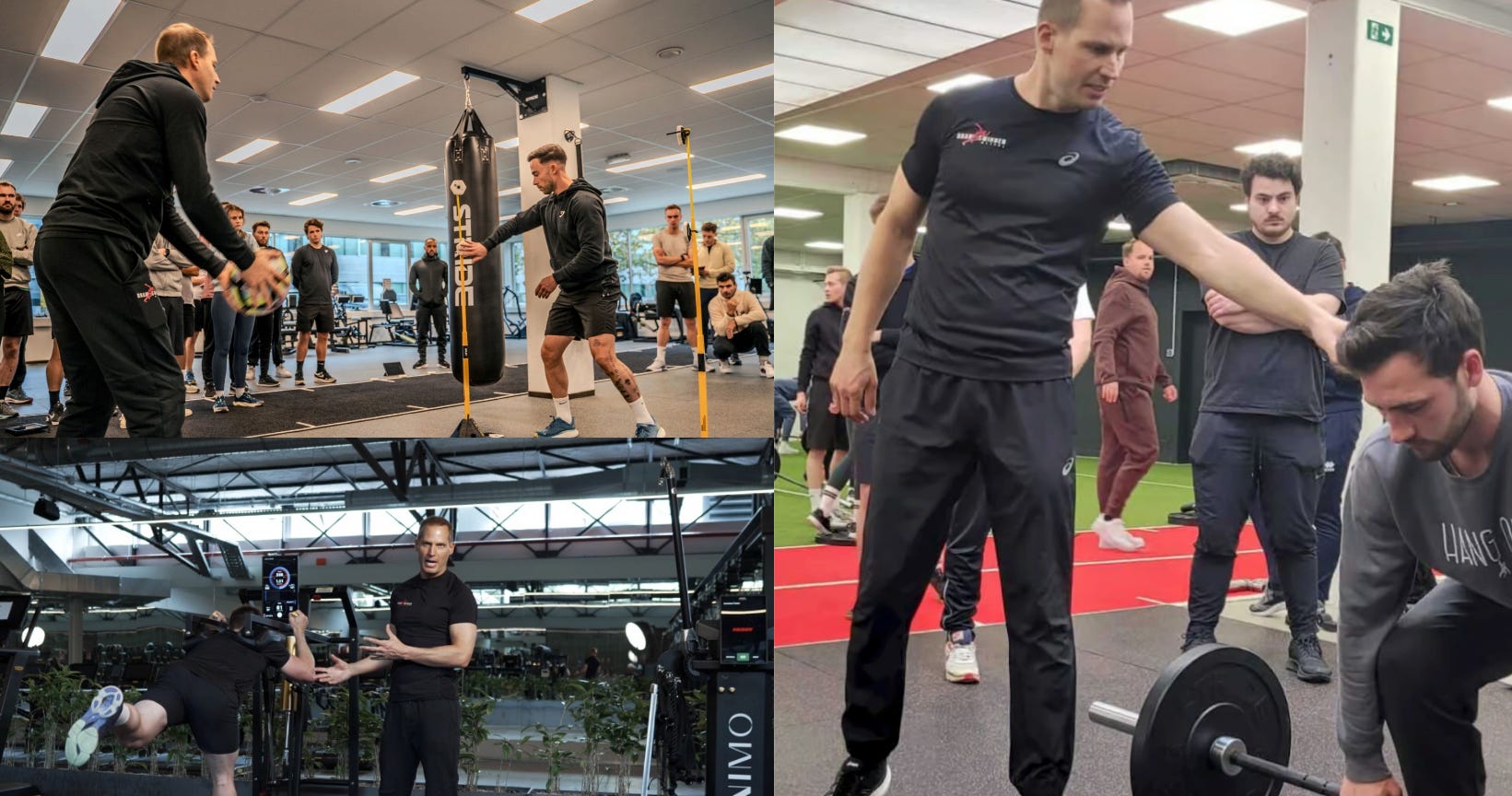
Pictures: Bram Swinnen
You can watch the video interview below by clicking on the Youtube link. You can also listen to the audio interview by clicking on the link at the top of the page:
📝Show Notes: During the interview with Bram, we discussed his background in sports science and rehabilitation and his belief that there should be no clear separation between rehab and performance. He shared his experience working across elite sports, including basketball, football, and track and field, and explained how this integrated approach led him to focus on return-to-play, injury prevention, and long-term performance development. Bram also outlined how his work at Integrated Performance Training supports professional teams and federations through consulting, education, and applied sports science.
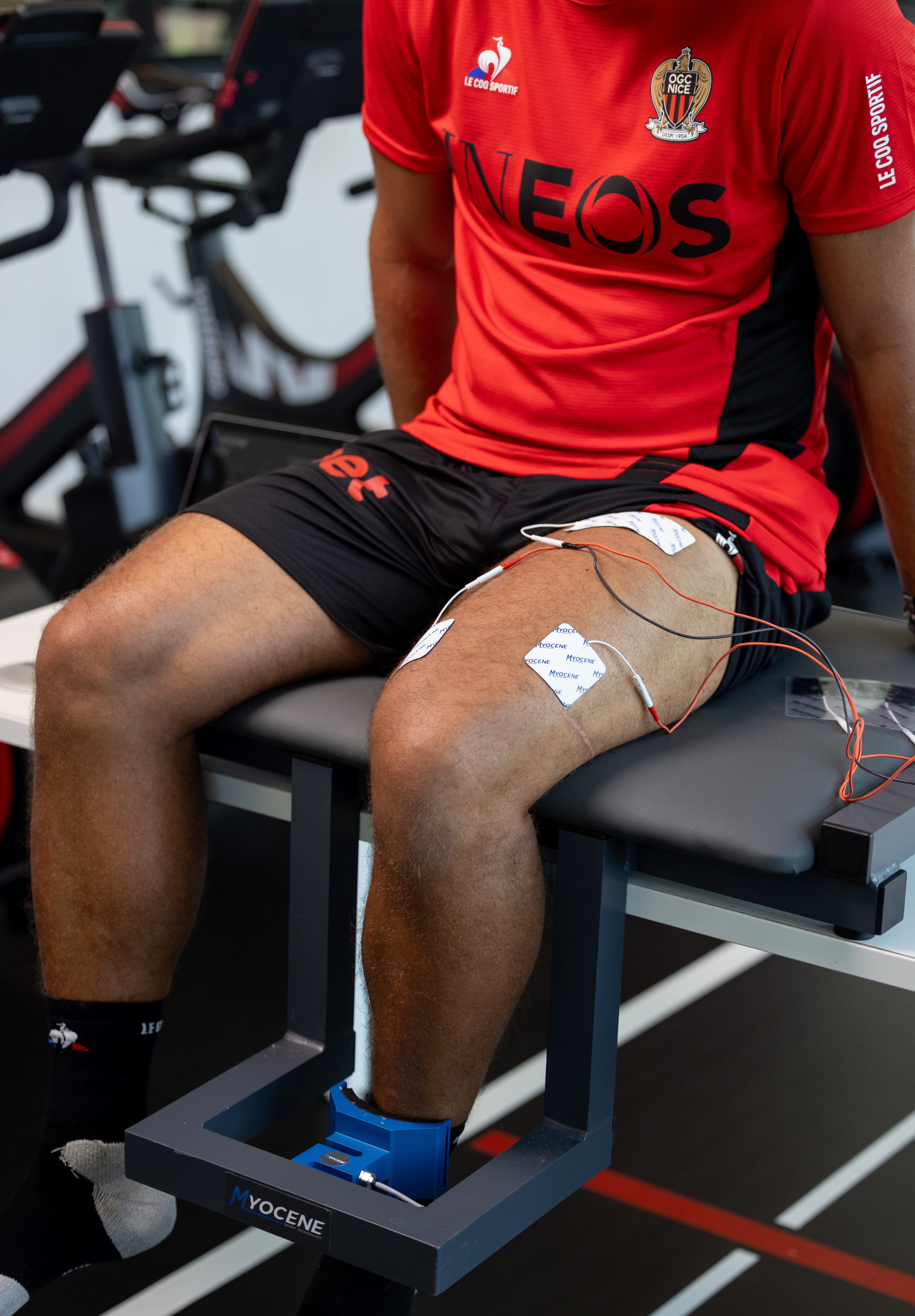
Picture: Myocene solution
During the interview with Bram, we also explored how he uses Myocene in both performance and rehabilitation settings to objectively assess neuromuscular fatigue. He explained how daily microdosing allows him to embed testing into training, adapt workloads in real time, and avoid the accumulation of unmanaged fatigue. A key theme of the discussion was Myocene’s value in rehabilitation, particularly after serious injuries such as ACL reconstruction, where neuromuscular inhibition can limit progress. Bram emphasized that having an objective, motivation-independent measure helps ensure training and rehab sessions are truly effective and better aligned with the athlete’s underlying neuromuscular needs.
You can read the full transcript of the podcast interview with Bram located at the top of this blog post.
Here are the quotes from the interview with Bram:
Q1. Can you briefly introduce yourself, your background, and the work your company does in performance and recovery?
“My background is in sports science and rehabilitation. I studied a Master’s in Sports Science and also a Master’s in Physical Therapy and Rehabilitation because I really wanted to understand everything about the body. Over time, I realized that I love rehab, I love performance, and especially blending the two. For me, there is no clear separation between rehab and performance — it’s all about return to play, prevention, and long-term development.”
“I started my career in professional basketball, working with several EuroLeague teams and NBA players during the off-season. Later I moved into professional football, as well as track and field, cycling, and other sports. About four years ago, we founded Integrated Performance Training, where we provide consulting, education, and in-house courses for professional teams and Olympic federations around the world.”
Q2. How and when did you start using Myocene, and what role does it play in your training and rehabilitation today?
“I’ve been using Myocene for almost a year now, both in performance and in rehabilitation. In performance, its value is quite obvious — it’s widely used to monitor neuromuscular fatigue, which is a major limiter of performance and also increases the risk of injury.”
“In rehabilitation, it’s less commonly used, but for me it has a lot of value. After serious injuries like ACL reconstruction, there is often a corticospinal inhibition, meaning the brain is no longer able to activate the muscles the way it used to. With Myocene, I can measure before and after rehab sessions and see whether the exercises are actually effective in activating the muscles.”
Q3. You regularly use Myocene through microdosing—can you explain how you apply this during training sessions and why this approach works for you?
“One of the biggest advantages of microdosing is that you gather data on a daily basis. Everything we do in training becomes testing — we don’t need to schedule separate testing sessions. That means the data is always current and always relevant.”
“Athletes or patients come into my facility, and before they even get dressed, I run a Myocene test. It takes about one and a half minutes, and it already gives me a clear idea of their neuromuscular status. I then use that information as part of an autoregulated periodization approach, where the plan can be adapted based on recovery and fatigue from previous days.”
Q4. How does Myocene support neuromuscular performance and help reduce or prevent neuromuscular fatigue from your experience?
“Because neuromuscular fatigue is measured on a regular basis, you can detect it earlier and adjust training or rehabilitation loads accordingly. This allows you to prevent the athlete or patient from going deeper and deeper into neuromuscular fatigue.”
“What I see very often, especially in rehab, is that fatigue accumulates over weeks without being noticed. At a certain point, you lose control of the situation. Myocene gives me a clear overview and helps me decide when it’s necessary to adapt the training plan or periodization to stay in control.”
Q5. What makes Myocene different or unique compared to other supplements or recovery strategies you’ve used?
“The method behind Myocene is based on decades of scientific research, so it’s reliable and accurate. That’s extremely important when you’re making decisions about load management and rehabilitation.”
“What really makes it stand out for me is that it’s fast, simple, and objective. It takes one and a half minutes, requires no warm-up, and it doesn’t rely on motivation or intent from the athlete. That makes it a very strong complement to other performance metrics, which often depend on how motivated or fresh the athlete feels that day.”
Q6. Who do you think Myocene is most useful for, and how would you recommend athletes or practitioners start using it?
“We see more and more evidence that after injuries like ACL reconstruction, tendinopathies, or muscle injuries, there is a significant inhibition from the nervous system. Even two years after an ACL reconstruction, many professional athletes are still unable to fully activate the quadriceps, which compromises strength and rate of force development.”
“For me, the biggest value of Myocene is that it allows me to evaluate whether a rehab workout is actually effective — whether it truly activates the muscles and addresses the underlying problem. That’s why it’s extremely useful in rehabilitation, but also for athletes where load management and neuromuscular fatigue are critical.”
You may also like:
🎙️ Upside Video Chat with Raphaël Ravet, Chief Commercial Officer of Myocene, a Leading Belgian Based Sports Tech Company.

Today we have the honor of interviewing Raphaël Ravet, the Chief Cmmercial Officer of Myocene, a leading Belgian based sports tech company.


