
This week we had the honor to interview a group of NCAA sports performance experts.
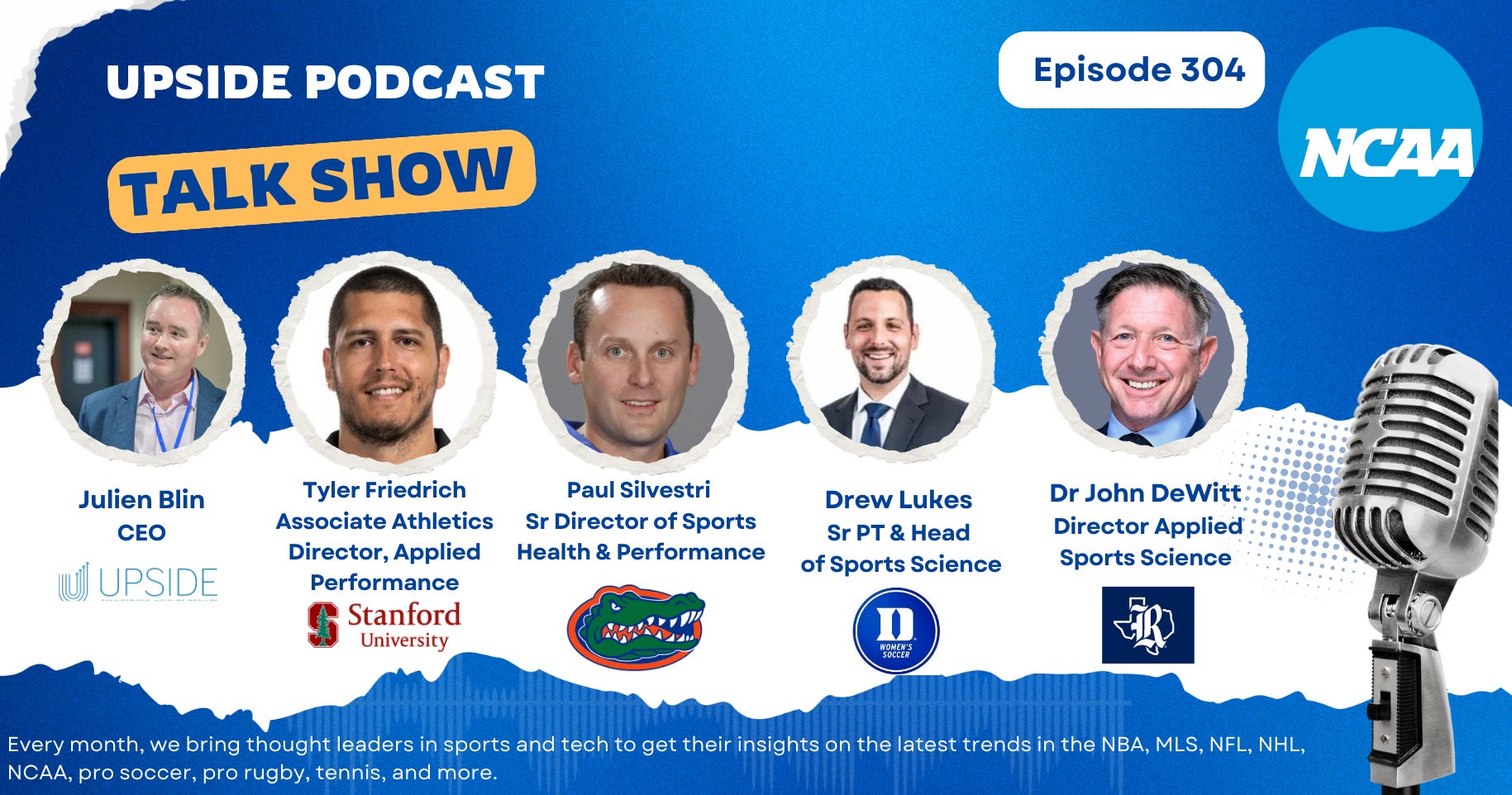
Dr. John DeWitt, Director of applied sports science in the athletic department and a faculty member, Rice University (NCAA team).
Paul Silvestri, Sr director of sports health and performance, University of Florida football (NCAA team).
Drew Lukes, Senior PT at Duke University and the head of sports science, Duke university’s women soccer team (NCAA team).
Tyler Friedrich, Associate Athletics Director, Applied Performance at Stanford University (NCAA team).
You can watch the video interview below by clicking on the Youtube link. You can also listen to the audio interview by clicking on the link at the top of the page:
📝Show Notes: Through this interview, we touched on the following questions related to the NIL:
Q1. With the NIL, the transfer portal, are we actually developing NCAA athletes anymore, or are we mostly managing them—and how has that changed your daily job?
Q2. How has NIL changed the power dynamics around injury, rehab, and performance—and what boundaries are hardest to protect right now?
Q3. Have you changed how you document, communicate, or educate athletes because of NIL?
Q4. If the NCAA landscape keeps evolving the way it is, what does the ‘ideal performance staff’ look like in 5 years—and what skills will matter more than certifications?
You can read the full transcript of the podcast interview located at the top of this blog post.
You can leave a comment by clicking on the button below:
Here are some of the best quotes of our conversation with them:
Q1: Development vs. Management with NIL/Transfer Portal
Dr. John DeWitt:
“The best source of data on an individual is their own data. And when people are leaving, we become more about managing than developing... The model of getting a guy when he is 17 years old and focusing on getting him to where he needs to be when he is 21 or 22—I think for a lot of places, that’s going out the window.”
“We’re looking at more of a professional model where you get someone and you’re trying to keep them for as long as you can until they walk out the door.”
Tyler Friedrich:
“There is a little bit of development if we’re getting kids after their freshman year, but even then, it’s all about where are they now... The kicker is they don’t get the benefit of those processes in place for four years where we can really get a good sense of who they are and train them up and develop them. They only get that benefit for one, two, three seasons at most.”
Paul Silvestri (University of Florida Football):
“We’re trying to get as much data as humanly possible prior to them even setting foot on campus for the visit... There’s a lot of money going out to these individuals, and if you don’t know what you’re paying for and what you’re going to get back in return—at least from an injury history and performance standpoint—you can make some huge misses.”
Q2: Power Dynamics Around Injury, Rehab, and Performance
Paul Silvestri:
“The biggest thing that’s changed drastically in the last couple years is that every one of these athletes I deal with at Florida now has an agent, and we’re going through that process of navigating second opinions. Our team doctors are fantastic—I’d put them up against anybody in the country—but we’re still navigating that process just like a lot of the pros do.”
Drew Lukes:
“I still try to keep the important thing at the forefront, and that is: do what’s best for the kid. I think it’s really easy to lose sight of what’s important when money starts flowing around. For me, I just have to continue to remind myself of that mantra: do what’s best for the kid.”
Tyler Friedrich:
“It’s really easy to get caught up trying to do the thing that makes the athlete happy or what they think they want, because you have an agent chirping or they’re a big money guy coming in. But we need to do what we think is best and utilize our skill sets and training to provide the best training, recovery, nutrition—whatever it is.”
“The draw of ‘we can develop you for professional or Olympic level’ isn’t quite as much as it was five or ten years ago. Now, you can have all those things and we’re still making those sales pitches when recruiting. But if someone’s going to offer a hundred thousand dollars more to a softball player, for example, it’s probably hard for that kid to turn that down.”
Question 3: Documentation, Communication, and Education Changes
Tyler Friedrich:
“We’re trying to centralize and standardize everything we’re doing—whether it be the tests we’re running, how we’re running them, how often we’re running them, how we’re programming... literally everything. We’re taking a more critical eye to all of our processes.”
“The last thing you want is to have an athlete sign an NIL agreement—a financial agreement with the university—and then claim negligence or improper training and documentation... We want to make sure we’re buttoned up and doing things at a professional level.”
Paul Silvestri:
“Before, if a kid transferred, people would call and you would just talk to them about their injury history, kind of off the cuff. Now it’s ‘give me a release from that kid,’ because there’s just too much money involved. If I say something about their medical information and they didn’t sign off on it, there’s the possibility of lawsuits... Everything just has to be dialed in now. There’s really little margin for error.”
Drew Lukes:
“We should already be documenting well, communicating well, and educating our athletes. Maybe what NIL has done more than anything is give us another kick in the butt to make sure our T’s are crossed and our I’s are dotted... It adds a magnifying glass to keep us on our toes and make sure we don’t lose sight of the importance of those things that aren’t as fun in our job.”
Q4: The Ideal Performance Staff in 5 Years
Dr. John DeWitt:
“Because the NCAA landscape is becoming more like a professional landscape, there has to be recognition from the university or leadership that people in these positions are fulfilling a major role... which means you have to rethink how you compensate these people.”
“The ideal performance staff may have to start branching out into specialists... maybe you have a sprinting specialist or a baseball technique specialist... The idea of a strength and conditioning coach doing five things—I think that’s got to stop.”
“I’m wondering how many of these athletes are coming in with their own trainers, just like in the pros. Now you’re going to have a situation where you have a team coach and then 17 guys with 17 different coaches. There has to be a way to integrate all these things.”
Paul Silvestri:
“This is still a personal business. It’s still a relationship business. At the end of the day, you have to be able to build trust with your athletes, and that takes communication and relationship building. That’s the core of it all. You can collect all the data you want, but if you don’t have trust from the athlete, it really doesn’t matter.”
Tyler Friedrich:
“Athletes, if they’re transferring year over year, will have several opportunities in front of them. They’re like free agents in professional sports. It’s about showing them our organization can help you reach your short and long-term goals... I don’t see NFL teams reducing staff. They’re adding staff because they want to become an attractive destination.”
“I would like it to go to the point where we see an increase of practitioners... Yes, work on the money and have the money for the athletes, but the flip side is: look, athlete, not only can we pay you, but we can also take care of you.”
You may also like:
🔥Upside NCAA Group Chat with Paul Silvestri (Florida Gators/NCAA), Drew Lukes (Duke University/NCAA), Dr John DeWitt (Rice University) On Social Media Stress, Biggest Hidden Performance Gap, and More

This week we had the honor to interview a group of NCAA sports performance experts.
🔥Upside NCAA Group Chat with Eric Renaghan (University of Miami/NCAA), Drew Lukes (Duke University/NCAA), Dr John DeWitt (Rice University), Brandon DeSantis (James Madison University/NCAA)

This week we had the honor to interview a group of NCAA sports performance experts.


