

Today we have the honor of interviewing Manfredi San Germano, Founder of Beyond Blood Diagnostics, a spinout of Imperial College in the UK. Beyond Blood Diagnostics is a deep tech startup specialized in blood sensor diagnostics.

Beyond Blood Diagnostics is a deep-tech company that has developed a portable, lab-grade blood analysis device designed to bring routine blood testing out of centralized labs and into everyday environments such as homes, training facilities, and remote settings. Its core product miniaturizes a standard blood count test into a rugged, handheld system that uses a simple finger-prick sample and delivers results in minutes, without the need for clinical supervision or sample shipping.
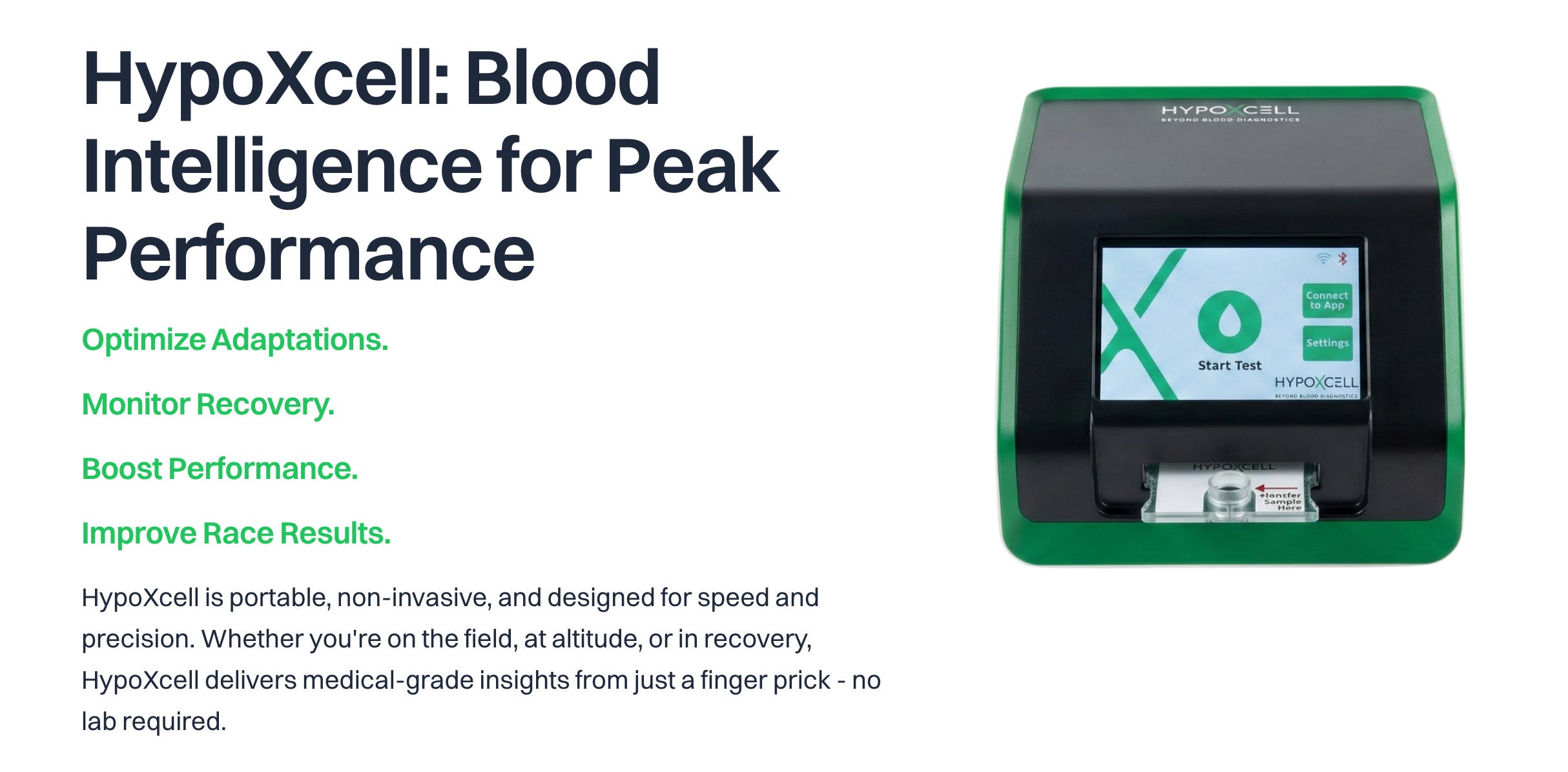
Picture: HypoXcell, Beyond Blood Diagnostics’ solution
By measuring key biomarkers such as red blood cells, hemoglobin, mean cell volume, and related indicators of oxygen-carrying capacity and physiological adaptation, the platform enables more frequent, decentralized monitoring for athletes, teams, and individuals. The system is built for real-world use—portable, precise, and robust enough to travel—making it particularly valuable for elite sports, endurance training, and other performance or readiness use cases where fast, reliable blood insights can directly inform decisions.
You can watch the video interview below by clicking on the Youtube link. You can also listen to the audio interview by clicking on the link at the top of the page:
Here is a video explaining how the technology works:
📝Show Notes: During this interview with Manfredi, we discussed his background in biomedical engineering and how his clinical experience led to the creation of Beyond Blood Diagnostics and its portable, finger-prick blood testing device. He explained how the product enables lab-grade blood analysis outside of traditional hospitals, allowing athletes and teams to monitor training adaptation, oxygen-carrying capacity, and potential overtraining more frequently. We also covered key trends and gaps in the blood analysis market, the main benefits teams see from faster and more decentralized decision-making, Beyond Blood’s competitive advantages in precision and portability, and the company’s near-term focus on regulatory approval, new biomarkers, and partnerships.
You can read the full transcript of the podcast interview with Manfedi located at the top of this blog post.
Here are the quotes from the interview with Manfredi:
1. Your Background
“I started my work in the hospital at Hammersmith in London, one of the biggest hospitals for surgery, working at the National Heart and Lung Institute together with Imperial College on new cell detection technologies. While I was working there, I began to realize how dependent blood diagnostics were on centralized hospitals and labs, and how difficult it was for people to access frequent testing.”
“That’s when it became clear to me that there was a real need for a way of testing blood outside of the clinic and into people’s homes, without needing to be under constant clinical supervision.”
2. Your Company & Product
“What we’ve developed is essentially what happens every single day in the lab—a routine blood test called the blood count—but we’ve miniaturized it so that you can perform this test in your own home without supervision from a clinician.”
“You don’t have to send the blood sample to a lab like most companies do today. You place the sample into the device, and the results are right in front of you in a matter of minutes, directly on your desk.”
3. Main Use Cases
“The biggest use case for professional athletes is understanding whether their training is actually doing what it’s supposed to do. A lot of athletes are training hard, but they don’t always have direct insight into how their physiology is adapting.”
“Monitoring oxygen-carrying capacity is not easy to do routinely, especially when athletes are traveling or training at altitude. We provide a simple finger-prick blood test that measures hemoglobin mass, red blood cell count, mean cell volume, and reticulocytes, all of which are key markers for performance.”
4. Blood Analysis Market & Trends
“One of the biggest problems for teams today is the inability to do blood testing in a decentralized way and at scale. Many athletes train alone or are coached remotely, and it’s just not practical to send them to hospitals for intravenous blood draws on a regular basis.”
“There’s also a regulatory and logistical challenge. Having a needle in your arm before a race isn’t always easy to justify, whereas finger-prick testing removes a lot of that friction and paperwork.”
5. Benefits for Teams
“The biggest payoff is faster decision-making for the coach, the athlete, and the team doctor. You get clear proof of whether the athlete is adapting to altitude or training, rather than relying on assumptions or delayed lab results.”
“When you test more frequently—every few days instead of once every few weeks—you get a much clearer picture of what’s really happening inside the athlete and whether they’re adapting or potentially overtraining.”
6. Competitive Advantages
“Usability is a key differentiator for us. Being able to perform lab-grade diagnostics without a trained healthcare professional taking blood is extremely difficult, and that’s something we’ve focused on from the very beginning.”
“Another major advantage is ruggedness. Traditional blood analyzers rely on optics, lenses, and cameras, and if you drop them, they break. Our device is built to be carried in suitcases and used in the field, which is why it attracted interest and funding from NATO.”
7. What Teams Like About the Product
“Precision is always the most important thing. Teams will consistently choose precision over other factors if they have to make that trade-off.”
“Portability also matters a lot because teams travel constantly. The device doesn’t need to be ultra-small, but it needs to be easy to carry, reliable, and accurate when it’s used in different environments.”
“The finger-prick method is another thing teams really appreciate because it removes many of the barriers associated with traditional blood draws.”
8. Business Model
“We operate through several channels, including affiliate programs, distribution partners, and direct-to-consumer sales, but for teams we usually work on highly customized plans because each organization has different requirements.”
“We also provide an app and web platform where users can track their metrics over time, understand trends, and get insights based on factors like age, weight, and physiology.”
“Our tests cost around £30 per test, which is significantly cheaper and much faster than most hospital-based blood tests.”
9. Plans for the Next 12 Months
“Over the next 12 months, our main focus is completing our clinical trials in the UK and moving toward CE certification, as well as progressing with FDA approval in the United States.”
“We’re also working on adding additional biomarkers through partnerships, particularly around nutrition and supplements, to better understand how different interventions impact blood health and performance.”
“We’re still very early in our journey, but we’re actively looking to partner with teams across different sports and performance environments.”


