

Today we have the honor of interviewing Pat Byrne, a sleep expert and the founder of Fatigue Science,
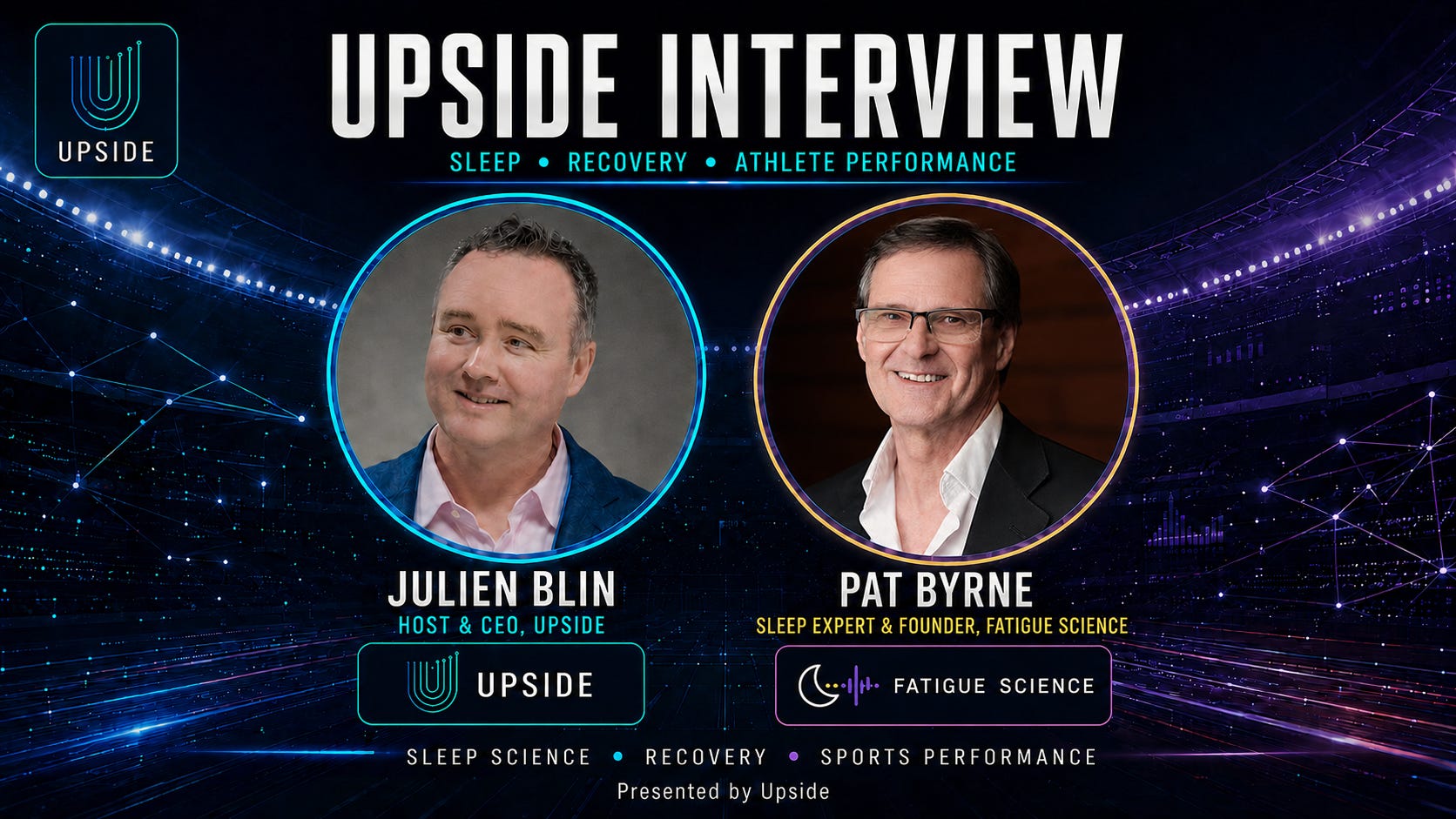
Pat Byrne is a leading sleep and fatigue-management expert with more than two decades of experience studying how sleep, travel and circadian rhythms affect safety and human performance. After spending over 20 years in occupational health and safety, he founded Fatigue Science, where he helped develop the Readiband—an FDA-cleared sleep and fatigue monitor combining actigraphy with U.S. military performance-prediction software. Byrne later spent seven seasons working with the Vancouver Canucks (NHL) and has supported approximately 20 professional sports organizations across the NHL, NBA, NFL, MLB and soccer, including the Seattle Seahawks and Dallas Mavericks. His work has helped teams identify sleep problems, evaluate fatigue risks associated with competition and travel schedules, and develop evidence-based strategies to improve athlete recovery, readiness and performance.
You can watch the video interview below by clicking on the Youtube link. You can also listen to the audio interview by clicking on the link at the top of the page:
📝Show Notes: During the interview with Pat Byrne, we discussed his journey from occupational health and safety into sleep and fatigue management, the personal tragedy that inspired his work, and how he founded Fatigue Science and helped the Vancouver Canucks (NHL) become the first professional sports team to use automated sleep-monitoring technology. We explored how teams can optimize sleep by adjusting travel, training, meetings and recovery schedules; why individualized support and confidential athlete data are essential; and why sleep quality can be just as important as duration. Pat also explained the limitations of consumer wearables, the importance of identifying the underlying causes of poor sleep, and the dangers of relying on marketing claims or flawed research.
We discussed the lessons from his book, Inconvenient Sleep: Why Teams Win and Lose, practical recommendations for building an effective fatigue-management strategy, and real examples of how schedule changes, strategic naps and better sleep opportunities have helped elite athletes perform more effectively.
Order Pat’s book by clicking on the button below:
You can read the full transcript of the podcast interview with Pat located at the top of this blog post.
Here are the quotes from the interview with Pat:
1. Background and elite sports
“My background is in occupational health and safety. Then one day, my young nephew and godson—a local basketball player—was working long hours, fell asleep while driving home, drove his car off a cliff and died. That changed my entire approach. I started contacting people around the world and asking, ‘What do we know about people falling asleep, and what can we do about it?’ They all said, ‘We don’t know.’ That is how I began my journey into sleep and fatigue.”
“In occupational hygiene, you have to measure something if you want to improve it. Whether you are measuring noise, dust, radiation or chemicals, you need to know whether the solution you put in place actually works. The problem with sleep and fatigue was that there wasn’t anything available to do that effectively.”
“I founded Fatigue Science, where we created the world’s first automated sleep watch. We could measure sleep, but we also needed to understand fatigue. The more tired you are, the slower your reaction time becomes and the greater the risk of an accident.”
“I sent Mike Gillis and the Vancouver Canucks (NHL) a letter saying, ‘I have this technology if you are interested. I haven’t worked in sports before, but let’s check it out.’ I didn’t hear anything for two months. Then I was invited to present to the team. After an hour and a half, he asked, ‘When can you start?’ The Canucks became the first professional sports team in the world to wear sleep watches.”
“If the entire team lost approximately 10% of its reaction time, it lost the vast majority of those games. At the beginning of a season, we could identify 12, 13 or 14 potentially problematic games and then test different solutions: What if we left one day earlier? What if we canceled a practice? What if we changed the travel schedule?”
2. Approach to sleep optimization
“From the team’s perspective, the first responsibility is to create sleep opportunities for the players. What time are practices? What does the meeting schedule look like? What demands are being placed on the players, particularly around travel? You have to look at the entire picture and ask, ‘Where are the opportunities we are giving these players to sleep?’”
“If you return from a Monday night football game and then wake the players at 7:00 the following morning for a meeting, why are you doing that? Teams will say, ‘We have always held meetings at that time.’ My response is, ‘Then don’t do it.’”
“The other side is working individually with players. Sometimes athletes believe they have a sleep problem when they actually do not, and understanding their sleep can remove some of that anxiety.”
“We work with athletes as individuals, but we use aggregated data to advise the team. We can say, ‘We understand how the group sleeps at home and on the road, so here are the changes that could create more sleep opportunities for the players.’”
“The entire idea is to create sleep opportunities. With the Canucks, operational changes reduced the time between the final whistle and the plane taking off to approximately one hour. That gave the players an additional hour to an hour and a half of sleep between back-to-back games.”
3. Latest trends and technology
“At Fatigue Science, we did not focus on the consumer market because our thinking was: we can sell people these devices, but they will not know what to do with the data. That is still true today.”
“Poor sleep is not a disease that you can fix by putting a Band-Aid on it. Poor sleep is a symptom—and it can be a symptom of hundreds of things: a sleep disorder, mental-health issues, stress, diet or many other factors.”
“If an athlete is not sleeping, the first step is to determine why. Once we understand why the athlete is not sleeping, we can find an appropriate solution. Gadgets often try to fix the symptom instead of addressing the underlying cause.”
“Sleep is not only about how long you sleep; it is also about how well you sleep. Sleep quality is just as important as sleep duration.”
“The bouncing back and forth between time zones is extremely difficult on the body. We collected enough data with the Canucks to show the NHL that repeatedly moving the team across time zones was creating problems. The league listened and changed the schedule.”
“Collecting good data can help beyond the individual team. You can take the evidence to the league and demonstrate why scheduling or travel practices need to change.”
4. The book and common misconceptions
“Suzanne and I realized that every time we spoke with a coach, team or group of players, we were saying the same things repeatedly. We finally said, ‘Why don’t we write a book?’ It took several years and a great deal of research.”
“You should not get all your science from podcasts, marketing or the news. You should read the original research paper and judge the evidence for yourself.”
“What has happened in sports is that people have taken consumer products off the shelf and applied them to athletes. A lot of those products do not work.”
“People frequently claim that less sleep automatically produces a greater risk of injury, but some of those claims are based on old and deeply flawed research. People select the parts of a study that support what they want to tell athletes. Teams need to examine the quality of the original research.”
“Many teams simply do not have the time or personnel to work through the research and understand what works and what does not. That was one of the main reasons behind the book.”
5. Recommendations for teams and athletes
“I start with diagnosis: What are you doing, and why are you doing it? What does your travel look like? Who controls it? Are you creating the right opportunities and environment for players to obtain the sleep they need?”
“The Canucks’ players used to share hotel rooms. I asked the team, ‘Why do you do that?’ Everyone looked around and said, ‘We have always done it this way.’ I said, ‘Then stop doing it.’ The Canucks became the first NHL team to give every player an individual room. Today, that is incorporated into the collective bargaining agreement.”
“It is important to establish a firewall and have somebody the players can trust. With the Canucks, I was the only person who saw the individual sleep data. I worked privately with the players, while the team received aggregated information.”
“Teams abused individual sleep data by using it against players in contract negotiations or disciplinary situations. That damaged trust, and it is why many collective bargaining agreements now restrict teams from accessing that information.”
“A lot of teams parachute someone in to speak about sleep for 30 minutes or an hour, and then that person leaves. Of course that does not work. It is like bringing in a strength and conditioning coach for one hour, explaining how to get fit and then leaving the players on their own.”
“Having in-house sleep expertise can help significantly. Players need confidential access to someone they trust, without worrying that asking for help will affect their position, contract or career.”
6. Athlete stories
“Alex Burrows had a baby girl during the playoffs. When he was interviewed after a game, the first thing he said was, ‘My wife is really great. She lets me sleep in the other room so I can get the sleep I need for my game.’ I remember thinking, ‘I got through to him.’”
“I worked with an international athlete who believed sleep consistency meant setting an alarm and waking at 7:00 every morning, even while competing in Asia. I asked him, ‘Why are you waking at 7:00?’ He said, ‘Because I always wake up at 7:00.’ I told him, ‘If your body needs sleep and you have nothing else to do, sleep in. Take every opportunity you can to sleep.’”
“A 30-minute nap in the early afternoon—usually around 1:00 or 2:00—can be ideal for athletes. If the nap becomes too long, the athlete may enter deeper sleep, experience sleep inertia and potentially have difficulty falling asleep that night.”
“Ken Griffey Jr. was once criticized after being found asleep in the clubhouse when it was his turn to bat. Years later, when I worked with the Mariners, the team installed nap rooms. They completely changed their philosophy—from criticizing players for sleeping to helping them obtain more sleep so they could perform on the field.”
7. What is the best way to reach out to you?
“You can get ahold of me through my LinkedIn account or by email. I receive a lot of emails, but I am always happy to hear from people. My email address is pat.byrne.sports@gmail.com.”
You may also like:
😴 The Sleep Tech Monitoring and Analysis Market

Over the past decades, sleep has become an issue for many individuals across many generations. Below is a compilation of key statistics from the American Sleep Association that relate to sleep and sleep disorders in the US:

🔎📈 Upside Study: The Impact of Sleep Interventions on Athletic Performance: A Systematic Review

Title: The Impact of Sleep Interventions on Athletic Performance: A Systematic Review


