
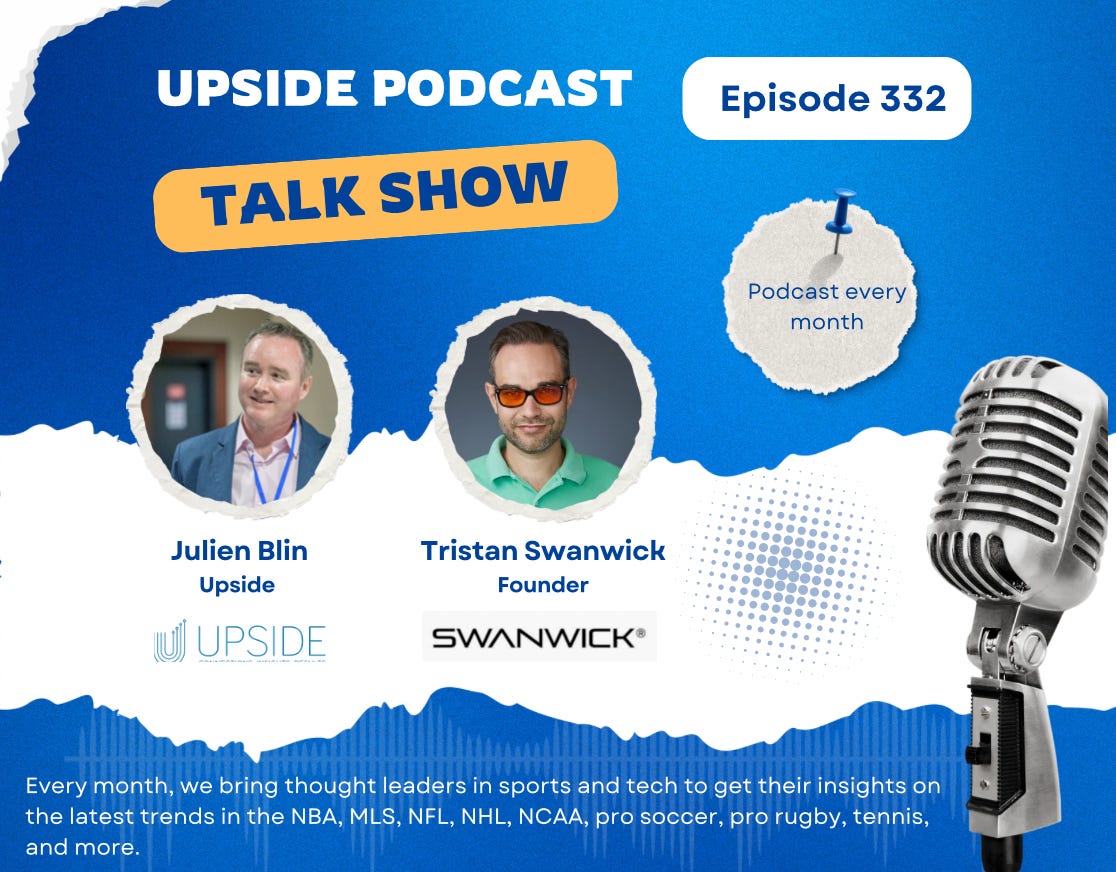
Today we have the honor of interviewing Tristan Swanwick, the founder of Swanwick, a leading health optimization brand focusing on blue light management.
Swanwick is a health optimization company specializing in blue light management products designed to improve sleep, recovery, and overall well-being. Its flagship sleep glasses filter up to 99% of blue light, helping the body naturally produce melatonin even when users are exposed to artificial lighting from screens, LED lights, or stadium environments. The company also offers Focus and Relax glasses for daytime productivity and evening wind-down, as well as a growing range of circadian-friendly lighting products.
Swanwick's key competitive advantage is its strong scientific foundation, with its products validated through independent, third-party, peer-reviewed research demonstrating improvements in sleep quality and sleep onset.
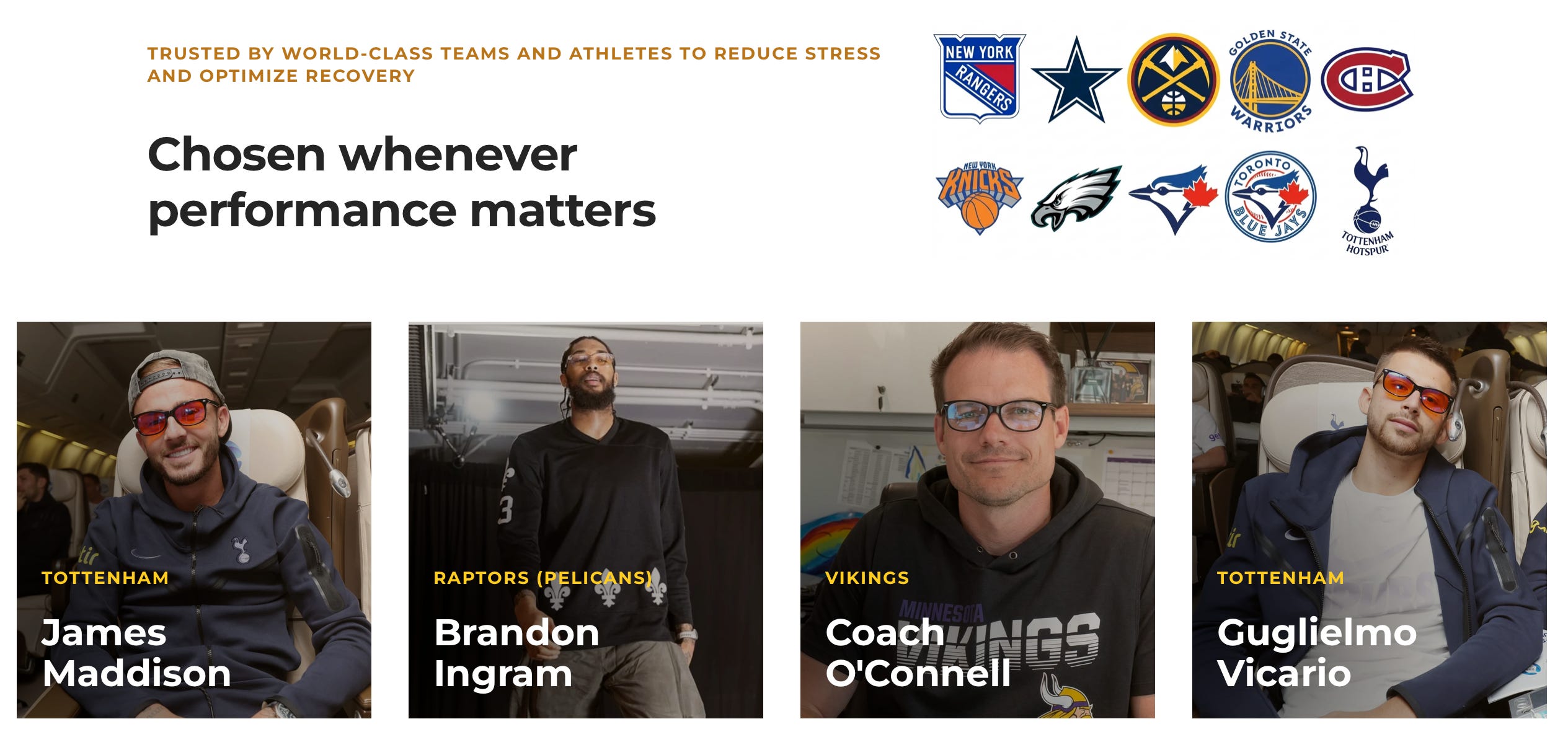
Trusted by professional sports teams across the NBA, NFL, NHL, and Premier League, Swanwick's solutions provide athletes, coaches, and performance staff with a simple, non-invasive, and cost-effective way to support recovery, manage jet lag, reduce the impact of artificial light exposure, and optimize performance.
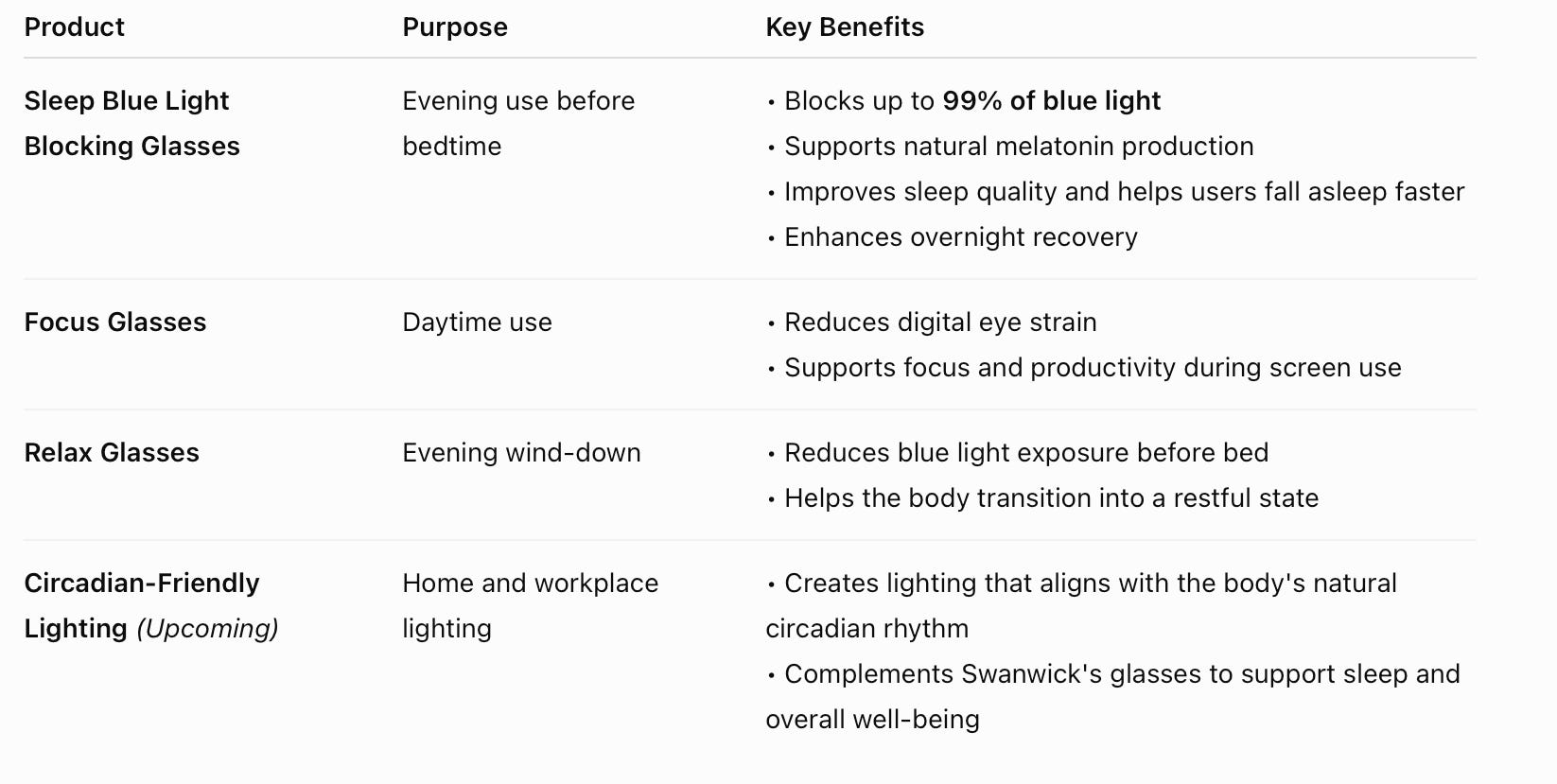
Product Portfolio Summary
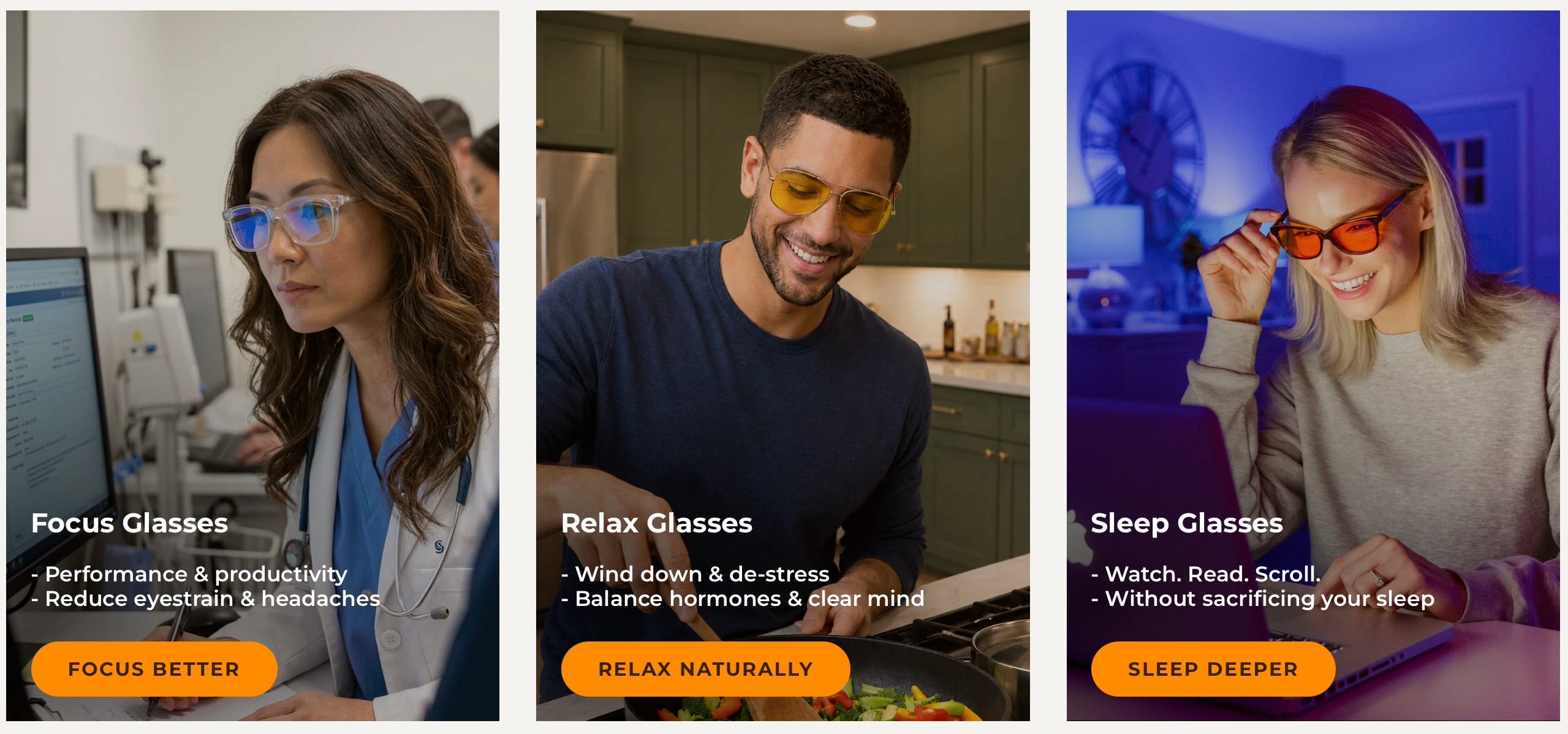
Swanwick offers a range of products designed to optimize circadian health by managing blue light exposure throughout the day. Its portfolio includes Sleep, Relax, and Focus blue light blocking glasses, as well as a growing line of circadian-friendly lighting products that work together to improve sleep quality, recovery, daytime focus, and overall well-being.
Sleep Glasses – Improve sleep quality, recovery, and melatonin production by blocking up to 99% of blue light.
Focus Glasses – Support daytime productivity and reduce digital eye strain.
Relax Glasses – Promote evening wind-down and prepare the body for restful sleep.
Circadian Lighting (in development) – Lighting solutions that work alongside the glasses to optimize circadian health and overall well-being
Source: Swanwick, 2026
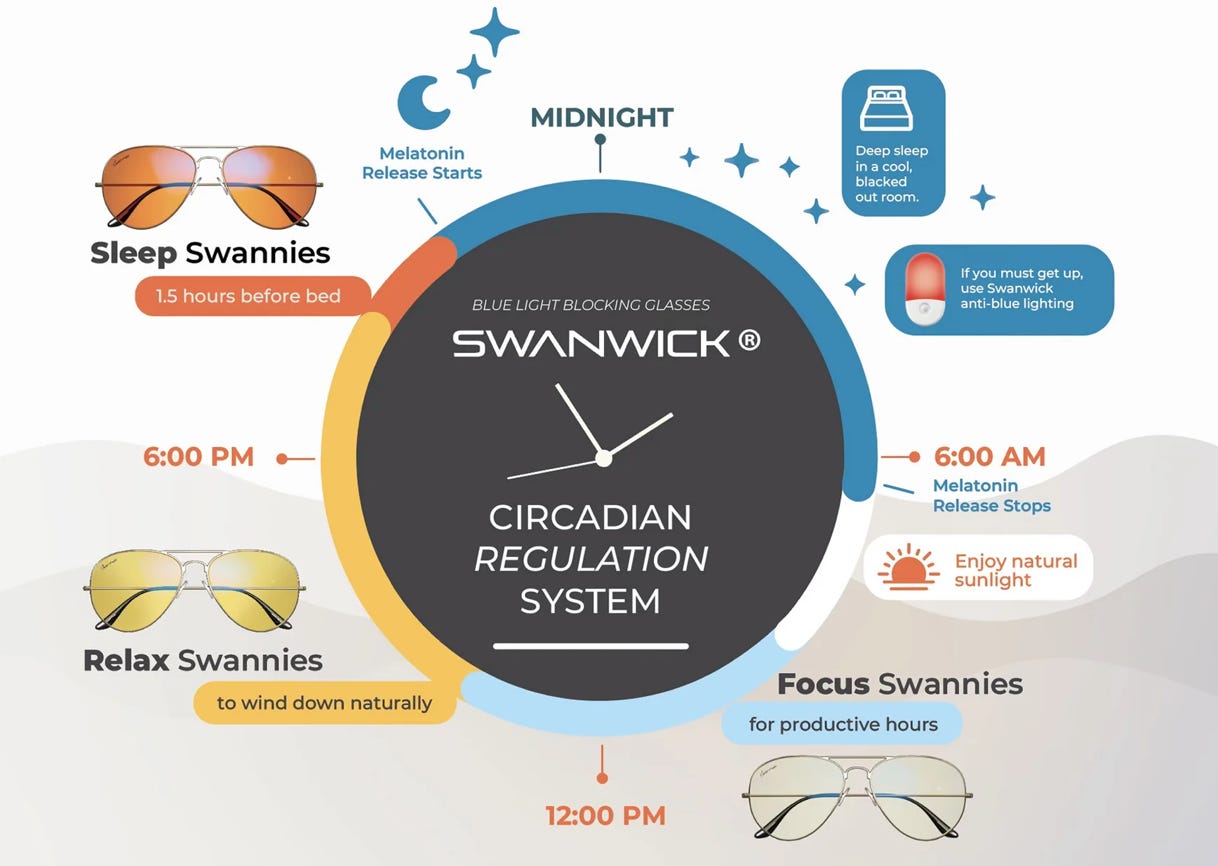
The Swanwick Circadian Regulation System is a 24-hour approach to managing light exposure in alignment with the body's natural circadian rhythm. By using different eyewear products at specific times of the day, the system aims to enhance daytime focus, promote evening relaxation, support natural melatonin production before bed, and improve sleep quality and recovery.
Swanwick Circadian Regulation System
Focus Swannies (Morning to Afternoon) – Designed for productive hours during the day. They help reduce digital eye strain while maintaining a healthy balance of light exposure during working hours.
Relax Swannies (Evening) – Worn after approximately 6:00 PM to reduce blue light exposure and help the body naturally transition into a relaxed state before bedtime.
Sleep Swannies (1.5 Hours Before Bed) – Worn about 90 minutes before sleep to block blue light, allowing melatonin production to begin naturally and preparing the body for restful sleep.
During Sleep – The goal is to achieve deep, restorative sleep in a cool, dark room. If users need to wake during the night, Swanwick recommends using anti-blue lighting to avoid disrupting melatonin production.
Morning (Around 6:00 AM) – Melatonin production naturally stops, and exposure to natural sunlight helps reinforce the body’s circadian rhythm and supports alertness for the day ahead.
Overall, the system promotes a 24-hour approach to circadian health, using different products and lighting strategies at specific times of day to optimize focus, relaxation, sleep quality, and recovery.
Source: Swanwick, 2026
Sleep Benefits Validated by Scientific Research
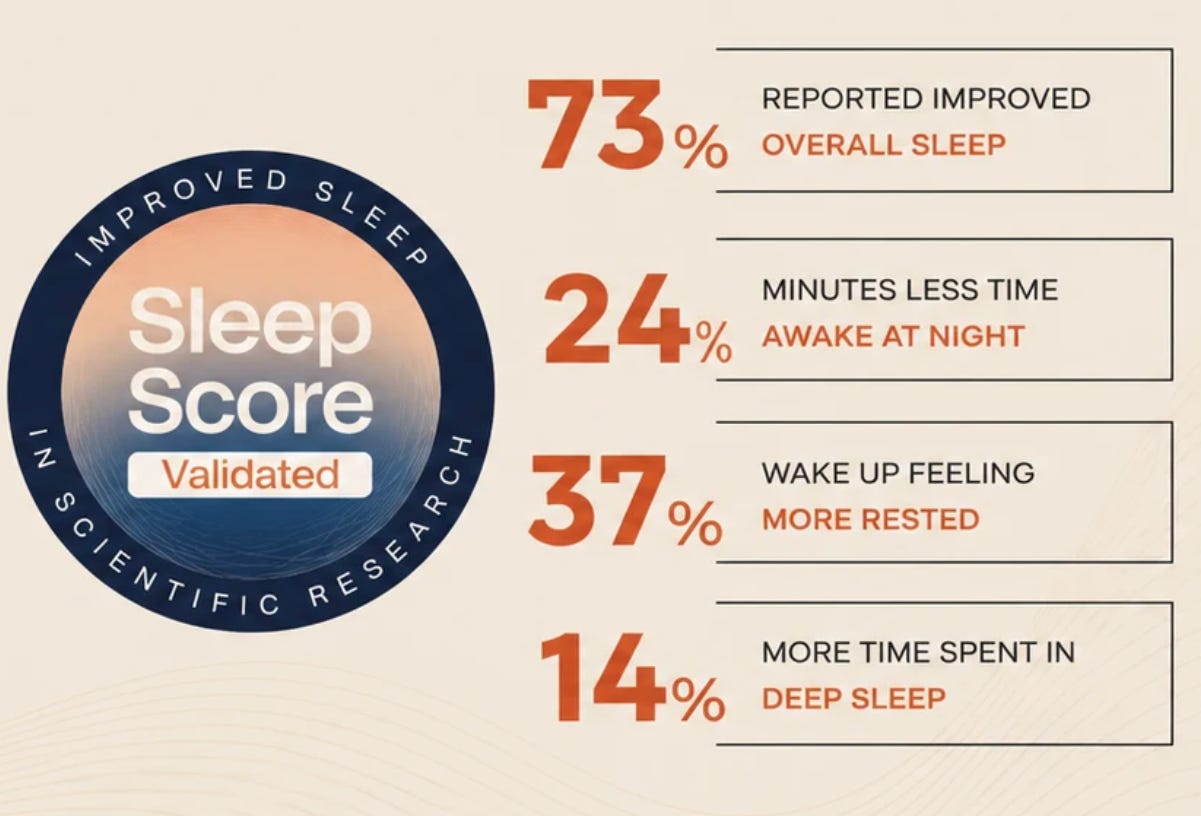
Swanwick highlights research demonstrating that its blue light blocking glasses can significantly improve sleep quality and recovery. According to the infographic, users reported the following benefits after wearing the glasses before bedtime:
73% improvement in overall sleep quality
24% less time awake during the night
37% increase in waking up feeling more rested
14% more time spent in deep sleep
These findings support Swanwick’s position that reducing blue light exposure before bed can enhance sleep quality, promote deeper restorative sleep, and improve next-day recovery and well-being.
Source: Swanwick, 2026
Impact of Swanwick Blue Light Blocking Glasses on Athletes and teams
Improves sleep quality and recovery by filtering up to 99% of blue light, allowing the body to naturally produce melatonin and supporting deeper, more restorative sleep.
Helps athletes recover after evening competitions by reducing the negative effects of bright stadium lighting, screens, and other artificial light sources that can delay sleep.
Supports travel and jet lag management, helping athletes adjust more quickly during long-haul trips and maintain better sleep routines.
Contributes to incremental performance gains, as better sleep and recovery improve physical, mental, and cognitive readiness for training and competition.
Backed by independent scientific research, giving professional sports organizations confidence that the glasses can meaningfully improve sleep quality and sleep onset.
Trusted by Elite Teams and Athletes
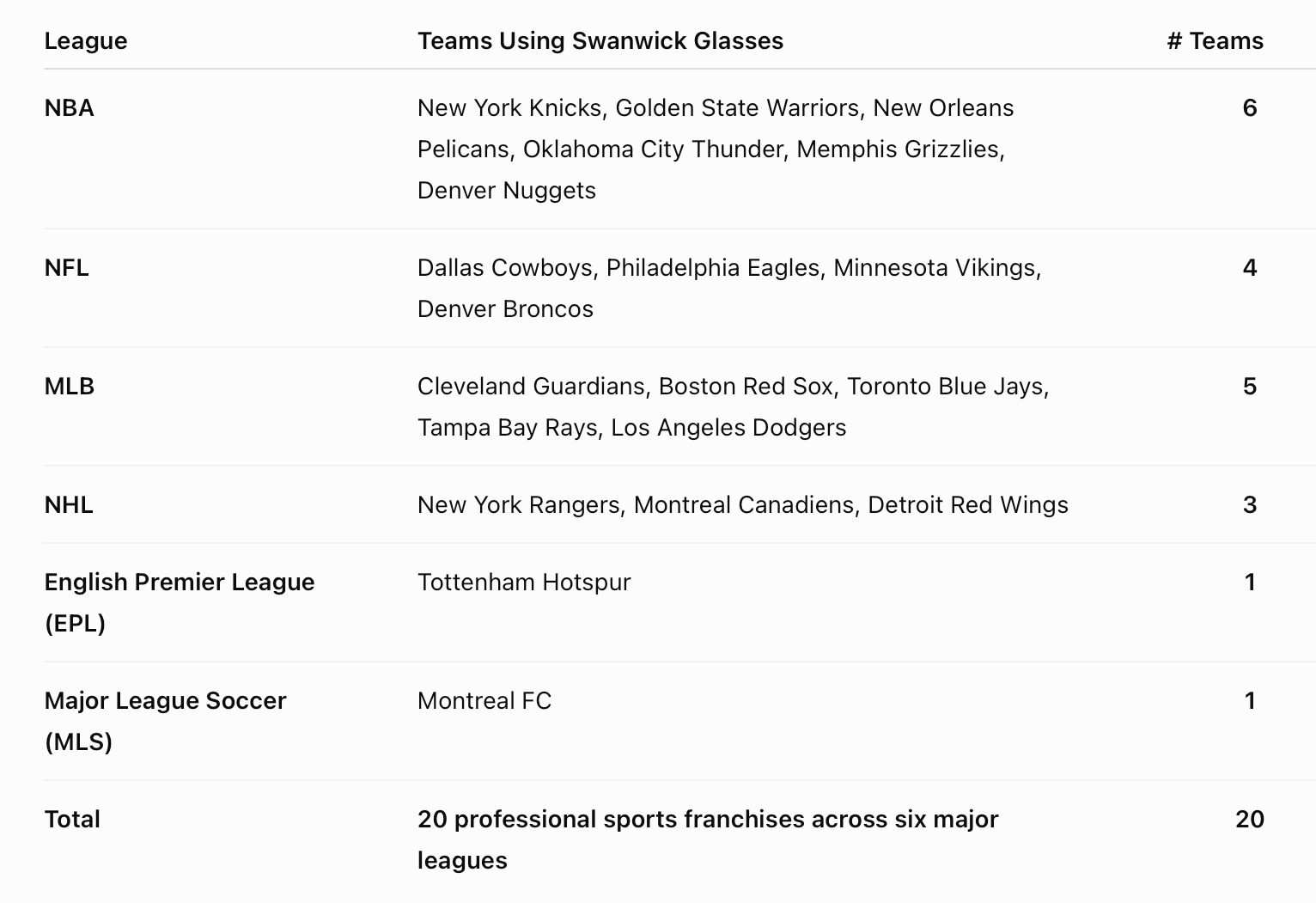
As shown in the table below, trusted by 20 professional sports teams across the NBA, NFL, NHL, and Premier League, Swanwick’s solutions provide athletes, coaches, and performance staff with a simple, non-invasive, and cost-effective way to support recovery, manage jet lag, reduce the impact of artificial light exposure, and optimize performance.
Source: Swanwick, 2026
You can watch the video interview below by clicking on the Youtube link. You can also listen to the audio interview by clicking on the link at the top of the page:
📝Show Notes: During our interview with Tristan Swanwick, we discussed how Swanwick has grown from a blue light blocking glasses company into a broader circadian health brand focused on improving sleep, recovery, and performance. Tristan explained the science behind managing blue light exposure, the growing adoption of Swanwick products by professional sports organizations, and the role of quality sleep in helping athletes recover, manage jet lag, and achieve incremental performance gains.
He also shared the company's competitive advantages, including its peer-reviewed scientific validation, and outlined Swanwick's plans to expand its product portfolio with circadian-friendly lighting solutions over the next 12 months.
You can read the full transcript of the podcast interview with Tristan located at the top of this blog post.
Here are the quotes from the interview with Tristan:
Q1. Tell me about your background.
“Before I tried my hand at entrepreneurship, I was a longtime newspaper journalist. Journalism taught me to be skeptical, ask questions, challenge claims, verify facts, and build relationships with people from all walks of life. You also become very curious and learn how to understand complex topics and communicate them clearly. It turned out to be excellent preparation for building a business.”
“Back in 2015, my brother, who was living in Los Angeles and becoming deeply involved in the early biohacking movement, approached me with the idea of starting a blue light blocking glasses company. People were already experimenting with crude solutions, and we thought we could build something specifically designed for the purpose that was also comfortable and stylish. That’s how Swanwick was born.”
Q2. Tell me about your company and product.
“The idea behind our product is simple. Artificial light, especially blue light, delays the body’s natural production of melatonin. If you can filter out those blue wavelengths, you give your body the opportunity to produce melatonin naturally, so when you go to bed your body is actually ready for sleep instead of trying to catch up.”
“Our sleep glasses filter out up to 99% of blue light. That means people can still use their phones, computers and modern LED lighting while significantly reducing the impact those lights have on their sleep. The goal is to let people enjoy modern technology without sacrificing recovery.”
“When we launched in 2015, the idea was to build a pair of glasses specifically designed for blue light management rather than having people wear ski goggles or safety glasses. We wanted something that worked, but that people would also feel comfortable wearing every night.”
Q3. What are the main use cases you are addressing in elite sports?
“Elite sport is all about incremental gains. Sports scientists have realized that it’s not just about what happens on the field or the pitch—it’s also about the rest and recovery. Sleep is fundamental to recovery because that’s when the body recovers physically, mentally and cognitively.”
“Athletes probably have it worse than anyone. They’re playing under extremely bright stadium lights, travelling on planes, staying in hotels, looking at their phones after games and being exposed to artificial light until midnight. We can’t change the schedule or eliminate artificial light, but we can help offset those challenges so they’re in a much better position to sleep and recover.”
“Jet lag has become another major use case. We’ve supplied entire travelling parties, including Tottenham Hotspur, with sleep glasses to help players manage long-haul travel between London and Australia, where jet lag can be a huge performance factor.”
“It’s not just athletes anymore. Coaching staffs, video analysts and data analysts spend countless hours in front of screens, so we’re increasingly providing products for them as well to help reduce screen fatigue and improve sleep.”
Q4. What are the benefits for teams to use your product?
“Our role is to help mitigate one of the biggest recovery challenges modern athletes face: constant exposure to artificial light after evening competition. If players can simply put on a pair of glasses after the game and keep them on until bed, they’re giving themselves a much better opportunity to sleep well and recover.”
“At the elite level, teams are open to trying anything that’s going to give them some sort of edge. Even a one or two percent improvement matters, and sleep is one of the few areas where relatively small interventions can potentially have a meaningful impact.”
Q5. What are your thoughts on the state of the blue light blocking glasses market and what are your competitive advantages? What do the teams like the most about your glasses?
“The market has become quite saturated. Unfortunately, there’s also a lot of misinformation, disinformation and wild marketing claims. There are products with completely clear lenses claiming they’ll improve sleep, but the science simply doesn’t support that.”
“One of the first things sports scientists tell us is, ‘The reason we came to you is because you actually have science, data and validation to back up what you claim.’ That’s what really separates us from many of the other products in the market.”
“We’ve gone above and beyond by validating our products through independent, third-party, peer-reviewed research. Studies showed people wearing our glasses got to sleep faster and slept better, and another independent study ranked our glasses as the top performer among 50 brands tested.”
“The consistent feedback we receive from teams is that they trust the science behind the product. These are billion-dollar organizations investing in athletes worth tens or hundreds of millions of dollars, so they want confidence that there’s real evidence supporting anything they introduce.”
Q6. Tell me about your business model.
“We’re still a direct-to-consumer business. Customers can buy through Amazon, but we generally prefer they come through our website because it allows us to provide the best customer service, answer questions directly and make sure people are getting the right product for their needs. We also work directly with professional sports organizations and their performance staffs.”
Q7. Any recommendations to teams who are looking to use blue light blocking glasses?
“I’d recommend starting with your most open-minded and influential players. Let them experience the product first and, if they like it, adoption tends to spread naturally throughout the team. That’s been the most successful approach we’ve seen across professional sports.”
“Blue light is a real issue, particularly for athletes, and you can’t control the environment all the time. Putting on a pair of glasses at the right time is a simple, low-cost solution to what is actually a very significant recovery challenge.”
Q8. What are your plans for the next 12 months?
“We have a clear roadmap of new products. We’ve expanded our lens categories to support people throughout the day and evening, and we’re now building a family of circadian-friendly lighting products because controlling the lighting environment is the other important piece of the puzzle.”
“You can filter light by wearing glasses, but you can also control the lighting around you. That’s why we’re expanding into lighting products that change throughout the day to better match your natural circadian rhythm.”
Q9. Best way to reach out to you?
“If you’re in the sports world, just reach out to us through our support email and let us know you’re interested. It’ll get passed directly to me, and I’m always happy to jump on a call, answer questions, provide recommendations or send samples so teams can try the products themselves.”
You may also like:

📚 Upside Studies: (1) The Impact of Daylight Exposure on Injured Athletes: Implications for Rehabilitation. (2) Sleep Study. (3) Pattern of Injuries in Basketball Players

Upside study: The Impact of Daylight Exposure on Injured Athletes: Implications for Rehabilitation
😴 The Sleep Tech Monitoring and Analysis Market

Over the past decades, sleep has become an issue for many individuals across many generations. Below is a compilation of key statistics from the American Sleep Association that relate to sleep and sleep disorders in the US:


