

Today we have the honor of interviewing David McHugh, the Director of mental performance at the Washington Spirit an NWSL team.
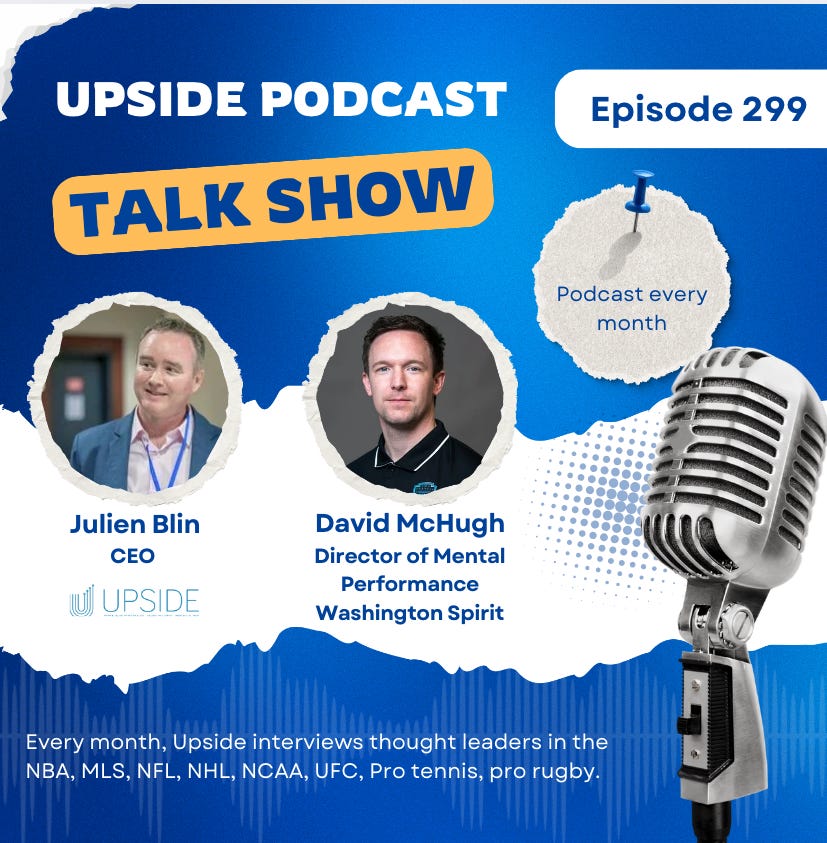
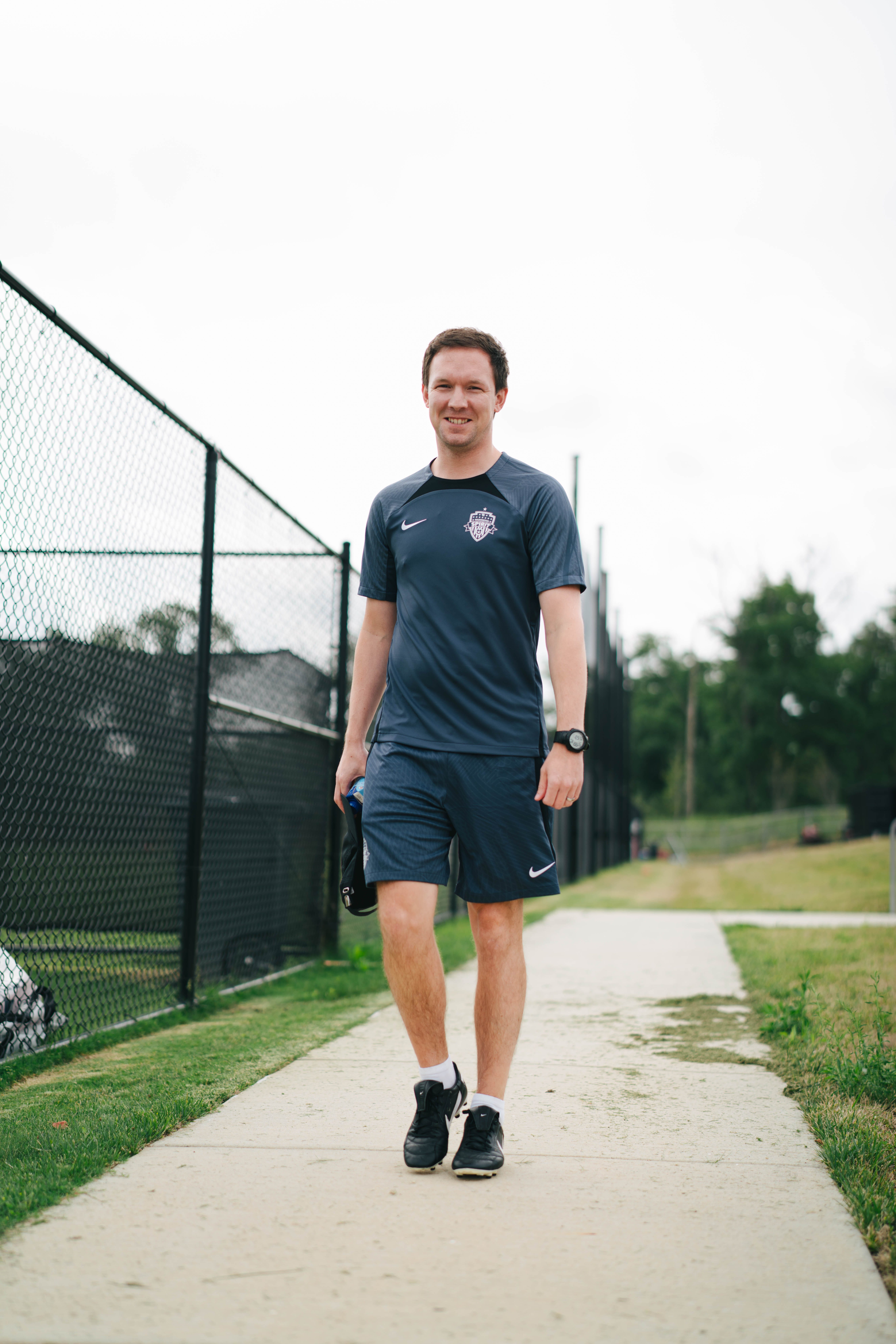
David McHugh is the Director of Mental Performance for the Washington Spirit (NWSL), where he supports players and staff through applied sports psychology, mental skills development, and performance planning. Originally an academy soccer player in Ireland, McHugh’s career in mental performance began after a significant injury sparked his interest in the psychology of recovery, resilience, and player development. He went on to earn advanced degrees in psychology, including a doctorate in sports psychology, and completed his UEFA coaching badge.
Before joining the Spirit, David held roles across Irish football as a coach, lecturer, and sports psychology practitioner, working with underage national teams, League of Ireland women’s programs, and academy environments. His blend of on-field coaching experience and psychological expertise allows him to integrate seamlessly with technical staff while supporting athletes across all phases of their development. At the Spirit, he plays a key role in shaping the club’s mental performance strategy, helping players build confidence, navigate pressure, and perform consistently at the highest level.
You can watch the video interview below by clicking on the Youtube link. You can also listen to the audio interview by clicking on the link at the top of the page:
📝Show Notes: Through this interview, we touched on:
His background & journey to the NWSL.
His role at the Washington Spirit.
His mental preparation philosophy
The use of technology
You can read the full transcript of the podcast interview with David located at the top of this blog post.
Here are the quotes from the interview with David:
1. Background & Journey to the NWSL
David McHugh
“Like a lot of people who end up working in sport, I started off as an athlete myself. I was playing academy soccer in Ireland, and when I was 16 I broke my leg and was out for about nine months — I didn’t get back on the pitch for a full year. That injury was a defining moment for me. It raised so many psychological questions: Why didn’t I fully recover? Why didn’t I reach my potential? Why wasn’t there support for the mental side of injury?
I went on to study psychology, and halfway through my degree I realized sports psychology was even a thing. Those early experiences — being injured, being sidelined, questioning everything — pushed me toward wanting to understand how to better support athletes. I did my master’s, then became a coach, did all of my UEFA coaching badges, worked in the League of Ireland, and coached both boys’ and women’s academy teams. Eventually, I went back and did my doctorate in sports psychology because I saw a gap — everyone focused on the physical, not the mental.
Over about 10 years those skill sets — coaching, psychology, understanding environments — all came together. When the role opened at Washington Spirit, I had experience in the women’s game, the coaching background to support the head coach, and the perspective to work with players individually. That combination is what ultimately led me to the Spirit, and now I’m finishing my third season with the club.”
2. Role in the Club
David McHugh
“Day-to-day, my role is a mix of being in the performance meetings, medical meetings, coaching meetings — really understanding what’s happening with every individual and every unit in the team. I’m looking at what players need this week, what the team needs, what messaging the head coach wants to set for the week, and then how we carry that into training.
I’m observing sessions, helping players debrief, meeting with them before or after training, and building mental-development plans. But I also zoom out and look at the entire performance system, because it’s not just individuals — it’s the international players, the rookies, the veterans, injured players, the staff, subgroups within staff, and even external influences like fans or media. Sometimes the issue for an athlete isn’t at the individual level — it’s at a higher layer of the system, so the solution might involve adjusting the coaching environment or shifting group messaging.
I also try to work two or three weeks ahead. Coaches focus on the immediate weekend — understandably — but I’m looking at what’s coming. For example, before playoffs, we might build penalty routines, or earlier in the season we plan for predictable moments like going ahead, going behind, or returning to level. So the job is part day-to-day support, part long-term planning, part environmental shaping. Everything is about helping the players and staff navigate the system in a way that supports performance and wellbeing.”
3. Mental Preparation Philosophy
David McHugh
“My philosophy is to keep things simple and tied directly to the demands of the game. A lot of sports psychology can get overly academic, but players need things that make sense on the field. So I always come back to three processes: the ability to be present, the ability to accept your emotions, and the ability to do what matters.
When players aren’t present, they usually can’t accept their emotions, and if they can’t accept their emotions, they struggle to act in line with their values. Those three pieces interact, and when a player explains what’s going on for them, I’ll put those three concepts on a whiteboard and ask which one will help them most right now. Then we build the session around that.
Confidence is a big one. Athletes often say, ‘I need to feel confident to perform,’ but the quickest way to feel confident is to go play at a lower level. You’ll be better technically, faster, more experienced — of course you’ll feel confident. But that’s not what they want. They want to be challenged. So instead of chasing a feeling, we redefine confidence around trust. The root of the word confidence is fidere, meaning to trust. So the real question becomes: What do you trust about yourself to cope with the challenge? What do you trust about the people around you?
It’s the same with pressure. Athletes say ‘I have to’ or ‘I need to,’ and that creates pressure. Those are closed goals — you either achieve them or you don’t. Instead, I help them shift toward open goals: How good can I be today? How many times can I get on the ball? How can I explore my potential in this moment? It moves players from pressure to exploration, which is usually why they fell in love with the game in the first place.”
4. Use of Technology
David McHugh
“The mental performance space is very education-heavy, so technology first helps us communicate and teach — Zoom, Google Meet, video tools. We can now educate athletes and even other mental-performance coaches at scale.
When it comes to specific tools, I’m a bit old-school. Relationships matter most. But one technology I rely on heavily is video. Analysts use tools like Sportscode to break down physical performance, but we can use the same tools to evaluate mental performance — comparing body language in different game states, examining behaviors when players are chasing closed goals versus open goals, and understanding emotional responses in context.
Right now that work is very manual, but AI will change everything. In sports like baseball, they’re already doing biomechanics analysis at a very high level. When that scales to soccer — tracking 22 players through video, capturing posture, movement, interactions — we’ll gain massive insight into team coordination, emotional regulation, and mental responses. People in tech tell me we’re heading there soon.
I’ve also seen vagus nerve techniques used — even simple ones like athletes putting their face in ice water to activate the diving reflex and regulate HRV and anxiety. I’ve shown athletes videos of divers using the technique, explained the theory, and helped them apply it at home. That’s where technology has power: when it educates, simplifies, and becomes something practical the athlete can use.”
You may also like:
🎙️ Upside Video Chat with Tyler Harris, Director of Sports Medicine, St Louis CITY SC (MLS)

Today we have the honor of interviewing Tyler Harris, the director of sports medicine at St Louis CITY SC, an MLS team.
🔥Upside Chat with Female Sports Experts: Allison Schmitt (Olympic Champion), Ciara Burgi (Las Vegas Aces / WNBA), Byrnadeen (Miami Marlins/MLB) on The Next Big Frontier for Women, and More

Today as part of our continued effort to bring more awareness on female athletes, teams and associated trends related to female athletes, we have the honor to interview a group of female sports performance experts:


